
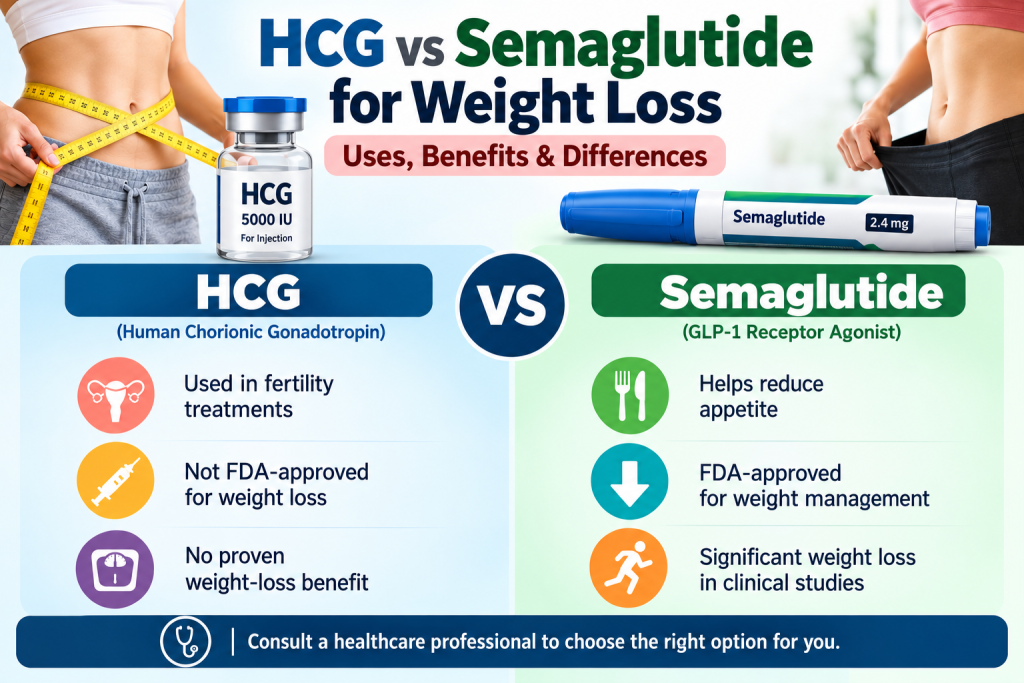
Weight-loss medications have become a major topic for people looking for medically supported ways to manage obesity and excess weight. Among the many options discussed online, HCG vs semaglutide for weight loss is a comparison that often confuses people. Both are injectable treatments, but they aren’t interchangeable and don’t work the same way.
HCG, or human chorionic gonadotropin, is a hormone with established medical applications, particularly in fertility treatment and certain hormonal conditions. However, HCG is not an FDA-approved weight-loss medication, and evidence does not show that HCG itself produces meaningful weight loss. Semaglutide is different. It belongs to a group of medicines called GLP-1 receptor agonists, and specific semaglutide products are approved for appropriate patients with obesity or overweight and certain related health conditions.
Understanding the difference between HCG vs semaglutide can help readers separate popular weight-loss claims from treatments supported by clinical evidence.
What is HCG?
Human chorionic gonadotropin is a naturally occurring hormone produced during pregnancy. Prescription HCG has medical uses that include supporting ovulation in certain fertility treatments and treating selected hormonal problems in men. Therefore, it is important to understand that HCG has legitimate medical applications, but HCG for weight loss is a different claim. The so-called HCG diet became popular because it combined HCG products with an extremely low-calorie diet.
Supporters claimed that HCG could help the body use stored fat while preserving lean tissue. However, the FDA has stated that no substantial evidence shows HCG increases weight loss beyond the effects of calorie restriction. This means that people searching for HCG injections for weight loss should be cautious about products or programs that present HCG as a proven fat-burning treatment. Extreme calorie restriction can cause weight loss, but that does not mean HCG caused the reduction.
What is Semaglutide?
Semaglutide is a GLP-1 receptor agonist that works differently from HCG. GLP-1 is a naturally occurring hormone involved in appetite regulation, digestion and blood-glucose control. Semaglutide mimics some of the effects of GLP-1 and can influence appetite and food intake. For eligible patients, semaglutide can be used as part of a comprehensive weight-management program. It may help people feel fuller for longer and consume fewer calories, which can contribute to sustained weight reduction when combined with appropriate dietary and lifestyle measures.
Clinical research has provided substantial evidence for semaglutide weight loss. In the STEP 1 clinical trial, adults with overweight or obesity who received once-weekly semaglutide 2.4 mg alongside lifestyle intervention experienced considerably greater average weight loss than participants receiving placebo. This evidence is one of the key differences when comparing semaglutide vs HCG for weight loss.
HCG vs Semaglutide: how do they work?
The mechanisms behind these treatments differ fundamentally. HCG is a reproductive hormone. Its established medical actions primarily relate to reproductive and hormonal functions. No established mechanism shows that HCG acts as an effective obesity medication. Semaglutide, meanwhile, activates GLP-1 receptors. This can influence appetite and satiety while also slowing gastric emptying. As a result, some patients may feel satisfied with smaller meals and experience less hunger between meals.
This difference matters because clinical research supports semaglutide for weight loss, while convincing evidence does not support claims that HCG directly causes substantial fat loss.
HCG diet vs Semaglutide
Another important distinction is between an HCG diet and medically supervised semaglutide treatment. The traditional HCG diet generally involves severe calorie restriction. Some versions have promoted extremely low daily calorie intake. Such restrictive diets can create rapid changes on the scale, but they may also make it difficult to get enough protein, vitamins, minerals, and other essential nutrients.
Semaglutide treatment does not depend on extreme starvation. Its appetite-suppressing effect can help eligible patients reduce calorie intake within a more sustainable dietary pattern. Clinical studies evaluated semaglutide alongside lifestyle intervention rather than as a replacement for healthy eating. Therefore, comparing the HCG diet vs semaglutide purely on how quickly someone loses weight can overlook more important differences in evidence, safety, and medical purpose.
Benefits of Semaglutide for weight management
The potential benefits of semaglutide extend beyond simply seeing a lower number on the scale. Clinical studies have reported reductions in body weight and waist circumference among appropriate patients. One reason semaglutide has attracted attention is its effect on appetite. People who regularly struggle with hunger or difficulty controlling food intake may find appetite reduction particularly relevant. However, response varies from person to person, and semaglutide does not guarantee a specific amount of weight loss. Research has also examined changes in several cardiometabolic measurements during semaglutide treatment. These findings have contributed to increased interest in semaglutide for obesity and long-term weight management.
Treatment should still be individualised. Starting weight, existing medical conditions, medications, dietary habits, physical activity and adherence can all influence results.
What are the side effects of Semaglutide?
Like any prescription medicine, semaglutide can cause side effects. Gastrointestinal symptoms are among the most commonly reported problems and may include nausea, vomiting, diarrhea, constipation and abdominal discomfort. These effects may be more noticeable when treatment begins or when the dose increases. A healthcare professional can determine whether semaglutide is appropriate and explain the approved dosing schedule and precautions. Patients should also review the specific prescribing information for the semaglutide product they are considering. Not every semaglutide product has the same approved indication, dose or formulation.
Can HCG and Semaglutide be used together?
People sometimes search for HCG and semaglutide together for weight loss, but combining medications should never be based solely on information found online. HCG may be prescribed for fertility or hormonal treatment, while semaglutide may be prescribed for diabetes or chronic weight management depending on the product and patient’s eligibility. If someone is already receiving HCG for a medical condition, they should discuss any proposed weight-loss treatment with their healthcare professional. There is no established reason to combine HCG with semaglutide to accelerate weight loss.
Best weight-loss treatments online
Readers researching alternatives to HCG-based weight-loss programs can explore other prescription treatments available through PremiumRxDrugs (PRx), a trustworthy platform for buying authentic medications online. Obelit 120mg contains orlistat, which works differently from GLP-1 medicines by reducing dietary fat absorption.
PRX also provides information through its weight loss medications for readers researching prescription approaches to weight management. For HCG’s established medical applications, readers can explore the HCG and infertility treatment range rather than treating HCG as a weight-loss medicine. The website also offers HCG products for established medical purposes. For example, Zyhcg 10000 IU contains HCG and is used in fertility-related treatment rather than as an approved obesity medication. Before you buy any medicine, consult your doctor to understand the medicine and its effectiveness for your condition.
Final thoughts
The HCG vs semaglutide for weight loss comparison involves two very different medical approaches. HCG is an established hormone used for specific reproductive and hormonal indications, but it is not approved for weight loss. Semaglutide is a GLP-1 receptor agonist with substantial clinical evidence supporting its use for weight management in appropriately selected patients.
For anyone considering a prescription weight-loss treatment, the decision should be based on medical history, current health, other medications, potential side effects and eligibility for the specific treatment. Rather than relying on claims surrounding the HCG diet or expecting identical results from different medications, patients should discuss evidence-based options with a qualified healthcare professional.


Latest posts by Marie (see all)
- HCG vs Semaglutide for Weight Loss: Uses, Benefits & Differences - October 1, 2026
- Budesonide Formoterol Inhaler: Uses, Dosage and How to Use It - September 28, 2026
- Pulmicort Inhaler: Uses, How to Use, Dosage and Side Effects - September 25, 2026


