
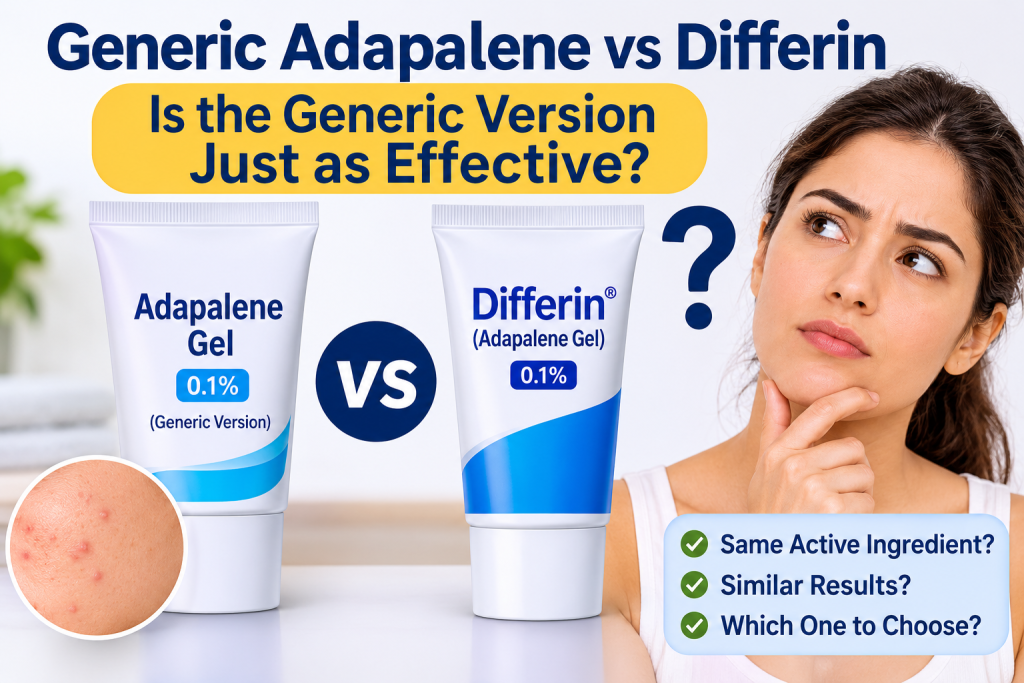
When choosing an acne treatment, it is natural to wonder whether a less expensive generic product will deliver the same results as a well-known brand. Adapalene is a popular topical retinoid used to treat acne, and it comes in different brand names, including Adaferin gel and Differin. Both products contain adapalene as the active ingredient, but differences in branding, formulation, packaging, and price can leave users unsure which to choose. The important question is whether generic adapalene can provide results comparable to Differin. In most cases, a properly manufactured generic product with the same adapalene strength can be an effective alternative. However, understanding how these treatments work and what to check before using them can help you choose more confidently.
What is generic Adapalene (Adaferin gel)?
Adaferin gel is a topical acne treatment containing adapalene. It is a generic version of Differin. It is commonly available in a 0.1% strength, although product availability can vary by market. Adapalene helps manage acne by influencing the way skin cells develop and shed inside hair follicles. When dead cells and excess oil build up in pores, they can contribute to comedones, including blackheads and whiteheads. These clogged pores may also develop into inflamed pimples. By helping regulate skin cell turnover and reduce inflammation, adapalene Gel addresses some of the processes responsible for acne formation. Doctors generally prescribe it for mild to moderate acne, especially when blackheads, whiteheads, and inflammatory spots appear together.
What is Differin?
Differin is a well-known brand of adapalene, available in topical formulations such as gel and cream. Its commonly used acne-treatment strength is 0.1%, although other strengths and formulations may be available depending on the country and prescription requirements. Differin works through the same active ingredient as Adaferin gel. It helps prevent clogged pores and reduces inflammation associated with acne. Rather than treating only visible pimples, adapalene works on the underlying changes within the pores that contribute to recurring breakouts. Although Differin is a recognised brand, its name alone doesn’t mean it will always produce better results than a suitable generic equivalent. The active ingredient, strength, formulation, and quality matter more.
Adaferin gel vs Differin: What is the difference?
The main similarity between Adaferin gel and Differin is that both contain adapalene. If two products have the same concentration and comparable formulations, they are generally expected to provide similar therapeutic effects when used correctly. The differences are more likely to involve the manufacturer, inactive ingredients, texture, packaging, and cost. These additional ingredients, often called excipients, help give a gel or cream its consistency and stability. They don’t provide the main acne-treating action, but they can affect how a product feels on the skin. For example, one gel may feel lighter or dry more quickly than another. Someone with sensitive or easily irritated skin may also notice that a particular formulation suits them better. This doesn’t necessarily mean one brand is stronger; it may simply reflect differences in the base ingredients.
Price can be another deciding factor. Generic medicines are often more affordable because they do not carry the same brand-related costs. This can make long-term acne treatment more manageable, especially for people who need several weeks or months of consistent use.
Is Generic Adapalene as effective as Differin?
A generic adapalene product can be just as effective as Differin when it contains the same active ingredient and strength and meets appropriate quality standards. For instance, Adaferin gel 0.1% and Differin gel 0.1% share the same acne-treating ingredient. However, don’t assume every product labelled adapalene is interchangeable. Strength, dosage form, product quality, and the manufacturer’s standards all matter. Get a generic product from a reliable source and check it carefully to ensure the label matches the treatment recommended by a healthcare professional. If a person switches from Differin to Adaferin gel, the results should not necessarily change simply because the brand name is different. However, a difference in texture or inactive ingredients may affect comfort and tolerability. If irritation increases or acne worsens after switching, discuss the change with a dermatologist.
How to use Adaferin gel or Differin
Both products should be used according to the instructions provided by a dermatologist or the product leaflet. Usually, apply a thin layer once daily, often in the evening, to clean, completely dry skin. A small, pea-sized amount is generally sufficient for the entire face when facial acne is being treated. Avoid applying the gel near the eyes, lips, nostrils, or on broken, sunburned, or irritated skin. Applying more will not make acne disappear faster. Instead, it may increase dryness, peeling, redness, and discomfort. During treatment, use a gentle cleanser and a non-comedogenic moisturiser. Daily sunscreen is also important because acne treatments can make the skin more sensitive to irritation from sunlight. Avoid combining adapalene with several strong exfoliating products or other irritating treatments unless your dermatologist recommends the combination.
Possible Side Effects of Both Products
Since Adaferin gel and Differin contain adapalene, their potential side effects are broadly similar. During the first few weeks, some users experience dryness, mild redness, peeling, itching, or a burning sensation. These effects are often more noticeable when treatment begins or when the product is applied too frequently. Some people may notice a temporary increase in visible breakouts as clogged pores begin to clear. However, severe irritation should not be dismissed as a normal adjustment period. Stop using the product and seek medical advice if you develop significant swelling, blistering, intense burning, or signs of an allergic reaction. Adapalene should generally be avoided during pregnancy unless a healthcare professional specifically advises otherwise. Anyone pregnant, planning pregnancy, or breastfeeding should discuss suitable acne treatments with a doctor before starting it.
How long does adapalene take to show results?
Adapalene is not an overnight acne treatment. Some people notice gradual improvement within four to eight weeks, but more noticeable results may take around 8–12 weeks of consistent use. Your response depends on acne severity, skin sensitivity, application habits, and whether you’re using other treatments. Stopping treatment too early because your skin hasn’t improved within a few days may prevent you from seeing its full benefit. At the same time, increasing the quantity or frequency without medical advice can cause unnecessary irritation.
Which one should you choose: Adaferin gel or Differin?
The choice depends on the product’s strength, formulation, quality, availability, and price. If Adaferin gel contains the same adapalene concentration as the prescribed Differin and comes from a reliable manufacturer, it may be a reasonable generic alternative. Differin may be preferable for someone who has already used it successfully and wishes to continue with the same formulation. Ultimately, the best option isn’t necessarily the most expensive. It is the product with the right adapalene strength for your skin that you can use consistently under appropriate medical guidance.
Conclusion
Adaferin gel and Differin share the same active ingredient, adapalene, which helps control acne by preventing clogged pores and reducing inflammation. When the generic product has the same strength, a comparable formulation, and meets appropriate quality standards, it can offer results similar to the branded version. The main differences may involve price, manufacturer, texture, and inactive ingredients rather than the acne-treating action itself. Before choosing either product, check its strength and source, particularly if you are switching from a treatment that has already worked for you. Whichever option you select, use it consistently as directed, moisturise regularly, and protect your skin from sunlight. If acne remains persistent or irritation becomes difficult to manage, consult a dermatologist to review your treatment plan.


Latest posts by Marie (see all)
- Generic Adapalene vs Differin: Is the Generic Version Just as Effective? - November 10, 2026
- Hydroquinone Alternatives for Melasma: Best Creams for Brighter, Even-Toned Skin - November 10, 2026
- Can Semaglutide Reduce Heart Disease Risk? SELECT Trial Results Explained - November 5, 2026


