




Adiff Gel 1% (15gm)
Available Dosages
| SKU | 2695 |
|---|---|
| Generic For | Differin Gel |
| Manufacturer | IPCA Laboratories |
| Active Ingredient | Adapalene |


| Pack Size | Qty | Price Per Pill or Unit | Price | Cart | |
|---|---|---|---|---|---|
| 1 Tube/s | US$ 11.50 | US$ 11.50 | |||
|
|||||
| 3 Tube/s | US$ 9.00 | US$ 27.0022%US$ 34.50 | |||
|
|||||
| 6 Tube/s | US$ 8.25 | US$ 49.5028%US$ 69.00 | |||
|
|||||

Adiff Gel 1% (Adapalene) — Generic Differin Gel
Adiff Gel 1% is a topical dermatological treatment formulated with Adapalene, a third-generation retinoid widely recommended by dermatologists for the management of acne. Designed to target pimples, blackheads, and whiteheads, this gel works at the root of acne by regulating skin cell turnover, unclogging pores, and reducing inflammation. If you’re struggling with persistent breakouts or oily skin, Adiff Gel 1% can be a safe, effective, and affordable solution.
Precautions Adiff gel 1%
Adiff gel 1 should not be used in patients hypersensitive to Adapalene, benzoyl peroxide, or other ingredients in the formulation. The gel's safety and effectiveness have not been clinically studied in children under twelve. The product should not come into contact with eyes, nose, mouth, ears, vagina, sunburned skin, or eczematous skin. In case of severe irritation, immediate treatment is discontinued. If the irritation is not severe, less frequent medication use is recommended, and temporary discontinuation until the effects resolve can help. Prefer using cosmetics that are non-comedogenic and non-stringent. If you have excessive dryness, use an oil-free moisturizer to relieve it. Adapalene may cause your skin to dry and cause some degree of irritation. Therefore, stop using skincare products that use abrasive cleansers, strong drying agents, and astringents that may add to irritant effects. Use in children below the age of twelve years has not been established. Till now, there have been no known drug interactions; however, the use of retinoids and other drugs with the same mechanism of action is contraindicated while using adapalene formulation. Sun exposure, including exposure to sunlamps and tanning booths, should be minimized during the use of Adapalene.
Looking for similar adapalene products? Check out Adaferin Gel 0.1% and Deriva MS Aqueous Gel to compare formulations and choose the option recommended by your healthcare provider.
Side effects of Adiff gel 1%
Adiff gel 1% may be applied to the skin, and a feeling of warmth, pruritus, burning sensation, dryness, scaling, or stinging may occur. These common side effects may persist despite treatment discontinuation. So, in that case, you can consult your dermatologist; you may be advised on ways to prevent and stop these side effects and restart your treatment.
How to use Adiff gel?
A thin layer of Adiff gel should be applied all over the acne-prone areas once daily before bedtime. Make sure you apply the medicine on clean and dry skin. Regularly apply the combination gel for best results while avoiding the eyes, lips, ears, and mucous membranes. If the product gets into your eyes or any other restricted place, rinse thoroughly with warm water. Significant improvement in the appearance of the skin is expected to be evident in just four to eight weeks of regular application. Excessive product application causes no more rapid results but irritation, redness, peeling, or skin discomfort.
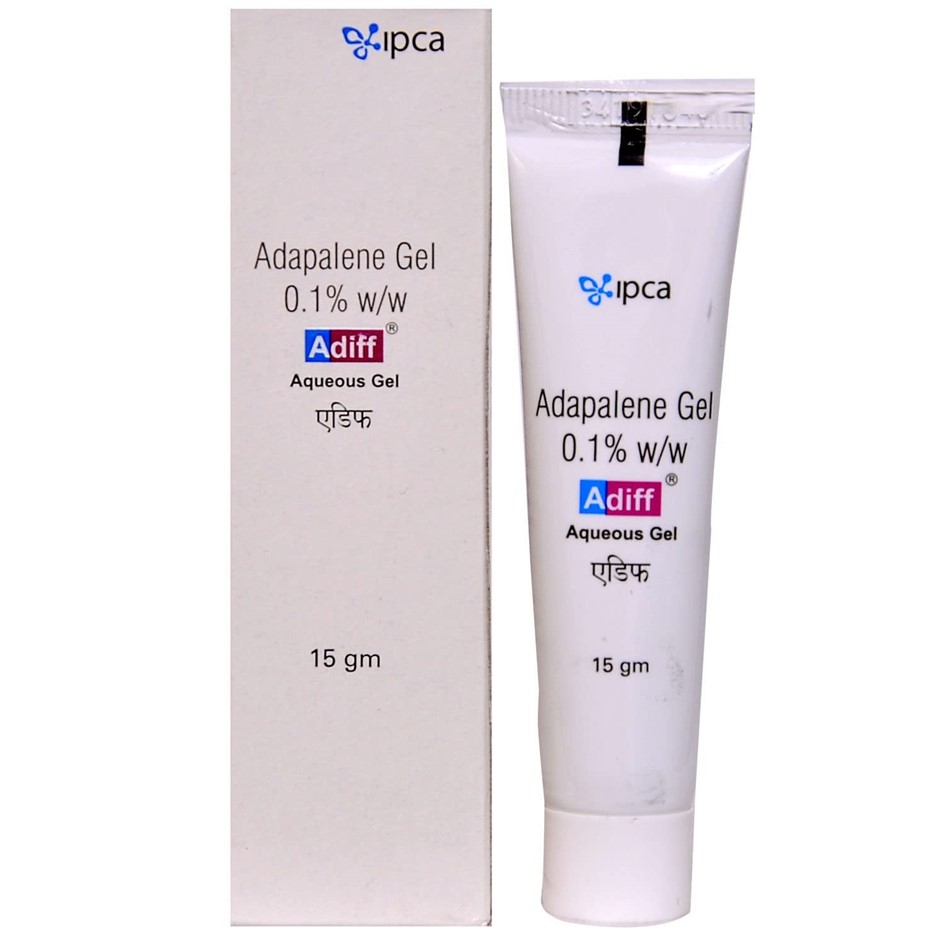
What is Adapalene and what skin condition does it treat?
Adapalene is a topical retinoid medication primarily used to treat acne vulgaris, including blackheads, whiteheads, and inflammatory pimples. Available as Adiff Gel 1% (15gm), this dermatological treatment works by targeting clogged pores and reducing acne lesions on the face, chest, and back. As a third-generation retinoid, adapalene is particularly effective for mild to moderate acne breakouts. This acne treatment gel helps clear existing blemishes while preventing new comedones from forming, making it a popular choice for long-term acne management and clearer skin.
How does Adapalene work to clear acne?
Adapalene in Adiff Gel 1% (15gm) works by normalizing the skin cell turnover process inside hair follicles and pores. This topical retinoid reduces the stickiness of skin cells, preventing them from clumping together and blocking pores where acne bacteria thrive. Additionally, adapalene possesses anti-inflammatory properties that calm redness and swelling associated with acne lesions. By keeping pores clear and reducing inflammation, this acne medication addresses both the formation of comedones and inflammatory breakouts. The gel formulation allows the active ingredient to penetrate effectively while being gentler than older retinoid treatments.
How long does Adiff Gel 1% (15gm) take to show results?
Most users begin noticing improvement in their acne within 8 to 12 weeks of consistent use of Adiff Gel 1% (15gm). Some individuals may see initial changes in as little as 4 weeks, though optimal results with adapalene typically require 3 months of regular application. During the first few weeks, you might experience temporary skin purging as the retinoid accelerates cell turnover and clears existing blockages. Maximum benefits from this acne treatment usually become visible after 12 weeks of continuous use. Patience is essential, as adapalene works gradually to transform skin health from within.
When and how should I apply Adiff Gel 1% (15gm)?
Apply Adiff Gel 1% (15gm) once daily in the evening to clean, dry skin. Wash your face with a gentle cleanser, pat completely dry, then apply a thin layer of the adapalene gel to affected areas, avoiding eyes, lips, and mouth. Use a pea-sized amount for the entire face. Always apply sunscreen during the day, as this retinoid treatment increases sun sensitivity. Start with every-other-night application if you have sensitive skin, gradually increasing to nightly use as tolerated. Consult your healthcare provider before use if pregnant, breastfeeding, or using other prescription acne medications.
Is Adiff Gel 1% (15gm) safe for extended use?
Adiff Gel 1% (15gm) is generally considered safe for long-term acne management when used as directed. Clinical studies have demonstrated that adapalene maintains its effectiveness and tolerability during extended treatment periods spanning months to years. Unlike some acne medications, this topical retinoid doesn't lead to antibiotic resistance or lose potency over time. Many dermatologists recommend continued use even after acne clears to prevent new breakouts from forming. The safety profile of adapalene makes it suitable for maintenance therapy, though periodic evaluation by your healthcare provider ensures the treatment remains appropriate for your evolving skin needs.
Can I use Adiff Gel 1% (15gm) with other skincare products or medications?
Adiff Gel 1% (15gm) can be combined with many skincare products, but certain combinations require caution. Avoid using adapalene simultaneously with other topical retinoids, benzoyl peroxide in the same application, or harsh exfoliants, as this may cause excessive irritation. However, benzoyl peroxide can be used at different times of day, and gentle moisturizers are actually recommended to minimize dryness. Products containing alcohol, astringents, or alpha-hydroxy acids should be introduced carefully. This acne gel works well alongside oral antibiotics when prescribed by your doctor for moderate to severe acne treatment regimens.
How does Adiff Gel 1% (15gm) compare to other retinoid acne treatments?
Adiff Gel 1% (15gm) containing adapalene offers several advantages over other retinoid acne therapies. Compared to tretinoin, adapalene typically causes less irritation, redness, and peeling while delivering comparable acne-clearing results. Unlike tazarotene, this retinoid treatment is generally better tolerated by sensitive skin types. Adapalene is photostable, meaning it remains effective even with light exposure, whereas tretinoin degrades in sunlight. The 1% concentration in Adiff Gel provides enhanced efficacy over lower 0.1% formulations. Among topical retinoids available for acne management, adapalene strikes an excellent balance between effectiveness and tolerability for most users.
Is generic Adapalene as effective as branded acne gels?
Generic adapalene formulations like Adiff Gel 1% (15gm) contain the same active ingredient concentration as branded versions such as Differin, making them equally effective for treating acne. Regulatory authorities require generic topical retinoids to meet strict bioequivalence standards, ensuring comparable therapeutic results. The primary differences lie in inactive ingredients, packaging, and price rather than acne-fighting performance. Many dermatology patients successfully switch between branded and generic adapalene products without noticing changes in efficacy. Choosing a quality generic acne treatment offers significant cost savings while delivering the same skin-clearing benefits as higher-priced brand-name alternatives.
Why do patients choose PremiumRxDrugs for Adiff Gel 1% (15gm)?
Patients prefer PremiumRxDrugs for Adiff Gel 1% (15gm) because of the combination of authenticity guarantees, affordability, and convenience. As a licensed pharmacy trusted for over a decade, PremiumRxDrugs supplies only manufacturer-sourced adapalene products at competitive prices for both generic and branded acne medications. Customers across the USA, UK, Australia, and Canada appreciate the discreet packaging, reliable worldwide shipping with free delivery options, and simple prescription management system. The easy reorder functionality means your retinoid treatment arrives consistently without pharmacy visits. For quality acne care delivered affordably and privately, PremiumRxDrugs offers a dependable solution.
What are the common side effects of Adapalene gel?
Common side effects of adapalene include skin dryness, redness, mild burning or stinging upon application, and increased peeling, especially during the first 2-4 weeks of treatment. Some users experience temporary acne flare-ups as the retinoid accelerates skin cell turnover. Increased sun sensitivity is typical with adapalene, making sunscreen essential during treatment. These reactions usually diminish as your skin adjusts to the acne medication. Applying moisturizer and starting with less frequent application can minimize discomfort. Severe irritation, blistering, or allergic reactions are uncommon but require discontinuation. Most side effects are manageable and temporary with this topical retinoid therapy.
Who should avoid using Adapalene for acne treatment?
Individuals with known hypersensitivity to adapalene or retinoid compounds should avoid this acne treatment. Pregnant women or those planning pregnancy should not use adapalene, as retinoids may pose risks to fetal development. Breastfeeding mothers should consult healthcare providers before applying this medication. People with eczema, rosacea, or severely inflamed skin may experience worsened irritation with adapalene gel. Those with sunburned or broken skin should wait until healing before starting retinoid therapy. If you're currently using other prescription acne medications or undergoing cosmetic procedures like waxing or laser treatments, medical guidance is necessary before beginning adapalene treatment.
Login
Sign Up
Login
Sign Up