
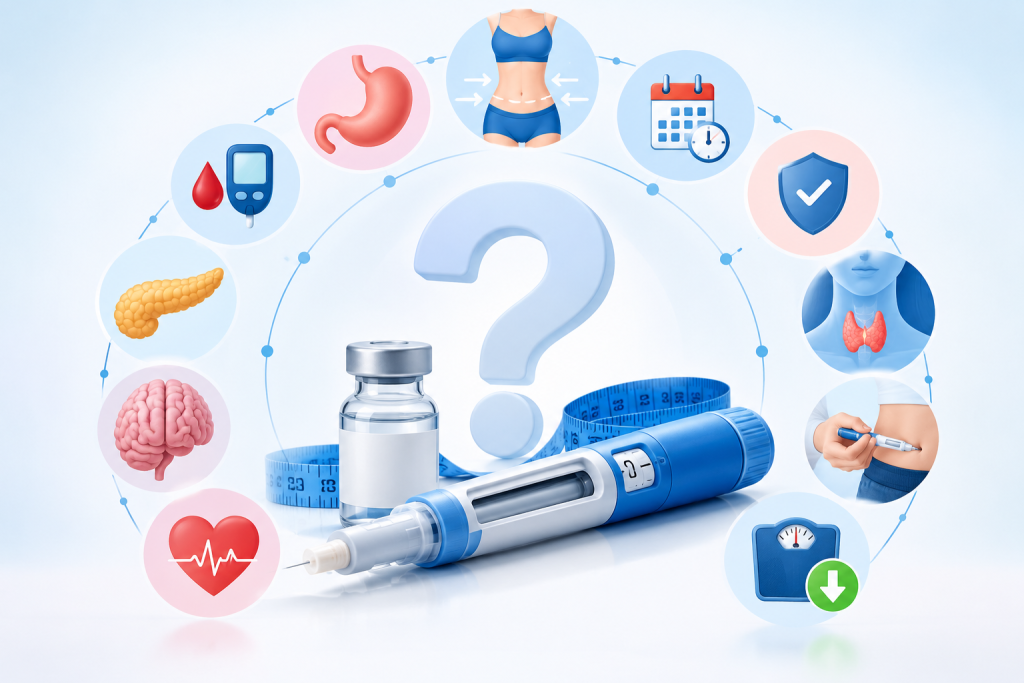
Starting a new medication can bring up a lot of questions, and Semaglutide is no exception. Whether your doctor prescribed Ozempic for type 2 diabetes or Wegovy for weight management, it’s normal to wonder how it works, what to expect, and how to get the best results.
To help, we’ve put together these semaglutide FAQs, answering the 15 semaglutide questions new patients ask most often. Think of this as your easy-to-read Ozempic FAQ and Wegovy FAQ in one place. As always, your own doctor is the best source of advice for your situation.
Getting Started: The Basics
1. What is Semaglutide?
Semaglutide is a prescription medication in a class called GLP-1 receptor agonists. It copies a natural gut hormone (GLP-1) that helps control blood sugar and appetite. It’s made by Novo Nordisk and is FDA-approved for type 2 diabetes, chronic weight management, and lowering heart-related risks in certain patients.
2. What’s the difference between Ozempic, Wegovy, and Rybelsus?
All three contain Semaglutide, but they’re approved for different uses and doses:
| Brand | Form | Main FDA-approved use | Max dose |
| Ozempic | Weekly injection | Type 2 diabetes | 2 mg weekly |
| Wegovy | Weekly injection (oral tablet also approved) | Chronic weight management | 2.4 mg weekly |
| Rybelsus | Daily tablet | Type 2 diabetes | 14 mg daily (newer higher-dose versions exist) |
In short: Ozempic and Rybelsus are mainly for diabetes, while Wegovy is the version made for weight loss.
3. How does Semaglutide work?
Semaglutide works in several ways at once:
- Helps your pancreas release insulin when blood sugar is high
- Lowers the amount of sugar your liver releases
- Slows how fast food leaves your stomach, so you stay full longer
- Acts on appetite centers in the brain to reduce hunger and food cravings
The result is better blood sugar control and, for many people, steady weight loss.
4. Who can take Semaglutide?
- Ozempic: adults with type 2 diabetes, alongside diet and exercise.
- Wegovy: adults with a BMI of 30 or higher, or a BMI of 27 or higher with at least one weight-related condition (such as high blood pressure, type 2 diabetes, or high cholesterol). It’s also approved for teens aged 12 and older with obesity.
Semaglutide is not for people with type 1 diabetes, and it isn’t safe for anyone with a personal or family history of certain thyroid cancers (more on this below).
Dosage and How to Use It
5. What is the usual semaglutide dosage?
Semaglutide dosage always starts low and increases slowly, usually every 4 weeks. This “dose escalation” helps your body adjust and reduces stomach side effects.
- Ozempic: starts at 0.25 mg once weekly, then usually increases to 0.5 mg, 1 mg, and up to 2 mg if needed.
- Wegovy: starts at 0.25 mg once weekly and steps up through 0.5 mg, 1 mg, and 1.7 mg to a maintenance dose of 2.4 mg.
The starting dose helps your body adjust, not produce big results, so don’t be discouraged if you see little change in the first month.
6. How do I inject Semaglutide?
Ozempic and Wegovy come in pre-filled pens. You inject once a week, on the same day each week, into the fat under the skin of your stomach, thigh, or upper arm. You can take it any time of day, with or without food. Rotating the injection spot each week helps prevent skin irritation. Your pharmacist or doctor can walk you through your first injection.
7. What if I miss a dose?
- Ozempic: take the missed dose within 5 days. If more than 5 days have passed, skip it and take the next dose on your regular day.
- Wegovy: if your next dose is more than 2 days away, take it as soon as possible. If it’s less than 2 days away, skip it.
Never take two doses at once. If you miss two or more weeks in a row, call your doctor, as you may need to restart at a lower dose.
Results: What to Expect
8. How fast does Semaglutide work?
Many people notice reduced appetite within the first one to two weeks. Blood sugar levels often start improving within the first few weeks too. Noticeable weight loss usually appears over the first two to three months, as the dose increases.
9. How much weight can I lose on Semaglutide?
In the major STEP 1 clinical trial, adults taking Wegovy 2.4 mg lost about 15% of their body weight on average over 68 weeks, compared with about 2–3% on placebo. For a 220-pound person, that’s roughly 33 pounds. People with type 2 diabetes taking Ozempic typically lose less, often around 5–10 pounds or more depending on the dose. Results vary, and they’re best when combined with healthy eating and regular activity.
Semaglutide Side Effects and Safety
10. What are the most common semaglutide side effects?
Most semaglutide side effects affect the digestive system and are strongest when starting or increasing the dose:
- Nausea
- Diarrhea or constipation
- Vomiting
- Stomach pain, bloating, or burping
- Tiredness and headache
For most people, these improve within a few weeks as the body adjusts. Eating smaller meals, avoiding greasy foods, and staying hydrated can help.
11. Are there serious side effects I should watch for?
Serious problems are less common but still important to know about. Call your doctor right away if you notice:
- Severe stomach pain that may spread to your back (possible pancreatitis)
- Pain in the upper right belly, fever, or yellowing skin (possible gallbladder problems)
- Signs of dehydration or reduced urination (possible kidney problems)
- Shakiness, sweating, or confusion (possible low blood sugar, mainly if you also take insulin or sulfonylureas)
- Sudden vision changes
- Swelling of the face, lips, or throat, or trouble breathing (possible allergic reaction)
Semaglutide also carries an FDA boxed warning about thyroid C-cell tumors seen in animal studies. Don’t take it if you or a family member has had medullary thyroid carcinoma (MTC) or Multiple Endocrine Neoplasia syndrome type 2 (MEN 2).
12. What should I eat, and can I drink alcohol?
Focus on smaller portions, lean protein, vegetables, whole grains, and plenty of water. Protein helps protect muscle while you lose weight. Limit fried, fatty, and very sugary foods, which can worsen nausea. Alcohol isn’t strictly forbidden, but it can worsen stomach upset and raise the risk of low blood sugar in people with diabetes, so keep it limited and talk to your doctor.
13. Can I take Semaglutide with my other medications?
Often, yes, but tell your doctor about everything you take. Key points:
- Taking it with insulin or sulfonylureas raises the risk of low blood sugar, so your doctor may lower those doses.
- Because Semaglutide slows digestion, it can change how some oral medications are absorbed.
- Don’t combine Semaglutide with other GLP-1 medicines (like liraglutide or tirzepatide).
Long-Term Use and Storage
14. What happens if I stop taking Semaglutide?
Semaglutide works only while you’re taking it. When people stop, appetite usually returns, and many regain weight. In a follow-up to the STEP 1 trial, participants regained about two-thirds of the weight they had lost within a year of stopping. For diabetes, blood sugar may rise again. Never stop on your own; talk to your doctor about a plan.
15. How should I store my semaglutide pens?
- Before first use: store pens in the refrigerator (36°F to 46°F). Don’t freeze them.
- Ozempic after first use: can be kept at room temperature (up to 86°F) or in the fridge for up to 56 days.
- Wegovy: pens can be kept out of the fridge between 46°F and 86°F for up to 28 days.
Always keep the cap on to protect it from light, and never use a pen that has been frozen.
Getting Your Semaglutide Safely
Semaglutide always requires a valid prescription. Be careful with websites selling “semaglutide” with no prescription needed, since these products may be counterfeit, contaminated, or incorrectly dosed.
More Weight Loss Injection FAQs
Is compounded semaglutide the same as Ozempic or Wegovy?
No. Compounding pharmacies make compounded Semaglutide, and it is not FDA-approved. The FDA has warned about dosing errors and products that may contain different salt forms of Semaglutide. Brand-name Ozempic and Wegovy go through strict FDA testing for safety and quality.
Does insurance cover Semaglutide?
Coverage depends on your plan and why you’re taking it. Ozempic is often covered for type 2 diabetes. Wegovy coverage for weight loss varies widely, though some plans, including Medicare, may cover it for eligible patients to lower heart risk. Check with your insurer and ask about manufacturer savings programs.
Can I take Semaglutide while pregnant or trying to get pregnant?
Semaglutide is not recommended during pregnancy. If you’re planning a pregnancy, the label advises stopping it at least 2 months before you try to conceive. Talk to your doctor about other options.
Does Semaglutide cause hair loss or “Ozempic face”?
Some people report hair thinning or a more hollow-looking face. These effects are usually linked to rapid weight loss itself rather than the drug directly. Eating enough protein and losing weight steadily may help.
Should I tell my surgeon I’m on Semaglutide?
Yes. Because Semaglutide slows stomach emptying, there’s a small risk of food remaining in the stomach during anesthesia. Always tell your surgeon and anesthesiologist about this and other GLP-1 questions you have before any procedure, so they can advise you on whether to pause a dose.
Disclaimer: This article is for informational purposes only and is not medical advice. Always consult a licensed healthcare provider before starting, stopping, or changing any medication.


Latest posts by Marie (see all)
- Semaglutide FAQs: 15 Expert Answers Every New Patient Should Know - October 31, 2026
- Alzheimer’s Disease Treatment: Medications That May Help Slow Memory Loss - October 29, 2026
- Liraglutide vs Semaglutide: Differences, Weight Loss Results & Effectiveness - October 28, 2026


