




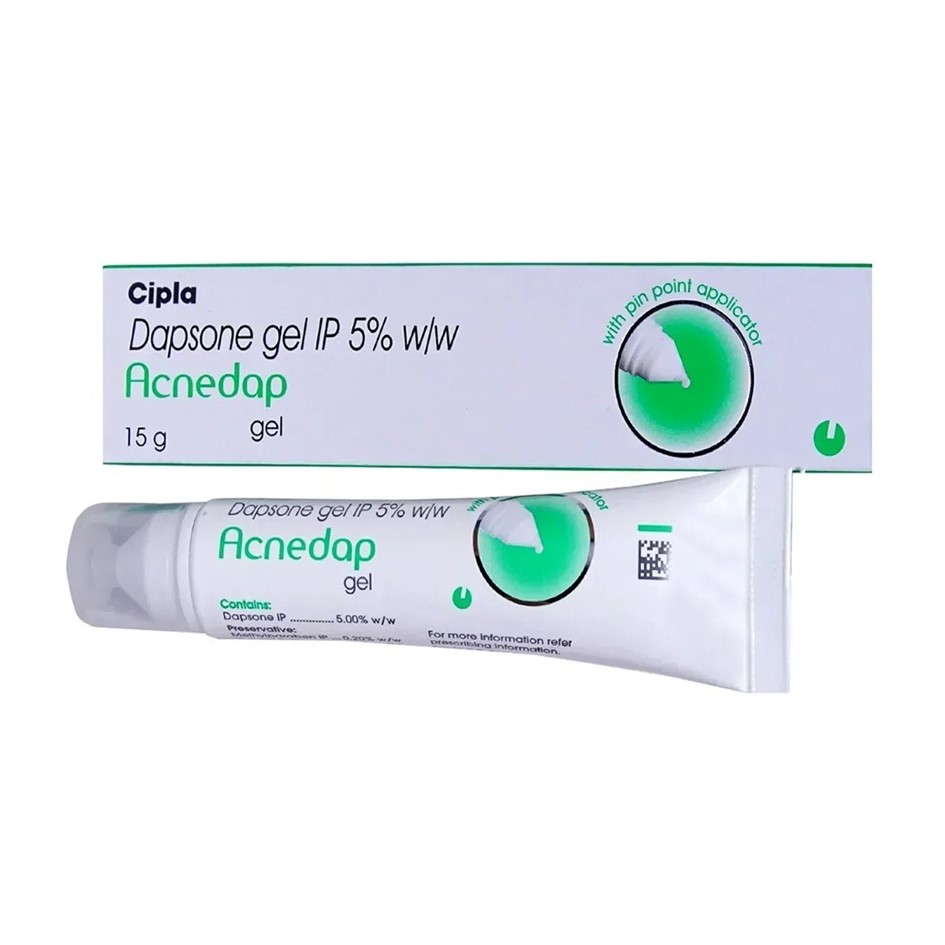
Acnedap Gel 5%
Available Dosages
| SKU | 2739 |
|---|---|
| Generic For | Aczone Gel |
| Manufacturer | Cipla, India |
| Active Ingredient | Dapsone |


| Pack Size | Qty | Price Per Pill or Unit | Price | Cart | |
|---|---|---|---|---|---|
| 1 Tube/s | US$ 16.00 | US$ 16.00 | |||
|
|||||
| 3 Tube/s | US$ 15.00 | US$ 45.006%US$ 48.00 | |||
|
|||||
| 5 Tube/s | US$ 14.00 | US$ 70.0012%US$ 80.00 | |||
|
|||||

Acnedap Gel 5% (Dapsone) – Affordable Aczone Gel Alternative
Acnedap 5% is a topical medicine used for the treatment of acne in individuals 12 years of age and older. It effectively treats acne on the face, back, chest, and shoulders. The active ingredient of the medicine, Dapsone, has both antibacterial and anti-inflammatory properties, which kill the bacteria responsible for causing acne and reduce skin inflammation.
Acnedap 5% Gel is a dermatologist-recommended topical medication used for the effective treatment of acne (pimples). It contains adapalene, a third-generation retinoid that helps regulate skin cell turnover, reduce inflammation, and prevent clogged pores. Acnedap Gel is commonly prescribed for mild to moderate acne and is suitable for long-term acne management when used as directed.
How Acnedap Gel Works
Acnedap Gel works deep within the skin to normalize the shedding of dead skin cells. By preventing pore blockage and reducing inflammation, it helps stop new pimples from forming while gradually clearing existing acne. Unlike older retinoids, adapalene is known for being effective yet gentler on the skin, making it suitable for regular use.
Precaution warnings with acnedap gel
Acnedap is contraindicated in people who have shown hypersensitivity to Dapsone or any of its components. The product should not be used on patients under the age of twelve. The safety and effectiveness of this gel preparation have not been established in patients over 65 years of age. Before you use Acnedap gel 5%, talk to your dermatologist if any of the following apply to you:
- You are pregnant or planning to conceive. In this case, it is essential to consult with your healthcare provider to determine whether the benefits outweigh the risks to the fetus.
- Are breastfeeding. Dapsone is believed to be passed into breast milk. In these cases, your healthcare professional must decide whether you should continue breastfeeding or stop applying Acnedap gel.
- Other topical products, including cosmetics and medicinal formulations, are also used.
- Have a history of grey or bluish discolouration of skin, lips, nails, and mucous membranes due to lack of sufficient oxygen in the bloodstream.
Generally, Acnedap is safe and well-tolerated in the treatment of acne vulgaris. It offers effective results with minimal exposure to side effects. However, like all pharmaceutical agents, Acnedap 5% can cause side effects, including redness, rash, hives, oiliness, dryness, and swelling of the face, lips, and eyes. These side effects are usually mild and resolve on their own. Seek medical help if any side effects bother you or do not go away.
The active ingredient Dapsone has been associated with blood abnormalities, typically when administered orally. Applying Acnedap to the skin does not result in sufficient Dapsone in the blood, which can cause abnormalities; however, these have not been observed in research trials. Methemoglobinemia has been reported while using Acnedap 5%. You should be careful of the symptoms suggestive of these medical conditions (anaemia, low white blood cells, and Methemoglobinemia) and follow the directions indicated by your healthcare provider if they happen to you.
How to use acnedap gel
Acnedap gel 5% is for topical usage only. It is not for oral, ophthalmic or intravaginal use. The gel formulation should only be applied to affected areas. It is not intended for use on broken skin. It should be applied once in the morning and once in the evening or as instructed by your dermatologist. If the formulation comes in contact with the eyes, rinse thoroughly with lots of water. After cleansing the skin with a mild cleanser and patting it dry, apply a pea-sized amount of gel to your fingertips and gently massage it all over your face once daily. A thin layer of the product may be applied to other affected areas of the skin once daily. The product should be gently and thoroughly rubbed into the skin. Be sure to wash your hands after each application. Do not expect to see an immediate improvement in your condition; however, be patient and continue using your topical medicine as directed.
If there is no improvement after twelve weeks of regular application, treatment with Dapsone gel should be reassessed under the supervision of a dermatologist. If an application is missed, it should be applied as soon as possible to ensure a constant amount of medication is used on acne-prone skin. However, if it's almost time for the next application, skip the missed application and follow the regular treatment regimen. Make sure you avoid double applications.
What is Dapsone and what skin condition does it treat?
Dapsone is a topical antibiotic and anti-inflammatory agent used primarily to treat acne vulgaris, particularly inflammatory acne lesions. Acnedap Gel 5% contains dapsone as its active ingredient and works by reducing bacteria on the skin and decreasing inflammation associated with breakouts. This prescription acne treatment is especially effective for moderate acne characterized by red, swollen pimples. The gel formulation allows targeted application directly to affected areas, making it a popular choice among dermatological medications for managing persistent facial acne and promoting clearer skin over time.
How does Dapsone work to clear acne?
Dapsone works through dual mechanisms to combat acne effectively. As an antimicrobial agent, it inhibits bacterial growth on the skin, reducing Cutibacterium acnes populations that contribute to breakouts. Additionally, Acnedap Gel 5% possesses anti-inflammatory properties that calm redness and swelling associated with inflamed pimples. Unlike oral antibiotics, this topical acne medication acts locally at the skin surface, minimizing systemic exposure. The gel penetrates pores to address both the bacterial component and inflammatory response simultaneously, making it a comprehensive acne solution that targets multiple factors responsible for lesion formation and persistence.
How long does Acnedap Gel 5% take to show results for acne?
Most patients notice initial improvements in their acne within 4 to 8 weeks of consistent use of Acnedap Gel 5%. However, optimal results with dapsone topical treatment typically appear after 12 weeks of regular application. The timeline varies depending on acne severity and individual skin response. Some users see reduced inflammation and fewer new breakouts within the first month, while complete clearance of existing lesions may take longer. Patience is essential with this acne medication, as skin cell turnover and healing occur gradually. Continued use as directed yields the best outcomes for achieving and maintaining clearer skin.
When and how should I apply Acnedap Gel 5% correctly?
Apply Acnedap Gel 5% twice daily—once in the morning and once in the evening—to clean, dry skin. Wash your face with a gentle cleanser, pat dry completely, then apply a thin layer of the dapsone gel to all affected acne areas. Use a pea-sized amount for the entire face if treating widespread breakouts. Avoid eyes, mouth, and mucous membranes. Allow the gel to dry fully before applying moisturizer, sunscreen, or cosmetics. Consistent application at roughly the same times each day maximizes effectiveness. Always follow your healthcare provider's specific instructions regarding frequency and duration of this topical acne treatment.
Is Acnedap Gel 5% safe for long-term acne management?
Acnedap Gel 5% is generally considered safe for extended use when managing chronic acne, as topical dapsone has a favorable long-term safety profile compared to systemic acne medications. Many dermatologists prescribe this acne gel for maintenance therapy lasting several months to years, particularly for patients prone to recurring breakouts. The localized application minimizes systemic absorption, reducing risks associated with oral antibiotics like resistance development. Most users tolerate the treatment well over time, though periodic monitoring by your healthcare provider ensures continued appropriateness. Long-term efficacy studies support sustained use for keeping acne under control without significant adverse effects in most patients.
Can I use Acnedap Gel 5% with other acne treatments or skincare products?
Acnedap Gel 5% can typically be combined with other topical acne treatments, though timing and compatibility matter. Many dermatologists pair dapsone gel with benzoyl peroxide, retinoids, or salicylic acid products for enhanced results. However, applying benzoyl peroxide simultaneously may temporarily discolor skin due to a chemical interaction—use them at different times of day to avoid this harmless but cosmetically undesirable effect. This acne medication generally works well alongside non-medicated moisturizers and sunscreens. Inform your healthcare provider about all skincare products and prescription medications you're using to ensure safe, effective combinations and avoid potential interactions or irritation.
How does Acnedap Gel 5% compare to other topical acne medications?
Acnedap Gel 5% offers unique advantages compared to other topical acne treatments. Unlike benzoyl peroxide, which can bleach fabrics and cause dryness, dapsone gel is gentler and non-bleaching, making it suitable for sensitive skin types. Compared to topical antibiotics like clindamycin, dapsone carries lower bacterial resistance risks with long-term use. While retinoids excel at unclogging pores, they often cause irritation; dapsone provides anti-inflammatory benefits with better tolerability for many patients. This acne medication works particularly well for inflammatory lesions and can complement other treatments. Its dual antimicrobial and anti-inflammatory action distinguishes it within the dermatological arsenal for comprehensive acne management.
Is generic Dapsone gel as effective as branded Acnedap Gel 5%?
Generic dapsone 5% gel is therapeutically equivalent to branded Acnedap Gel 5%, containing the identical active ingredient at the same concentration. Regulatory agencies require generic acne medications to demonstrate bioequivalence to brand-name versions, ensuring comparable efficacy, safety, and quality. Both formulations work through the same antimicrobial and anti-inflammatory mechanisms to treat acne lesions effectively. The primary differences lie in inactive ingredients, packaging, and cost, not therapeutic performance. Many patients and dermatologists confidently choose generic dapsone as a cost-effective alternative without sacrificing treatment outcomes. Whether selecting generic or branded versions, consistent application remains key to achieving clear, healthy skin.
Why do patients choose PremiumRxDrugs for ordering Acnedap Gel 5%?
Patients prefer PremiumRxDrugs for Acnedap Gel 5% because of the pharmacy's commitment to authenticity, affordability, and convenience. As a fully licensed pharmacy trusted for over ten years, it supplies only genuine, manufacturer-sourced dapsone gel and acne treatments. Competitive pricing makes prescription skincare accessible, while discreet packaging ensures privacy throughout delivery. The platform serves international customers across the USA, UK, Australia, Canada, and beyond with reliable worldwide shipping, including free shipping options on qualifying orders. Easy prescription management and straightforward reordering streamline ongoing acne treatment. This combination of quality assurance, affordability, and customer-focused service makes PremiumRxDrugs a preferred choice for dermatological medications.
What are the most common side effects of Dapsone gel?
Common side effects of dapsone topical gel include dryness, redness, oiliness, and mild peeling at application sites. Some users experience occasional itching or a burning sensation when first starting this acne medication. These reactions are typically mild and often diminish as skin adjusts to treatment. Less common effects include skin discoloration or temporary color changes. Application site reactions generally indicate skin sensitivity rather than serious complications. Most patients tolerate topical dapsone well, with side effects manageable through moisturizer use or temporary dosage adjustment. Severe reactions are rare with topical formulations compared to oral dapsone, which carries different systemic risks not associated with gel applications.
Who should not use Dapsone for acne treatment?
Individuals with known hypersensitivity or allergic reactions to dapsone or any formulation ingredients should avoid this acne medication. Those with glucose-6-phosphate dehydrogenase (G6PD) deficiency require special caution, as dapsone can cause hemolytic anemia in susceptible individuals, though topical application poses lower risk than oral forms. Pregnant or breastfeeding women should discuss dapsone use with their healthcare provider to evaluate potential risks versus benefits. Patients with methemoglobinemia or significant blood disorders typically require alternative acne treatments. Anyone with severe dermatological conditions beyond acne should seek medical guidance before starting topical dapsone to ensure appropriate treatment selection and safety monitoring.
Login
Sign Up
Login
Sign Up