




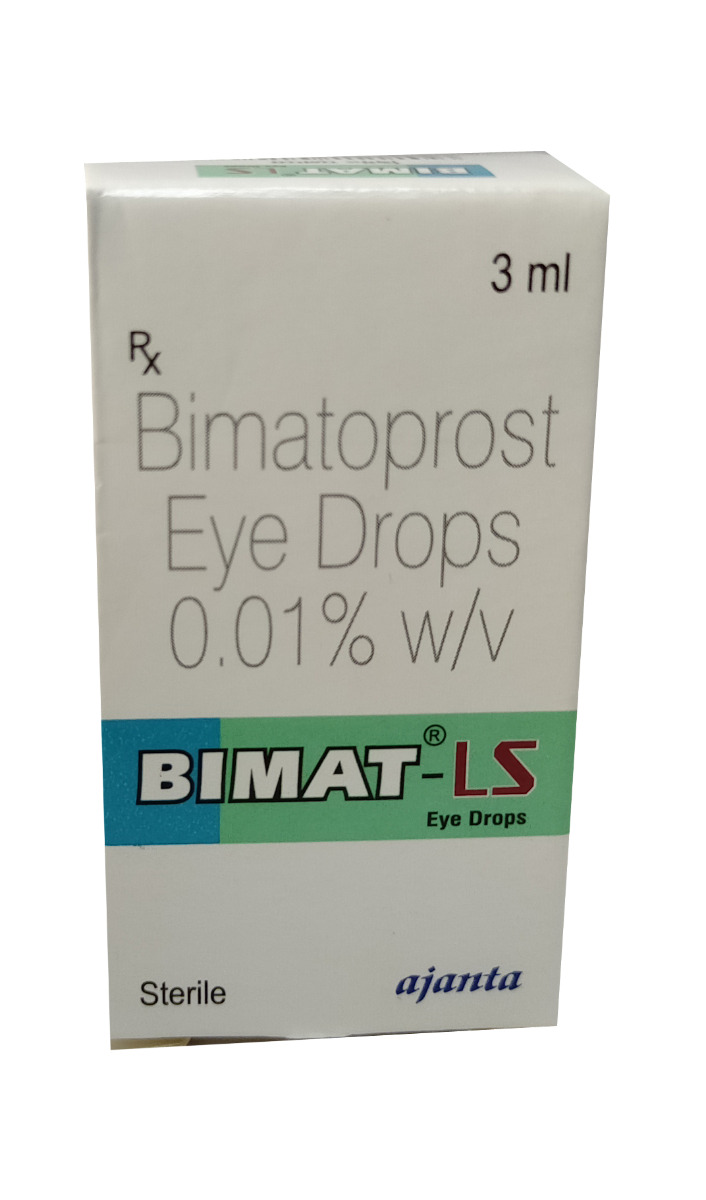
Bimat LS 3 ml 0.01%
Available Dosages
| SKU | 2381 |
|---|---|
| Generic For | Bimat |
| Strength | 0.01% |
| Manufacturer | Ajanta Pharma |
| Active Ingredient | Bimatoprost Ophthalmic Solution |


| Pack Size | Qty | Price Per Pill or Unit | Price | Cart | |
|---|---|---|---|---|---|
| 1 Bottle/s | US$ 17.00 | US$ 17.00 | |||
|
|||||
| 3 Bottle/s | US$ 14.00 | US$ 42.0018%US$ 51.00 | |||
|
|||||
| 6 Bottle/s | US$ 12.17 | US$ 73.0028%US$ 102.00 | |||
|
|||||

Bimat LS 0.01% (Bimatoprost Ophthalmic Solution) for Longer Eyelashes
Bimat LS 3 ml 0.1%
For adults who are suffering from open-angle glaucoma, ophthalmologist usually prescribes a prostaglandin analogue eye drop such as Bimat LS 3 ml 0.1 to reduce intraocular pressure (IOP). The medication contains Bimatoprost 0.01% lowers pressure by increasing the outflow of fluid from the eye. The eye drops treat the condition of ocular hypertension by helping open the drain. Normally, fluid is constantly being produced and drained out of the eye. In patients with ocular hypertension, fluid does not drain out of the eyes, which builds up pressure within the eye. Bimat eye drops increase the flow of fluid out of the eye. The ophthalmic solution begins to work within 4 hours after being instilled in the eye. Prostaglandin analogue drop is a first-line treatment as it works better than any other glaucoma medication available. The ophthalmic solution comes with minimal side effects, but locally cause redness or eyelash growth in patients. For best effects, used it daily under the guidance of an eye care specialist.
Bimat LS Bimatoprost 0.1% is an ophthalmic solution used to treat glaucoma and ocular hypertension by reducing intraocular pressure. It can also be used for eyelash growth (though typically, higher concentrations like 0.03% are used for cosmetic purposes).
Precautions
Make sure you use Bimat LS under the guidance of an eye care specialist. If your ophthalmologist has prescribed you Bimatoprost ophthalmic solution than he/she will want to examine you regularly to make sure whether the medication is working properly or not. In case, itching, swelling, or redness occur, talk to your eye doctor. These symptoms may indicate an allergic reaction towards Bimatoprost 0.1%. While receiving this prostaglandin analogue treatment, you may also notice that the iris of your treated eye may gradually become brown in colour. The change is more noticeable within several months or years. Also, the ophthalmic solution may make your lashes to grow longer darker and thicker. These changes to iris and eyelashes may be permanent even if you discontinue treatment.
Side Effects of Bimat LS 3 ml 0.1%?
Along with beneficial effects, Bimat LS may contribute to unwanted effects that are usually mild. Although not everyone who uses this prostaglandin analogue develops side effects, if they occur, talk to your eye doctor straight away. Check with your eye care specialist if you develop common side effects such as itching, redness, burning sensation, dry eyes, blurry vision, eye colour changes, long eyelashes, or vision changes. Most of these side effects do not need medical attention, and they may go during treatment as body adjusts to the drug.
Usage Instructions
Use Bimat LS 3 ml 0.1% as instructed by your ophthalmologist. Do not use it more than the suggested amount. The general dose of Bimatoprost ophthalmic solution is one drop in the affected eye. It should not be used for more than once daily, since using this eye drop more than once daily may reduce eth effects of the medication. For best results, it is important to use this ophthalmic solution as prescribed by your eye care specialist. To use Bimat LS ophthalmic formulation:
- Wash your hands before using the eye drops. Tilt your head and gently squeeze the bottle to instil one drop in the affected eye. Do not blink and close the eye. Keep them closed for about 1 to 2 minutes to allow the medicine to get absorbed by the eye.
- Remove the excess medication around the eye with a cotton swab or a tissue.
- After using the eye drops, immediately wash your hands to remove the medicine that may be on your hands.
- If you wear contact lens, the preservatives used in the Bimat LS drops may not be suitable for you. Make sure you remove contact lenses before you use this ophthalmic solution. You may put your lens back fifteen minutes after you have used the medicine.
What is Bimatoprost Ophthalmic Solution and what condition does it treat?
Bimatoprost Ophthalmic Solution is a prostaglandin analogue eye drop primarily used to treat elevated intraocular pressure in patients with open-angle glaucoma or ocular hypertension. Bimat LS 3 ml 0.01% contains bimatoprost as its active ingredient, which helps reduce pressure inside the eye by increasing the natural drainage of fluid. This glaucoma medication is also known for promoting eyelash growth, making it popular for cosmetic enhancement. By lowering eye pressure effectively, this ophthalmic solution helps prevent optic nerve damage and potential vision loss associated with chronic glaucoma.
How does Bimatoprost Ophthalmic Solution work in the body?
Bimatoprost Ophthalmic Solution works by mimicking natural prostaglandins in your body, which regulate fluid drainage from the eye. The active ingredient bimatoprost increases uveoscleral outflow, allowing excess aqueous humour to drain more efficiently through alternative pathways. This drainage mechanism reduces intraocular pressure within hours of application. Bimat LS 3 ml 0.01% binds to prostamide receptors in eye tissues, triggering biological changes that improve fluid circulation. Unlike some glaucoma treatments that reduce fluid production, this prostaglandin analogue focuses on enhancing natural drainage, making it effective for long-term pressure management in ocular hypertension and open-angle glaucoma patients.
How long does Bimat LS 3 ml 0.01% take to work?
Bimat LS 3 ml 0.01% begins lowering intraocular pressure within approximately four hours after the first application, with maximum pressure reduction occurring around eight to twelve hours post-dose. However, optimal therapeutic benefits typically develop after consistent daily use for several weeks. Most glaucoma patients notice measurable pressure improvements within one to two weeks of regular application. For those using bimatoprost ophthalmic solution for eyelash enhancement, visible cosmetic results generally appear after six to eight weeks, with full growth effects becoming evident after twelve to sixteen weeks of continuous treatment. Patience and adherence to prescribed dosing schedules are essential for this prostaglandin analogue to deliver sustained results.
When and how should I take Bimat LS 3 ml 0.01%?
Apply Bimat LS 3 ml 0.01% once daily, preferably in the evening, directly into the affected eye or along the upper eyelid margin if using for cosmetic purposes. Wash your hands thoroughly before application and remove contact lenses if worn. For glaucoma treatment, tilt your head back, pull down the lower eyelid, and instil one drop of bimatoprost ophthalmic solution into the conjunctival sac without touching the dropper tip to any surface. Blink gently and wipe away excess solution. Wait at least five minutes before applying other eye medications. Consistent timing each day maximizes this prostaglandin analogue's effectiveness in managing intraocular pressure.
Is Bimat LS 3 ml 0.01% safe for long-term use?
Bimat LS 3 ml 0.01% has been extensively studied and is generally considered safe for long-term use in managing chronic glaucoma and ocular hypertension when used as directed. Clinical trials have demonstrated sustained efficacy and tolerability over extended periods, with many patients using bimatoprost ophthalmic solution continuously for years. However, long-term application may cause gradual changes such as increased iris pigmentation or periorbital fat atrophy in some individuals. Regular ophthalmologic monitoring helps detect any ocular changes early. This prostaglandin analogue's safety profile makes it a preferred maintenance treatment, though individual responses vary and ongoing medical supervision ensures optimal outcomes.
Can I take Bimat LS 3 ml 0.01% with other medicines?
Bimat LS 3 ml 0.01% can typically be used alongside most systemic medications without significant interactions, as bimatoprost ophthalmic solution has minimal absorption into the bloodstream. However, combining it with other prostaglandin analogue eye drops is generally not recommended due to potential additive effects. If you're using multiple glaucoma medications or other ophthalmic preparations, space applications at least five to ten minutes apart to prevent dilution and ensure proper absorption. Certain anti-inflammatory eye drops may interact with this treatment. Always inform your healthcare provider about all medications, supplements, and eye products you're currently using to avoid complications and ensure the safe management of your ocular hypertension or glaucoma.
How does Bimat LS 3 ml 0.01% compare to similar medicines in its class?
Bimat LS 3 ml 0.01% belongs to the prostaglandin analogue class alongside medications like latanoprost and travoprost, all effective for lowering intraocular pressure. Bimatoprost often demonstrates slightly superior pressure-reducing efficacy compared to other prostaglandin analogues in clinical comparisons, making it particularly beneficial for patients requiring aggressive glaucoma management. Unlike beta-blockers or carbonic anhydrase inhibitors, this ophthalmic solution works through enhanced fluid drainage rather than reduced production. Bimat LS also offers the unique advantage of promoting eyelash growth, a cosmetic benefit not shared by most glaucoma treatments. Its once-daily dosing and sustained pressure control make it comparable in convenience while often outperforming alternatives in therapeutic outcomes.
Is the generic Bimatoprost Ophthalmic Solution as effective as branded versions?
Generic Bimatoprost Ophthalmic Solution like Bimat LS 3 ml 0.01% is therapeutically equivalent to branded versions such as Lumigan, delivering identical efficacy in reducing intraocular pressure and managing glaucoma. Regulatory authorities require generics to demonstrate bioequivalence, meaning they contain the same active ingredient concentration and produce comparable clinical effects. The primary differences lie in pricing and inactive ingredients, with generics offering significant cost savings without compromising treatment quality. Clinical studies confirm that generic bimatoprost formulations achieve similar pressure reductions and safety profiles as brand-name prostaglandin analogues. Patients switching from branded to generic versions typically experience seamless therapeutic continuity, making generics a smart, evidence-based choice.
Why do patients choose PremiumRxDrugs for Bimat LS 3 ml 0.01%?
Patients prefer PremiumRxDrugs for Bimat LS 3 ml 0.01% because here, we provide a combination of pharmaceutical authenticity with exceptional value and service. As a licensed pharmacy trusted for over ten years, PremiumRxDrugs guarantees genuine bimatoprost ophthalmic solution sourced directly from manufacturers. Customers benefit from competitive pricing that makes long-term glaucoma treatment more affordable, along with discreet packaging that protects privacy. The pharmacy's worldwide shipping network serves the USA, UK, Australia, Canada, and beyond, with free shipping options available. Easy prescription management and streamlined reordering simplify ongoing prostaglandin analogue therapy. This combination of reliability, affordability, convenience, and global accessibility makes PremiumRxDrugs the preferred choice for quality eye care medications.
What are the common side effects of Bimatoprost Ophthalmic Solution?
Common side effects of Bimatoprost Ophthalmic Solution include mild eye redness, itching, or a sensation of something in the eye, which typically diminish with continued use. Some patients experience gradual darkening of the iris, particularly those with mixed-colored eyes, and increased brown pigmentation of eyelid skin. Enhanced eyelash growth, including increased length, thickness, and darkness, is a frequent cosmetic effect. Temporary blurred vision immediately after application may occur. Less common reactions include dry eyes, eye discharge, or increased light sensitivity. Most adverse effects associated with this prostaglandin analogue are mild and localized to the eye area, rarely requiring discontinuation of glaucoma treatment.
Who should avoid taking Bimatoprost Ophthalmic Solution?
Bimatoprost Ophthalmic Solution should be avoided by individuals with known hypersensitivity to bimatoprost or any formulation components. Patients with active intraocular inflammation such as iritis or uveitis should not use this prostaglandin analogue until the condition resolves, as it may worsen inflammation. Those with compromised corneal integrity or after recent eye surgery should exercise caution and seek specialist guidance. Pregnant or breastfeeding women should discuss risks versus benefits with healthcare providers, as safety data in these populations remains limited. People with certain types of glaucoma, particularly angle-closure glaucoma, may require alternative treatments. Contact lens wearers should remove lenses before application and wait fifteen minutes before reinsertion.
Login
Sign Up
Login
Sign Up