




Glycomet GP (500+1) mg
Available Dosages
| SKU | 656 |
|---|---|
| Generic For | Glycomet GP |
| Strength | (500+1)mg |
| Manufacturer | US Vitamin |
| Active Ingredient | Metformin + Glimepiride |


| Pack Size | Qty | Price Per Pill or Unit | Price | Cart | |
|---|---|---|---|---|---|
| 30 Tablet/s | US$ 0.23 | US$ 6.89 | |||
|
|||||
| 60 Tablet/s | US$ 0.23 | US$ 13.77 | |||
|
|||||
| 90 Tablet/s | US$ 0.23 | US$ 20.66 | |||
|
|||||

Glycomet GP (500+1) mg (Metformin + Glimepiride) for Type 2 Diabetes
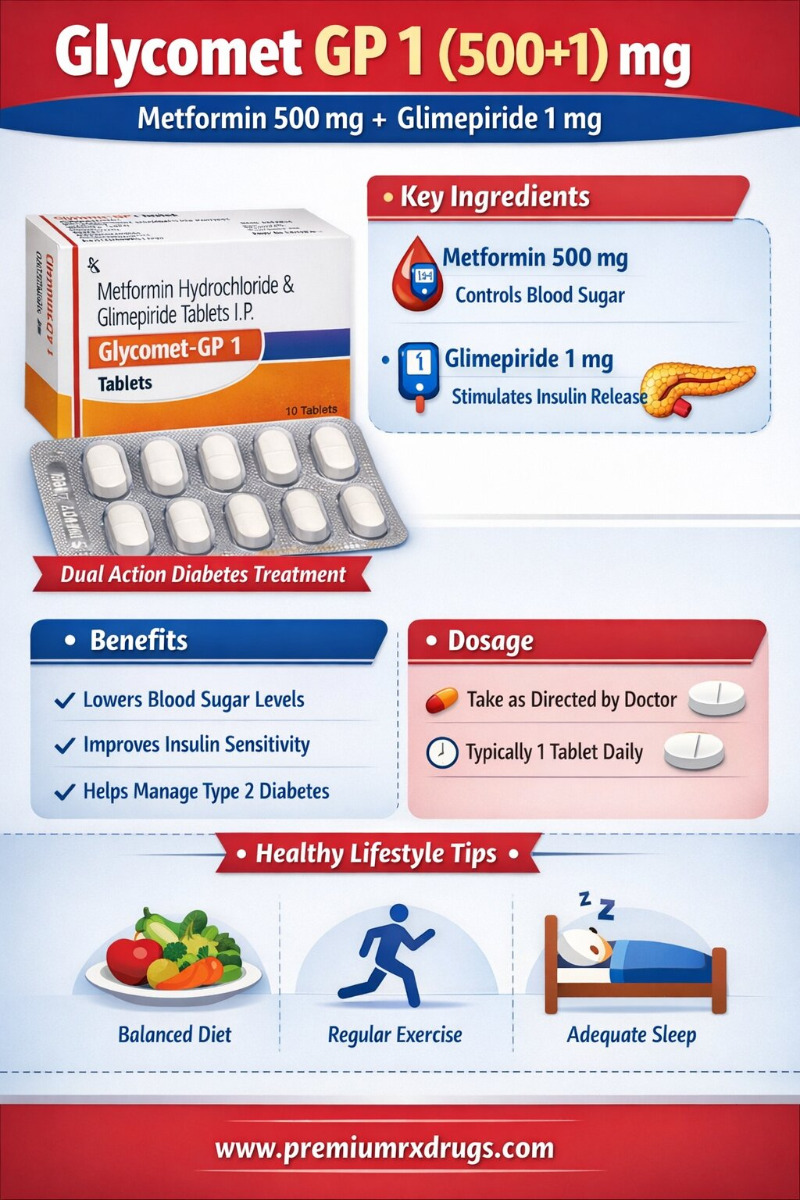
Glycomet GP (500+1)mg is an oral antidiabetic medicine that is used to treat type-2 diabetes and limited cases of type-1 diabetes. This medicine contains two main active ingredients: Glimepiride 1 mg and Metformin 500mg. The combination medicine increases and promotes insulin using pancreatic beta cells in your body. This ingredient can also improve body cells' sensitivity to insulin.
In other words, Metformin can suppress glucose production by the liver, and Glimepiride is an oral hypoglycemic medicine that promotes insulin production from pancreatic beta cells.
Glycomet GP (500+1)mg uses
When taken per regimen, Glycomet-GP 1 tablet, the antidiabetic medication, can considerably lower blood sugar levels over time. This drug is combined with other medicines to treat diabetes, but your doctor can determine the appropriate dosage. This drug must be supported with a well-balanced, calorie-controlled diet comprising healthy fruits and vegetables. Remember that this medicine can only control diabetes, not cure it.
How does glycomet GP (500+1) mg tablet work?
Metformin hydrochloride, the active ingredient of Glycomet GP, can decrease high blood glucose/hyperglycemia and help your body efficiently utilize insulin released by the pancreas. Moreover, Metformin decreases hepatic gluconeogenesis and, at the same time, decreases intestinal absorption of glucose.
Another active ingredient, Glimepiride, ties along with the potassium channel and depolarizes the membrane. Thereafter, it activates calcium-iron inflow and induces insulin secretion. It can also stimulate the insulin release from functioning pancreatic β-cells and inhibit gluconeogenesis in hepatic cells. Both the ingredients can increase insulin sensitivity to cure type-2 and type-1 (insulin-dependent) diabetes. Metformin is also known to treat the complications of cardiovascular diabetes.
Safety precautions with Glimepiride 1mg and Metformin 500mg tablet
Glycomet GP may interact with some drugs, such as cimetidine, glucocorticosteroids, corticosteroids, tetracosactrin, warfarin, danazol, diuretics, and sulphonylurea.
Apart from these, this medicine's administration with propranolol may increase Cmax, AUC, and T1/2 of Glimepiride. Moreover, coumarins, probenecid, MAOs, salicylates, sulfonamides, chloramphenicol, and beta blockers can change the hypoglycemic action of Glimepiride. Furosemide also increases the Cmax of Metformin.
Glycomet GP 1mg should not be used in patients with known hypersensitivity to Glimepiride, Metformin, or any of the formulation's ingredients. Also, inform your doctor about your existing ailments and the medicine/supplements you may be taking. Pregnant and breastfeeding women should inform their doctor about their physical state for the safe usage of this medicine.
Store Glycomet GP in a cool and dry place, and keep it away from pets and children as it can harm them.
Side effects of Glimepiride 1mg and Metformin 500mg tablet
Some common side effects of this medicine include:
- Vomiting
- Diarrhea
- Metallic taste
- Rash
- Allergic skin reactions
- Leukopenia
- Hemolytic anemia
- Photosensitivity reactions
- Isolated transaminase elevations
- Aplastic anemia
- Cholestatic jaundice
- Agranulocytosis
- Thrombocytopaenia
- Pancytopenia
- Blurred vision
Another side effect is the buildup of lactic acidosis in the body, which could be potentially fatal if you leave it unattended. You have to discuss with your doctor if any side effects of the medicine are affecting your health or bothering you.
Usage instructions of Glimepiride 1mg and Metformin 500mg tablet
Glycomet GP (500+1)mg dosage for adults varies from patient to patient, depending on their health condition. The tablet is given once or twice daily. Its dosage should not be more than 1000 mg. The medication course should be continued as recommended by your doctor. Take the tablet with a glass of water after having food. If you have missed a dose, you can consume it the next day in less than an hour of your routine meal. Never double up the dose to compensate for missed doses' damage.
What is Glycomet GP 500+1mg used for?
Glycomet GP 500+1mg is a fixed-dose combination tablet containing metformin 500mg and glimepiride 1mg, used for type 2 diabetes management in adults. It combines metformin's mechanisms — reducing hepatic glucose output and improving peripheral insulin sensitivity — with glimepiride's insulin-secretion stimulation, providing complementary dual-mechanism glucose control. The low 1mg glimepiride dose alongside metformin makes this formulation suitable for patients starting combination therapy or those at higher risk of hypoglycaemia.
How does the metformin and glimepiride combination work better than either alone?
Metformin reduces fasting blood glucose by suppressing hepatic gluconeogenesis and improving insulin sensitivity in muscle and fat. Glimepiride stimulates pancreatic insulin secretion to handle post-meal glucose spikes. Together, they address both fasting and post-prandial hyperglycaemia through different mechanisms, producing additive HbA1c reduction. Clinical trials show the combination reduces HbA1c by 1.5–2.5% — greater than either drug alone. The single fixed-dose tablet improves adherence vs. taking two separate medications.
How and when should Glycomet GP 500+1mg be taken?
Glycomet GP 500+1mg is taken once or twice daily with meals — typically with the first main meal. Taking with food reduces metformin's GI side effects and synchronises glimepiride's insulin stimulation with carbohydrate ingestion. Do not take on an empty stomach. If twice-daily dosing is prescribed, take morning and evening with meals. Swallow whole with water. Never crush or chew the tablet. Blood glucose monitoring guides the twice-daily vs. once-daily decision.
How long does Glycomet GP 500+1mg take to achieve HbA1c goals?
HbA1c improvement from combination metformin/glimepiride therapy is measurable at 8–12 weeks and reaches full effect by 3–6 months. Patients typically see fasting blood glucose improvements within 1–2 weeks of starting. The HbA1c reduction with this combination is usually 1.0–2.5% depending on baseline. HbA1c should be measured at baseline, 3 months, then every 6 months. If HbA1c targets are not met at 3–6 months, dose escalation (to 500+2mg or higher) or adding a third agent is considered.
What are the risks of low blood sugar with Glycomet GP 500+1mg?
Hypoglycaemia risk comes primarily from the glimepiride 1mg component. At this low dose, severe hypoglycaemia is uncommon but possible, especially if meals are skipped, alcohol is consumed, or additional glucose-lowering medications are taken. Metformin alone does not cause hypoglycaemia. Symptoms of low blood sugar — trembling, sweating, confusion, hunger — require immediate treatment with fast-acting glucose. Always carry glucose tablets when taking any sulfonylurea-containing combination.
Who should not take Glycomet GP 500+1mg?
Contraindications include type 1 diabetes, DKA, severe renal impairment (eGFR <30 ml/min — both metformin and glimepiride are contraindicated), significant hepatic impairment, congestive heart failure requiring pharmacological treatment, pregnancy, and breastfeeding. Metformin must be withheld before procedures using iodinated contrast media. Sulfonamide hypersensitivity contraindicates the glimepiride component. Patients with irregular meal patterns are at higher hypoglycaemia risk.
How does Glycomet GP 500+1mg compare to sitagliptin + metformin combinations?
Glycomet GP (metformin + glimepiride) and Istamet (metformin + sitagliptin) are both dual oral combination therapies for type 2 diabetes. Glycomet GP causes more hypoglycaemia and modest weight gain (glimepiride effect). Istamet has minimal hypoglycaemia risk and is weight-neutral. HbA1c reduction is similar or slightly greater with Glycomet GP. Glycomet GP is substantially cheaper. Istamet is preferred when hypoglycaemia risk must be minimised (elderly, variable meal patterns). Both are effective options depending on patient profile.
Is Glycomet GP the same as Amaryl M 500/1mg?
Glycomet GP 500+1mg and Amaryl M 500/1mg both contain metformin 500mg and glimepiride 1mg in a fixed-dose combination tablet. They are manufactured to bioequivalence standards with equivalent glucose-lowering efficacy. Glycomet GP is a widely trusted generic formulation available at significantly lower cost than branded Amaryl M, making combination diabetes therapy more accessible.
Can I order Glycomet GP 500+1mg from PremiumRxDrugs for international delivery?
Yes. PremiumRxDrugs.com ships Glycomet GP 500+1mg to the USA, UK, Australia, and many countries worldwide. Our genuine manufacturer-verified diabetes medications, transparent pricing, and free worldwide shipping on qualifying orders make us a reliable pharmacy for patients requiring affordable fixed-dose combination diabetes therapy.
What side effects does Glycomet GP 500+1mg commonly cause?
Metformin-related GI side effects are most common initially — nausea, vomiting, diarrhoea, and abdominal discomfort — typically improving after 2–4 weeks and minimised by taking with food. Glimepiride contributes hypoglycaemia risk and modest weight gain. Metallic taste from metformin is occasionally reported. Rare but serious risks include lactic acidosis (metformin, typically in patients with renal impairment) and haematological effects from glimepiride. Long-term metformin use may cause vitamin B12 deficiency — annual B12 monitoring is recommended.
What precautions should I take with Glycomet GP 500+1mg?
Take with meals — never on an empty stomach. Carry glucose for hypoglycaemia emergencies. Withhold metformin before iodinated contrast procedures and restart 48 hours post-procedure when renal function is confirmed normal. Monitor eGFR at least annually. Limit alcohol. Report any muscle weakness, unusual tiredness, or breathing difficulty — these could indicate lactic acidosis (rare). Annual vitamin B12 levels are recommended. Inform your doctor of all new medications to check for interactions with glimepiride.
Login
Sign Up
Login
Sign Up