




Glycomet GP (500+2)mg
Available Dosages
| SKU | 657 |
|---|---|
| Generic For | Glycomet GP |
| Strength | (500+2)mg |
| Manufacturer | US Vitamin |
| Active Ingredient | Metformin + Glimepiride |


| Pack Size | Qty | Price Per Pill or Unit | Price | Cart | |
|---|---|---|---|---|---|
| 30 Tablet/s | US$ 0.34 | US$ 10.14 | |||
|
|||||
| 60 Tablet/s | US$ 0.34 | US$ 20.28 | |||
|
|||||
| 90 Tablet/s | US$ 0.34 | US$ 30.40 | |||
|
|||||

Glycomet GP (500+2)mg (Metformin + Glimepiride) for Type 2 Diabetes
Glycomet GP (500+2)mg is a combination oral medication for type 2 diabetes and contains two active ingredients: Metformin and Glimepiride. It is sold under several trade names worldwide, some of which are Glycomet GP manufactured by US Vitamin. Metformin and Glimepiride medication controls blood sugar levels by helping the body absorb glucose efficiently and properly respond to insulin, a hormone secreted by the pancreas crucial to glucose absorption in the body. Metformin+Glimepiride gp 2 is a prescription medicine that should be taken per regimen to achieve the desired results. Glycomet GP 2 is not prescribed for type 1 diabetes.
Safety precautions with Glycomet GP (500+2)mg
You must not take Glycomet GP (500+2)mg if you are allergic to its active ingredient Metformin, Glimepiride, or to any sulfa drugs if you have heart, liver, or kidney disease; suppressed enzymes (G6PD); abnormally functioning pituitary or adrenal glands and related problems; or if you are under-nourished.
Metformin and Glimepiride medication must also not be taken if you are suffering from diabetic ketoacidosis (a condition in which the body lacks insulin and uses fats instead of glucose for energy purposes, resulting in ketones in the body).
You may be required to temporarily suspend Metformin Glimepiride medication if you are scheduled for the X-ray or CT Scan test and require a dye to be injected intravenously. Lactic acidosis has been observed in some people who take Metformin. Visit a clinic if you experience symptoms of lactic acidosis such as muscle pain or weakness, numb or cold feeling in your limbs, breathing trouble, pain, nausea with vomiting, slow or irregular heartbeat, dizziness, overall weakness, or lethargy. Early symptoms may deteriorate and can turn fatal. So be careful and ask your doctor for more details on it.
It is not known if Metformin and Glimepiride can be harmful to pregnant or breastfeeding women. Inform your doctor about it if you are any of these.
Interaction with other drugs
Before taking Glycomet GP let your doctor know if you are already taking these medications: nifedipine, cimetidine, ranitidine, albuterol; clonidine; reserpine; beta blockers like carvedilol, labetalol, atenolol, or others; furosemide, digoxin, vancomycin, quinidine, vancomycin, trimethoprim, quinine, morphine, or amiloride. They can interfere with Metformin and Glimepiride and may obstruct your treatment.
You may get hypoglycemia (low blood sugar) if you take Metformin and Glimepiride with these medications: exenatide; some nonsteroidal anti-inflammatory drugs; aspirin or other salicylates; exenatide; sulfa drugs; a monoamine oxidase inhibitor; other oral diabetes medications like acarbose, miglitol, rosiglitazone or others.
For safe usage of any drug, it is important to inform your doctor about your existing ailments and the medicine /supplements you are taking to treat them. Doing this will help avoid most drug interactions causes.
Side effects of Glycomet GP (500+2)mg
Get emergency medical attention if you witness allergic reactions to Glycomet GP, like hives, breathing difficulty, or facial, lips, tongue, or throat swelling. This medication may lead to lactic acidosis (excessive levels of lactic acid in your body, which can be dangerous). Lactic acidosis may be mild initially, but it can become dangerous gradually if not controlled.
Seek emergency medical help if you have the following symptoms with this medicine: chills, muscle pain, breathing shortness, light-headed feeling, feeling like you may pass out, stomach ache, increased sleepiness, reduced heart rate, bloody, dark or painful urination; increased urination; dark brown clay-colored stools; bloating; unexplained weight gain; pain in chest; nausea; itching on upper stomach; unexpected appetite changes; pale skin; easy bruising or bleeding; or increased thirst or hunger.
Some common side effects of this medicine include headache, mild nausea, weakness, vomiting, diarrhea, gas, or stomach pain. The side effects mentioned in this guide are not a complete set of side effects you may experience due to this medication.
Usage instructions of Metformin and Glimepiride tablet
Take Metformin and Glimepiride medication (Glycomet GP (500+2)mg usage) strictly as your doctor advises. Don’t alter the course of the medication in any way, either by amount or duration. Your doctor may advise you to change Metformin and Glimepiride doses sometimes to ensure the best diabetes management. You may also be required to suspend your medication temporarily if you are scheduled for surgery or have an illness or an infection.
Metformin medication will not control your diabetic problems single-handedly. You have to maintain a strict diet, exercise, and weight control measures and may also require other medications. Going slack in any of these can result in your condition going out of control and be dangerous.
Monitor your blood sugar levels while taking Metformin and Glimepiride. Your doctor may often suggest undergoing blood tests to monitor your progress closely.
After properly examining your conditions, your doctor will prescribe a Glycomet GP (500+2)mg dosage. Dosage may change from patient to patient. Always follow your doctor’s directions and stick to what
What is Glycomet GP 500+2mg used for?
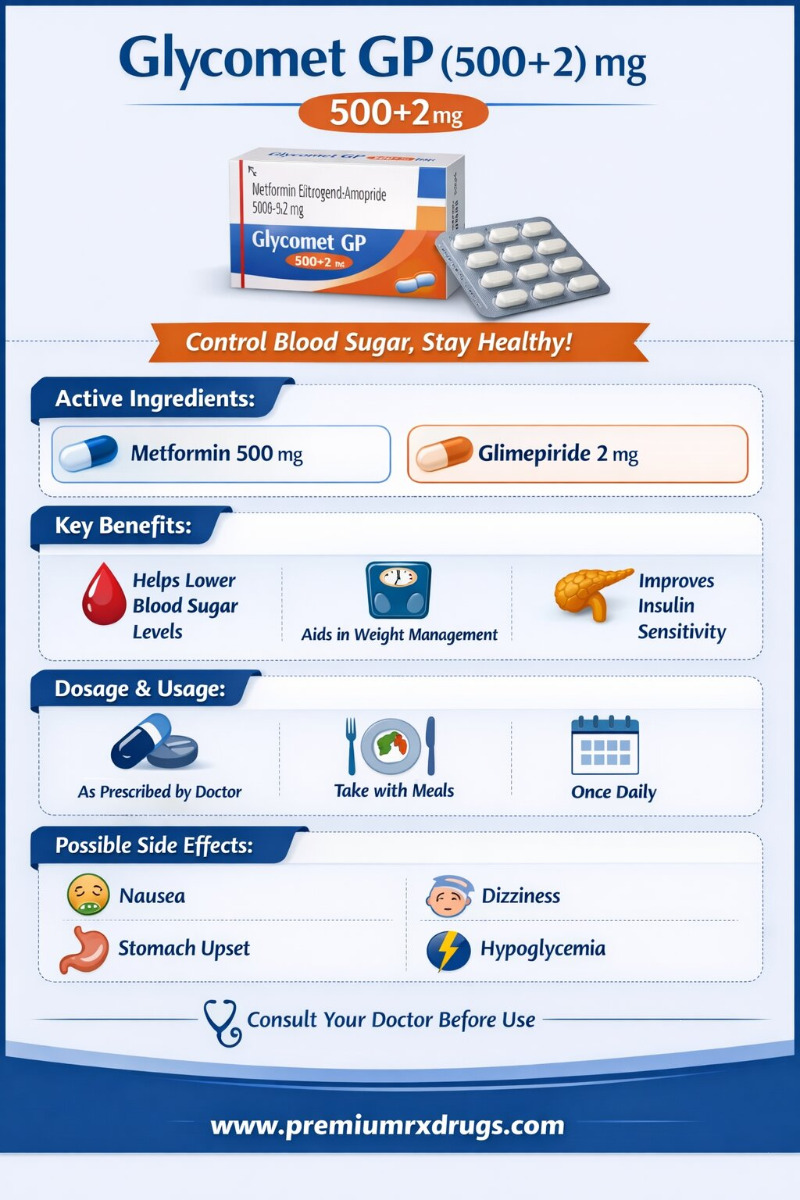
Glycomet GP 500+2mg combines metformin 500mg and glimepiride 2mg in a single tablet for type 2 diabetes management. This formulation is appropriate when the 1mg glimepiride dose provides insufficient HbA1c reduction, or when moderate insulin secretory stimulation is required alongside metformin. The 2mg glimepiride dose provides meaningful additional HbA1c reduction while remaining below the higher-risk 4mg dose, making it a well-balanced option for most adults with moderately uncontrolled type 2 diabetes.
How is 500+2mg different from 500+1mg in terms of blood glucose control?
The metformin 500mg component is identical in both formulations. The difference is glimepiride: 2mg provides approximately 0.5–1.0% additional HbA1c reduction compared to 1mg in most patients. At 2mg, sulfonylurea-stimulated insulin secretion is meaningfully higher, particularly controlling post-prandial glucose rises. The hypoglycaemia risk is moderately higher than with 1mg. This formulation is typically a step-up from 500+1mg when glycaemic targets are not met after 4–8 weeks of the lower dose.
How should Glycomet GP 500+2mg be taken?
Glycomet GP 500+2mg is taken once or twice daily with meals, as prescribed. The most common regimen is twice daily — morning and evening meals — providing both fasting and post-prandial glucose control throughout the day. Consistent meal timing with the dose is essential to match glimepiride's insulin stimulation to carbohydrate intake. Do not take the dose if you are skipping a meal. Swallow whole with water. Take metformin-containing medications at the same time each day.
How long does Glycomet GP 500+2mg take to improve HbA1c?
The combined metformin/glimepiride 2mg effect on HbA1c becomes measurable within 4–8 weeks and reaches full effect at 3 months. Patients often notice improved fasting glucose readings within 1–2 weeks of starting. A full 3-month HbA1c assessment is the primary measure of response. If the HbA1c target is not reached after 3 months on 500+2mg, options include increasing glimepiride to 4mg, adding metformin dose, or adding a third agent such as sitagliptin, pioglitazone, or an SGLT2 inhibitor.
Is Glycomet GP 500+2mg safe in patients with mild kidney disease?
Mild renal impairment (eGFR 45–60 ml/min, CKD stage 2–3a) requires caution. Metformin is generally safe to continue until eGFR falls below 45 ml/min (reduce dose) or 30 ml/min (stop). Glimepiride should be used with caution in CKD as reduced renal clearance prolongs drug action and increases hypoglycaemia risk. In CKD stage 3 (eGFR 30–60), more frequent blood glucose monitoring is required and dose reduction may be appropriate. Regular eGFR monitoring every 6 months is recommended.
What interactions increase hypoglycaemia risk with Glycomet GP 500+2mg?
The glimepiride component's hypoglycaemic effect is significantly enhanced by: NSAIDs (ibuprofen, naproxen), fluconazole and other azole antifungals, ciprofloxacin and other fluoroquinolones, ACE inhibitors, beta-blockers (can mask hypoglycaemia symptoms), and fibrates. New antibiotics or antifungals started during diabetes treatment should prompt blood glucose monitoring for 7–10 days. The metformin component does not cause hypoglycaemia independently.
How does Glycomet GP 500+2mg compare to Trajenta Met (linagliptin/metformin)?
Glycomet GP 500+2mg (metformin + glimepiride 2mg) and Trajenta Met (linagliptin + metformin) are both fixed-dose dual combinations. Glycomet GP provides greater HbA1c reduction potential (sulfonylureas produce stronger insulin secretion) but causes hypoglycaemia and weight gain. Trajenta Met is weight-neutral, has minimal hypoglycaemia risk, and is suitable for older patients or those with irregular meal patterns. Glycomet GP is significantly cheaper. Trajenta Met is preferred when tolerability is the priority.
Is Glycomet GP 500+2mg equivalent to Amaryl M 500/2mg?
Yes. Glycomet GP 500+2mg and Amaryl M 500/2mg both contain metformin 500mg and glimepiride 2mg and are manufactured to bioequivalence standards. They deliver identical glycaemic control outcomes. Glycomet GP is the affordable generic formulation providing the same therapeutic quality as branded Amaryl M at substantially lower cost — making it an excellent option for patients on long-term dual therapy for type 2 diabetes.
Can I order Glycomet GP 500+2mg from PremiumRxDrugs for delivery to Canada?
Yes. PremiumRxDrugs.com ships Glycomet GP 500+2mg to the USA, UK, Australia, and many other countries. Our genuine manufacturer-verified diabetes medications, competitive pricing, and free worldwide shipping on qualifying orders make us a trusted international pharmacy for dual-agent oral diabetes therapy.
What are the common side effects of Glycomet GP 500+2mg?
GI side effects from metformin — nausea, diarrhoea, vomiting, bloating — are most common in the first 2–4 weeks and diminish significantly when taken with food. Glimepiride 2mg contributes modest hypoglycaemia risk and weight gain (1–3 kg over 6 months). Metallic taste, rare in metformin users, may occur. Long-term: vitamin B12 deficiency (metformin), and rare haematological effects (glimepiride). Lactic acidosis from metformin is extremely rare when used within approved renal function thresholds.
What precautions are important when using Glycomet GP 500+2mg?
Take with meals without exception — metformin GI effects worsen on empty stomach, and glimepiride hypoglycaemia risk increases if meals are skipped. Carry glucose for low blood sugar epiSodiumes. Withhold metformin 24–48 hours before any contrast-enhanced radiology procedure and restart when renal function is confirmed stable. Monitor eGFR annually. Avoid excess alcohol. Check B12 levels annually after 3 years of metformin use. Alert your doctor to any new medications, particularly antibiotics and antifungals.
Login
Sign Up
Login
Sign Up