




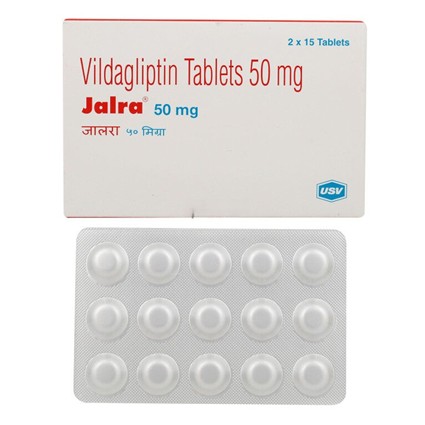
Jalra 50mg Tablet
| SKU | 2757 |
|---|---|
| Generic For | Vidagliptin |
| Manufacturer | USV Pvt. Ltd, India |
| Active Ingredient | Vidagliptin |


| Pack Size | Qty | Price Per Pill or Unit | Price | Cart | |
|---|---|---|---|---|---|
| 30 Tablet/s | US$ 0.73 | US$ 22.00 | |||
|
|||||
| 60 Tablet/s | US$ 0.67 | US$ 40.009%US$ 44.00 | |||
|
|||||
| 90 Tablet/s | US$ 0.67 | US$ 60.009%US$ 66.00 | |||
|
|||||

Jalra 50mg Tablet | Buy Generic Vildagliptin Online
Jalra 50 mg tablet is a prescription oral medicine prescribed to manage blood sugar levels in adults suffering from type 2 diabetes mellitus. The medicine contains Vildagliptin 50 mg as its active ingredient, an antidiabetic agent in the DPP-4 inhibitor class, also known as gliptins. Jalra 50 mg helps control both fasting and after-meal blood sugar levels and can be used on its own or in combination with other diabetes medicines such as metformin, sulfonylureas, or insulin, as recommended by your doctor.
Key Highlights at a Glance
|
Brand Name |
Jalra 50 mg |
|
Generic Name |
Vildagliptin 50 mg |
|
Drug Class |
DPP-4 Inhibitor (Antidiabetic / Gliptin) |
|
Dosage Form |
Oral Tablet |
|
Pack Size |
15 tablets per strip |
|
Primary Use |
Management of Type 2 Diabetes Mellitus in Adults |
|
Prescription |
Required |
|
Alternatives (PremiumRxDrugs) |
What Is Jalra 50 mg Tablet?
Jalra 50 mg is a prescription diabetes tablet that belongs to a group of medicines called DPP-4 inhibitors (dipeptidyl peptidase-4 inhibitors), commonly referred to as gliptins. This class of medicines represents one of the most significant advances in type 2 diabetes treatment over the last two decades, offering a smarter way to manage blood sugar by working with the body's own hormonal system rather than forcing the pancreas to produce more insulin regardless of blood sugar levels.
Unlike older diabetes medicines such as sulfonylureas, vildagliptin only stimulates insulin release when blood sugar is actually elevated — for example, after a meal. This glucose-dependent action means the risk of hypoglycaemia (dangerously low blood sugar) is much lower compared to older drug classes. Jalra 50 mg is available as a standalone tablet and is also formulated in combination with metformin (the Jalra-M range) for patients who need additional blood sugar control.
Jalra 50 mg is not a cure for diabetes. It is a long-term management tool that works best when combined with a healthy diet, regular physical activity, and lifestyle changes as advised by your doctor.
Uses of Jalra 50 mg Tablet
Doctors prescribe Jalra 50 mg tablet for the following:
- Type 2 diabetes mellitus: The primary use of Jalra 50 mg is to manage blood sugar levels in adults with Type 2 Diabetes, either as a first-line treatment or as an add-on when other medicines are not providing enough control.
- Monotherapy: Jalra 50 mg can be used alone in patients for whom metformin is not suitable or tolerated, in combination with an appropriate diet and exercise.
- As combination therapy with Metformin: One of the most common uses of Jalra is in combination with metformin for patients whose blood sugar is not adequately controlled by metformin alone. The Jalra-M combination tablets (50/500, 50/850, 50/1000) are available for this purpose.
- As an add-on with a sulfonylurea: Jalra 50 mg can be added to a sulfonylurea (such as glibenclamide or glipizide) when blood sugar control is insufficient.
- As an add-on to insulin: In patients already using insulin, Jalra 50 mg can be prescribed to improve overall blood sugar control, especially post-meal glucose spikes.
- Lowering HbA1c: Jalra 50 mg helps reduce HbA1c — the key long-term measure of blood sugar control — which in turn lowers the risk of diabetes complications such as nerve damage, kidney disease, and eye problems.
How Does Jalra 50 mg Work?
To understand how Jalra 50 mg works, it helps first to understand how your body normally controls blood sugar after eating.
When you eat a meal, your small intestine releases natural hormones called incretins — the two main ones are GLP-1 (glucagon-like peptide-1) and GIP (glucose-dependent insulinotropic polypeptide). These incretin hormones do two very important jobs: they signal the pancreas to release more insulin (which lowers blood sugar), and they tell the pancreas to reduce the release of glucagon (a hormone that raises blood sugar by releasing stored glucose from the liver).
However, incretins are fragile. The body breaks them down within minutes using an enzyme called DPP-4 (dipeptidyl peptidase-4). In people with Type 2 Diabetes, the incretin system does not work as efficiently as it should, which means less insulin is produced after meals and blood sugar stays elevated for longer.
This is where Jalra 50 mg steps in. Vildagliptin, the active ingredient, works by blocking the DPP-4 enzyme. When DPP-4 is inhibited, incretin hormones remain active in the bloodstream for longer. The result is:
- More insulin is released from the pancreas in response to meals — precisely when it is needed
- Less glucagon is released, so the liver does not dump excess glucose into the bloodstream
- After-meal blood sugar spikes are reduced
- Fasting blood sugar levels are also improved over time
Because this process only happens when blood sugar is actually high (after eating), Jalra 50 mg has a built-in safety advantage — it is far less likely to cause dangerously low blood sugar (hypoglycaemia) than older diabetes medicines that force insulin release regardless of blood sugar levels.
Why Buy Jalra 50 mg from PremiumRxDrugs?
Managing type 2 diabetes is a long journey, and having a trustworthy pharmacy by your side makes all the difference in helping you manage your health smartly. PremiumRxDrugs.com has been a licensed online pharmacy since 2002, serving patients worldwide with authentic, affordable prescription medicines.
Here is why thousands of diabetes patients trust us for their monthly refills:
The website ships 100% authentic diabetes medicines, offers discreet packaging, free shipping on qualifying orders, competitive & transparent pricing, a licensed & trusted platform, dedicated customer support, and much more.
Warnings and Precautions
- Liver function monitoring: Liver enzymes should be checked before starting Jalra 50 mg and periodically during treatment (typically every 3 months for the first year). Inform your doctor immediately if you develop symptoms of liver disease.
- Kidney disease: Jalra 50 mg can be used in mild kidney impairment, but dose adjustment may be needed in moderate to severe kidney disease. Your doctor will assess your kidney function before prescribing.
- Heart failure: Use Jalra 50 mg with caution if you have a history of heart failure, particularly severe (NYHA Class III or IV). Discuss your heart health history fully with your doctor.
- Hypoglycaemia (low blood sugar): When Jalra is combined with insulin or a sulfonylurea, the risk of hypoglycaemia increases. Know the signs — trembling, sweating, confusion, rapid heartbeat, or feeling faint — and keep a fast-acting sugar source (like glucose tablets or juice) with you.
- Pancreatitis: If you develop persistent, severe abdominal pain that radiates to your back, contact your doctor immediately. DPP-4 inhibitors have been associated with a small risk of pancreatitis.
- Not for Type 1 Diabetes or DKA: Jalra 50 mg is only for Type 2 Diabetes. It must not be used to treat Type 1 Diabetes or diabetic ketoacidosis (DKA).
- Pregnancy and breastfeeding: Jalra 50 mg is not recommended during pregnancy or breastfeeding. Women with diabetes who are pregnant or planning pregnancy should discuss suitable alternatives with their doctor.
- Children and adolescents: Jalra 50 mg has not been studied in patients under 18 years of age and is not recommended for this age group.
Drug Interactions
Always tell your doctor and pharmacist about all medicines, vitamins, supplements, and herbal products you are currently taking. Jalra 50 mg may interact with insulin, sulfonylureas, corticosteroids (steroids), diuretics (water tablets), beta blockers, ACE inhibitors, and other antidiabetic medicines.
Contraindications — Who Should NOT Take Jalra 50 mg?
Do not take Jalra 50 mg if you:
- Have type 1 diabetes mellitus — Jalra is only approved for type 2 diabetes
- Have diabetic ketoacidosis (DKA) — a serious condition requiring immediate medical treatment
- Have severe liver impairment or active liver disease
- Are allergic to vildagliptin or any other ingredient in the tablet
- Are under 18 years of age
- Are pregnant or breastfeeding — consult your doctor about safer alternatives for managing diabetes during pregnancy.
Storage instructions: Store at room temperature or as directed on the packaging. Keep away from direct sunlight and moisture. Store in a dry place, out of reach of children. Do not use after the expiry date printed on the strip or carton.
Possible Side Effects with Jalra 50mg
Jalra 50 mg is generally well tolerated. Most people experience few or no side effects. However, like all medicines, it can cause side effects in some people.
Common side effects (may affect up to 1 in 10 people): Nausea, dizziness, headache, joint pain (arthralgia), fatigue, and constipation. These are usually mild and often settle on their own within a few weeks.
Less common side effects: Upper respiratory tract infections (cold-like symptoms such as a runny nose or sore throat), swelling of the hands or feet (peripheral oedema), and low blood sugar (hypoglycaemia) — particularly when Jalra is used with insulin or a sulfonylurea.
Serious side effects — contact your doctor immediately: Liver problems — symptoms include yellowing of the skin or whites of the eyes (jaundice), dark-coloured urine, persistent nausea or vomiting, or pain in the upper right part of the abdomen. Inflammation of the pancreas (pancreatitis) — symptoms include severe, persistent stomach pain that may spread to the back. Severe skin reactions or unusual blistering of the skin (a rare condition called bullous pemphigoid).
Report any unusual or persistent symptoms to your doctor. Never ignore signs of liver problems or pancreatitis, as early action is important.
Dosage and How to Take Jalra 50 mg
Always follow your doctor's prescription. Do not adjust your dose without medical advice. General dosing guidelines are:
- As monotherapy or with Metformin / TZDs (thiazolidinediones): The usual dose is 50 mg twice daily — one tablet in the morning and one in the evening. Some doctors may prescribe 100 mg once daily—always follow your doctor's specific instructions.
- As an add-on to insulin or a sulfonylurea: The usual dose is 50 mg once daily. This lower frequency reduces the risk of hypoglycemia when combined with insulin or a sulfonylurea.
Jalra 50 mg can be taken with or without food with a glass of water. Swallow the tablet whole and do not chew or crush it. Try to take your medicine at the same time each day to maintain a steady medicine level in the body. If you miss a dose, take it when you remember. If the next dose is near, skip the missed dose and continue with the schedule. Keep taking the medicine for the prescribed period; do not stop the treatment in between without consulting your doctor, even if you achieve the desired results.
What is Jalra 50mg Tablet used for?
Jalra contains Vildagliptin, a DPP-4 inhibitor used alongside diet and exercise — and often other diabetes medicines — to improve blood sugar control in adults with type 2 diabetes.
How does Vildagliptin work?
It inhibits the DPP-4 enzyme, increasing levels of incretin hormones that stimulate insulin release and reduce excess glucose production by the liver, particularly after meals.
How is it usually taken?
Typically taken twice daily (morning and evening), with or without food, exactly as prescribed — dosing may vary if combined with other diabetes medications
What if a dose is missed?
Take it as soon as you remember unless it's almost time for the next dose, in which case skip the missed one. Do not double up.
What are the common side effects?
Dizziness, headache, and mild gastrointestinal symptoms are commonly reported. When combined with certain other diabetes drugs, there may be a higher risk of low blood sugar (hypoglycemia).
What precautions should be taken?
People with liver problems should use this medicine with caution, as it isn't generally recommended in significant hepatic impairment. Regular liver function monitoring may be advised. It's not intended for type 1 diabetes or diabetic ketoacidosis.
Is a prescription required?
Yes, this is a prescription medicine for diabetes management.
Login
Sign Up
Login
Sign Up