




Nevanac Eye Drop 5ml
| SKU | 722 |
|---|---|
| Generic For | Nepafenac Opthalmic solution |
| Manufacturer | Alcon Labs, India |
| Active Ingredient | Nepafenac Opthalmic solution |


Out Of Stock

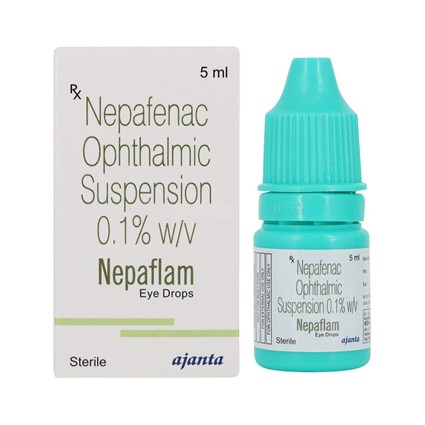
Nevanac Eye Drop (Nepafenac Opthalmic solution)
Nevanac Eye Drop 5 ml is a prescription treatment for managing eye pain and inflammation following cataract surgery. It also reduces the risk of swelling in the back of the eye after cataract surgery in diabetic patients.
The active ingredient of the medicine, Nepafenac, is an anti-inflammatory drug (NSAID) that stops the release of certain natural substances responsible for causing pain and swelling.
Nevanac ophthalmic medication is contraindicated in patients with a history of hypersensitivity to any of the ingredients in the formulation or to other NSAIDs.
Speak to your healthcare specialist before using Nevanac eye drops if any of the following apply to you:
- Bruise easily or have had bleeding problems
- Take medicines that may make you bleed more, like warfarin or acetylsalicylic acid.
- Have diabetes
- Have eye diseases such as dry eye syndrome, a corneal epithelial effect, or a corneal ulcer.
- Have had complicated eye surgeries
- Have had many eye surgeries within a short period
- Wear contact lenses
- Apply other NSAID or steroid medicines to your eye, as these may slow the healing process.
- Using other medications in the eye.
- Have rheumatoid arthritis
Pregnant and breastfeeding women are advised to inform a doctor about their condition before using any medicine, supplements, or eye drops.
The ophthalmic formulation contains a preservative that can discolour soft lenses and may contribute to eye irritation. Advised addition, wearing contact lenses is not an option after surgery. Avoid wearing contact lenses while using this ophthalmic product.
Side effects of Nepafenac eye drops
Like all medicines, Nevanac eye drops can cause side effects, although not everybody gets them. The risk of corneal side effects increases if any of the following apply:
- Repeated eye surgery within a short period
- Complicated eye surgery
- Certain problems are associated with the surface of the eye, including dry eye and inflammation.
- Certain general diseases, including diabetes or rheumatoid arthritis
Contact your healthcare specialist immediately if the eye reddens or causes more pain while using the eye drops. This may occur due to inflammation of the eye surface, with or without cell loss or damage, or inflammation of the iris (the coloured part of the eye).
Uncommon side effects include foreign body sensations, inflammation of the eye's surface with or without loss or damage to cells, eyelid crusting, or eyelid drooping.
Rarely reported side effects include:
- Effects in the eye: dry eye, iris inflammation, eye pain, eyelid swelling, itchy eyes, increased tear production, allergic conjunctivitis, eye irritation, eye redness, fluid or swelling at the back of the eye, and deposits on the eye surface.
- General adverse effects include headache, nausea, dizziness, redness, itching, and skin inflammation.
If you experience any of these side effects, consult your healthcare specialist. This includes any possible adverse reaction not mentioned in this information guide.
How to use Nepafenac eye drops?
Use this medicine only under the supervision of an ophthalmologist. The product is for your eyes only. Do not inject or swallow. The usual suggested dose is one drop in the affected eye thrice daily (morning, midday, and evening). The medication should be started one day before cataract surgery. Continue using it on the day of surgery. Then, use it for as long as your ophthalmologist asks you to. You may be advised to use this medicine for up to three weeks to prevent and resolve eye pain and inflammation or for up to 60 days to prevent the occurrence of macular oedema after your surgery.
The usage instructions:
- Wash your hands before you handle the eye drop bottle. Shake the bottle well before use.
- Twist off the cap and hold the bottle, pointing down between your fingers and thumb.
- Tilt your head back and then gently pull down your lower eyelid, creating a pocket between the eye and the eyelid.
- Keep the bottle top close to your eye, without touching the eyelid or surrounding areas with the tip of the bottle, as it could infect the eye drops.
- Gently press the base of the bottle to release one drop into the eye at a time. Avoid squeezing the bottle, as it is designed to require only a gentle press on the bottom.
If you have been advised to use the eye drops in both eyes, repeat the process for your other eye. If a drop misses your eye pocket, try again. If you are using any other eye drop, wait for at least five minutes between using Nevanac and other ophthalmic solutions. Continue using this eye drop for the prescribed period and report any issues to your doctor.
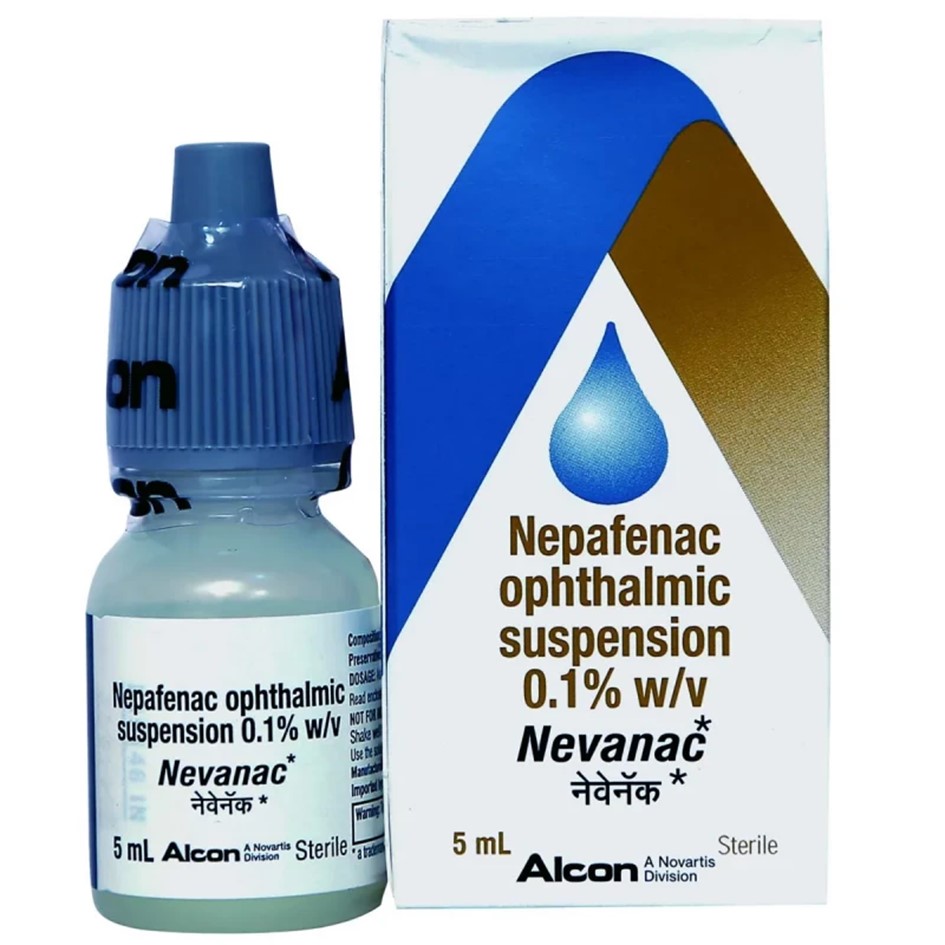
What is Nepafenac Ophthalmic solution and what condition does it treat?
Nepafenac Ophthalmic solution is a nonsteroidal anti-inflammatory drug (NSAID) eye drop used to reduce pain and inflammation following cataract surgery. Marketed under the brand name Nevanac Eye Drop 5ml, this ophthalmic medication targets post-operative eye discomfort and swelling. The active ingredient Nepafenac belongs to the NSAID class of medicines specifically formulated for ocular use. It effectively manages surgical inflammation, helping patients recover more comfortably after lens replacement procedures. This prescription eye treatment provides targeted relief directly to the affected eye tissue.
How does Nepafenac Ophthalmic solution work in the body?
Nepafenac Ophthalmic solution works by blocking cyclooxygenase enzymes that produce prostaglandins, chemicals responsible for inflammation and pain in eye tissue. When you apply Nevanac Eye Drop 5ml to your eye, the active ingredient Nepafenac penetrates the cornea and converts to amfenac, its active form. This nonsteroidal anti-inflammatory medicine then inhibits the inflammatory cascade triggered by cataract surgery. By reducing prostaglandin production, this ophthalmic NSAID decreases swelling, redness, and post-surgical discomfort, allowing your eye to heal with minimal inflammation throughout the recovery period.
How long does Nevanac Eye Drop 5ml take to work?
Nevanac Eye Drop 5ml typically begins working within hours of the first dose, though maximum anti-inflammatory effects build over the first few days of treatment. Most patients notice reduced eye discomfort and inflammation within 24 to 48 hours after starting this Nepafenac ophthalmic solution. The nonsteroidal anti-inflammatory action continues throughout your dosing schedule, usually prescribed for two to three weeks following cataract surgery. Consistent application as directed ensures steady therapeutic levels of this NSAID eye drop in your ocular tissues, providing ongoing protection against post-operative inflammation during the critical healing window.
When and how should I take Nevanac Eye Drop 5ml?
Nevanac Eye Drop 5ml is typically instilled three times daily, beginning one day before cataract surgery and continuing for two to three weeks afterward. To apply this Nepafenac ophthalmic solution, wash your hands thoroughly, tilt your head back, pull down your lower eyelid, and place one drop into the pocket formed. Avoid touching the dropper tip to any surface to prevent contamination. Wait at least five minutes before using other eye medications. If you wear contact lenses, remove them before applying this nonsteroidal anti-inflammatory eye drop and wait 15 minutes before reinserting.
Is Nevanac Eye Drop 5ml safe for long-term use?
Nevanac Eye Drop 5ml is designed for short-term use surrounding cataract surgery rather than long-term therapy. This Nepafenac ophthalmic solution is typically prescribed for a specific post-operative period, usually not exceeding three weeks. Extended use of nonsteroidal anti-inflammatory eye drops beyond recommended durations may increase risks of corneal complications or delayed healing. Your ophthalmologist determines the appropriate treatment duration based on your individual surgical recovery. The safety profile of this NSAID eye medication is well-established for its intended short-term application following lens replacement procedures.
Can I take Nevanac Eye Drop 5ml with other medicines?
Nevanac Eye Drop 5ml can generally be used alongside other eye medications, though spacing between different drops is important. When combining this Nepafenac ophthalmic solution with other eye treatments like antibiotic drops or steroid eye medications commonly prescribed after cataract surgery, wait at least five minutes between applications. This nonsteroidal anti-inflammatory eye drop may interact with oral anticoagulants or other systemic NSAIDs, potentially increasing bleeding risk. Inform your healthcare provider about all medications you're taking, including over-the-counter products and supplements, to ensure safe concurrent use.
How does Nevanac Eye Drop 5ml compare to similar medicines in its class?
Nevanac Eye Drop 5ml offers distinct advantages among ophthalmic NSAIDs due to its prodrug formulation that enhances corneal penetration. Unlike other nonsteroidal anti-inflammatory eye drops such as ketorolac or bromfenac, Nepafenac converts to its active form within eye tissue, potentially providing more effective intraocular inflammation control. This ophthalmic solution typically requires three-times-daily dosing, whereas some competing NSAID eye medications offer once-daily formulations. Clinical studies show comparable efficacy across the class for managing post-cataract surgery inflammation, with individual tolerability and dosing convenience influencing medication choice alongside your ophthalmologist's clinical assessment.
Is the generic Nepafenac Ophthalmic solution as effective as branded versions?
Generic Nepafenac Ophthalmic solution contains the same active ingredient in identical concentrations as branded Nevanac Eye Drop 5ml and meets rigorous regulatory standards for bioequivalence. These nonsteroidal anti-inflammatory eye drops must demonstrate equivalent therapeutic effects, safety profiles, and quality as the original branded product. Generic ophthalmic NSAID formulations offer the same post-surgical inflammation control at typically lower costs. Regulatory agencies in the USA, UK, Canada, and Australia require generic eye medications to perform identically to brand-name versions, making generic Nepafenac a clinically sound and economical alternative for managing cataract surgery recovery.
Why do patients choose PremiumRxDrugs for Nevanac Eye Drop 5ml?
Patients choose PremiumRxDrugs for Nevanac Eye Drop 5ml because of guaranteed authenticity, competitive pricing, and reliable international delivery. As a licensed pharmacy, we have been serving customers for over ten years, building trust through a consistent supply of manufacturer-sourced Nepafenac Ophthalmic solution and other prescription eye medications. The platform offers both branded Nevanac and cost-effective generic alternatives, helping patients access necessary nonsteroidal anti-inflammatory treatment affordably. Discreet packaging protects privacy, while streamlined prescription management makes reordering this post-surgical eye drop effortless. Free shipping options and responsive customer support across the USA, UK, Australia, and Canada further enhance the service experience.
What are the common side effects of Nepafenac Ophthalmic solution?
Common side effects of Nepafenac Ophthalmic solution include temporary eye discomfort, stinging or burning sensation upon application, headache, and increased light sensitivity. Some patients experience a feeling of something in the eye, watery eyes, or mild vision changes shortly after using this nonsteroidal anti-inflammatory eye drop. Crusty eyelid discharge or eyelid swelling occurs occasionally. These NSAID eye medication effects are typically mild and resolve quickly. Rare but serious reactions include severe eye pain, significant vision changes, or signs of infection. Most people tolerate this ophthalmic solution well during their post-surgical treatment period.
Who should avoid taking Nepafenac Ophthalmic solution?
Nepafenac Ophthalmic solution should be avoided by individuals with known hypersensitivity to NSAIDs, aspirin allergies, or previous reactions to any component of this eye medication. Patients with bleeding disorders or those taking anticoagulant medications require careful evaluation before using this nonsteroidal anti-inflammatory eye drop. Pregnant or breastfeeding women should discuss risks versus benefits with their healthcare provider, as ophthalmic NSAIDs carry specific considerations during these periods. People with complicated eye surgeries, pre-existing corneal problems, or rheumatoid arthritis may face increased risks. Your ophthalmologist will assess individual contraindications before prescribing this post-surgical treatment.
Login
Sign Up
Login
Sign Up