




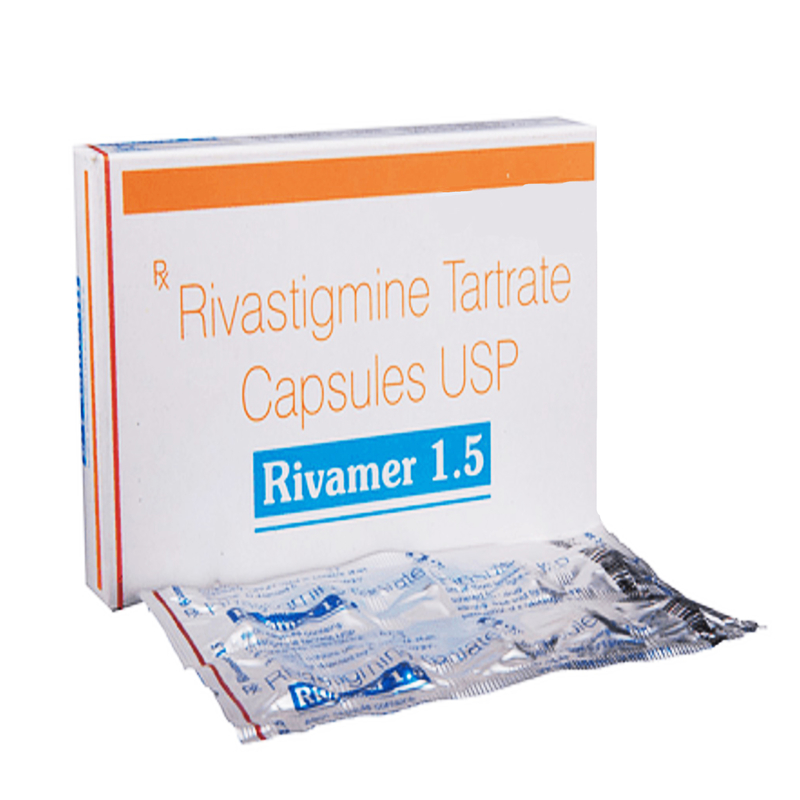
Rivamer 1.5 mg
Available Dosages
| SKU | 2498 |
|---|---|
| Generic For | Exelon |
| Manufacturer | Sun Pharma, India |
| Active Ingredient | Rivastigmine |


| Pack Size | Qty | Price Per Pill or Unit | Price | Cart | |
|---|---|---|---|---|---|
| 30 Capsule/s | US$ 0.50 | US$ 15.00 | |||
|
|||||
| 60 Capsule/s | US$ 0.50 | US$ 30.00 | |||
|
|||||
| 90 Capsule/s | US$ 0.47 | US$ 42.007%US$ 45.00 | |||
|
|||||

Rivamer 1.5 mg (Rivastigmine) – Affordable Exelon Alternative
Rivamer 1.5 mg capsule is a prescription medication for treating mild to moderate level dementia of Alzheimer disease. The main active ingredient of Rivamer is Rivastigmine that works against the condition. Dementia is a progressive disease that weakens memory and the ability to think. The doctors also prescribe Rivamer for treating dementia-alike diseases, i.e. Parkinson. However, this medicine doesn’t cure the disease, but it effectively helps improving memory and thinking ability.
Find out the working of Rivamer for treating Dementia in Alzheimer's disease
Dementia in Alzheimer triggers when the brain nerve cells stop working efficiently. A chemical called acetylcholine becomes inefficient and weak to pass signals and communication to other brain nerve cells. Dementia in Alzheimer causes memory loss, communication issues (i.e. speech and language), alertness, confusion, disorientation etc. Rivastigmine 1.5 mg helps brain cells share signals/communicate and make the patient stable so that he/she can understand communication.
Working of Rivamer 3 mg in Dementia associated with Parkinson's disease
A patient with Dementia in Parkinson's losses the ability to think and memorize things; due to this issue, the patient, generally suffer from bad quality of life. Rivastigmine drugs help improve the symptoms when taken as prescribed by a doctor. The medicine help patient to lead his/her routine life to some extent.
Make sure to mention all the drugs and supplements you may take to your physician. This will make him prescribed the treatment that could save you from unwanted side effects and eliminate drug interaction with other medications you may take or have taken in the past. People with a disease like asthma, epilepsy, stomach ulcer and heart issues should avoid taking Rivamer 1.5 mg medicine. Pregnant women and breastfeeding moms should also discuss about their condition with a doctor.
The common side effects associated with Rivamer 1.5 mg capsules are vomiting, nausea, weakness, indigestion, and weight loss. These side effects fade away its own as soon as your body gets used to the medicine, but call your doctor in case if any of the side effects persist for longer.
Take medicine as recommended by your doctor to experience the best results. Rivamer 1.5 mg capsule dosage and treatment may vary from patient to patient based on his condition. It drug may take a few weeks to improve your Dementia problems. Take your medicine daily and skip missing the dose, as missing the dosage can affect the efficiency of the drug. Also, never stop taking medicine without consulting a doctor.
What is Rivastigmine and what condition does it treat?
Rivastigmine is a cholinesterase inhibitor medication used primarily to treat dementia symptoms associated with Alzheimer's disease and Parkinson's disease. Rivamer 1.5 mg contains rivastigmine as its active ingredient and works by improving cognitive function, memory, and daily living abilities in patients with mild to moderate dementia. This Alzheimer's medication helps restore chemical balance in the brain by preventing the breakdown of acetylcholine, a neurotransmitter essential for memory and thinking. Rivamer belongs to a class of dementia treatments that may slow cognitive decline, though it does not cure the underlying disease.
How does Rivastigmine work in the body?
Rivastigmine works by inhibiting enzymes called acetylcholinesterase and butyrylcholinesterase that break down acetylcholine in the brain. Acetylcholine is a crucial chemical messenger involved in memory, reasoning, and concentration. In Alzheimer's disease and Parkinson's-related dementia, acetylcholine levels are typically reduced. Rivamer 1.5 mg blocks these enzymes, allowing more acetylcholine to remain active between nerve cells, thereby enhancing communication within brain pathways responsible for cognitive functions. This cholinesterase inhibitor mechanism helps improve mental clarity, attention span, and the ability to perform everyday tasks in patients experiencing dementia symptoms.
How long does Rivamer 1.5 mg take to work?
Rivamer 1.5 mg typically begins working within a few weeks, though noticeable cognitive improvements may take 8 to 12 weeks of consistent use. This dementia medication requires gradual dose titration, starting with lower strengths before reaching maintenance doses. Individual response varies based on disease severity and progression. Some patients or caregivers notice subtle improvements in memory, attention, or daily functioning within the first month, while maximum therapeutic benefits from rivastigmine usually emerge after several months of regular treatment. Patience is essential, as this Alzheimer's treatment works progressively rather than providing immediate symptom relief like pain relievers or allergy medications.
When and how should I take Rivamer 1.5 mg?
Take Rivamer 1.5 mg exactly as prescribed by your healthcare provider, typically twice daily with morning and evening meals. Taking this rivastigmine medication with food significantly reduces nausea and digestive discomfort, which are common initially. Swallow the capsule whole with water without crushing or chewing it. Maintain consistent timing each day to keep steady medication levels in your system. If you miss a dose, take it as soon as you remember unless it's nearly time for your next scheduled dose. Your doctor may start you on a lower strength and gradually increase the dosage of this dementia treatment to minimize side effects.
Is Rivamer 1.5 mg safe for long-term use?
Rivamer 1.5 mg is designed for long-term use in managing Alzheimer's disease and Parkinson's-related dementia, as these are chronic progressive conditions requiring ongoing treatment. Clinical studies demonstrate that rivastigmine can be taken safely for extended periods under medical supervision. Long-term users typically tolerate this cholinesterase inhibitor well once their body adjusts during the initial weeks. Regular monitoring by healthcare providers ensures the medication continues working effectively and any emerging concerns are addressed promptly. The benefits of sustained cognitive support generally outweigh risks for most dementia patients, making Rivamer a cornerstone therapy in long-term Alzheimer's management strategies.
Can I take Rivamer 1.5 mg with other medicines?
Rivamer 1.5 mg can interact with certain medications, so inform your doctor about all medicines, supplements, and herbal products you're taking. This rivastigmine medication may interact with anticholinergic drugs used for bladder problems, stomach issues, or Parkinson's symptoms, potentially reducing effectiveness of either treatment. Nonsteroidal anti-inflammatory drugs (NSAIDs) may increase risk of stomach problems when combined with this dementia medication. Beta-blockers and other heart medications require monitoring when used alongside Rivamer. Muscle relaxants and anesthetics also warrant caution. Your healthcare provider will assess your complete medication profile to ensure safe concurrent use of this Alzheimer's treatment with your existing therapies.
How does Rivamer 1.5 mg compare to similar medicines in its class?
Rivamer 1.5 mg belongs to the cholinesterase inhibitor class alongside donepezil (Aricept) and galantamine (Razadyne). Rivastigmine uniquely inhibits both acetylcholinesterase and butyrylcholinesterase enzymes, while donepezil targets only acetylcholinesterase. This dual-action mechanism may offer broader cognitive benefits for some Alzheimer's patients. Rivamer is specifically approved for both Alzheimer's dementia and Parkinson's disease dementia, whereas donepezil primarily treats Alzheimer's. Rivastigmine also comes in patch formulations besides capsules, providing dosing flexibility. Individual response varies, so neurologists select among these dementia medications based on patient-specific factors, tolerability, disease type, and severity of cognitive impairment.
Is the generic Rivastigmine as effective as branded versions?
Generic rivastigmine is equally effective as branded versions like Rivamer 1.5 mg and Exelon. Regulatory agencies including the FDA require generic medications to demonstrate bioequivalence, meaning they deliver the same amount of active ingredient into the bloodstream at the same rate as brand-name products. Generic dementia medications undergo rigorous testing to ensure identical therapeutic effects, safety profiles, and quality standards. The main differences lie in inactive ingredients, packaging, and cost rather than efficacy. Many patients successfully use generic rivastigmine as an affordable Alzheimer's treatment option without compromising cognitive benefits. Both generic and branded cholinesterase inhibitors work through the same mechanism.
Why do patients choose PremiumRxDrugs for Rivamer 1.5 mg?
Patients choose PremiumRxDrugs for Rivamer 1.5 mg because of guaranteed medication authenticity, competitive pricing, and reliable worldwide delivery. As a fully licensed international pharmacy, PremiumRxDrugs source rivastigmine directly from manufacturers, eliminating concerns about counterfeit dementia medications. The pharmacy simplifies prescription management and reordering for chronic Alzheimer's treatments, which is especially helpful for caregivers managing long-term care. Discreet packaging protects patient privacy, while free shipping options reduce overall costs for this ongoing cognitive therapy. With more than ten years serving patients across USA, UK, Australia, and Canada, PremiumRxDrugs combines affordability with dependable access to essential cholinesterase inhibitor medications.
What are the common side effects of Rivastigmine?
Common side effects of rivastigmine include nausea, vomiting, loss of appetite, diarrhea, and weight loss, particularly when starting treatment or increasing dosage. Many patients also experience dizziness, headache, fatigue, and increased sweating. These gastrointestinal symptoms typically lessen as your body adjusts to this cholinesterase inhibitor. Taking the medication with meals significantly reduces digestive discomfort. Some people report tremors, weakness, or sleep disturbances. Most side effects are mild to moderate and temporary. Serious but rare reactions include slow heartbeat, fainting, seizures, severe stomach pain, or difficulty urinating. Gradual dose titration helps minimize initial side effects of this dementia medication.
Who should avoid taking Rivastigmine?
People with known allergies to rivastigmine, carbamate derivatives, or medication components should avoid this treatment. Patients with certain heart conditions including sick sinus syndrome or conduction disorders require careful evaluation before using this cholinesterase inhibitor. Those with active stomach or duodenal ulcers, severe asthma, or chronic obstructive pulmonary disease need medical assessment, as rivastigmine may worsen these conditions. Individuals with urinary obstruction, seizure disorders, or severe liver disease should discuss risks with their healthcare provider. Pregnant or breastfeeding women should use alternative treatments when possible. Always disclose your complete medical history to ensure this dementia medication is appropriate for your specific health situation.
Login
Sign Up
Login
Sign Up