




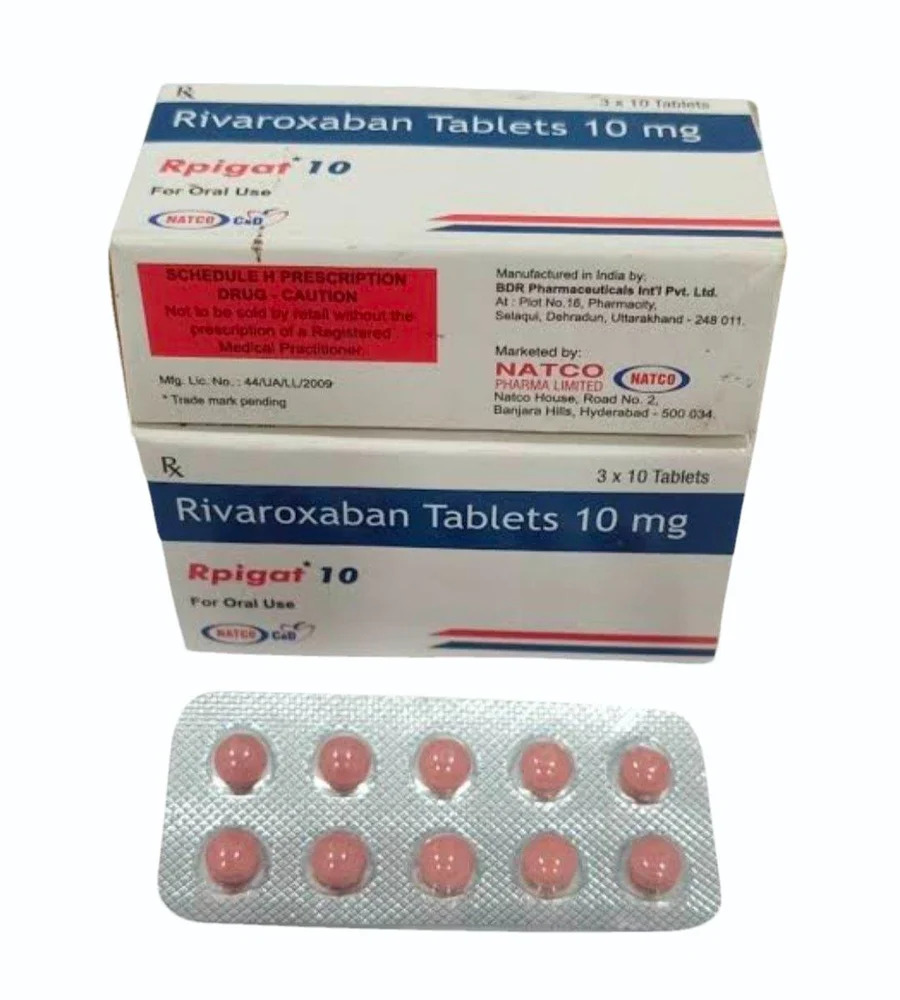
Rpigat 10mg
| SKU | 2725 |
|---|---|
| Generic For | Rivaroxaban |
| Manufacturer | BDR Pharmaceuticals Int. Pvt. Ltd. |
| Active Ingredient | Rivaroxaban |
| Marketed By | Natco Pharma Ltd |


| Pack Size | Qty | Price Per Pill or Unit | Price | Cart | |
|---|---|---|---|---|---|
| 30 Tablet/s | US$ 0.83 | US$ 25.0030%US$ 35.70 | |||
|
|||||
| 60 Tablet/s | US$ 0.83 | US$ 50.0030%US$ 71.40 | |||
|
|||||
| 90 Tablet/s | US$ 0.67 | US$ 60.0044%US$ 107.10 | |||
|
|||||

Rpigat 10mg (Rivaroxaban)
Rpigat 10 mg contains the active substance Rivaroxaban, which belongs to a group of medicines called antithrombotic agents. It blocks a certain blood clotting factor called Xa, thus reducing the tendency of the blood to form clots.
Rpigat 10 mg is commonly used in patients with atrial fibrillation (irregular heart rhythm) to prevent clot formation. It also effectively reduces the risk of getting clots in people who have undergone knee or hip replacement surgeries.
Precautions (warning, allergy, things to remember)
Do not give Rpigat 10 mg if a patient is allergic to Rivaroxaban or any of the other ingredients of this medicine. Also, avoid using it if a patient is bleeding excessively, has a liver disease or kidney disorder, or is taking medicine to prevent blood clotting. Rivaroxaban is not recommended for use in pregnant and breastfeeding women. Before taking Rpigat, inform a doctor about all the medicines, including prescription and non-prescription medicines, vitamins, and herbal supplements the patient may take. Especially be cautious of taking ritonavir, ketoconazole, lopinavir, indinavir, carbamazepine, itraconazole, rifampin, phenobarbital, and ritonavir.
Side effects
The most common side effects of taking Rpigat 10 mg are pain, bleeding, diarrhea, indigestion, stomach pain, tiredness, dizziness, headache, rash, itchy skin, constipation, weakness, swelling in the limbs, nausea, and low blood pressure. Talk to a healthcare professional if any of your symptoms worsen.
How to use Rpigat 10 mg
It is an oral prescription medicine. Your healthcare provider will decide the dose and duration of Rpigat based on the disease condition and other factors.
People with atrial fibrillation may take a Rpigat tablet one time a day with an evening meal. Stopping the medication may increase your risk of having a stroke or forming blood clots in other parts of your body.
For people with knee or hip replacement surgery, take the medicine once daily before or after consuming food.
Swallow the pill whole with a glass of water. The tablet may be taken before or after consuming food. Patients with atrial fibrillation are advised to take Rivaroxaban once a day with an evening meal. If you have trouble swallowing the pill, consult your doctor for another way to take the tablet. If required, this tablet may be crushed and mixed with water. The tablet may be taken before or after consuming food. Do not change the dose without consulting your healthcare professional. It can quickly put you at high risk of having a heart attack, the formation of blood clots within a blood vessel. You can reduce the risk of having a blood clot by making lifestyle changes such as eating a healthy diet, exercising regularly, not smoking, and losing weight (if required).
What is Rivaroxaban and what condition does it treat?
Rivaroxaban is an anticoagulant medication, commonly known as a blood thinner, used to prevent and treat blood clots. Rpigat 10mg contains this active ingredient and is prescribed to reduce the risk of stroke in patients with atrial fibrillation, treat deep vein thrombosis (DVT), pulmonary embolism (PE), and prevent clots after hip or knee replacement surgery. This oral anticoagulant works by blocking specific clotting factors in your blood, making it less likely to form dangerous clots that could travel to your lungs, brain, or heart.
How does Rivaroxaban work in the body?
Rivaroxaban works by selectively inhibiting Factor Xa, a crucial protein in the blood clotting cascade. By blocking this clotting factor, Rpigat 10mg prevents the formation of thrombin, which is essential for creating fibrin—the mesh-like substance that forms blood clots. Unlike older blood thinners such as warfarin, this direct Factor Xa inhibitor provides predictable anticoagulation without requiring routine blood monitoring. The mechanism allows your blood to flow more freely through vessels while still maintaining enough clotting ability to stop bleeding from minor cuts or injuries.
How long does Rpigat 10mg take to work?
Rpigat 10mg containing Rivaroxaban begins working relatively quickly, with peak blood levels reached within two to four hours after taking a dose. This anticoagulant starts providing blood-thinning effects within hours, making it faster-acting than traditional vitamin K antagonists. For preventing stroke in atrial fibrillation patients, the protective benefits build up within days of starting treatment. However, full therapeutic anticoagulation for conditions like deep vein thrombosis may require several days of consistent dosing. The quick onset time makes this blood thinner convenient for both acute treatment and long-term prevention.
When and how should I take Rpigat 10mg?
Take Rpigat 10mg exactly as your doctor prescribes, typically once daily at the same time each day. Swallow the tablet whole with water, with or without food. Consistency is important—setting a daily reminder helps maintain steady blood levels of Rivaroxaban. Don't crush, break, or chew the tablet. If you miss a dose, take it as soon as you remember on the same day, then continue your regular schedule the next day. Never double up doses. Inform your healthcare provider about all medications and supplements you're taking, and attend scheduled appointments to monitor your condition.
Is Rpigat 10mg safe for long-term use?
Rpigat 10mg is designed for long-term use in many patients requiring ongoing anticoagulation therapy. Clinical studies have demonstrated that Rivaroxaban maintains its effectiveness and safety profile over extended periods when managing chronic conditions like atrial fibrillation. The predictable pharmacology of this Factor Xa inhibitor eliminates the need for frequent blood monitoring required with older blood thinners. Long-term safety depends on proper dosing, regular medical supervision, and awareness of bleeding risks. Your healthcare provider will periodically assess kidney function and overall health to ensure continued safe use of this anticoagulant medication.
Can I take Rpigat 10mg with other medicines?
Rpigat 10mg can interact with several medications, so always inform your doctor about everything you're taking. Drugs that increase bleeding risk include aspirin, NSAIDs like ibuprofen, other anticoagulants, and antiplatelet medications. Certain antibiotics, antifungals, and HIV medications can alter Rivaroxaban blood levels by affecting liver enzymes. St. John's Wort and some seizure medications may reduce effectiveness. Conversely, drugs like ketoconazole or ritonavir can increase blood thinner levels. Your pharmacist can review your complete medication list for potential interactions. Never start or stop any medication without medical guidance while taking this anticoagulant.
How does Rpigat 10mg compare to similar medicines in its class?
Rpigat 10mg belongs to the direct oral anticoagulant (DOAC) class, which includes apixaban, edoxaban, and dabigatran. Unlike warfarin, Rivaroxaban requires no dietary restrictions or routine INR monitoring, offering greater convenience. Compared to other DOACs, it features once-daily dosing for most indications and rapid onset of action. The 10mg strength is commonly used for stroke prevention in atrial fibrillation patients, while higher doses treat acute clots. Clinical trials show comparable effectiveness and safety across the DOAC class, though individual patient factors like kidney function influence which blood thinner works best.
Is the generic Rivaroxaban as effective as branded versions?
Generic Rivaroxaban, including Rpigat 10mg, contains the identical active ingredient as branded versions and undergoes rigorous testing to ensure bioequivalence. Regulatory agencies in the USA, UK, Canada, and Australia require generics to deliver the same therapeutic effect, safety profile, and blood concentration levels as original formulations. The anticoagulant potency remains identical—only inactive ingredients like fillers or coatings may differ slightly. Generic blood thinners offer significant cost savings without compromising quality or effectiveness. Clinical outcomes with generic Rivaroxaban match those of brand-name products, making them a reliable and economical choice for long-term anticoagulation therapy.
Why do patients choose PremiumRxDrugs for Rpigat 10mg?
Patients select PremiumRxDrugs for Rpigat 10mg because of substantial cost savings on this blood thinner without compromising quality. As a licensed pharmacy, we source authentic Rivaroxaban directly from manufacturers, ensuring every tablet meets international standards. Convenient features include easy prescription management, quick reordering for ongoing anticoagulation therapy, and discreet worldwide shipping that protects your privacy. Competitive pricing helps patients afford long-term treatment, while free shipping options reduce overall costs. With more than ten years serving customers across multiple countries, PremiumRxDrugs has built a reputation for reliability, authenticity, and exceptional service in delivering essential cardiovascular medications.
What are the common side effects of Rivaroxaban?
The most common side effects of Rivaroxaban include bleeding-related symptoms such as nosebleeds, bleeding gums, heavier menstrual periods, or bruising more easily. Some patients experience fatigue, dizziness, or headaches. Gastrointestinal effects like nausea, stomach pain, or indigestion occur occasionally. Minor bleeding from cuts may take longer to stop since this anticoagulant reduces clotting ability. Serious but rare side effects include signs of major bleeding: unusual bruising, blood in urine or stools, coughing up blood, or severe headaches. Most people tolerate this blood thinner well, with benefits outweighing risks for appropriate patients.
Who should avoid taking Rivaroxaban?
People with active bleeding or conditions causing significant bleeding risk should not take Rivaroxaban. Those with severe kidney disease or liver problems metabolize this anticoagulant poorly, increasing complications. Patients with artificial heart valves require different blood thinners. Pregnant or breastfeeding women should avoid this medication as it may harm the baby. Individuals with hypersensitivity to the active ingredient or scheduled for spinal procedures face increased risks. Those with antiphospholipid syndrome may need alternative anticoagulation. Anyone taking certain interacting medications or unable to manage bleeding risks should discuss alternatives. Your doctor evaluates individual factors before prescribing this blood thinner.
Login
Sign Up
Login
Sign Up