




Sebifin Cream 1%
Available Dosages
| SKU | 1092 |
|---|---|
| Generic For | Lamisil |
| Strength | 1% (30gm) |
| Manufacturer | Sun Pharma Medisales Pvt Ltd. |
| Active Ingredient | Terbinafine HCl |


Out Of Stock

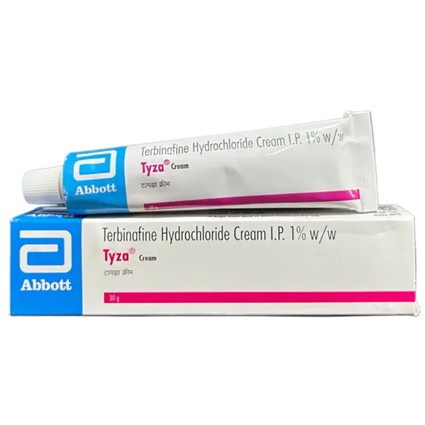
Sebifin Cream 1% – Affordable Lamisil Alternative for Nail & Skin Fungus
Sebifin Cream 1% contains the active ingredient Terbinafine, which is an antifungal agent that is developed to treat fungal infection in different parts of your body. This medicine is hydrophobic in nature and it’s commonly prescribed to treat fungal infections. Sebifin cream is manufactured by Ranbaxy Labs.
Sebifin 1%-30 gm Cream is specifically formulated to relieve you from itching, burning, cracking and scaling that are caused by ringworm, jock itch, athlete's foot, and other fungal infections of the skin. Its active ingredient Terbinafine cream is a strong topical antifungal agent that can easily kill sensitive fungi without hurting your skin.
How does Sebifin cream 1% work?
Terbinafine, an active ingredient of Sebifin Cream, inhibits the normal growth of Cytoplasmic membrane of a fungal cell. It also works to enhance the efficiency of Ergosterol, so that fungal cell membrane does not develop further.
What medications interact with Sebifin 1%?
There are some medicines as well as salt interactions that may influence the normal strength of Sebifin Cream 1% when used together. In some cases, this medication interacts with medicinal elements like Amiodarone, Rifampin, Cimetidine, Desipramine, Ketoconazole, and Fluconazole. Moreover, oral diabetes medicines, Rifabutin, sedative drugs, or seizure medicines could also interact with this Sebifin.
When should Sebifin 1% not be used?
There are some health problems and medical or physical conditions that may contraindicate with the Sebifin 1%-30gm. These conditions include:
- Breastfeeding
- Alcoholic condition
- Kidney problems
- Liver disease
- Blood-related problems
- Depression
- Skin disease
- Elderly
- Hypersensitivity
- Lupus erythematosus
- Pregnancy
How should Sebifin 1% be used?
The sufficient amount of this cream or its dosage may depend on different factors like age, sex, drug allergies, or seriousness of the condition, etc. Your doctor can tell you exactly how frequently and how much to be used for the good treatment of fungal infections. Usually, Sebifin 1%- 30gm is applied twice daily. But again, it depends on the condition of the patient.
Missed dose of Sebifin 1 %?
If you have missed your regular dose then take it as soon as you remember, but don’t increase the dose in order to make up the loss of missed doses. Excess application of Sebifin Cream 1% - 30gm is not good for the skin and you should tell your doctor if it makes the condition worse.
How long should you use Sebifin 1%?
Usually, 2-3 weeks are enough to treat fungal infections. If the skin condition is more severe then you can extend the use of Sebifin Cream for one more week.
How should Sebifin 1 % be stored?
No special storage place is required and you can keep this medicine at room temperature. Keep it away from direct heat and moisture. Keep your children away from the medicine for their safety.
What are the side effects of Sebifin 1%?
There are some common side effects of Sebifin 1%-30gm, such as:
- Abdominal pain
- Anorexia
- Visual disturbances
- Urticaria
- Elevated liver function test
- Taste disturbances
- Dyspepsia
- Urge to vomit
- Diarrhea
- A rash or redness of the skin
- Elevated enzyme levels
The possible allergic side effects of Terbinafine HCl topical cream are redness, burning, itching, or irritation. The potentially hazardous side effects of Sebifin Cream include neutropaenia, liver failure, and Stevens-Johnson syndrome.
Apart from these, you may experience a decline in food intake that leads to significant weight loss and the development of wrinkles on the skin. Some rare side effects are also registered, such as psoriaform eruptions or exacerbation of psoriasis, hair loss, and anaphylactoid reactions (including angioedema).
Some other possible allergic side effects could be swelling of the tongue, face, lips or other parts of the body, shortness of breath, wheezing or difficulty breathing, rash, itching or hives on the skin. If you experience such allergic side effects, then you should tell your doctor about it as soon as possible.

What is Sebifin Cream 1% used for?
Sebifin Cream 1% contains terbinafine hydrochloride 1% — a topical allylamine antifungal for treating dermatophyte (ringworm/tinea) infections of the skin. Indications: tinea pedis (athlete's foot), tinea corporis (ringworm of the body), tinea cruris (jock itch/groin ringworm), and cutaneous candidiasis. Terbinafine cream is the preferred topical antifungal for dermatophyte infections — it is both fungistatic and fungicidal against dermatophytes (Trichophyton rubrum, T. mentagrophytes), allowing shorter treatment courses (1–2 weeks) compared to azole creams (4–6 weeks).
How does Sebifin Cream 1% kill dermatophyte fungi?
Terbinafine inhibits squalene epoxidase — a fungal enzyme in the ergosterol biosynthesis pathway that converts squalene to squalene epoxide. This enzyme is highly selective for fungal cells (10,000× more sensitive than mammalian squalene epoxidase). Terbinafine's inhibition causes: (1) accumulation of squalene — toxic to fungal cells; (2) depletion of ergosterol — disrupting membrane integrity. The combination of squalene toxicity and ergosterol depletion is fungicidal against dermatophytes — killing the fungi rather than just inhibiting growth. This fungicidal activity allows shorter treatment courses than most azole antifungals.
How should Sebifin Cream 1% be applied?
Clean and dry the affected area thoroughly before application. Apply a thin layer of Sebifin Cream 1% to the affected skin and 1cm of surrounding normal skin once or twice daily as directed. Rub in gently. Treatment duration: tinea pedis — 1–2 weeks (once or twice daily); tinea corporis/cruris — 1–2 weeks (once daily); cutaneous candidiasis — 2 weeks. Continue for the full recommended duration even if symptoms improve early — stopping prematurely allows fungal recurrence. Wash hands after applying. Keep away from eyes and mucous membranes. Occlusive dressings may increase absorption — use open dressings.
Is Sebifin Cream 1% safe during pregnancy for tinea infections?
Topical terbinafine 1% cream has minimal systemic absorption (approximately 5% absorbed through normal skin). Human teratogenicity studies for topical terbinafine are limited, but given the very low systemic exposure, risk to the fetus is considered negligible. Clotrimazole 1% cream is more extensively studied in pregnancy and is typically recommended as the first choice topical antifungal in pregnancy. If clotrimazole is unavailable or ineffective, topical terbinafine for limited skin areas (avoiding extensive body surface coverage) is likely safe. Avoid applying to breast areas if breastfeeding. Discuss with your healthcare provider if uncertain.
What drug interactions apply to Sebifin Cream 1%?
Topical terbinafine cream has negligible systemic absorption (5%) — systemic drug interactions are not clinically significant. No systemic interaction monitoring is required for topical application. Locally: other topical preparations may dilute or interfere with terbinafine if applied simultaneously to the same area — apply Sebifin Cream alone, wait 10–15 minutes before applying other products. Avoid combining with other topical antifungals in the same application — sequential use is appropriate if targeting different organisms (e.g. tinea + candida). Emollients and moisturisers can be applied after terbinafine has absorbed.
How does Sebifin Cream 1% compare to clotrimazole cream for athlete's foot?
Terbinafine 1% cream and clotrimazole 1% cream both treat tinea pedis (athlete's foot). Key differences: terbinafine is fungicidal against dermatophytes — allowing 1 week treatment for interdigital tinea pedis (vs. 4 weeks for clotrimazole). Clinical trial evidence consistently shows terbinafine superior mycological cure rates for tinea pedis (mycological cure 70–85% vs. 50–65% for 1-week courses). Clotrimazole is preferred for cutaneous candidiasis (broader antifungal spectrum). For pure tinea pedis (dermatophyte confirmed or probable), terbinafine is the preferred topical antifungal. Azoles (clotrimazole, miconazole) are used when the organism is unknown or when candida is suspected.
Is Sebifin Cream 1% equivalent to Lamisil Cream 1%?
Yes. Sebifin Cream 1% and branded Lamisil Cream 1% both contain terbinafine hydrochloride 1% in equivalent topical formulations. Sebifin is the generic alternative providing the same antifungal efficacy against dermatophytes at significantly lower cost.
Can I order Sebifin Cream 1% from PremiumRxDrugs for international delivery?
Yes. PremiumRxDrugs.com ships Sebifin Cream 1% to the USA, UK, Australia, and many other countries. Our genuine manufacturer-verified antifungal products, competitive pricing, and free worldwide shipping on qualifying orders make us a reliable international source for topical terbinafine.
What side effects does Sebifin Cream 1% cause?
Topical terbinafine is very well tolerated. Common local reactions: mild burning or stinging at the application site (typically transient), itching, and mild erythema (redness). Skin dryness or peeling at the treated site occasionally occurs — a sign of antifungal activity. Rare: allergic contact dermatitis (persistent worsening redness and itch after initial improvement — stop use and consult a doctor). Systemic side effects are not expected from topical use at 1% concentration. If the treated area worsens significantly, blisters, or becomes very painful, seek medical assessment — other skin conditions (eczema, psoriasis, bacterial infection) can mimic tinea.
How can recurrence of tinea pedis be prevented after Sebifin Cream 1% treatment?
Preventing tinea pedis recurrence: dry feet thoroughly after bathing, particularly between toes — moisture is the main risk factor; wear breathable socks (cotton, wool) and change daily; rotate footwear — allow shoes to dry fully between wearings; use antifungal powder in shoes and on feet during high-risk periods (sports, swimming); wear flip-flops in communal showers and changing rooms; treat toenail fungus (onychomycosis) if present — nails are a reservoir for reinfection; continue terbinafine cream for 2 full weeks for plantar tinea pedis even after symptoms resolve. Recurrent tinea pedis after proper treatment suggests either nail reservoir involvement (requiring oral terbinafine) or reinfection from the environment.
Can Sebifin Cream 1% treat nail fungus (onychomycosis)?
Topical terbinafine 1% cream alone is generally insufficient for nail fungus (onychomycosis) — the cream cannot penetrate the nail plate adequately to reach the nail bed where the infection resides. For onychomycosis, oral terbinafine 250mg daily for 6 weeks (fingernails) or 12 weeks (toenails) is the gold standard treatment with 70–80% mycological cure rates. Some topical nail lacquers (amorolfine, ciclopirox) can treat superficial nail fungus but are less effective than oral therapy. If nail involvement is present alongside skin tinea, oral terbinafine treats both simultaneously — the cream can be used as adjunct to reduce skin infection load.
Login
Sign Up
Login
Sign Up