




A Ret HC Cream
Available Dosages
| SKU | 2708 |
|---|---|
| Generic For | Skin Lite |
| Manufacturer | Akum Drugs |
| Active Ingredient | Hydroquinone 2% + Tretinoin 0.05% + Hydrocortisone 1% |


| Pack Size | Qty | Price Per Pill or Unit | Price | Cart | |
|---|---|---|---|---|---|
| 1 Tube/s | US$ 11.50 | US$ 11.50 | |||
|
|||||
| 3 Tube/s | US$ 10.67 | US$ 32.007%US$ 34.50 | |||
|
|||||
| 6 Tube/s | US$ 10.00 | US$ 60.0013%US$ 69.00 | |||
|
|||||

A Ret-HC Cream (Tretinoin) – Affordable Skin Lite Alternative
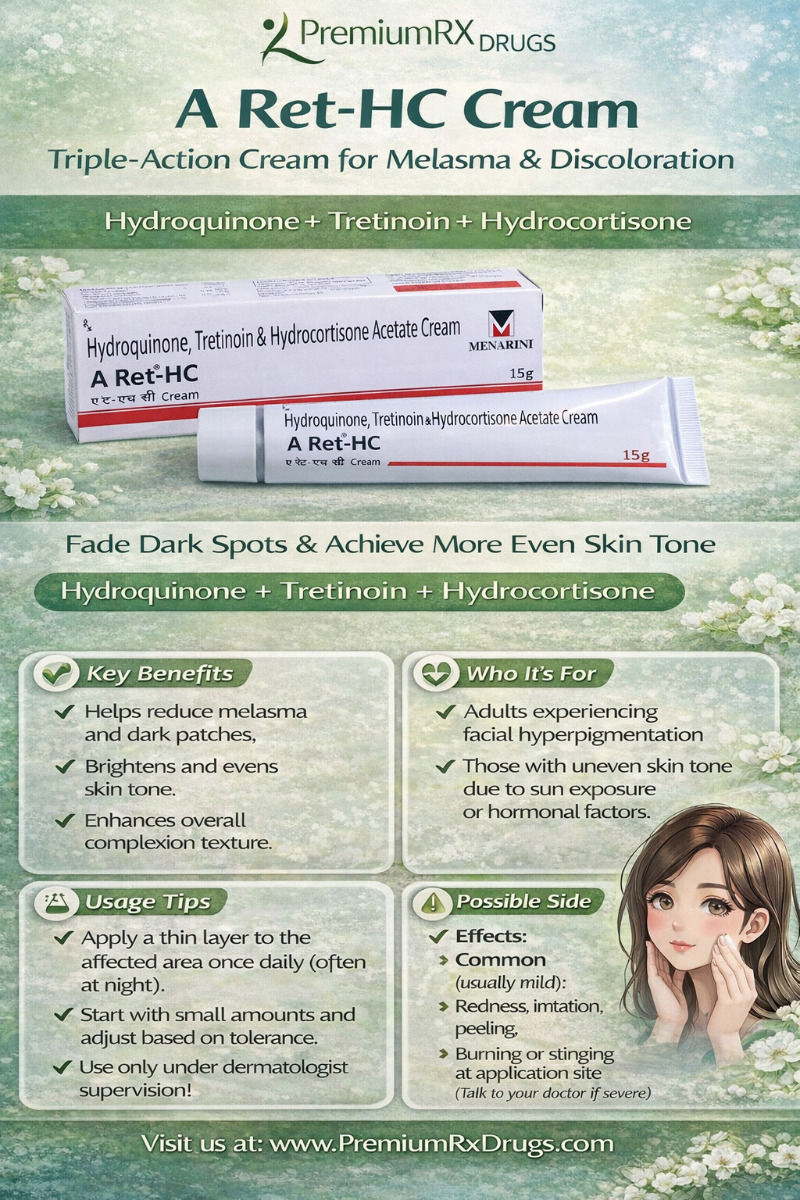
A Ret HC cream is a topical prescription treatment used to treat melasma (a skin disorder that brings dark, discoloured patches on the skin, primarily on the facial skin). The skin condition is common during pregnancy and menopause. A Ret HC is a triple combination cream that combines Hydroquinone (bleaching agent), tretinoin (retinoid acid), and hydrocortisone (steroid) to lighten these dark patches by reducing melanin production. It improves skin texture and gives smoother-looking skin. This cream also reduces itchiness, redness, and swelling, especially with sensitive skin.
- Hydrocortisone is an anti-inflammatory agent that calms inflammation and addresses redness.
- Tretinoin produces significant clinical improvement of melasma, mainly due to a reduction in epidermal pigment.
- Hydroquinone is the most frequently prescribed depigmenting agent, and it has remained the gold standard for treating melasma, particularly the epidermal type.
In addition to avoidance of aggravating factors such as oral pills and ultraviolet exposure, this triple combination cream therapy remains the mainstay of treatment.
A Ret HC cream is not recommended for children under twelve. Also, do not use this medicine for other skin conditions without consulting your dermatologist. Hydroquinone, tretinoin, and hydrocortisone should not be used by patients with a sulfite allergy, eczema, dermatitis (redness and swelling), or any skin infection.
The product may interact with other topical medications, especially benzoyl peroxide. However, if you are using any other medicines, whether it is a topical formulation or an oral drug, please consult your dermatologist. Do not use the product in larger amounts for a prolonged time. Please do not cover the treated area with clothing or wrap it with bandages unless instructed. Pregnant and breastfeeding women should confirm with their health care provider if they are suitable candidates for A ret HC cream.
Most A Ret HC cream side effects do not require medical help and resolve as your body adjusts to the medicine. Common side effects of A ret HC cream include dry skin, thinning skin, and application site reactions (itching, irritation, burning, and redness) if you develop any other symptoms because of this topical medication.
Use A-Ret HC cream exactly as prescribed by your dermatologist. Follow the directions carefully to achieve the best results. Let your dermatologist know if you are allergic to this medicine. The product is usually applied as a thin layer over the pigmented areas. Make sure you wash your hands after applying the medication. Treatment should be continued for up to three months up to one year. Avoid applying the cream on open wounds, cut, chapped, or sunburned skin. Avoid stepping out in the sun, as A Ret HC cream may make you more sensitive to sunlight. If you go out, wear protective clothing, and apply sunscreen to protect your skin from sunlight.
What is Hydroquinone 2% + Tretinoin 0.05% + Hydrocortisone 1% and what condition does it treat?
A Ret-HC Cream combines three active ingredients—Hydroquinone 2%, Tretinoin 0.05%, and Hydrocortisone 1%—in a specialized topical formulation designed to treat melasma, dark spots, and hyperpigmentation. This triple-action skin lightening cream targets uneven skin tone, age spots, and discoloration caused by sun damage or hormonal changes. Hydroquinone acts as a depigmenting agent, Tretinoin serves as a retinoid that promotes cell turnover, while Hydrocortisone reduces inflammation and irritation. This prescription-strength combination therapy is particularly effective for facial pigmentation disorders requiring medical-grade treatment.
How does Hydroquinone 2% + Tretinoin 0.05% + Hydrocortisone 1% work in the body?
This triple-combination depigmentation cream works through complementary mechanisms to fade dark patches and even skin tone. Hydroquinone inhibits tyrosinase, the enzyme responsible for melanin production, thereby reducing pigment formation in affected areas. Tretinoin, a vitamin A derivative, accelerates skin cell renewal and helps hydroquinone penetrate deeper layers more effectively. Hydrocortisone, a mild topical corticosteroid, minimizes the potential irritation and inflammation that can occur with retinoid and bleaching treatments. Together, these active ingredients in A Ret-HC Cream create a synergistic effect that lightens hyperpigmentation more effectively than single-ingredient treatments.
How long does A Ret-HC Cream take to work for melasma and dark spots?
Most users begin noticing visible lightening of dark spots and hyperpigmentation after 4 to 6 weeks of consistent nightly application of A Ret-HC Cream. Significant improvement in melasma and uneven skin tone typically occurs between 8 to 12 weeks of regular use. The tretinoin component requires time to stimulate cellular turnover, while hydroquinone gradually reduces excess melanin deposits. Individual results vary based on pigmentation severity, skin type, and adherence to sun protection during treatment. This prescription skin lightening combination delivers optimal results when used as part of a comprehensive skincare regimen with broad-spectrum sunscreen.
When and how should I apply A Ret-HC Cream correctly?
Apply A Ret-HC Cream once daily at bedtime to clean, completely dry skin. Use a pea-sized amount for the entire face or apply sparingly only to affected dark spots and hyperpigmented areas. Gently massage the cream until fully absorbed, avoiding the eye area, lips, and mucous membranes. Wait at least 20 minutes after cleansing before application to prevent excessive irritation. Always apply broad-spectrum SPF 30 or higher sunscreen every morning, as this tretinoin-based combination increases sun sensitivity. Start with every-other-night application if you have sensitive skin, gradually increasing frequency as tolerated under medical supervision.
Is A Ret-HC Cream safe for long-term use on my skin?
A Ret-HC Cream is generally prescribed for short-to-medium term treatment cycles, typically 8 to 12 weeks, rather than indefinite continuous use. The hydrocortisone component, though mild, may cause skin thinning with prolonged application beyond recommended durations. Hydroquinone is typically used intermittently with treatment breaks to prevent ochronosis, a rare darkening condition associated with extended use. Many dermatologists recommend maintenance protocols alternating this triple-combination therapy with single-ingredient retinoids or vitamin C serums. Your healthcare provider will determine the appropriate treatment duration and monitoring schedule based on your hyperpigmentation response and individual skin characteristics.
Can I use A Ret-HC Cream with other skincare products or medications?
Exercise caution when combining A Ret-HC Cream with other active topical treatments. Avoid using alongside benzoyl peroxide, salicylic acid, glycolic acid, or other exfoliating products, as these may cause excessive dryness, peeling, or irritation when layered with tretinoin. Do not apply with additional retinoids or separate hydroquinone products to prevent ingredient overload. Gentle, fragrance-free moisturizers and mineral sunscreens are safe complementary products. If using prescription acne medications, anti-aging serums, or other dermatological treatments, discuss your complete skincare routine with your prescribing physician to ensure compatibility and avoid adverse interactions with this multi-ingredient pigmentation cream.
How does A Ret-HC Cream compare to other melasma treatments available?
A Ret-HC Cream stands out among hyperpigmentation treatments by combining three therapeutic agents in one formulation, whereas many alternatives contain only hydroquinone or tretinoin alone. Single-ingredient bleaching creams often require separate anti-inflammatory products to manage irritation. Compared to prescription formulations like Tri-Luma, this cream offers a similar triple-action approach at competitive pricing. Over-the-counter dark spot correctors with lower active concentrations deliver slower, less dramatic results for melasma. Chemical peels and laser treatments work faster but cost significantly more and carry higher complication risks. This combination therapy provides medical-grade efficacy for stubborn pigmentation without invasive procedures.
Is generic Hydroquinone Tretinoin Hydrocortisone cream as effective as branded versions?
Generic formulations containing Hydroquinone 2%, Tretinoin 0.05%, and Hydrocortisone 1% are therapeutically equivalent to branded versions like Tri-Luma when manufactured by reputable pharmaceutical companies. Regulatory authorities require generic depigmentation creams to contain identical active ingredient concentrations and demonstrate comparable bioavailability to reference products. A Ret-HC Cream delivers the same skin-lightening efficacy as higher-priced branded alternatives while offering significant cost savings. The active pharmaceutical ingredients work identically regardless of brand name or generic status. Quality generic versions provide an accessible treatment option for melasma and hyperpigmentation without compromising clinical results or safety standards.
Why do patients choose PremiumRxDrugs for A Ret-HC Cream orders?
Patients trust PremiumRxDrugs for A Ret-HC Cream because of competitive pricing on both branded and generic melasma treatments without compromising authenticity. The pharmacy source all hyperpigmentation medications directly from manufacturers, guaranteeing genuine tretinoin-based formulations rather than counterfeit products. Customers across the USA, UK, Australia, and Canada appreciate discreet packaging that protects privacy and worldwide shipping with free delivery options on qualifying orders. The user-friendly prescription management system simplifies refills for ongoing pigmentation treatment cycles. With more than ten years serving international patients, PremiumRxDrugs has built a reputation for reliable service, pharmaceutical quality, and accessible pricing on specialized dermatological medications.
What are the common side effects of Hydroquinone 2% + Tretinoin 0.05% + Hydrocortisone 1% cream?
Common side effects of this triple-combination topical treatment include mild-to-moderate skin dryness, peeling, redness, and temporary burning or stinging upon application, particularly during initial weeks. The tretinoin component frequently causes flaking as it accelerates cellular turnover, while hydroquinone may cause slight irritation in sensitive individuals. Some users experience temporary darkening before lightening occurs as pigment rises to the surface. Less common reactions include contact dermatitis, itching, or increased sun sensitivity requiring diligent photoprotection. These depigmentation cream side effects typically diminish as skin adapts to treatment. Severe reactions like blistering, excessive inflammation, or paradoxical hyperpigmentation require immediate discontinuation and medical evaluation.
Who should avoid using Hydroquinone 2% + Tretinoin 0.05% + Hydrocortisone 1% cream?
Pregnant and breastfeeding women should avoid this combination cream, as tretinoin poses potential fetal risks and hydroquinone absorption concerns exist during nursing. Individuals with known allergies to hydroquinone, retinoids, or corticosteroids should not use this formulation. Those with eczema, rosacea, or severely sensitive skin may experience excessive irritation from the multi-ingredient formula. Children under 12 typically should not use this prescription-strength depigmentation treatment. People with active skin infections, open wounds, or sunburned areas must wait until healing before application. Anyone planning extensive sun exposure or unable to commit to daily broad-spectrum sunscreen should postpone treatment, as this combination significantly increases photosensitivity and UV damage risk.
Login
Sign Up
Login
Sign Up