




Triluma Cream
Available Dosages
| SKU | 2130 |
|---|---|
| Generic For | Triluma |
| Strength | 15 gm |
| Manufacturer | Encube Ethicals (Galderma) |
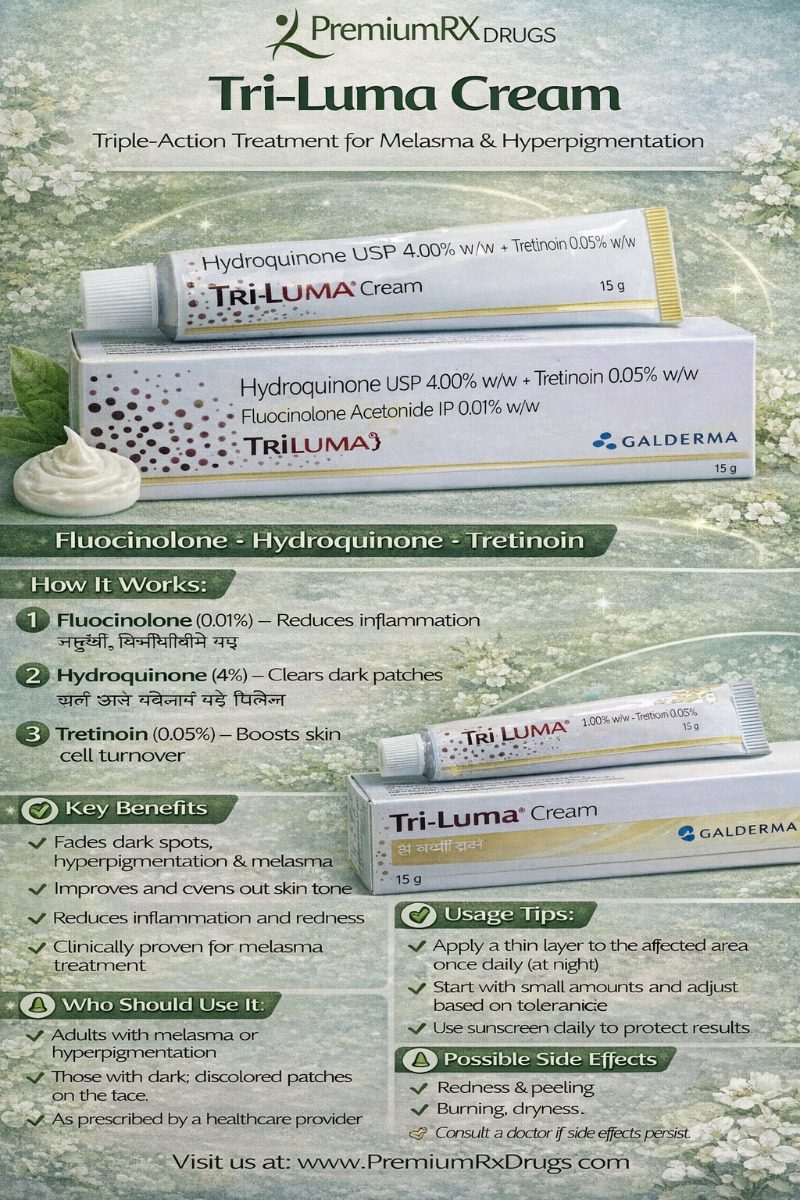
| Active Ingredient | Hydroquinon 4%, Tretinoin 0.05%, Fluocinolone 0.01% Topical Cream |


| Pack Size | Qty | Price Per Pill or Unit | Price | Cart | |
|---|---|---|---|---|---|
| 1 Cream | US$ 32.50 | US$ 32.50 | |||
|
|||||
| 3 Cream | US$ 30.00 | US$ 90.008%US$ 97.50 | |||
|
|||||
| 6 Cream | US$ 26.67 | US$ 160.0018%US$ 195.00 | |||
|
|||||

Triluma Cream (Hydroquinone 4%) – Melasma Treatment
Tri luma cream 15mg is a topical therapy with a unique combination of effective ingredients. It is an FDA-approved formulation for treating melasma. Tri-luma cream has given some hope to sufferers to treat their skin blemishes conveniently. The tri-luma cream contains three active ingredients that are effective in treating skin issues. It’s an eight-week course for treating facial dark spots from moderate to severe melasma appearance. The power of its 3 main ingredients plays a vital role in treating skin issues.
The Triple Combination Cream formulation triggers its effect by restricting the production of certain hormones (prostaglandins) that cause skin redness and patches. TriLuma contains:
- Hydroquinone 4% - Reduces skin pigmentation.
- Tretinoin 0.05% -Helps you renew skin tissues as it contains vitamin A, a substance that offers a natural glow and softens the skin.
- Fluocinolone Acetonide 0.01% - Reduces skin inflammation. It blocks the production of prostaglandins (certain chemical messengers) that cause the skin to be red, itchy, and swollen.
Learn triluma cream usage and review its benefits if you are prescribed for this topical formulation.
TriLuma cream contains sulfites. Sulfites may cause severe and life-threatening allergies in people who are allergic to sulfites. Hydroquinone may also cause temporary skin darkening. You should not use TriLuma cream if you are pregnant or planning to get pregnant.
- Avoid going in sunlight and UV rays after applying the cream. Due to the formulation ingredients, the chances of sunburn are high. Dark skin patches may become darker as sun rays trigger the melasma faster when the skin is exposed to sunlight. Therefore, protecting your skin from the sun is important to prevent further skin darkening. Avoiding sun rays is especially important for women who are taking birth control pills or have undergone hormone replacement therapy.
- Avoid using alcohol-containing toiletries and other products, such as harsh soaps, cleansers, astringents, shampoos, spices, and lime.
- Don’t use other medicines while using Tri-Luma cream unless your doctor advises. Certain drugs and medications can cause serious skin issues and drug interaction.
You may experience skin burning, redness, itching, peeling, or irritation after its application; these are the common signs, but if it irritates your skin too much, stop using the cream immediately and consult your dermatologist. It is best to use TriLuma cream with effective sunscreens (SPF 30) if you plan to go out. Also, wear protective clothes if you spend much time in sunlight. Sun avoidance measures help Tri-luma to work fast. This cream helps improve melasma appearance but does not promise to cure.
Consult your dermatologist if you face the following effects:
- Severe Skin irritation/ hives
- Skin darkness
- Severe swelling
- Skin itchiness, redness, peeling or blistering.
- Tiredness
Note: These are the commonly reported side effects, not the full list.
Use the Tri Luma cream if your doctor recommends it. The following steps can be taken care of while applying Triluma cream:
- Apply TriLuma 30 minutes before going to bed
- Wash your face with a mild cleanser and pat it dry
- Take a pea-sized amount of cream on your fingertips and apply a thin coating to discolored spots, covering ½ inches of normal skin and the affected area.
- Rub the cream gently on your skin; it will be almost invisible after a few seconds of its application. If you still see the cream on your face, you have applied an extra cream.
- While applying TriLuma cream, avoid mouth, eyes, nose, and any open wounds.
- Apply this formulation till the time your dermatologist recommends it. Too much application may irritate your skin and prevent faster results.
- Don’t cover the area where you have applied the cream with anything.
As stated above, this is a prescription product and should be used when prescribed. Also, always check its ingredients when considering Tri luma cream buy online or over-the-counter.
What is Hydroquinone 4% and what skin condition does it treat?
Hydroquinone 4% is a topical depigmenting agent used to treat hyperpigmentation disorders such as melasma, age spots, freckles, and post-inflammatory dark patches. Triluma Cream contains this active ingredient combined with other compounds to lighten darkened skin areas. This skin-lightening medication works by reducing melanin production in affected areas. It's commonly prescribed for uneven skin tone, sun damage discoloration, and hormonal pigmentation issues. The 4% concentration is a prescription-strength formulation, making it more potent than over-the-counter skin brightening products available at lower percentages.
How does Hydroquinone 4% work to lighten dark spots on skin?
Hydroquinone 4% works by inhibiting tyrosinase, the enzyme responsible for melanin synthesis in skin cells. By blocking this enzyme activity, Triluma Cream reduces the production of melanin pigment that causes dark spots and uneven skin tone. This depigmenting action gradually lightens hyperpigmented areas over consistent use. The active ingredient penetrates the outer skin layer to reach melanocytes where pigment is produced. Unlike physical exfoliants, this skin-lightening agent addresses pigmentation at the cellular level, making it effective for stubborn discoloration that doesn't respond to cosmetic treatments alone.
How long does Triluma Cream take to show visible results?
Triluma Cream typically shows initial lightening effects within 4 to 6 weeks of consistent nightly application. Most users notice significant improvement in melasma and dark spots after 8 to 12 weeks of regular use. The timeframe varies depending on the severity of hyperpigmentation, skin type, and adherence to application instructions. Some individuals with lighter discoloration may see results sooner, while deeper pigmentation may require the full treatment course. This hydroquinone-based medication works gradually, so patience and consistent application are essential. Visible skin tone improvement continues with ongoing use within the prescribed treatment duration.
When and how should I apply Triluma Cream for best results?
Apply Triluma Cream once daily at bedtime to clean, dry skin on affected areas only. Use a thin layer of this hydroquinone 4% formulation, gently rubbing it into darkened spots or patches. Avoid application near eyes, inside nostrils, or on broken skin. Wash hands thoroughly after applying the topical treatment. Always use broad-spectrum sunscreen during daytime, as this depigmenting agent increases sun sensitivity. Limit sun exposure while using this skin-lightening medication. Your healthcare provider will determine the appropriate treatment duration, which typically ranges from 8 to 24 weeks depending on your specific pigmentation concerns.
Is Triluma Cream safe to use long-term for skin lightening?
Triluma Cream is generally prescribed for short to medium-term use, typically 8 to 24 weeks, rather than indefinite long-term application. Extended continuous use of hydroquinone 4% may increase the risk of ochronosis, a paradoxical darkening and thickening of skin. Most dermatologists recommend treatment breaks or cycling this depigmenting agent to minimize potential side effects. After achieving desired lightening results, many patients transition to maintenance protocols with lower-strength formulations or periodic treatment courses. The safety profile for intermittent use under medical supervision is well-established, but ongoing monitoring ensures the skin-lightening medication continues working effectively without adverse effects.
Can I use Triluma Cream alongside other skincare products or medications?
Triluma Cream can generally be used with most skincare products, but certain combinations require caution. Avoid using this hydroquinone-based treatment simultaneously with benzoyl peroxide, hydrogen peroxide, or other oxidizing agents, as they may cause temporary skin staining. Harsh exfoliants, retinoids, or alpha-hydroxy acids may increase irritation when combined with this depigmenting medication. Space out application times if using multiple active ingredients. Inform your healthcare provider about all topical and oral medications you're using, including acne treatments, anti-aging serums, and prescription drugs. Mineral-based sunscreens work well with this skin-lightening formulation during daytime protection.
How does Triluma Cream compare to other melasma treatments available?
Triluma Cream stands out among hyperpigmentation treatments because it combines hydroquinone 4% with tretinoin and fluocinolone in one formulation. This triple-action approach addresses melasma more comprehensively than single-ingredient alternatives. Standalone hydroquinone products lack the cell turnover benefits of tretinoin or the anti-inflammatory properties of corticosteroids. Compared to kojic acid or azelaic acid treatments, this prescription-strength depigmenting medication typically delivers faster, more dramatic lightening results for stubborn dark spots. However, it may cause more initial irritation than gentler alternatives. Clinical studies show higher efficacy rates for combination skin-lightening therapies versus monotherapy approaches for moderate to severe pigmentation disorders.
Is generic Hydroquinone 4% as effective as branded Triluma Cream?
Generic hydroquinone 4% formulations contain the same active depigmenting ingredient as Triluma Cream and meet identical regulatory standards for purity and potency. The lightening efficacy of the hydroquinone component itself remains equivalent across branded and generic versions. However, Triluma specifically combines three active ingredients in a proprietary base that may affect absorption, tolerability, and overall effectiveness differently than single-ingredient generics. Generic alternatives to multi-ingredient formulations vary in their companion components. For simple hydroquinone-only products, generic skin-lightening medications offer comparable results at lower costs. Your dermatologist can help determine whether the branded triple-combination therapy or a generic alternative best suits your pigmentation concerns.
Why do patients choose PremiumRxDrugs for purchasing Triluma Cream?
Patients prefer PremiumRxDrugs for Triluma Cream because we provide authentic, manufacturer-sourced medications, competitive pricing, and reliable international delivery. As a licensed pharmacy, we are committed to offering genuine 4% hydroquinone formulations at significantly lower prices than local pharmacies in the USA, the UK, Australia, and Canada. Our discreet packaging ensures privacy for skin-lightening treatments, while free shipping options reduce overall costs. The easy prescription management system simplifies reordering this depigmenting medication for ongoing melasma treatment. With more than ten years of service to customers worldwide, PremiumRxDrugs has built trust through consistent product quality and dependable service. Our commitment to dispensing only verified prescription-strength formulations gives patients confidence they're receiving effective, safe hyperpigmentation therapy.
What are the most common side effects of Hydroquinone 4% cream?
Common side effects of Hydroquinone 4% include mild skin irritation, redness, dryness, and slight burning or stinging at application sites. These reactions typically occur during the first few weeks as skin adjusts to this depigmenting agent. Some users experience temporary increased sensitivity to sunlight, making sun protection essential during treatment. Mild peeling or flaking may occur as the skin-lightening medication accelerates cell turnover. Less commonly, contact dermatitis or allergic reactions present as itching or rash. Most side effects are manageable and diminish with continued use. Rare but serious reactions include ochronosis or unwanted lightening of surrounding skin with improper application of this topical treatment.
Who should avoid using Hydroquinone 4% for skin lightening?
Hydroquinone 4% should be avoided by individuals with known allergies to this depigmenting ingredient or any formulation components. Pregnant and breastfeeding women should not use this skin-lightening agent due to insufficient safety data. Children under 12 typically shouldn't use prescription-strength hydroquinone without specific medical guidance. People with extremely sensitive skin, eczema, or dermatitis may experience excessive irritation from this topical treatment. Those with kidney or liver disease should exercise caution, as should individuals taking photosensitizing medications. Anyone with a history of ochronosis or abnormal skin reactions to bleaching agents should avoid this medication. Discuss your complete medical history with a dermatologist before starting this hyperpigmentation treatment.
Login
Sign Up
Login
Sign Up