




A Ret Gel 0.05%
Available Dosages
| SKU | 1149 |
|---|---|
| Generic For | Retin A |
| Strength | 0.05% (20 gm) |
| Manufacturer | AKUMS DRUGS & PHARMACEUTICALS LTD |
| Active Ingredient | Tretinoin Gel USP |


| Pack Size | Qty | Price Per Pill or Unit | Price | Cart | |
|---|---|---|---|---|---|
| 1 Tube/s | US$ 7.00 | US$ 7.00 | |||
|
|||||
| 3 Tube/s | US$ 5.33 | US$ 16.0024%US$ 21.00 | |||
|
|||||
| 6 Tube/s | US$ 5.33 | US$ 32.0024%US$ 42.00 | |||
|
|||||

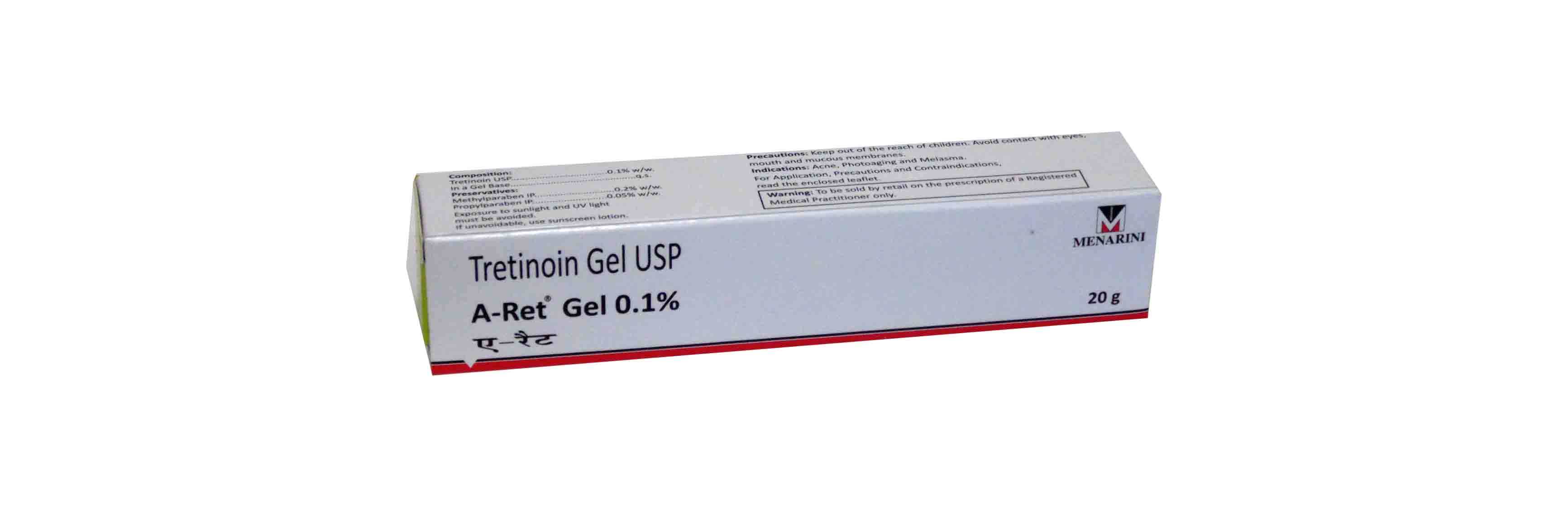
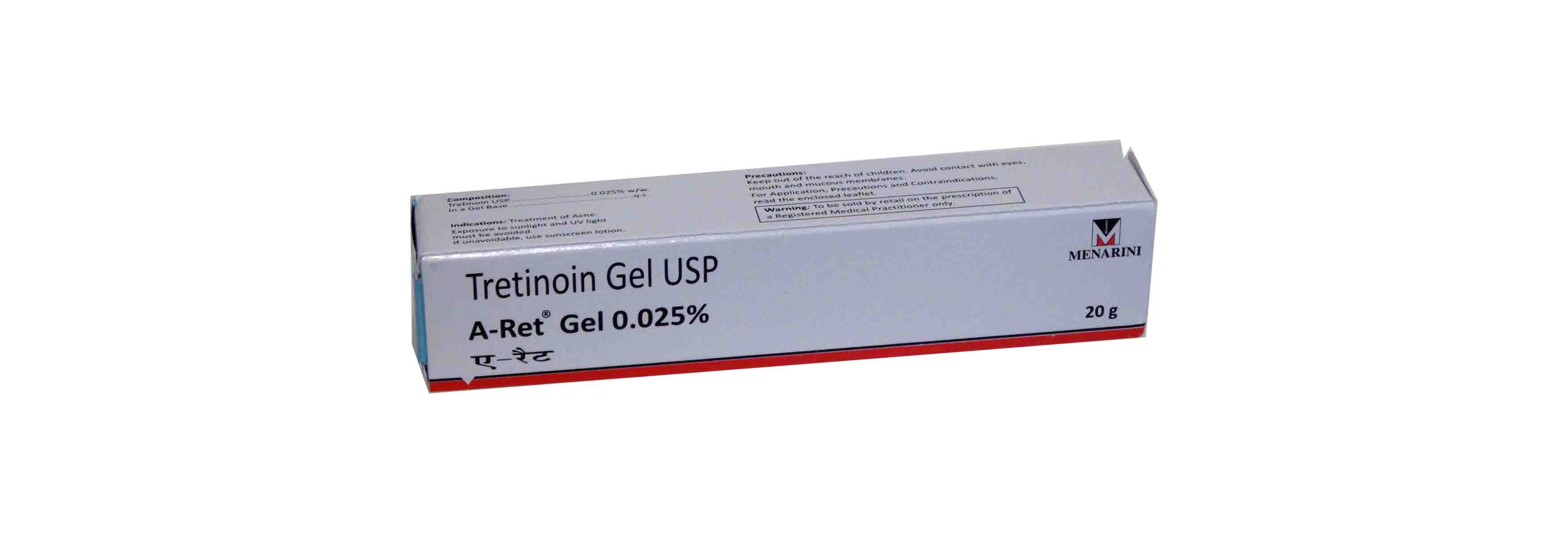
A Ret Gel 0.05% – Affordable Retin A Alternative
A ret gel 0.05% 20gm is a retinoid medication widely used for the treatment of acne. Tretinoin, the active ingredient not only treats acne but also effective in reversing many of the visual signs of ageing. The most common use of Tretinoin 0.05% is to remove acne. It quickly removes acne, clearing skin pores and preventing pimples from developing as they normally would. Tretinoin is one of the most effective acne treatments available on the market today.
The topical medicine works by affecting the production of skin oils, although the exact mechanism of action is still unknown by which the medication works. By reducing oil levels, tretinoin makes it significantly more difficult for pimples to develop on the facial skin. It can take up to 12 weeks to see results from A ret gel. If you develop irritation by using it, check with your dermatologist if symptoms are troublesome.
Retin A gel may make your skin condition worse during the initial days of the treatment before it gets better. The condition is temporary and goes away. The topical formulation is not recommended for women who are pregnant or breastfeeding. When you are following a tretinoin therapy, be careful about your exposure to the sun, as, like other tretinoin preparations, A ret gel can thin your skin, making it more prone to sun damage. However, wearing sunscreen can minimize damage or sunburn. Also, consider additional preventive measures like wearing a hat with a brim.
Like all medicines, A ret gel 0.05% gel has some side effects. In general, all tretinoin formulations are safe and effective medication. However, some users may experience unwanted effects ranging from minor skin irritation to long term severe side effects. The most common side effects of A ret gel is a burning or stinging sensation in the skin directly after the application. This is often accompanied by itching, redness, and mild scaling. Many of these minor side effects are temporary resolves on their own while others easily fixed by using moisturizers or other skincare products to overcome dryness caused by Tretinoin. More serious side effects are rare and include facial swelling, conjunctivitis, skin discolouration, swelling of the eyelids, and blisters.
Apply just a pea-sized amount to your entire face. The topical formulation is potent, so a pea size is all you need. Spread it across your fingertips and then dab it all over the affected area, smooth it around. The gel formulation works faster since it is alcohol-based and evaporates quickly. Go a bit lighter around your eyes nose and mouth since those are flake prone areas. Use the formulation at night and apply sunscreen during the day. UV rays make tretinoin less active, so there’s no point using the product during daytime as you won’t get the same results. If you are making all your efforts to minimize the drying effect of the product, cut back the usage every other night under the supervision of a dermatologist.

What is A Ret 0.05% Gel used for?
A Ret 0.05% Gel contains tretinoin 0.05% in a conventional gel formulation — a hydroalcoholic base. It is indicated for: acne vulgaris (comedonal, papulopustular, and nodulocystic as part of combination therapy); photoaging (fine lines, rough texture, dyspigmentation, lentigines); and post-inflammatory hyperpigmentation. The gel vehicle is lighter and more suitable for oily and combination skin types than tretinoin cream — it applies more cleanly without an occlusive feel, making it cosmetically preferred by many acne patients. A Ret 0.05% gel provides intermediate-strength retinoid therapy effective for moderate acne and photoaging.
How does A Ret 0.05% Gel differ from Retino A 0.05% Cream?
A Ret 0.05% Gel and Retino A 0.05% Cream both contain tretinoin 0.05% but in different vehicles. Gel vs. cream differences: the gel vehicle is alcohol-based and lighter — faster-drying, non-greasy, cosmetically preferred for oily skin. The cream vehicle is more emollient and moisturising — better tolerated in dry or sensitive skin types. Efficacy: both deliver the same tretinoin concentration — comparable clinical outcomes for acne and photoaging at equal concentrations. Side effects: the gel may cause slightly more dryness and initial irritation due to the alcohol content; the cream's emollient base softens irritation. Clinical selection: A Ret 0.05% gel for oily/combination acne-prone skin; Retino A 0.05% cream for dry, sensitive, or mature skin types.
Is A Ret 0.05% Gel safe alongside topical antibiotics for acne?
A Ret 0.05% Gel combined with topical clindamycin 1% gel (Clindac A) or topical erythromycin is a well-established acne combination — addresses both comedone formation (tretinoin) and P. acnes overgrowth (antibiotic). Application: apply topical antibiotic in the morning, A Ret gel in the evening — this separates the two agents and avoids potential incompatibilities. Alternatively, pre-formulated combination products (tretinoin + clindamycin) are available. Topical antibiotic monotherapy is discouraged due to resistance risk — combination with tretinoin is standard-of-care. Duration: limit topical antibiotics to 3–6 months; continue tretinoin indefinitely as monotherapy for acne maintenance.
What drug interactions apply to A Ret 0.05% Gel?
Topical tretinoin gel has minimal systemic absorption — no systemic drug interactions expected. Local interactions: benzoyl peroxide degrades tretinoin — apply separately (A Ret at night, benzoyl peroxide in the morning); alcohol-based toners worsen gel's drying effect — avoid; salicylic acid in combination with tretinoin gel increases irritation and peeling — use separately if at all. The gel vehicle dries faster than cream — compatible moisturisers (fragrance-free, non-comedogenic) can be applied 5–10 minutes after A Ret gel absorption. Photosensitisation: strict daily SPF 30+ sunscreen required — the gel vehicle does not provide UV protection. Avoid waxing, IPL, or laser procedures on A Ret-treated skin for at least 5–7 days before procedures.
Is A Ret 0.05% Gel equivalent to Retin-A 0.05% Gel?
Yes. A Ret 0.05% Gel and branded Retin-A 0.05% Gel both contain tretinoin 0.05% in equivalent gel formulations. A Ret is the generic alternative providing the same intermediate-strength retinoid therapy for acne and photoaging at significantly lower cost. PremiumRxDrugs.com stocks authentic manufacturer-sourced A Ret 0.05% Gel verified for quality and bioequivalence.
Can I order A Ret 0.05% Gel from PremiumRxDrugs for international delivery?
Yes. PremiumRxDrugs.com ships A Ret 0.05% Gel to the USA, UK, Australia, and many other countries. Our genuine manufacturer-verified tretinoin gel products, competitive pricing, and free worldwide shipping on qualifying orders make usa reliable international pharmacy for topical retinoid therapy.
What side effects does A Ret 0.05% Gel cause?
Common: dryness and peeling (the gel vehicle can be more drying than cream — particularly in the first 4–8 weeks); erythema and skin redness; purging (acne worsening for 4–8 weeks); burning or stinging on application; photosensitisation (increased sensitivity to sunburn — strict sunscreen use required). The alcohol content of gel vehicles can cause more initial stinging than cream formulations on sensitive skin. Managing gel irritation: ensure skin is completely dry before application (20–30 minutes post-wash); use a very thin amount; apply non-comedogenic moisturiser after absorption; consider switching to Retino A 0.05% cream if gel causes excessive dryness or irritation. Allergic contact dermatitis to tretinoin itself is uncommon.
What is the correct way to start A Ret 0.05% Gel for a tretinoin-naive patient?
Tretinoin-naive patients starting A Ret 0.05% Gel: Week 1–2: apply a pea-sized amount every other night to completely dry skin; skip if excessive irritation develops. Week 3–4: apply every other night consistently; introduce a supportive ceramide moisturiser applied 5–10 minutes after gel absorption. Week 5–8: move to nightly application if tolerating well (minimal peeling, manageable redness). Week 8+: nightly application; skin should be adapting — the retinization phase completing. If 0.05% causes persistent excessive irritation at week 4: switch to A Ret 0.025% or Retino A 0.025% cream for 8–12 weeks before returning to 0.05%. The most common reason tretinoin fails is discontinuation due to early irritation — graded initiation and patient education about the purging phase are critical.
How should A Ret 0.05% Gel be stored?
Store A Ret 0.05% Gel at room temperature (15–25°C) away from direct sunlight and heat. Tretinoin is degraded by UV light and heat — exposure causes the formulation to become less potent and the gel may change colour (yellowing indicates tretinoin degradation). Do not freeze. Keep the tube tightly capped when not in use to prevent air oxidation of tretinoin. Keep out of reach of children. Do not use after the expiry date. An opened tube should be used within 12 months per the product label. The alcohol-based gel is flammable — keep away from open flames. If the gel changes colour significantly from light yellow to dark yellow or brown, replace with a fresh tube.
Can A Ret 0.05% Gel be used for dark spots and uneven skin tone?
Yes — A Ret 0.05% Gel is effective for post-inflammatory hyperpigmentation (PIH), acne-related dark spots, and uneven skin tone (dyschromia). Tretinoin fades pigmentation via: accelerated keratinocyte turnover dispersing melanin-containing cells; tyrosinase inhibition reducing new melanin formation; dispersing existing melanin granules within the epidermis. Clinical timeline for PIH: visible lightening at 8–12 weeks; significant improvement at 3–6 months. For optimal PIH results: combine A Ret 0.05% gel (evening) with morning vitamin C serum (antioxidant, additional tyrosinase inhibition) and mandatory SPF 50+ sunscreen (prevents UV-triggered PIH recurrence). Azelaic acid 20% cream can be used in the morning alongside evening A Ret — a highly effective dual-agent PIH treatment combination.
What is the recommended morning skincare routine while using A Ret 0.05% Gel at night?
Morning routine for A Ret 0.05% Gel users: (1) gentle non-foaming cleanser — removes nighttime skin products without stripping; (2) optional — vitamin C serum (10–15% L-ascorbic acid) or niacinamide serum for antioxidant protection and PIH improvement; (3) lightweight non-comedogenic moisturiser (especially important during retinization phase); (4) broad-spectrum SPF 30–50+ sunscreen — mandatory every morning, year-round, regardless of weather. The morning routine should be simple and supportive — its primary purpose is moisturisation and UV protection to counteract tretinoin-induced dryness and photosensitisation. Avoid: physical scrubs, exfoliating acids, and astringent toners in the morning while on tretinoin. Keep active ingredients to a minimum, particularly during the first 4–8 weeks of retinoid use.
Login
Sign Up
Login
Sign Up