




A Ret Gel .1% (Tretinoin Gel)
Available Dosages
| Description |
|
|---|---|
| SKU | 1150 |
| Generic For | Retin A Gel |
| Strength | 0.1% (20gm) |
| Manufacturer | AKUMS DRUGS & PHARMACEUTICALS LTD |
| Active Ingredient | Tretinoin Gel USP |


| Pack Size | Qty | Price Per Pill or Unit | Price | Cart | |
|---|---|---|---|---|---|
| 1 Tube/s | US$ 9.00 | US$ 9.00 | |||
|
|||||
| 3 Tube/s | US$ 7.00 | US$ 21.0022%US$ 27.00 | |||
|
|||||
| 6 Tube/s | US$ 6.75 | US$ 40.5025%US$ 54.00 | |||
|
|||||

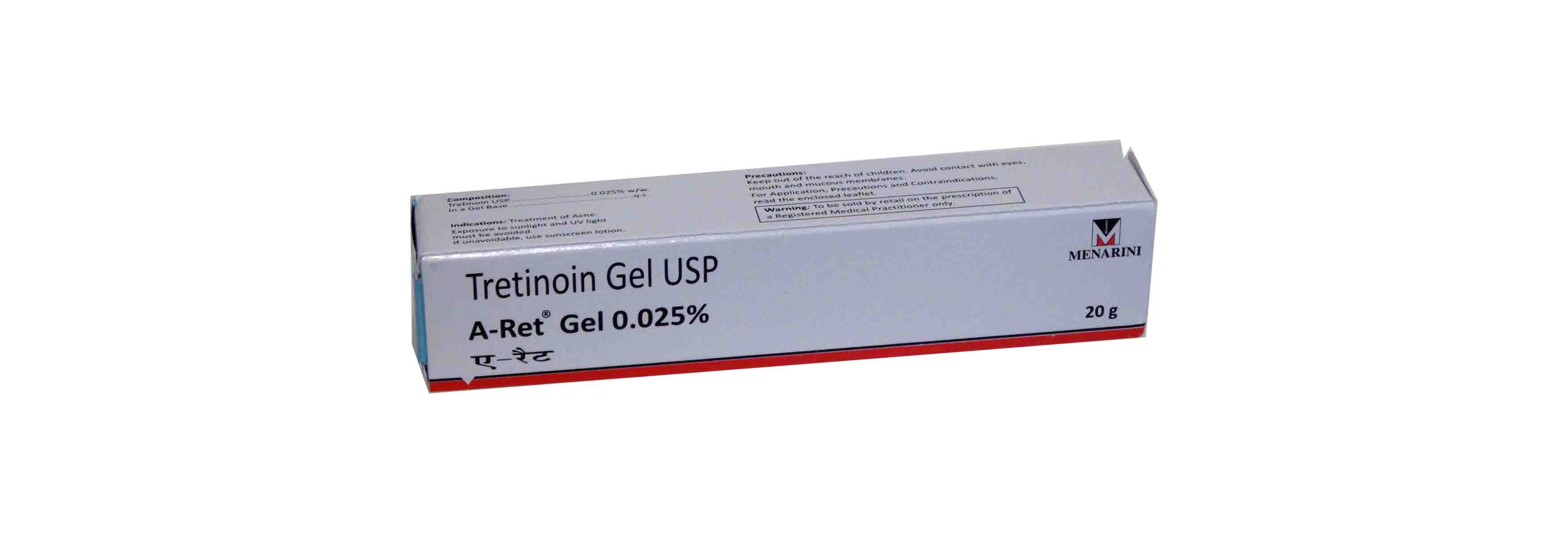
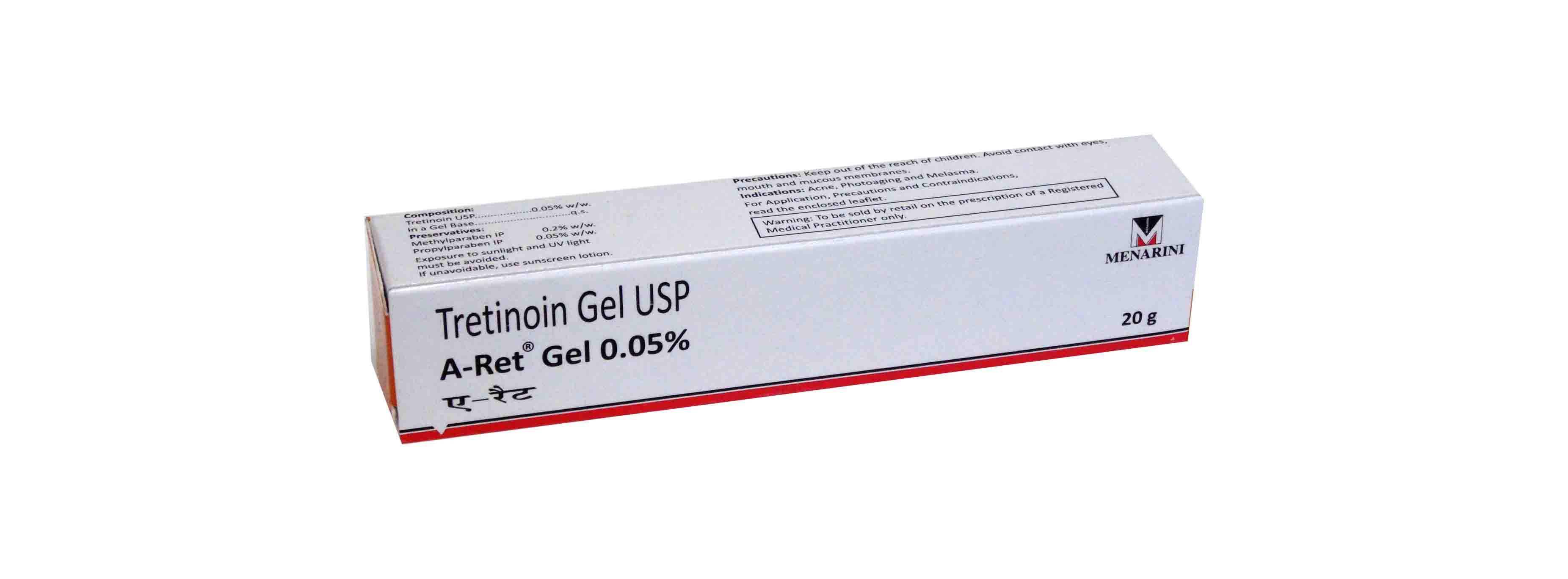
A Ret Gel .1% ( Menarini Tretinoin Gel) – Retin A Gel Alternative
A-Ret gel 0.1% is a powerful topical retinoid medication used to treat acne, improve skin texture, and reduce visible signs of ageing. The gel contains tretinoin as the main active ingredient, a vitamin A derivative widely prescribed by dermatologists to promote the growth of healthier skin cells. People struggling with persistent pimples, blackheads, and acne scars often use tretinoin-based treatments under medical guidance because they target the root causes of acne rather than simply drying the skin. With regular use, A-Ret gel 0.1% helps reveal smoother, clearer, and more radiant skin. Whether you want to treat acne breakouts, reduce wrinkles, or improve skin tone, this advanced acne & skin renewal treatment is a clinically trusted solution that delivers visible results over time.
What is A-Ret gel 0.1%?
A-Ret gel 0.1%is a topical acne medication that contains tretinoin (retinoic acid). It is a medication used to treat acne vulgaris. Acne is a common skin condition that causes pimples. You can use this retinoid solution on the entire skin. For best results, wash your hands before and after using this medication. Apart from acne, A-Ret gel 0.1% is a highly effective topical retinoid treatment that improves skin texture and reduces signs of ageing. With consistent use and proper skincare habits, A-Ret gel can transform acne-prone or uneven skin into smoother, brighter, and more youthful-looking skin.
Tretinoin – Action mechanism
Tretinoin is a vitamin A derived compound (retinoid) widely used in dermatology for the treatment of acne and other skin concerns. It is available in creams, gels, and lotions in varying strengths (commonly 0.025%, 0.05%, and 0.1%). It is considered a gold-standard topical treatment because it acts directly in its active form without requiring conversion in the skin. Tretinoin works by binding to retinoic acid receptors (RARs) in skin cells, which are located in the cell nucleus. This interaction alters gene expression and regulates the growth, division, and maturation of skin cells. As a result, it normalises keratinisation, the process by which skin cells are formed and shed. One of its primary actions is increasing skin cell turnover. It accelerates the shedding of dead skin cells and promotes the production of new ones, preventing clogged pores and reducing the formation of acne lesions such as blackheads and whiteheads. This gives tretinoin its strong comedolytic (pore-clearing) effect.
Additionally, tretinoin stimulates collagen production in the dermis, helping to reduce fine lines and improve skin elasticity over time. It also disperses melanin more evenly, which helps fade dark spots and improve overall skin tone. Overall, tretinoin works at the cellular level to renew the skin, making it highly effective for both acne treatment and anti-ageing.
Manufacturer: Akums Drugs & Pharmaceuticals Ltd. is the manufacturer of A-Ret gel 0.1%. This means the physical production of the gel (formulation, filling, packaging) is carried out in Akums’ manufacturing facilities in India. Retin-A is the original brand-name formulation of tretinoin, while A-Ret gel is its generic equivalent.
Brand (Retin A) Vs Generic (A-Ret gel)
The main difference between Retin-A and A-Ret gel 0.1% lies in branding, formulation, and cost rather than effectiveness. Both contain the same active ingredient, tretinoin, a powerful vitamin A derivative used to treat acne, reduce fine lines, and improve skin texture. They deliver nearly identical clinical results when used consistently. However, Retin-A, being a branded product, may use more refined or patented delivery systems that can feel smoother on the skin and sometimes cause slightly less irritation, while generic A-Ret gel 0.1% is more affordable and widely available but may vary in texture and tolerability depending on the manufacturer. In terms of side effects such as dryness, redness, and peeling, both behave similarly due to the same active compound, making the final choice largely dependent on budget, skin sensitivity, and personal preference rather than performance.
Medical uses of A-Ret gel
A-Ret gel 0.1% (tretinoin gel) is commonly prescribed for several dermatological conditions.
- Acne vulgaris: The primary use of tretinoin gel is to treat acne. It helps remove pore blockages and reduce inflammation that causes pimples.
- Blackheads and whiteheads: The medication reduces comedones by preventing keratin buildup inside pores.
- Acne scars: Consistent use helps improve skin texture and reduce the appearance of acne scars.
- Hyperpigmentation: A-Ret gel helps fade dark spots caused by acne, sun exposure, or hormonal changes.
- Fine lines and wrinkles: Because tretinoin stimulates collagen production, it can improve early signs of ageing and skin dullness.
How A-Ret gel work?
Dermatologists often consider tretinoin one of the most effective topical treatments for acne and skin renewal, as it can transform the skin at a cellular level. The active ingredient tretinoin is believed to regulate the life cycle of skin cells. Tretinoin is a retinoid that works by regulating skin cell growth and reducing pore blockage. By accelerating skin cell turnover and preventing dead cells from clogging pores, tretinoin helps reduce breakouts and improve overall skin clarity. Fewer blocked pores mean fewer pimples and breakouts. Tretinoin stimulates collagen production, improving skin elasticity and reducing wrinkles. By targeting the underlying causes of acne, tretinoin helps provide long-lasting improvements rather than temporary relief.
Key benefits of A-Ret gel 0.1%
Using A-Ret gel regularly can provide several dermatological benefits. This retinoid treatment improves both acne and long-term skin health.
- Treats acne effectively: A-Ret gel works by clearing clogged pores and preventing the formation of new pimples, blackheads, and whiteheads. It also reduces inflammation associated with acne.
- Promotes skin renewal: Tretinoin accelerates the natural skin cell turnover process, helping shed old skin cells and replace them with healthier new ones.
- Reduces acne scars and dark spots: The medication helps fade hyperpigmentation and acne scars by breaking down excess melanin and stimulating skin regeneration.
- Improves skin texture: Regular application smooths rough skin, tightens pores, and enhances overall skin texture.
- Anti-ageing benefits: Tretinoin also stimulates collagen production, helping reduce fine lines and wrinkles while improving skin firmness and elasticity.
These benefits make A-Ret gel a versatile treatment for people who want both clear skin and a youthful appearance.
Tretinoin products
Tretinoin comes in different strengths and formulations. For desired results, follow your doctor’s instructions. Some of the common products that come under tretinoin:
Tretin Cream 0.025% and more
Precautions and warnings with tretinoin gel
Before using A-Ret gel, consider the following safety guidelines.
- Sun protection: Tretinoin makes the skin more sensitive to sunlight, so use a daily sunscreen with SPF 30 or higher.
- Avoid harsh skincare products: Do not combine with strong exfoliants, alcohol-based products, or harsh chemical peels unless recommended by a dermatologist.
- Pregnancy and breastfeeding: Tretinoin is generally not recommended during pregnancy. Consult a doctor before use if pregnant or breastfeeding.
- Sensitive skin: People with eczema, sunburn, or extremely sensitive skin should consult a healthcare professional before starting treatment.
Side effects of Menarini tretinoin gel
Like most retinoid medications, A-Ret gel may cause mild side effects, especially during the first few weeks. Common side effects include skin dryness, peeling or scaling, mild burning or stinging, redness, and increased sensitivity to sunlight. These effects usually improve as the skin adjusts to the medication. In rare cases, users may experience severe irritation, blistering, swelling, or skin discolouration. If severe symptoms occur, discontinue use and consult a healthcare professional.
Why buy A-Ret gel 0.1% online?
Buying A-Ret gel online offers convenience and accessibility for people seeking reliable acne treatment. Benefits include affordable prices, convenient home delivery, easy access to dermatologist-recommended medications, and repeat-purchase options for ongoing skincare treatment. When purchasing online, always choose trusted pharmacies to ensure product authenticity and quality. Premiumrxdrugs is one of the best online pharmacies that offer authentic medicines at reasonable prices.
Dosage and administration methods of tretinoin gel
Proper usage is essential for achieving the best results and minimising side effects. For proper application, wash your face with a mild cleanser and pat dry. Wait 15–20 minutes to ensure skin is completely dry. Apply a pea-sized amount of the gel to the affected areas. Gently spread a thin layer over the skin. Use once daily, preferably at night, for best results. Dermatologists usually recommend starting with 2–3 applications per week and gradually increasing frequency as your skin adapts. Always wash your hands after applying the gel. However, people with extremely sensitive skin should start with lower strengths, such as 0.025% or 0.05%, before using 0.1%.
Tretinoin results: Results from tretinoin treatments take time and require consistency. At about 2–4 weeks, skin may start peeling or purging as clogged pores clear. During 6–8 weeks, acne breakouts begin to reduce. From about 3–6 months: Visible improvement in wrinkles, pigmentation, and skin texture. Maximum benefits are achieved with regular use over about 6 to 12 months. It is important to continue treatment even if improvement is gradual.
Storage instructions: To maintain the effectiveness of A-ret gel, store at room temperature. Keep away from heat and sunlight. Close the tube tightly after use. Keep out of reach of children. Proper storage ensures the medication remains stable and effective.
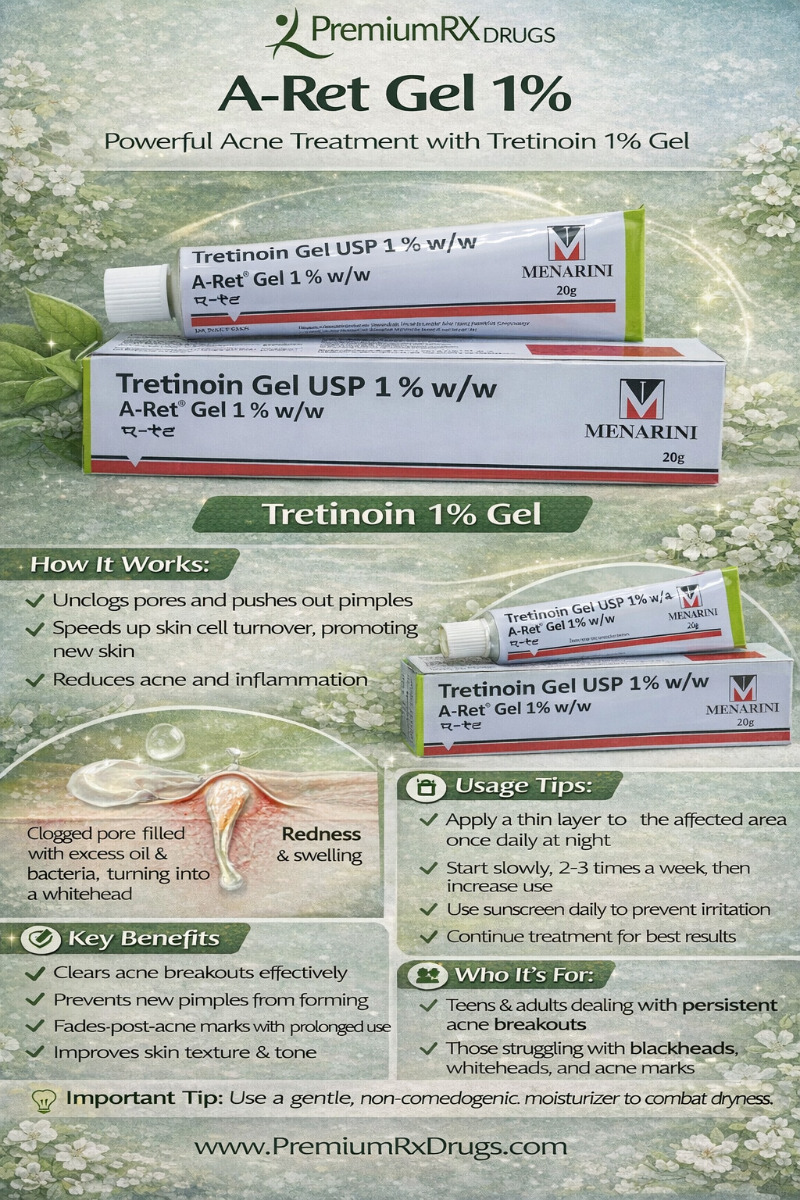
What is A Ret 0.1% Gel used for?
A Ret 0.1% Gel contains tretinoin 0.1% — the highest standard concentration topical retinoid. Indications: moderate-severe acne vulgaris (resistant to lower concentrations); significant photoaging (deep wrinkles, pronounced dyspigmentation, loss of skin firmness); and post-inflammatory hyperpigmentation resistant to lower-strength retinoids. At 0.1%, tretinoin provides maximum keratinocyte normalization, comedolytic action, and collagen stimulation — the most effective topical retinoid therapy available. Reserved for patients with established retinoid tolerance (previously used 0.025–0.05% successfully) or under close dermatologist supervision for patients requiring aggressive acne or photoaging treatment.
Who is A Ret 0.1% Gel appropriate for?
A Ret 0.1% Gel is appropriate for: (1) patients previously tolerating tretinoin 0.05% or Supatret 0.04% nightly who need enhanced efficacy; (2) adults with moderate-severe inflammatory and comedonal acne inadequately controlled at lower concentrations; (3) patients specifically seeking maximum photoaging treatment under dermatologist guidance; (4) skin of colour patients with significant PIH unresponsive to lower concentrations (with careful monitoring for irritation-related hyperpigmentation). Not appropriate for: retinoid-naive patients (start at 0.025% or 0.04% microsphere); sensitive, dry, or eczema-prone skin; patients with rosacea (may flare); patients unable to commit to strict daily sunscreen use and avoidance of excessive sun exposure.
How should A Ret 0.1% Gel be introduced for patients upgrading from 0.05%?
Upgrading from tretinoin 0.05% to A Ret 0.1% Gel: Week 1–2: apply 0.1% every other night (even if tolerating 0.05% nightly — the higher concentration causes more initial irritation during transition). Week 3–4: assess skin response — if tolerating well (manageable peeling and dryness, no excessive erythema or blistering), move to nightly application. Week 5+: nightly application. The 0.1% formulation achieves significantly more rapid epidermal turnover — initial dryness and peeling may be more intense than with lower concentrations even in retinoid-experienced skin. Supporting skincare: rich non-comedogenic moisturiser (ceramide-based); daily SPF 50+; avoid all other potential irritants during transition.
What drug interactions apply to A Ret 0.1% Gel?
Same precautions as lower-concentration tretinoin gels — systemic drug interactions are not expected. Local interactions: the higher tretinoin concentration increases the severity of reactions with incompatible topicals. Benzoyl peroxide: absolute separation required (apply morning only); concurrent use with 0.1% tretinoin at night would cause significant skin damage. Salicylic acid: avoid concurrent use — excessive exfoliation and irritation. Alcohol-based toners, astringents: worsen drying — avoid. Other retinoids: never combine. At 0.1%, the photosensitisation effect is most pronounced — SPF 50+ every morning without exception. Pre-procedure tretinoin pause: extend to 7–10 days before laser, IPL, or chemical peel procedures (longer than for lower concentrations due to enhanced skin turnover rate).
Is A Ret 0.1% Gel equivalent to Retin-A 0.1% Gel?
Yes. A Ret 0.1% Gel and branded Retin-A 0.1% Gel both contain tretinoin 0.1% in equivalent gel formulations. A Ret is the generic alternative providing the same maximum-strength topical retinoid therapy at significantly lower cost. PremiumRxDrugs.com stocks authentic manufacturer-sourced A Ret 0.1% Gel verified for quality and therapeutic equivalence.
Can I order A Ret 0.1% Gel from PremiumRxDrugs for international delivery?
Yes. PremiumRxDrugs.com ships A Ret 0.1% Gel to the USA, UK, Australia, and many other countries. Our genuine manufacturer-verified tretinoin products, competitive pricing, and free worldwide shipping on qualifying orders make us a reliable international source for maximum-strength topical retinoid therapy.
What side effects does A Ret 0.1% Gel cause?
A Ret 0.1% causes the most pronounced retinoid dermatitis of all standard tretinoin concentrations: significant dryness and skin flaking; pronounced erythema and skin redness; intense purging (acne worsening for 6–10 weeks); stinging on application; substantial photosensitisation. Blistering or skin sloughing if applied to broken/irritated skin. Eyelid oedema if applied too close to the orbital rim. Managing 0.1% side effects: the every-other-night start is non-negotiable for the first 4–6 weeks; use a rich barrier moisturiser (ceramide-based); consider 'sandwich method' — moisturiser before and after tretinoin application; strict SPF 50+ every morning. If side effects are intolerable after 6 weeks: revert to 0.05% until skin fully adapts before retrying 0.1%.
What results can be expected from A Ret 0.1% Gel for photoaging?
A Ret 0.1% is the most-studied topical agent for photoaging with robust clinical trial evidence. Expected improvements: fine lines and wrinkles — 20–30% reduction in depth at 6 months; 40–55% at 12 months; skin texture — significant smoothing at 3 months; dyspigmentation/age spots — significant fading at 4–6 months; skin firmness — measurable increase in dermal collagen density at 6 months (ultrasound-confirmed); epidermal thickness — increased at 3 months with continued improvement. Long-term use (years): progressive and maintained improvement as long as retinoid therapy continues. Cessation of tretinoin: improvements gradually reverse over 6–24 months as collagen remodelling returns to baseline. Maintenance therapy is therefore recommended indefinitely for sustained photoaging benefits.
Can A Ret 0.1% Gel be used on body skin for keratosis pilaris?
Tretinoin 0.1% gel can be used for keratosis pilaris (KP) on the upper arms, thighs, and buttocks — a common condition of rough follicular papules due to keratin plugging. Application: apply a thin layer to affected body areas 2–3× weekly (body skin is more sensitive to tretinoin than facial skin). KP improvement: keratin plugs are gradually broken down by tretinoin's comedolytic action — smoother skin texture over 3–6 months. Important considerations: body application covers a larger surface area — use a minimal amount; photosensitisation of body skin may be less practical to manage with sunscreen (clothing is an alternative). Alternatives for KP: urea 20–40% cream, glycolic acid lotion, and lactic acid lotion are also effective and cause less photosensitisation — often used alternating with or instead of tretinoin for body KP.
How long should A Ret 0.1% Gel be used continuously?
A Ret 0.1% Gel is suitable for indefinite long-term use once skin is adapted — there is no maximum treatment duration for tretinoin. For acne: use nightly until full clearance is achieved (typically 6 months), then continue at 2–3× weekly as maintenance or reduce to lower concentration (0.05%). For photoaging: use indefinitely — benefits are cumulative and progressive; stopping leads to gradual reversal. Long-term safety: decades of clinical use data confirm topical tretinoin's long-term safety — no organ toxicity, carcinogenicity, or tachyphylaxis (loss of efficacy). Skin thickness increases with long-term use rather than thinning (unlike topical steroids). Annual dermatologist skin review is recommended for photoaging patients on long-term retinoid therapy to monitor results and assess for any skin changes.
Does A Ret 0.1% Gel affect skin's natural barrier function?
High-concentration tretinoin 0.1% initially disrupts the skin barrier during the retinization phase — accelerated corneocyte shedding temporarily reduces the stratum corneum's protective function, increasing transepidermal water loss (TEWL) and sensitivity. This is why supporting the barrier with ceramide-rich moisturisers is essential during the first 8–12 weeks of 0.1% use. With long-term use (beyond 3–6 months): tretinoin actually strengthens the skin barrier — it increases epidermal thickness, stimulates ceramide synthesis, and improves barrier function markers. This explains why long-term tretinoin users ultimately have more resilient skin than before treatment started. The initial barrier disruption phase, while uncomfortable, is temporary and leads to long-term barrier improvement.
Login
Sign Up
Login
Sign Up