
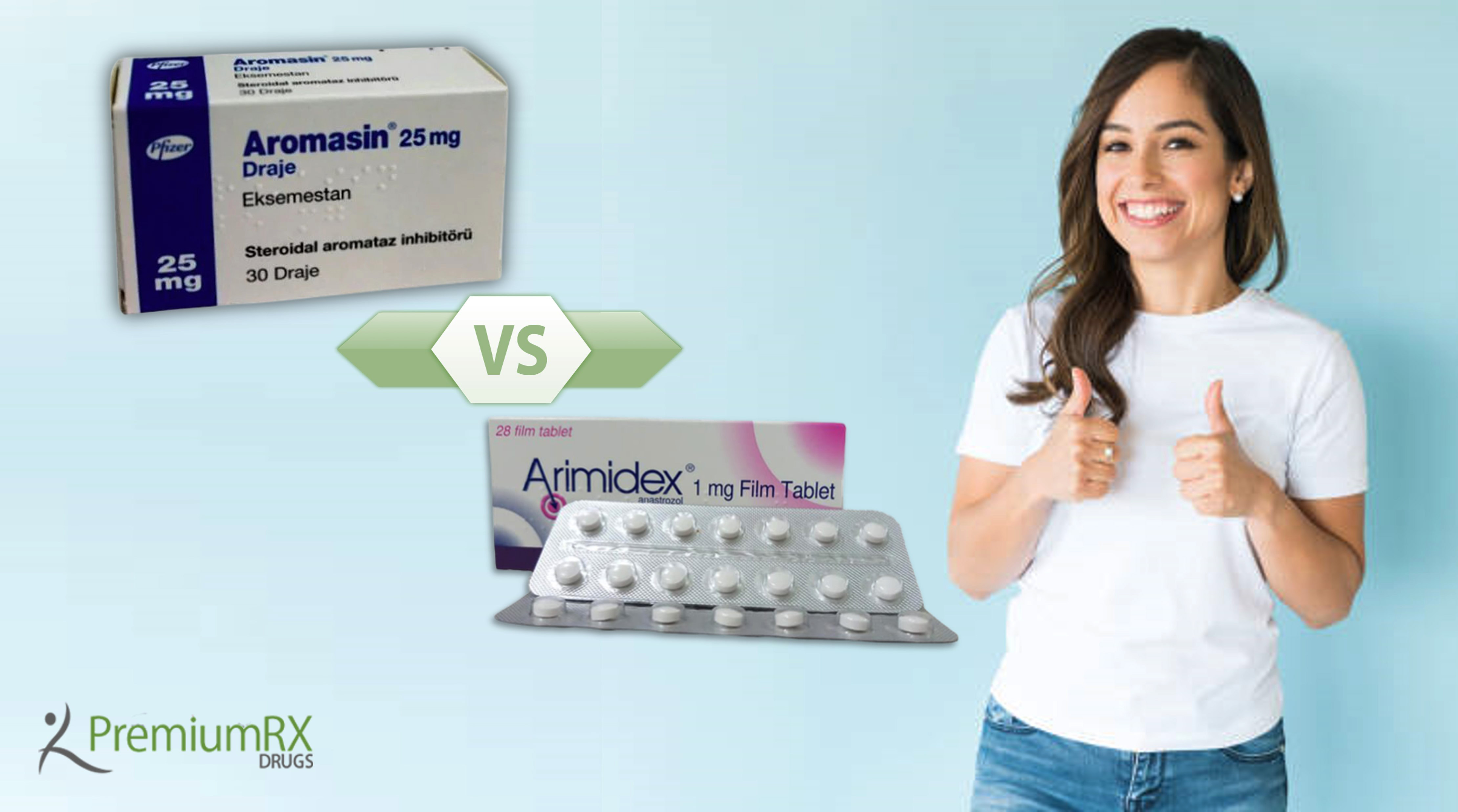
Arimidex and Aromasin are aromatase inhibitors used for treating estrogen receptor-positive ER+ breast cancer in women who have gone through menopause. As per studies, both anastrozole and exemestane are similarly effective in achieving cancer-free survival.
Aromasin (exemestane) and Arimidex (anastrozole) belong to a class of medications known as aromatase inhibitors, which work by blocking aromatase, an enzyme involved with the production of estrogen in the body. Aromatase transforms androgens, such as testosterone, into the female hormone estrogen. Most breast cancers are classified as hormone receptor-positive breast cancer, meaning the growth of the cancer is heavily maintained by the amount of estrogen in the body. Estrogen can bind to estrogen receptors on breast cancer cells, signalling them to replicate and grow.
Aromasin and Arimidex are brand-name drugs. They are also hormone therapy drugs that effectively treat hormone receptor-positive breast cancer. By reducing estrogen levels in the body, these aromatase inhibitors help slow or stop the growth of cancer cells. Both these medications should be used under a doctor’s supervision. Continue reading to find out more about the differences between Arimidex and Aromasin.
The main differences between Aromasin and Arimidex
Aromasin is the trade name of exemestane. It was approved by the Food and Drug Administration to treat hormone receptor-positive breast cancer of early stage in postmenopausal women who have already used Tamoxifen for two to three years. Aromasin 25mg tablet is taken once daily after consuming food. Taking Aromasin after a meal has been shown to increase its absorption.
Arimidex is a brand name for anastrozole, which the FDA approved to treat hormone receptor-positive early breast cancer in postmenopausal women. The medicine is available as a 1mg tablet, taken once a day before or after meals. The absorption of this drug in the body is not greatly affected by food.
What are Aromasin and Arimidex treats?
Arimidex and Aromasin are typically given after initial therapy, such as surgery, has been administered. Aromasin is FDA-approved as an adjunct breast cancer treatment after Tamoxifen has been administered for two to three years. Aromasin is used for 2 to 3 years following tamoxifen therapy, for a total of 5 years of Tamoxifen and Aromasin therapy. Tamoxifen is an estrogen modulator that binds to estrogen receptors on cancer cells, preventing estrogen from binding and promoting cancer cell growth. Arimidex is approved for adjuvant treatment right after the first therapy, such as surgery, without using tamoxifen first.
Both these medications are also effective in treating advanced-stage hormone receptor-positive breast cancer following tamoxifen therapy. Also known as metastatic cancer, advanced breast cancer spreads to the lymph nodes and other body parts such as the lungs, liver, and bones. Arimidex also got clinical approval for treating advanced hormone breast cancer or cancer that may or may not be responsive to hormone treatment. In comparison, Aromasin is not approved for treating advanced-stage hormone-unknown breast cancer, although it may sometimes be used off-label for this purpose.
Aromasin or Arimidex, which one is more effective?
Both Aromasin and Arimidex are effective breast cancer treatments. The most effective breast cancer therapy usually depends on several factors, such as the patient’s condition, response to the treatment, and any side effects experienced. It is important to speak to a doctor to determine the best option.
As per research studies, these aromatase inhibitors were equally effective for treating hormone receptor-positive breast cancer. Moreover, clinical studies found that five years of aromatase inhibitor treatment was not superior to two years of tamoxifen therapy, followed by three years of aromatase inhibitor therapy. Another study revealed that breast cancer drugs are effective adjuvant treatments for postmenopausal breast cancer. One of the main deciding factors between these two medications may be their tolerability, including potential adverse effects. The same clinical research revealed that Aromasin could be considered an upfront adjuvant treatment for postmenopausal hormone receptor-positive breast cancer without requiring three years of tamoxifen treatment first.
Common side effects of Aromasin Vs Arimidex
Aromasin and Arimidex can cause similar side effects, such as joint pain, muscle pain, and hot flashes. As aromatase inhibitors, both drugs can significantly reduce bone mineral density and increase the risk of bone disease (osteoporosis).
According to research reports, Arimidex’s most common side effects are weakness, sore throat, depression, nausea, joint pain, osteoporosis, headache, insomnia, back pain, and high blood pressure. In comparison, Aromasin’s most common side effects include fatigue, headache, nausea, increased sweating, increased appetite, hot flashes, and insomnia. When both these medications were compared in clinical trials, studies found that Arimidex 1mg was more likely to cause osteoporosis, high cholesterol levels, and vaginal bleeding. This aromatase inhibitor was more likely to cause liver function abnormalities.
Conclusion
Both medicines, Arimidex and Aromasin, are aromatase inhibitors that block the aromatase enzyme. The FDA approves both to treat breast cancer. Aromasin contains exemestane, and Arimidex contains anastrozole. Aromasin effectively treats hormone receptor-positive breast cancer, but it’s not approved to be used upfront without two to three years of tamoxifen therapy. Anastrozole is clinically tested to treat hormone receptor-positive breast cancer upfront. When it comes to finding the best aromatase inhibitor, it is the one that is effective and well tolerated, with the fewest adverse reactions.

Latest posts by Marie (see all)
- Peptide Science: Understanding Peptides, Their Biology, Uses and Future in Medicine - September 22, 2026
- HCG for Men: Uses, Benefits, and Important Considerations - September 18, 2026
- Alpha Blockers for Blood Pressure and Prostate: A Patient’s Guide to Alpha Blockers - September 17, 2026


