
Hair is a woman’s most important accessory, and good hair is a sign of inner health. However, unwanted hair, especially on a woman’s face, is a big red flag in social gatherings. Female facial hair has long been a taboo topic. Unwanted facial hair among women can be distressing. This condition is mostly caused by underlying skin and endocrine disorders.
Types of unwanted hair on the face
There are two types of hair on the face: terminal and vellus. Terminal hair is dark, coarse hair similar to that found on the scalp and underarms. Vellus hair is the thin, light hair found on the face and body in women. Thick, coarse hair on androgen-dependent areas such as the upper lip, chin, centre of the chest, lower abdomen, and thighs is common; this condition is called hirsutism. Hirsutism is a medical condition characterised by excessive hair growth, which is dark or coarse like that of men. In women, it results from the overproduction of androgens and menopause.
Prescription cream to stop hair growth on the face
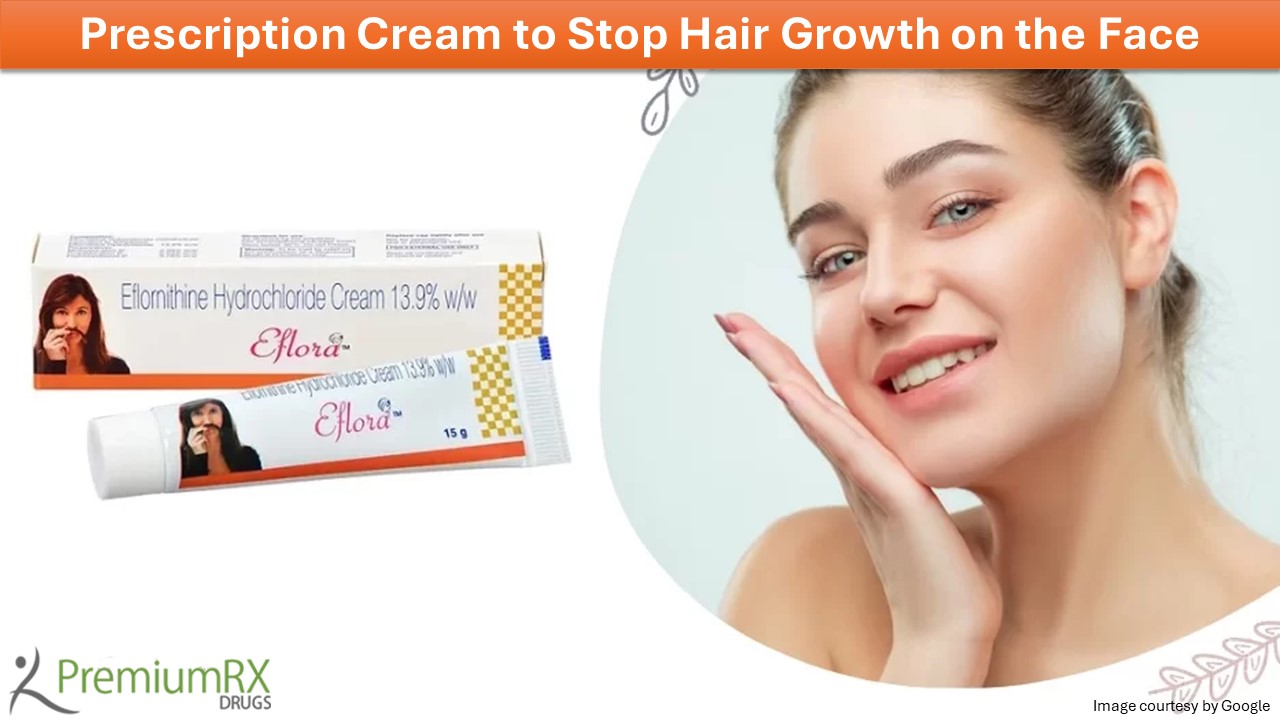
Eflora cream contains Ethornithine HCL (13.9% w/w). Eflornithine hydrochloride inhibits the ornithine decarboxylase enzyme essential for hair growth and reduces facial hair growth in women suffering from facial hirsutism. Eflora cream is not a hair removal cream; it hinders excessive or unwanted hair growth when applied accurately.
Eflornithine is the active ingredient in Eflora, a prescription cream for women experiencing excessive facial hair growth. This cream is sold only on the recommendation or prescription of a licensed medical practitioner. Eflora is a generic of Vaniqa.
How does Eflora work?
This medicated cream works only on the face by blocking a natural enzyme essential for hair growth in the skin. When applied regularly, this cream slows down hair growth and may also make the hair finer and lighter. It does not remove hair or cause hair loss; it works by stopping the hair follicle from growing further.
When used regularly, Eflora cream hinders the production of proteins vital to hair growth and blocks cell division, slowing facial and under-the-chin hair growth in women without destroying or preventing it from regrowing.
Eflora should not be used on other body parts and in children younger than 15.
How to use Eflora cream?
Always remember to wash your hands properly before and after using this medication. Clamp the affected area and pat dry. Apply a thin layer of Eflora cream to the affected areas of the face and chin. Usually, it is prescribed to use twice daily (at least in a gap of 8 hours). It is a prescription medicine; therefore, it should be used according to your dermatologist’s directions.
Eflora may take 4 to 6 weeks or longer to deliver noticeable results. Keep applying the cream for the prescribed period, and do not stop using it in between, even if you achieve the results. If you notice no result after using it for 10-12 weeks, contact your dermatologist.
Points to remember
- Read the patient information leaflet to know the application methods.
- There should be a 5-minute gap after shaving, waxing, or any other hair removal method.
- Do not wash the medicated area for at least 4 hours.
- Remember to maintain hygiene and wash your hands properly before and after application.
- Avoid getting this cream in your eyes, nose, or mouth. If it gets inside your eyes by mistake, rinse them thoroughly with running water. If irritation persists, consult your doctor immediately.
- Avoid applying makeup or cosmetics until the medication has dried completely.
- After use, close the cap tightly.
Achieving beautiful skin is not an overnight process. This medication may take 4 to 8 weeks to show its effective results. Consistency is key; stay consistent with your prescribed products and start noticing the desired results.
Side effects of Eflora cream
Although Eflornithine cream is safe and has reported rare chances of getting any side effects, some still suffer some adverse effects that need medical assistance, such as:
- Small red bumps on the skin
- A severe allergic reaction, such as itching or rashes
- Swelling on the face
- Breathing problem
These side effects are rare, but everyone’s skin is different; therefore, contact your dermatologist immediately if you experience any adverse effects.
Storage condition
It should be stored at room temperature. Please keep it away from direct sunlight and from the reach of children and pets.

Latest posts by Marie (see all)
- HCG for Men: Uses, Benefits, and Important Considerations - September 18, 2026
- Alpha Blockers for Blood Pressure and Prostate: A Patient’s Guide to Alpha Blockers - September 17, 2026
- Allergy Medications Guide: Best Treatments for Seasonal, Skin & Food Allergies - September 17, 2026


