
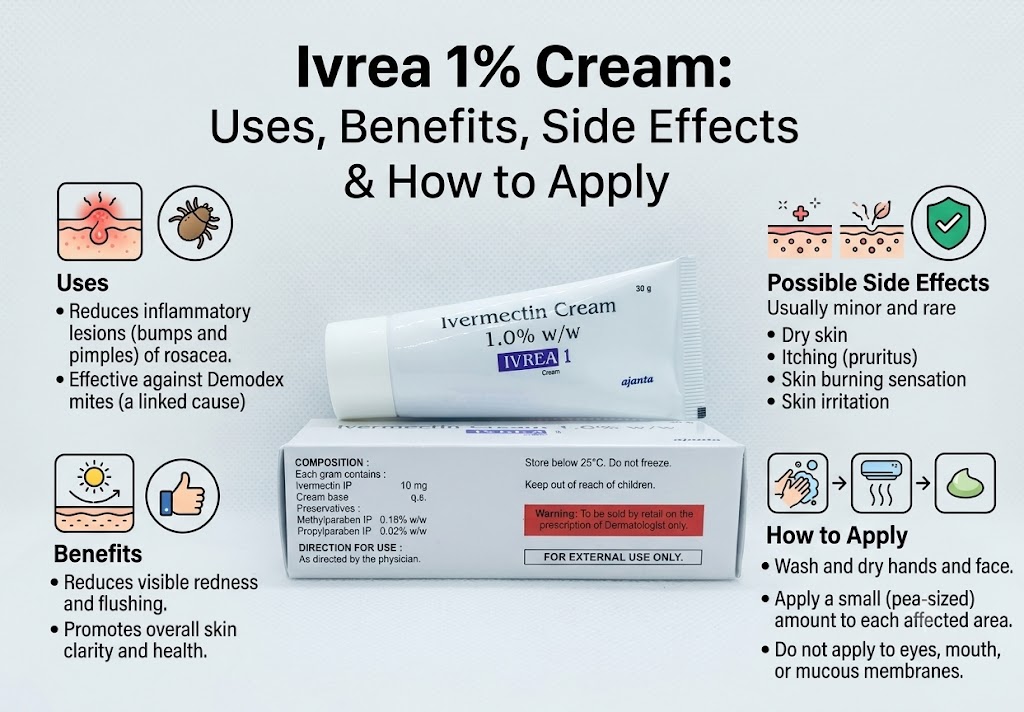
Rosacea is a chronic skin condition that affects millions of adults worldwide. It often causes persistent facial redness, visible blood vessels, inflammatory bumps, and sensitive skin. While rosacea cannot be cured, effective treatments can help control symptoms and improve skin appearance.
One commonly prescribed treatment is Ivrea 1% Cream, which contains Ivermectin 1%, an antiparasitic and anti-inflammatory medication. It is widely used to reduce inflammatory lesions associated with rosacea while improving skin texture and minimizing flare-ups.
This comprehensive guide explains everything you need to know about Ivrea 1% Cream, including its uses, benefits, how it works, dosage, side effects, precautions, and tips for achieving the best possible results.
What Is Ivrea 1% Cream?
Ivrea 1% Cream is a topical medication containing Ivermectin 1% w/w. It is primarily prescribed to treat inflammatory lesions caused by rosacea in adults.
Unlike many acne treatments that simply dry out the skin, ivermectin targets one of the possible contributors to rosacea—Demodex mites—while also reducing inflammation. This dual action makes it an effective option for many patients experiencing papules, pustules, and facial redness.
The cream is intended for external use only and should be applied exactly as directed by your healthcare provider.
How Does Ivrea 1% Cream Work?
Ivrea 1% Cream works through two important mechanisms.
1. Reduces Demodex Mites
Research suggests that people with rosacea often have increased numbers of microscopic Demodex mites living on the skin. Ivermectin helps reduce these mites, which may contribute to inflammation in some individuals.
2. Controls Skin Inflammation
Besides its antiparasitic action, ivermectin also has anti-inflammatory properties. It helps calm the skin, reducing:
- Red bumps
- Pus-filled pimples
- Swelling
- Irritation
- Overall skin inflammation
These combined actions help improve the appearance of rosacea over time.
Uses of Ivrea 1% Cream
Healthcare professionals commonly prescribe Ivrea 1% Cream for:
- Papulopustular rosacea
- Persistent inflammatory facial lesions
- Redness associated with rosacea
- Long-term maintenance of rosacea symptoms
Although some people discuss ivermectin cream for other skin concerns, such as acne or Demodex-related conditions, these uses may not be approved in every country. Always use the cream according to your healthcare provider’s advice.
Benefits of Ivrea 1% Cream
Many patients experience noticeable improvement after consistent use.
Some major benefits include:
- Reduces inflammatory bumps
- Helps decrease facial redness
- Improves skin texture
- Controls Demodex mite populations
- Less irritation than many acne medications
- Suitable for long-term maintenance under medical supervision
- Usually applied only once daily
- Helps reduce rosacea flare-ups
Because of its once-daily application, many users find it convenient to incorporate into their skincare routine.
How to Apply Ivrea 1% Cream
Proper application improves treatment success.
Step 1
Wash your face using a mild, fragrance-free cleanser.
Step 2
Pat your skin dry gently.
Step 3
Apply a pea-sized amount to each affected area:
- Forehead
- Chin
- Nose
- Each cheek
Step 4
Spread a thin layer evenly.
Step 5
Wash your hands after application.
Important Tips
- Avoid contact with the eyes.
- Do not apply inside the nose or mouth.
- Avoid broken or severely irritated skin.
- Allow the cream to absorb before applying moisturizer or sunscreen.
Dosage
The usual dosage is:
- Apply once daily
- Continue treatment for up to 12–16 weeks or as directed by your healthcare provider
Do not apply extra cream if you miss a dose. Simply resume your normal schedule.
How Long Does Ivrea 1% Cream Take to Work?
Results vary between individuals.
Typical timeline:
Weeks 1–2
- Mild improvement may begin.
Weeks 3–6
- Reduced inflammation.
- Fewer bumps.
Weeks 8–12
- Significant improvement for many patients.
After 12 Weeks
- Your healthcare provider will evaluate whether continued treatment is appropriate.
Patience is important. Stopping treatment too early may reduce its effectiveness.
Who Can Use Ivrea 1% Cream?
Ivrea 1% Cream is generally intended for adults diagnosed with inflammatory rosacea.
Your healthcare provider will determine whether it is appropriate based on:
- Skin type
- Severity of rosacea
- Previous treatments
- Medical history
- Current medications
Possible Side Effects
Most people tolerate Ivrea 1% Cream well.
Common side effects include:
- Mild burning
- Skin irritation
- Dryness
- Itching
- Temporary redness
Less common side effects:
- Skin sensitivity
- Rash
- Worsening irritation
Rarely, some individuals may experience an allergic reaction. Seek immediate medical attention if you notice swelling of the face, difficulty breathing, or severe rash.
Precautions
Before using Ivrea 1% Cream, tell your healthcare provider if you:
- Have allergies to ivermectin or any ingredients in the cream
- Have eczema or other inflammatory skin conditions
- Have severely damaged skin
- Are pregnant or planning pregnancy
- Are breastfeeding
Never share prescription medication with another person.
Pregnancy and Breastfeeding
There is limited information regarding the use of topical ivermectin during pregnancy and breastfeeding.
Your healthcare provider will weigh the potential benefits and risks before recommending treatment.
Always seek medical advice before using any prescription medication while pregnant or nursing.
Can Ivrea 1% Cream Be Used with Other Skincare Products?
Yes, but carefully.
A gentle skincare routine is recommended.
Use:
- Mild cleanser
- Fragrance-free moisturizer
- Broad-spectrum sunscreen (SPF 30 or higher)
Avoid combining Ivrea with multiple potentially irritating products unless advised by your healthcare provider, such as:
- Strong exfoliating acids
- High-strength retinoids
- Alcohol-based toners
- Harsh scrubs
Lifestyle Tips for Managing Rosacea
Medication works best when combined with healthy skincare habits.
Try to avoid common rosacea triggers such as:
- Excessive sunlight
- Hot beverages
- Alcohol
- Spicy foods
- Emotional stress
- Extreme temperatures
Daily sunscreen use is one of the most effective ways to help prevent flare-ups.
Storage Instructions
Store Ivrea 1% Cream:
- At room temperature
- Away from heat and moisture
- Out of reach of children
- With the cap tightly closed
Do not use the cream after its expiration date.
Frequently Asked Questions
1. What is Ivrea 1% Cream used for?
It is primarily used to treat inflammatory lesions associated with rosacea in adults.
2. How often should I use Ivrea 1% Cream?
Most patients apply it once daily or as directed by their healthcare provider.
3. Can Ivrea 1% Cream cure rosacea?
No. Rosacea is a chronic condition, but Ivrea can help manage symptoms and reduce flare-ups.
4. Is Ivrea 1% Cream an antibiotic?
No. It contains ivermectin, an antiparasitic medication with anti-inflammatory properties.
5. Can I wear makeup after applying Ivrea?
Yes. Allow the cream to dry completely before applying makeup.
6. Is sunscreen necessary?
Yes. Daily sunscreen helps protect sensitive rosacea-prone skin.
7. Can I stop using the cream when my skin improves?
Continue treatment only as advised by your healthcare provider.
8. What if I miss a dose?
Apply the next scheduled dose. Do not double the amount.
9. Is Ivrea suitable for acne?
Its primary approved use is rosacea. Use for acne only if recommended by a healthcare provider.
10. Can I moisturize while using Ivrea?
Yes. A gentle, fragrance-free moisturizer is recommended.
Conclusion
Ivrea 1% Cream is a well-established topical treatment for inflammatory rosacea. By combining antiparasitic and anti-inflammatory effects, it helps reduce bumps, redness, and irritation while improving overall skin appearance. Consistent use, combined with gentle skincare and avoidance of common rosacea triggers, can lead to noticeable improvement for many patients. You can buy ivrea cream online at resobble price in USA with free shiiping and secure delivery.
For the best outcomes, always use Ivrea 1% Cream exactly as prescribed by your healthcare provider and attend follow-up appointments to monitor your progress.


