
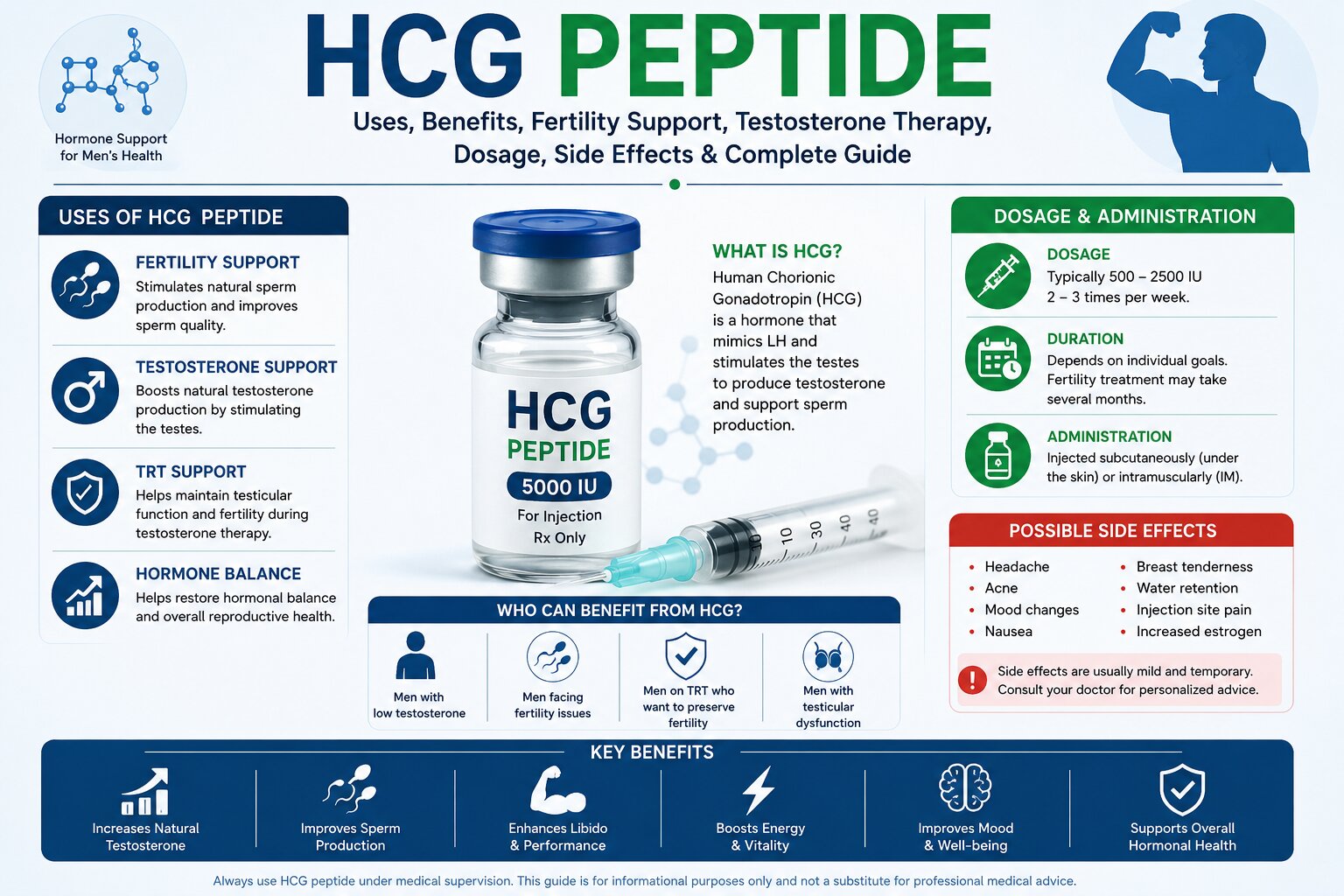
Human Chorionic Gonadotropin (HCG) has become one of the most discussed hormones in men’s health, fertility treatment, and testosterone optimisation. Often referred to as an “HCG peptide,” HCG is actually a naturally occurring glycoprotein hormone that contains amino acid chains and carbohydrate molecules. It plays a critical role in reproductive health and has become an important therapeutic option for men dealing with infertility, low testosterone, and hormone-related concerns.
HCG therapy is widely prescribed by fertility specialists and endocrinologists to stimulate natural testosterone production and support sperm development. Unlike traditional testosterone replacement therapy (TRT), HCG can help preserve fertility while improving hormone levels, making it an attractive option for men who wish to maintain reproductive function.
In this comprehensive guide, we’ll explain everything you need to know about HCG peptide therapy, including its uses, benefits, dosage, side effects, and how it supports fertility and testosterone production.
What Is HCG Peptide?
Human Chorionic Gonadotropin (HCG) is a hormone naturally produced during pregnancy. In medicine, it is manufactured as an injectable medication used to treat various fertility and hormonal disorders in both men and women.
Although commonly called an HCG peptide, HCG is technically a glycoprotein hormone rather than a simple peptide. It closely mimics the activity of Luteinizing Hormone (LH), which is naturally produced by the pituitary gland.
In men, LH signals the testes to produce:
- Testosterone
- Sperm cells
- Other reproductive hormones necessary for fertility
By mimicking LH, HCG stimulates the testes to function naturally, making it highly valuable in fertility and hormone optimisation treatments.
How Does HCG Work in the Body?
HCG works by binding to LH receptors found in the Leydig cells of the testes. This interaction stimulates:
Increased Testosterone Production
HCG stimulates the testes to produce endogenous testosterone.
Improved Sperm Production
Adequate testosterone production within the testes is necessary for healthy sperm development.
Maintenance of Testicular Function
HCG helps preserve testicular size and function, particularly in men receiving testosterone replacement therapy.
Hormonal Balance
HCG supports the body’s natural hormone pathways instead of completely replacing testosterone production.
Uses of HCG Peptide
1. Male Fertility Treatment
One of the primary uses of HCG therapy is treating male infertility.
Men experiencing fertility issues often have:
- Low testosterone levels
- Reduced sperm count
- Hormonal imbalances
- Hypogonadotropic hypogonadism
HCG stimulates the testes to resume normal hormone production and sperm development.
Potential Benefits for Fertility:
- Increased sperm production
- Improved sperm quality
- Enhanced testosterone levels
- Improved reproductive function
- Better chances of conception
2. Testosterone Support
HCG therapy is commonly used to improve testosterone production naturally.
Low testosterone levels can cause:
- Fatigue
- Low libido
- Erectile dysfunction
- Depression
- Loss of muscle mass
- Increased body fat
- Reduced energy levels
Because HCG stimulates natural testosterone production, many men experience significant improvements in these symptoms.
3. HCG During Testosterone Replacement Therapy (TRT)
Many men on TRT experience suppression of their body’s natural testosterone production.
Possible side effects of TRT include:
- Testicular shrinkage
- Reduced sperm production
- Infertility
HCG is frequently prescribed alongside TRT because it helps maintain:
- Testicular size
- Natural testosterone production
- Fertility potential
- Hormonal balance
For men who want the benefits of TRT without sacrificing fertility, HCG may play an essential role in treatment.
Benefits of HCG Peptide Therapy
1. Supports Natural Testosterone Production
Unlike testosterone injections that replace natural production, HCG encourages your body to continue producing testosterone on its own.
2. Helps Preserve Fertility
One of the biggest advantages of HCG therapy is maintaining sperm production and reproductive health.
This benefit is especially important for:
- Younger men
- Men planning future pregnancies
- Men undergoing TRT
3. Improves Energy Levels
Low testosterone often causes:
- Constant fatigue
- Lack of motivation
- Poor concentration
Many patients report improved energy and mental clarity during HCG therapy.
4. Enhances Libido and Sexual Function
Healthy testosterone levels are essential for:
- Sex drive
- Erectile function
- Sexual performance
- Confidence
HCG may help improve these areas by stimulating testosterone production.
5. Helps Maintain Muscle Mass
Testosterone plays a major role in:
- Building muscle
- Preserving lean body mass
- Supporting strength
- Improving recovery
Optimised testosterone levels may contribute to improved physical performance.
6. May Improve Mood and Well-Being
Hormonal imbalances can negatively affect emotional health.
Proper testosterone levels may support:
- Better mood
- Increased motivation
- Reduced irritability
- Improved quality of life
Who Can Benefit From HCG Therapy?
HCG therapy may be suitable for men experiencing:
Secondary Hypogonadism
When the brain fails to signal adequate testosterone production.
Low Testosterone Levels
Men with clinically confirmed testosterone deficiency.
Infertility Issues
Men with low sperm count due to hormonal problems.
TRT-Induced Infertility
Men using testosterone replacement therapy who want to preserve fertility.
Testicular Dysfunction
Certain conditions affect normal testicular hormone production.
HCG Dosage and Administration
The appropriate HCG dosage depends entirely on the medical condition being treated.
For Fertility Treatment
HCG may be administered several times per week over multiple months. In some cases, additional medications such as FSH may be added if sperm counts do not improve sufficiently.
For Testosterone Support
Doctors often prescribe HCG several times weekly to stimulate testosterone production while maintaining testicular function.
Method of Administration
HCG is usually administered through:
- Subcutaneous injection
- Intramuscular injection
Treatment plans should always be individualised and supervised by a qualified healthcare professional.
How Long Does HCG Take to Work?
Results vary among individuals.
Testosterone Improvement
Some men notice improvements in:
- Energy
- Libido
- Mood
within several weeks.
Fertility Improvement
Sperm production typically requires several months because sperm development follows a natural biological cycle.
Consistency and medical monitoring are essential for optimal outcomes.
HCG for Male Fertility: How Effective Is It?
HCG has been successfully used for decades in reproductive medicine.
Potential improvements may include:
- Increased testosterone levels
- Improved sperm count
- Better sperm quality
- Enhanced fertility potential
However, success depends on:
- Age
- Underlying medical conditions
- Hormone levels
- Treatment adherence
- Overall reproductive health
A fertility specialist may recommend additional treatments if necessary.
HCG and Testosterone Replacement Therapy: Can They Be Used Together?
Yes.
Many healthcare providers combine HCG with TRT to help preserve reproductive health.
Potential benefits of combining HCG and TRT include:
- Prevention of testicular shrinkage
- Maintenance of sperm production
- Better hormonal balance
- Preservation of fertility potential
- Support of natural testosterone production
Combination therapy should always be managed by an experienced healthcare provider.
Potential Side Effects of HCG Therapy
Like any medication, HCG may cause side effects.
Common side effects include:
- Injection site discomfort
- Headache
- Acne
- Mood changes
- Water retention
- Breast tenderness
- Increased estrogen levels
Most side effects are manageable and may improve with dose adjustments and medical supervision.
Who Should Avoid HCG Therapy?
HCG therapy may not be suitable for everyone.
Individuals should discuss risks with their healthcare provider if they have:
- Hormone-sensitive medical conditions
- Certain endocrine disorders
- Allergic reactions to HCG preparations
- Unexplained hormonal abnormalities
A complete medical evaluation is important before starting treatment.
Monitoring During HCG Therapy
Regular monitoring helps ensure safety and effectiveness.
Doctors may recommend:
Blood Tests
- Total testosterone
- Free testosterone
- Estradiol
- LH
- FSH
Fertility Assessments
- Semen analysis
- Sperm count
- Sperm motility
General Health Monitoring
- Weight changes
- Blood pressure
- Symptom assessment
Monitoring allows healthcare providers to optimise treatment and minimise potential risks.
Lifestyle Tips to Maximise HCG Therapy Results
Maintain a Healthy Weight
Excess body fat can negatively impact hormone balance.
Exercise Regularly
Strength training and physical activity support healthy testosterone levels.
Eat a Balanced Diet
Focus on:
- Lean protein
- Healthy fats
- Fruits and vegetables
- Whole grains
Prioritize Sleep
Poor sleep may negatively affect hormone production.
Reduce Stress
Chronic stress can disrupt hormonal balance and reproductive health.
Combining HCG therapy with healthy lifestyle habits often produces better long-term results.
Frequently Asked Questions (FAQs)
Is HCG a steroid?
No. HCG is a hormone and is not classified as an anabolic steroid.
Does HCG increase testosterone?
Yes. HCG stimulates the testes to produce testosterone naturally.
Can HCG improve fertility?
Yes. HCG may improve sperm production and reproductive function in certain men with hormonal deficiencies.
Can I use HCG with testosterone therapy?
Yes. HCG is frequently prescribed alongside TRT to help preserve fertility and testicular function.
How long should I take HCG?
Treatment duration varies depending on individual medical needs and treatment goals.
Is HCG safe?
When prescribed and monitored appropriately, HCG is generally considered safe and effective for approved medical uses.
Final Thoughts
HCG peptide therapy has emerged as an important treatment option for men seeking fertility support and natural testosterone optimisation. By mimicking the activity of luteinizing hormone, HCG stimulates the testes to produce testosterone and support sperm development while helping preserve reproductive function.
For men dealing with low testosterone, fertility concerns, or TRT-related reproductive issues, HCG may offer meaningful benefits. However, treatment should always be guided by a qualified healthcare professional who can perform appropriate testing, monitor progress, and develop an individualised treatment plan.
With proper medical supervision, lifestyle optimisation, and consistent follow-up, HCG therapy can be an effective tool for supporting hormone health, fertility, and overall well-being.

Latest posts by Marie (see all)
- Semaglutide for PCOS: Can It Help with Weight Loss, Insulin Resistance & Irregular Periods? - October 17, 2026
- Semaglutide Side Effects: Common Symptoms, Serious Risks & Safety Tips - October 16, 2026
- How to control high cholesterol: self-care at home? - October 15, 2026


