
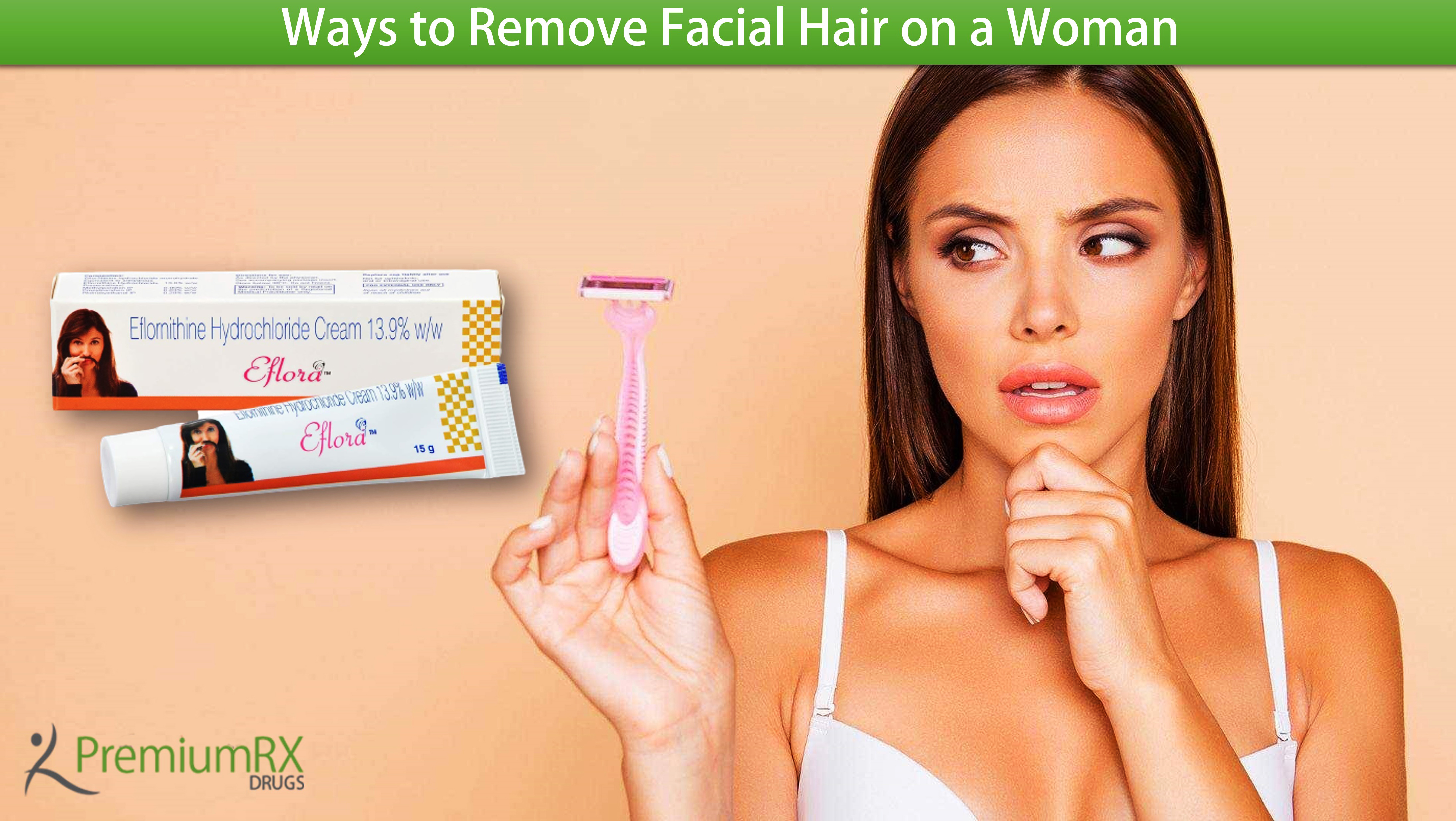
Several options are available to remove unwanted facial hair, including tweezing, waxing, or depilatory creams. Topical formulations like Eflora cream also offer longer results and can help remove facial hair for several weeks or months.
Best ways to remove facial hair
One of the major causes of hair growth is hormonal changes. Unwanted hair growth may also be triggered by genetics. If you are concerned about facial hair growth, follow these tips.
- Tweezing is the easiest and cheapest method for removing facial hair. It is most commonly used to keep your eyebrows in place. But it can also be used for those occasional chin hairs that develop out of nowhere.
- Depilatory hair removal cream: A depilatory is a strong product that breaks down hair so it is easy to wipe off with a towel. The process takes anywhere from 5 to 10 minutes, depending on hair texture and the product’s formula. While hair removal is fast and convenient, it is important to be careful when choosing a product. Hair removal formulations often contain harmful chemicals that can burn your skin, especially in delicate areas. Try something that has extra moisturising properties. Also, ensure that results tend to last only a few days.
- Waxing – A long-favoured hair removal method that helps eliminate the face and body of unwanted fuzz. In general, the method lasts a good four weeks. Waxing requires some hot wax and waxing strips. However, waxing can be a harsh exfoliation method that often causes side effects, such as more pronounced redness in sensitive skin.
Since facial skin is more delicate than the rest of your body, the skincare expert recommends using only facial wax strips or hair removal creams on that area, as it is more prone to irritation. Experts also warn against skin care products that can further irritate the skin. After waxing, it is important to moisturise the skin with a light cream or a calming oil. This is extremely beneficial if your skin feels irritated.
- Prescription creams – Prescription creams are recommended for many skin issues, so why should hair removal differ? Eflora cream is an FDA-approved prescription formulation that reduces facial hair in women. Allergen, the pharmaceutical company that manufactured this formulation, says a user should see improvements between four and eight weeks after beginning the treatment. While there is a permanent hair removal method, the prescription formulation helps hair grow back more slowly and in finer, softer textures.
When applied to the skin, eflornithine, the active component in Eflora, works by blocking the activity of an enzyme in hair follicles, which plays a role in hair production. It is used with laser therapy to reduce the growth rate of unwanted facial hair in women with this condition.
How effective is Eflora cream?
Over time, the need for additional hair removal techniques to maintain hair-free skin may be reduced. However, hair removal is not effective for everyone. The topical cream is used cosmetically to remove unwanted facial hair. It is not used to treat patients with parasitic infections.
Eflora is not a depilatory cream. You should continue using your usual hair removal routines. Removing unwanted hair includes shaving, plucking, waxing, hair-removing creams, electrolysis, and laser treatments. Your doctor will advise you on which one to use alongside Eflora cream.
- If you want to apply makeup to areas of skin where you’ve applied the cream, you can do so, but please wait at least five minutes before applying Eflora Vaniqa.
- You must use the cream regularly. It can take about eight weeks to see its full benefit. If there is little improvement after four months of using the creat, please discuss this with your doctor, who will review your treatment.
- Eflora cream is not intended for men or girls under 18.
Side effects of Eflora cream
Eflora cream is very well tolerated and safe to use. Some women may experience minor, temporary skin irritation, including redness, stinging, burning, tingling, and a rash.
If you develop skin irritation, reduce the application as your dermatologist advises. If irritation persists, stop using this hair removal cream.

Latest posts by Marie (see all)
- Peptide Science: Understanding Peptides, Their Biology, Uses and Future in Medicine - September 22, 2026
- HCG for Men: Uses, Benefits, and Important Considerations - September 18, 2026
- Alpha Blockers for Blood Pressure and Prostate: A Patient’s Guide to Alpha Blockers - September 17, 2026


