
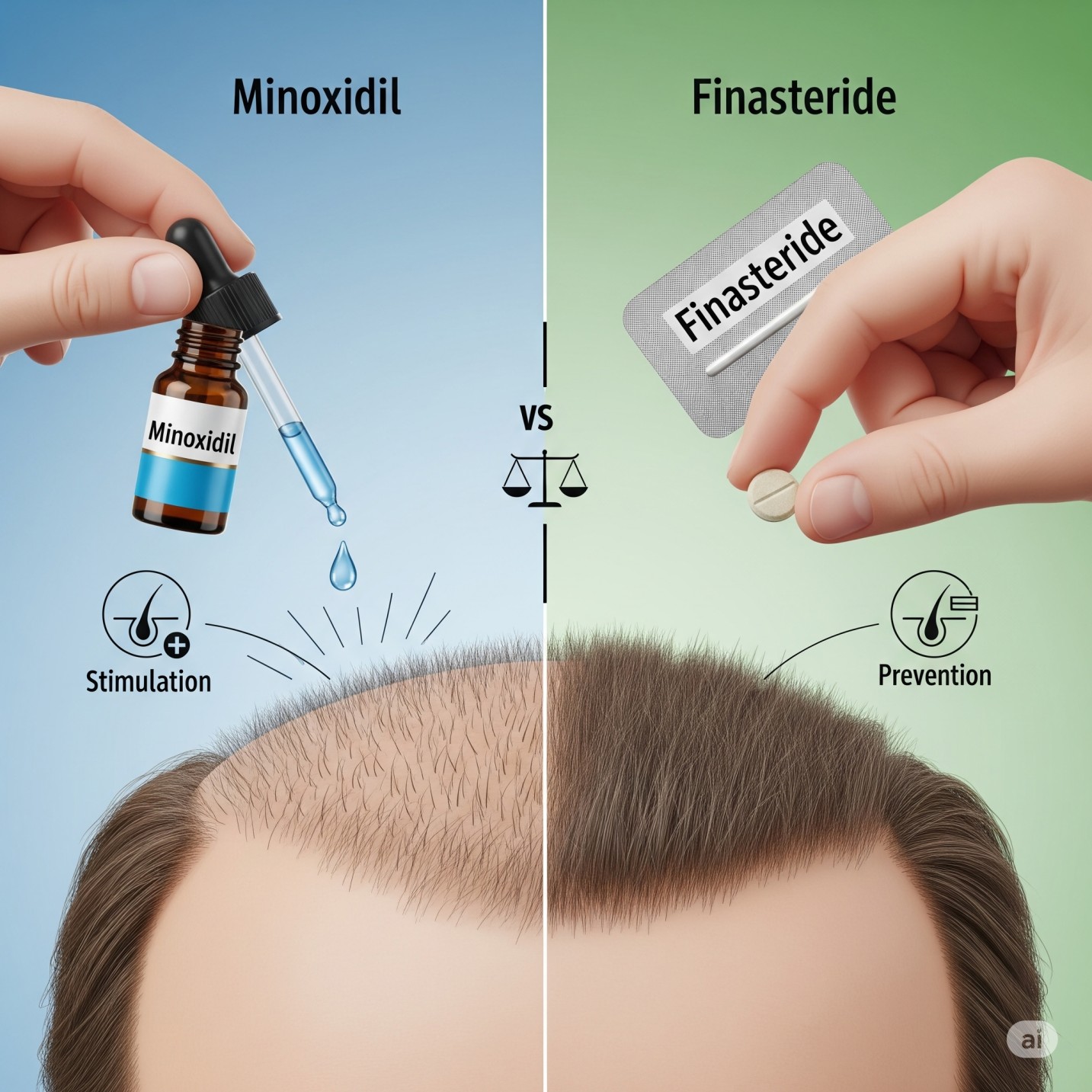
Topical Minoxidil and Oral Finasteride 1mg are the only two pharmacological treatment options authorised for androgenetic alopecia. It’s quite hard to choose between them. Let’s find what’s better for you.
Staring in the mirror and noticing receding hairlines or thinning patches can be heartbreaking. It is a salient struggle for many. The sinking feeling and silent sighs lead to desperate research for an effective solution that may provide permanent results. If you are one of those people who has lost a significant amount of hair, you’ve come to the right page. Get ready to reclaim your crowning glory. You are not alone in this journey. Well, it takes courage to seek solutions, and we hope this blog helps you in every way.
Two names often pop up when researching hair loss remedies: Minoxidil and Finasteride. Are they effective? If so, how do you use them? And most importantly, which one is the best hair loss solution for you? Let’s dive into the facts that explain the differences, advantages and potential side effects of these clinically approved treatment options for hair loss.
Minoxidil and Finasteride: The Difference
Minoxidil and Finasteride are the two giants in the battle against hair loss. The goal of both treatments is to provide you with a thicker head of hair, but they differ in their forms, modes of action, and potential benefits. Well, consider them two different paths leading to the same destination: healthier hair growth. Whether you are a male experiencing the early signs of male pattern baldness or a female frustrated due to androgenetic alopecia, it is important to understand these differences. It helps you make an informed decision based on your unique hair health needs.
What about Minoxidil?
Minoxidil is a topical hair loss therapy often supplied as a solution or foam. Originally discovered to treat hypertension (High blood pressure). Minoxidil’s hair growth-stimulating properties were an unexpected discovery. The topical medication works by enhancing the blood flow towards the hair follicles. The increased blood flow helps revitalise dormant hairs, making them thicker and healthier. Whether you are using a Minoxidil liquid preparation or foam formulation, it offers a ray of hope to everyone who looks forward to a non-hormonal approach for effective hair loss therapy.
How does Minoxidil work?
For hair follicles that are deeply rooted and thirsting for much-needed nourishment, Minoxidil is the answer, enhancing blood flow to these follicles. Minoxidil is categorised as a vasodilator, a class of medications that help widen blood vessels, ensuring a steady flow of essential components like oxygen and nutrients to each hair follicle. This causes rejuvenation of dormant hairs and extends the anagen (growth) phase. The results you achieve include longer, thicker hair.
What is Finasteride?
Finasteride 1mg is a prescription oral medication primarily used to treat male pattern hair loss in men. But what makes it different from any other hair loss medication? Well, it works on the hormone responsible for hair thinning, dihydrotestosterone (DHT). An excessive amount of DHT leads to hair thinning. Furthermore, by inhibiting the conversion of testosterone to DHT, Finasteride halts the progression of hair loss and promotes hair regrowth. It gives hope to many who wish to feel teh presence of those long and thick waves once again. However, it is crucial to understand the mode of action and potential side effects before making it part of your hair care regimen.
How does Finasteride work?
To keep your scalp healthy, you need the right environment, free from harmful elements. The entry of DHT (a byproduct of testosterone), which in excess can wreak havoc on the hair on your scalp, ultimately leading to male pattern baldness. Finasteride 1mg inhibits the conversion of testosterone into DHT. A reduction in DHT levels protects your hair follicles and creates an environment conducive to hair growth, resulting in significant improvements in hair growth and density.
Possible side effects of Minoxidil and Finasteride
The major difference between Finasteride and Minoxidil lies in the side effects users may experience. No matter how promising the results are, almost all pharmaceutical ingredients can bring their own set of unwanted problems and concerns. But this information guide helps you through them.
For Minoxidil, the side effects are primarily localised. Commonly reported symptoms include itchiness, skin irritation, redness at the application site, and excessive hair growth on your body. This is not the complete list of Minoxidil’s side effects. Some might experience severe reactions, like an irregular heartbeat and blurred vision.
On the other hand, oral Finasteride can affect the entire body as it gets absorbed into the system. The side effects include erectile dysfunction, decreased libido, breast enlargement and tenderness. While these side effects are rare, they can be more severe than those associated with Minoxidil solution. Your health is a priority. Therefore, it is always important to listen to your body and trust your feelings. If you get any of these symptoms, seek medical attention. Always remember your journey towards achieving the goal of a thicker head of hair; never compromise with your overall health.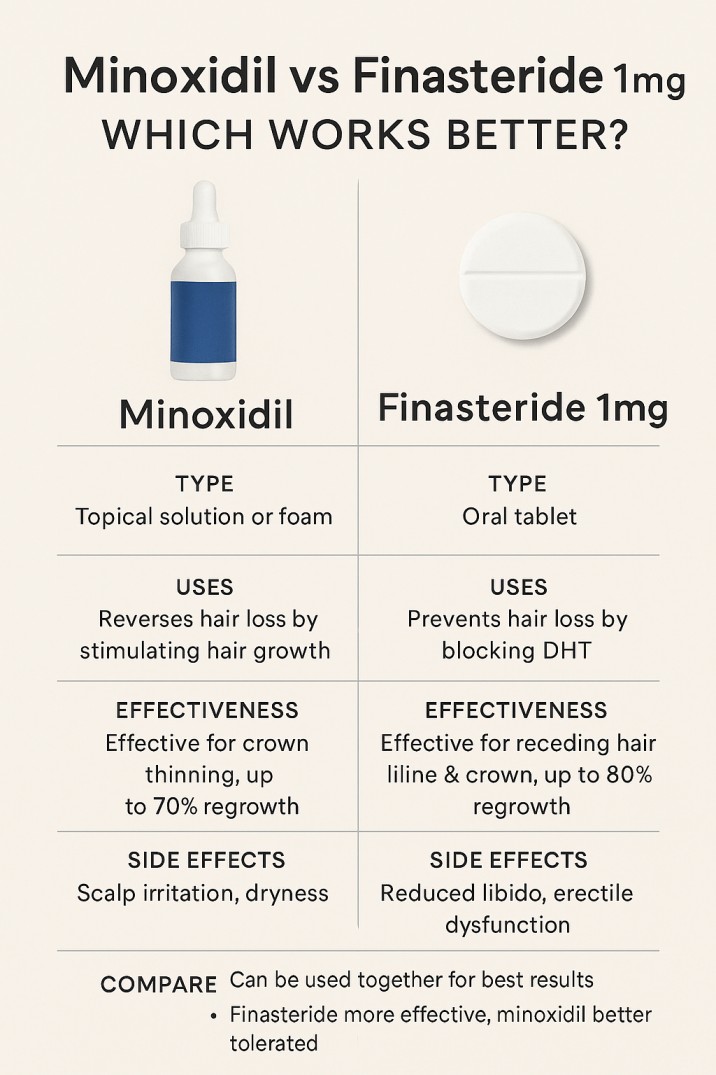
Is it safe to use Finasteride and Minoxidil together?
So, can you combine the two powerful hair loss medications? Well, the answer backed by numerous research studies is a resounding yes. Hair loss medicines with different modes of action can work together to provide a hair restoration solution. While taking both medications is generally safe, it is always wise to consult a dermatologist who specialises in treating hair loss. Keep a close eye on any unusual symptoms and seek a dermatologist’s advice before making any modifications to your hair loss treatment plan. After all, your journey is unique, and you deserve an individualistic approach.
What’s more effective?
Well, the answer is not straightforward. Finasteride offers a powerful solution for male pattern baldness by targeting the hormone responsible for hair thinning. Minoxidil focuses on enhancing blood flow and addressing various types of hair loss. Applied directly on the scalp, it promotes hair regrowth. Scientific studies suggest that both are effective in treating hair loss, but their suitability varies based on the type of hair loss and the individual’s hair loss. So, what’s the right option for you? Well, consult your dermatologist to get an individualised treatment plan tailored to your unique hair health.
Getting on the path to restore your hair’s former glory. While both Finasteride and Minoxidil have proven their worth in the hair restoration arena, the right approach still depends on several factors. Firstly, you should consider the working mechanism. Finasteride works by blocking the hormones that affect hair growth, whereas Minoxidil works by improving blood circulation to revitalise hair follicles. Then, the matter of side effects should be discussed, from skin irritation caused by Minoxidil to the stronger sexual effects some users experience with oral Finasteride. Moreover, Lifestyle preference should be considered, as the ease of popping a tablet versus directly applying the topical solution to the scalp comes into play. Last but not least, every individual’s response to the medication varies. Some might benefit from the monotherapy, while others might find the combination more fruitful.
The key is to consult a dermatologist and choose an option that supports your body’s requirements and hair aspirations.

Latest posts by Marie (see all)
- A-Ret Gel 0.025% vs A Ret 0.05% vs A ret 0.1% — Which Strength Is Right for You? - June 26, 2026
- Coupon for Bimatoprost & Careprost: Save More on Bimatoprost Ophthalmic Solution 0.03% in 2026 - June 26, 2026
- Travisight 3ml Eye Drop (Travoprost 0.004%): Uses, Benefits, Dosage & Side Effects - June 23, 2026


