
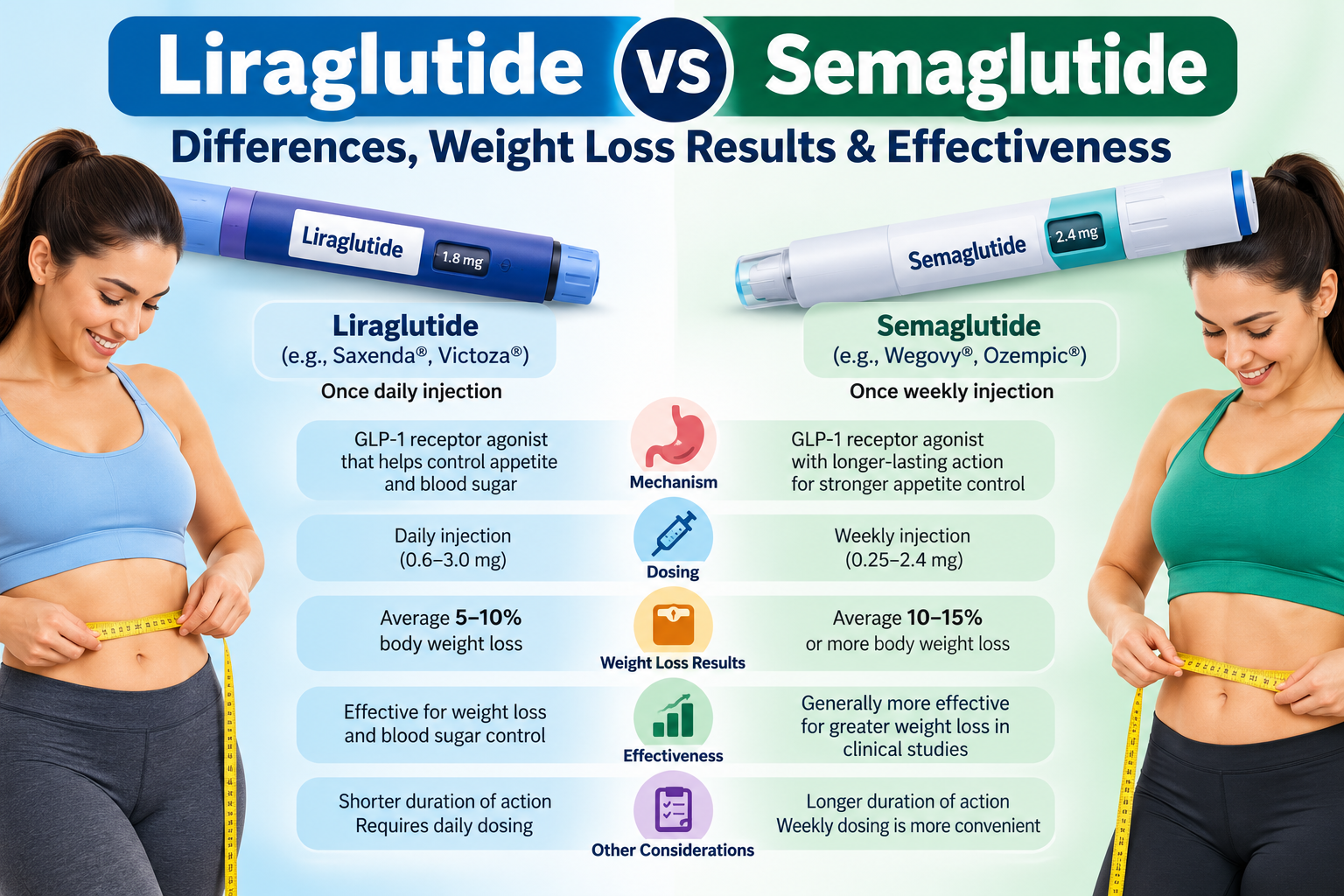
If you’re researching weight loss medications or diabetes injections, two names that most frequently come up are liraglutide and semaglutide. Both belong to the same drug family, both are made by Novo Nordisk, and both can help lower blood sugar and body weight. Yet they’re far from identical.
In this guide, we break down liraglutide vs semaglutide: how they work, how often you take them, how much weight people actually lose, and what side effects to expect. Whether you’re comparing Ozempic vs Saxenda or just want a clear GLP-1 comparison before talking to your doctor, this article will help you ask the right questions and understand the answers.
What are Liraglutide and Semaglutide?
Liraglutide and semaglutide are GLP-1 receptor agonists. They mimic GLP-1 (glucagon-like peptide-1), a natural hormone your gut releases after you eat. GLP-1 helps your body:
- Release insulin when blood sugar rises
- Reduce the amount of sugar your liver releases
- Slow down how quickly your stomach empties
- Signal fullness to your brain, so you feel satisfied with less food
Because of these effects, GLP-1 medications are used both to manage type 2 diabetes and to support long-term weight management.
Brand names at a glance
Liraglutide is sold as:
- Victoza – for type 2 diabetes (up to 1.8 mg daily)
- Saxenda – for chronic weight management (3 mg daily)
- Generic liraglutide versions are now available in the US for both uses
Semaglutide is sold as:
- Ozempic – weekly injection for type 2 diabetes (up to 2 mg weekly)
- Wegovy – weekly injection for chronic weight management (2.4 mg weekly); an oral Wegovy tablet has also been approved for weight loss
- Rybelsus – a daily tablet for type 2 diabetes
This is why “Ozempic vs Saxenda” is such a common search. People often compare the most famous semaglutide brand with the liraglutide brand made for weight loss, even though Ozempic is officially a diabetes drug.
Liraglutide vs Semaglutide: Key Differences
| Feature |
Liraglutide (Victoza, Saxenda) |
Semaglutide (Ozempic, Wegovy) |
| How often | Once daily injection | Once-weekly injection (oral options also exist) |
| Half-life | About 13 hours | About 1 week |
| Average weight loss (weight-loss dose) | About 5–8% of body weight | About 15% of body weight |
| Blood sugar (A1C) reduction | Good | Greater |
| Heart benefits proven | Yes (in type 2 diabetes) | Yes (with and without diabetes) |
| FDA-approved for teens (12+) for weight | Yes (Saxenda) | Yes (Wegovy) |
| Generic available | Yes | Not yet in the US |
1. Dosing schedule
The biggest everyday difference is convenience. Liraglutide lasts about half a day in the body, so it must be injected every day. Semaglutide has a much longer half-life, so one injection lasts a full week. Many people find a once-weekly shot easier to stick with, and better consistency often means better results.
2. Strength and potency
Semaglutide is engineered to bind more strongly to albumin (a blood protein), keeping it active longer and providing a steadier, more powerful effect on appetite and blood sugar.
3. Cost and availability
Liraglutide has been on the market since 2010, and generic versions are now available, which may lower costs for some patients. Semaglutide is still brand-only in the US. Prices and insurance coverage vary widely, so it’s worth checking both options with your insurer and pharmacy.
Weight loss results: Semaglutide vs Liraglutide
When it comes to the numbers, semaglutide vs liraglutide is not a close race.
The head-to-head study (STEP 8)
The best evidence comes from the STEP 8 trial, which directly compared the weight-loss doses of each drug in adults with overweight or obesity (without diabetes) over 68 weeks. Both groups also followed diet and exercise counseling.
- Semaglutide 2.4 mg weekly (Wegovy): average weight loss of about 15.8%
- Liraglutide 3 mg daily (Saxenda): average weight loss of about 6.4%
Semaglutide users were also far more likely to hit major milestones. Roughly 7 in 10 lost at least 10% of their body weight, compared with about 1 in 4 on liraglutide. For someone weighing 220 pounds, that’s an average loss of around 35 pounds with semaglutide versus about 14 pounds with liraglutide.
Other major trials
- In the SCALE studies, Saxenda helped people lose about 8% of their body weight over a year, compared with about 3% on placebo.
- In STEP 1, Wegovy led to about 15% weight loss over 68 weeks, compared with about 2–3% on placebo.
Bottom line: in this efficacy comparison, semaglutide typically produces about two times more weight loss than liraglutide.
Effectiveness for type 2 diabetes
For people with type 2 diabetes, both drugs lower A1C (a measure of average blood sugar over about three months) and reduce the need for other medicines.
In the SUSTAIN 10 trial, Ozempic (1 mg weekly) was compared with Victoza (1.2 mg daily):
- A1C reduction: about 1.7% with Ozempic vs about 1.0% with Victoza
- Weight loss: about 5.8 kg (12.8 lb) with Ozempic vs about 1.9 kg (4.2 lb) with Victoza
That means semaglutide generally offers stronger blood sugar control and more weight loss for people with diabetes.
Heart health benefits
Both medications have shown cardiovascular benefits:
- Liraglutide (LEADER trial): lowered the risk of heart attack, stroke, or cardiovascular death by about 13% in people with type 2 diabetes and heart disease risk.
- Semaglutide (SUSTAIN-6 and SELECT trials): lowered major heart events by about 26% in people with diabetes, and by about 20% in adults with overweight or obesity and existing heart disease who did not have diabetes.
Side effects comparison
Because they work the same way, their side-effect profiles are very similar. Most side effects affect the digestive system and are strongest when starting the drug or increasing the dose.
Common side effects (both drugs)
- Nausea
- Diarrhea or constipation
- Vomiting
- Stomach pain, bloating, or gas
- Headache and fatigue
- Injection-site reactions (more common with daily liraglutide simply because there are more injections)
In STEP 8, the overall rate of stomach-related side effects was similar for both drugs. However, more people stopped liraglutide than semaglutide, suggesting semaglutide may be easier for many patients to stay on over time.
Serious but less common risks
- Pancreatitis (inflammation of the pancreas): seek care for severe stomach pain that spreads to the back
- Gallbladder problems, including gallstones, especially with rapid weight loss
- Kidney problems, often linked to dehydration from vomiting or diarrhea
- Low blood sugar, mainly when combined with insulin or sulfonylureas
- Allergic reactions
Warning
Both liraglutide and semaglutide carry an FDA boxed warning about thyroid C-cell tumors, based on studies in rodents. You should not use either medication if you or a family member has had medullary thyroid carcinoma (MTC) or Multiple Endocrine Neoplasia syndrome type 2 (MEN 2).
Tips to reduce side effects
- Follow the slow dose-increase schedule your doctor prescribes
- Eat smaller meals and stop when you feel full
- Limit greasy, fried, and very sugary foods
- Stay well hydrated
- Tell your doctor if nausea or vomiting doesn’t improve
Liraglutide vs Semaglutide: Which one is right for you?
There is no single “best” choice for everyone. Your healthcare provider will consider your health goals, medical history, insurance coverage, and preferences.
Semaglutide may be a better fit if you:
- Want the greatest possible weight loss or A1C reduction
- Prefer one injection per week instead of daily shots
- Have heart disease and are overweight or obese
Liraglutide may be a better fit if you:
- Have trouble getting semaglutide covered or prefer a generic option
- Want a daily dose that leaves your body quickly if side effects occur
- Have already done well on liraglutide
If you’re switching from one drug to the other, never do it on your own. Your doctor will set a new starting dose to limit side effects.
Buying GLP-1 medications safely
All of these medications require a valid prescription. Be cautious of websites selling “generic semaglutide” without a prescription, as these products may be counterfeit or unsafe. Talk to your healthcare provider about whether liraglutide or semaglutide fits your treatment plan.
Frequently Asked Questions
1. Is semaglutide stronger than liraglutide?
Yes. In head-to-head studies, semaglutide led to about twice as much weight loss as liraglutide (around 15.8% vs 6.4% of body weight) and a larger drop in A1C for people with type 2 diabetes. It also only needs to be taken once a week.
2. What is the difference between Ozempic and Saxenda?
Ozempic contains semaglutide and is FDA-approved for type 2 diabetes as a once-weekly injection. Saxenda contains liraglutide and is FDA-approved for chronic weight management as a once-daily injection. The semaglutide product approved for weight loss is Wegovy, while the liraglutide product for diabetes is Victoza.
3. Can I switch from liraglutide to semaglutide?
Yes, many people switch, usually to get stronger results or the convenience of weekly dosing. Your doctor will typically stop liraglutide and start semaglutide at a low dose, then slowly increase it. Always switch under medical supervision.
4. Which has fewer side effects, liraglutide or semaglutide?
They have very similar side effects, mainly nausea, diarrhea, vomiting, and constipation. In the STEP 8 study, side effect rates were similar, but fewer people stopped treatment with semaglutide than with liraglutide.
5. How long does it take to see weight loss results?
Many people notice reduced appetite within the first few weeks. Meaningful weight loss usually appears within 2–3 months, with the biggest results after about a year on the full dose, combined with healthy eating and regular activity.
Disclaimer: This article is for informational purposes only and is not med

Latest posts by Marie (see all)
- Liraglutide vs Semaglutide: Differences, Weight Loss Results & Effectiveness - October 28, 2026
- Amoebiasis Treatment: Symptoms, Diagnosis & Best Medicines - October 27, 2026
- Semaglutide for PCOS: Can It Help with Weight Loss, Insulin Resistance & Irregular Periods? - October 17, 2026


