
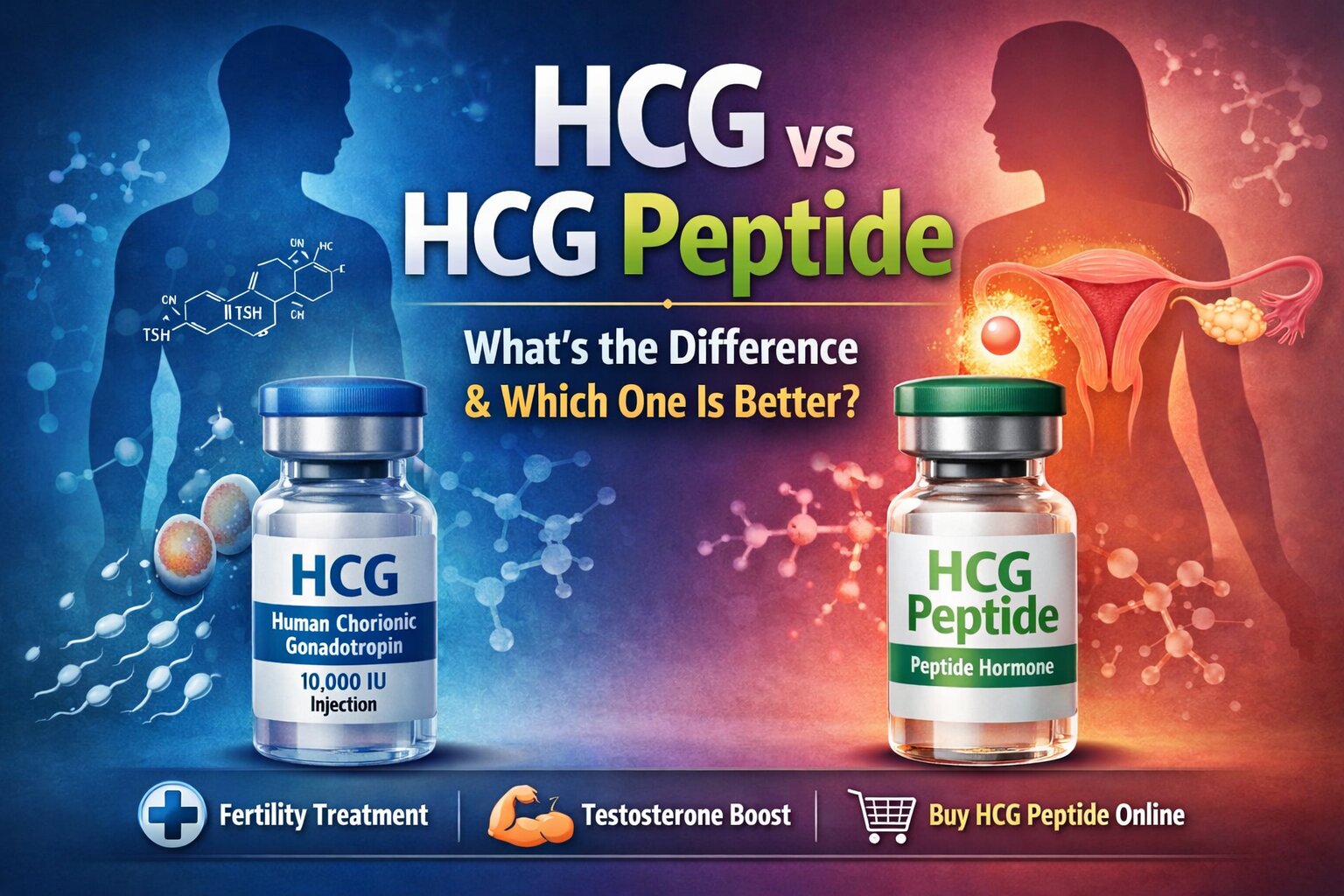
Hormone therapies and peptide treatments have become increasingly popular in recent years, especially for addressing issues like low testosterone, fertility problems, and hormonal imbalance. Among these treatments, Human Chorionic Gonadotropin (HCG) and the term “HCG peptide” are often mentioned together, leading many people to wonder whether they are the same substance or distinct ones.
If you search online or browse fitness and medical forums, you’ll often see questions like: “Is HCG a peptide?”, “What is HCG peptide therapy?”, or “Is HCG peptide better than regular HCG?”
The truth is that the difference between HCG and HCG peptide is mostly about terminology rather than a major chemical difference. However, understanding how HCG injections work, why they are sometimes referred to as a peptide, and how they are used in medicine and fitness can help you make informed decisions.
In this comprehensive guide, we will explain:
- What HCG is
- What people mean by HCG peptide
- Key differences between HCG and HCG peptide
- Medical and fitness uses
- Benefits and risks
- Which option may be better depending on your needs
Let’s start by understanding what HCG actually is.
What Is HCG?
Human Chorionic Gonadotropin (HCG) is a hormone naturally produced in the human body, particularly during pregnancy. It is secreted by the placenta after a fertilised egg attaches to the uterine lining.
This hormone plays a critical role in maintaining pregnancy by stimulating the production of other hormones such as progesterone.
However, outside of pregnancy, HCG also has important medical uses because it mimics luteinizing hormone (LH), a hormone that regulates reproductive functions.
How HCG Works?
HCG sends signals to reproductive organs to stimulate hormone production.
In men, it stimulates the testes to produce testosterone.
In women, it stimulates the ovaries to release eggs (ovulation).
Because of these effects, doctors use HCG in several treatments related to fertility and hormone balance.
What Is HCG Peptide?
The term HCG peptide is often used in:
- Peptide therapy clinics
- Bodybuilding communities
- Online supplement markets
- Research chemical discussions
Technically, HCG is not a simple peptide. Instead, it is a glycoprotein hormone, meaning it is composed of amino acid chains combined with carbohydrate molecules.
Peptides are also made of amino acids, which is why some people loosely refer to HCG as a peptide.
Why HCG Is Sometimes Called a Peptide?
HCG consists of two protein chains composed of amino acids, similar to many peptide hormones. Because of this structure, people sometimes categorise it as a peptide hormone.
However, HCG is larger and more complex than the typical peptides used in peptide therapy.
So the term “HCG peptide” is mostly a marketing or informal label rather than a different compound.
Key Differences Between HCG and HCG Peptide
Although the two terms are often used interchangeably, there are some differences in how they are presented or discussed.
| Feature | HCG | HCG Peptide |
|---|---|---|
| Scientific classification | Glycoprotein hormone | Informal term |
| Medical recognition | FDA-approved medication | Often used in peptide therapy discussions |
| Common use | Fertility and hormone therapy | Bodybuilding and peptide clinics |
| Chemical structure | Complex hormone protein | Same hormone but labelled as a peptide |
| Regulation | Medical prescription drug | Sometimes marketed differently |
In most cases, HCG peptide simply refers to the same HCG hormone.
Medical Uses of HCG
HCG has been used in medical treatments for decades and is approved for several conditions.
1. Male Hypogonadism
Hypogonadism is a condition where the body produces low levels of testosterone.
HCG can stimulate the testes to produce testosterone naturally, which helps improve symptoms such as:
- Fatigue
- Low libido
- Depression
- Reduced muscle mass
2. Male Infertility
HCG is often prescribed to help men who have low sperm production.
The hormone stimulates the testes, increasing sperm production and improving fertility.
3. Female Fertility Treatment
HCG is widely used in fertility treatments, including in vitro fertilisation (IVF).
It helps trigger ovulation, allowing eggs to be collected or fertilised.
4. Delayed Puberty in Boys
Doctors sometimes prescribe HCG to stimulate testosterone production in boys who experience delayed puberty.
HCG in Bodybuilding and Fitness
Beyond medical treatments, HCG is also popular among bodybuilding and performance-enhancement communities.
1. Post Cycle Therapy (PCT)
Many athletes who use anabolic steroids experience suppression of natural testosterone production.
HCG is sometimes used during post-cycle therapy (PCT) to restart natural testosterone production.
2. Preventing Testicular Shrinkage
Steroid use can cause testicular atrophy because the body stops producing its own hormones.
HCG stimulates the testes and helps maintain their normal function.
3. Hormone Balance
Some men use HCG along with testosterone therapy to maintain natural hormone balance.
Benefits of HCG Therapy
When used under medical supervision, HCG therapy can offer several benefits.
Increased Testosterone Production
HCG can stimulate natural testosterone production, which may improve:
- Energy levels
- Libido
- Mood
- Muscle growth
Improved Fertility
For men and women struggling with fertility, HCG therapy can significantly improve reproductive function.
Support During Testosterone Therapy
Men receiving testosterone replacement therapy (TRT) sometimes use HCG to maintain natural testicular activity.
Hormonal Balance
HCG helps regulate the hormonal system, especially when natural hormone levels are low.
Possible Side Effects of HCG
Like any medication or hormone therapy, HCG can cause side effects in some individuals.
Common Side Effects
- Headache
- Mood swings
- Fatigue
- Injection site pain
- Water retention
Hormonal Side Effects
Because HCG increases testosterone levels, it can sometimes lead to:
- Acne
- Gynecomastia (breast tissue in men)
- Increased estrogen levels
Rare Side Effects
In rare cases, HCG may cause more serious complications, such as blood clots or ovarian hyperstimulation syndrome in women undergoing fertility treatments.
Is HCG Peptide Better Than HCG?
This is one of the most common questions people ask.
The simple answer is no.
In most contexts, HCG and HCG peptide refer to the same hormone.
The term “peptide” is often used for marketing purposes or to categorise the treatment alongside other peptide therapies.
Therefore, neither option is inherently better than the other.
What matters more is:
- The quality of the medication
- The correct dosage
- Proper medical supervision
How HCG Is Administered
HCG is usually given through injections.
Injection Methods
- Subcutaneous injection (under the skin)
- Intramuscular injection
The medication often comes as a powder that must be mixed with sterile water before injection.
Typical Dosage
Dosage varies depending on the medical condition being treated.
For example:
- Fertility treatments may require specific high doses
- Hormone therapy may use smaller, regular doses
Only a healthcare professional should determine the correct dosage.
Who Should Consider HCG Therapy?
HCG therapy may be suitable for individuals experiencing:
- Low testosterone
- Hormonal imbalance
- Fertility issues
- Delayed puberty
- Testosterone suppression after steroid cycles
However, it is important to consult a doctor before starting any hormone therapy.
HCG Peptide Benefits
HCG peptide therapy is widely discussed in both medical and wellness communities for its potential benefits to hormone balance and reproductive health. When used under medical supervision, HCG may help regulate important hormonal functions in the body.
Some of the most commonly discussed HCG peptide benefits include:
1. Supports Natural Testosterone Production
HCG helps stimulate the testes to produce testosterone naturally. This can help improve energy levels, muscle mass, libido, and overall male hormone balance.
2. Helps Improve Male Fertility
HCG therapy is frequently used in fertility treatments because it can increase sperm production and improve reproductive function in men.
3. Assists With Hormone Therapy
Many men using testosterone replacement therapy (TRT) combine it with HCG to maintain natural hormone production and prevent testicular shrinkage.
4. Supports Ovulation in Women
In women undergoing fertility treatments, HCG helps trigger ovulation, increasing the chances of successful conception.
5. Helps Restore Hormonal Balance
HCG may help the body maintain proper hormone levels when natural production is low due to medical conditions or hormonal suppression.
Who Should Avoid HCG?
HCG therapy may not be suitable for individuals who have:
- Hormone-sensitive cancers
- Certain endocrine disorders
- Severe heart or kidney conditions
A proper medical evaluation is essential before beginning treatment.
Important Safety Considerations
Hormone therapies should always be approached carefully.
Here are some important guidelines:
Always Use Medical Supervision
Self-medicating with hormone treatments can lead to serious health risks.
Avoid Unregulated Products
Some products marketed as “peptide hormones” online may be unregulated or counterfeit.
Follow Correct Dosage
Taking too much HCG can disrupt hormone balance and cause unwanted side effects.
Summary
The terms HCG and HCG peptide often refer to the same hormone. The difference mainly comes from how the substance is described or marketed, rather than a true chemical difference. HCG has been used in medicine for many years to treat fertility problems, hormonal imbalances, and low testosterone levels. It can also play a role in hormone therapy and post-cycle therapy for certain individuals.
However, hormone treatments should always be used under medical guidance to ensure safety and effectiveness. If you are considering HCG therapy, speaking with a qualified healthcare provider can help determine whether it is the right option for your health goals.

Latest posts by Marie (see all)
- HCG for Men: Uses, Benefits, and Important Considerations - September 18, 2026
- Alpha Blockers for Blood Pressure and Prostate: A Patient’s Guide to Alpha Blockers - September 17, 2026
- Allergy Medications Guide: Best Treatments for Seasonal, Skin & Food Allergies - September 17, 2026


