
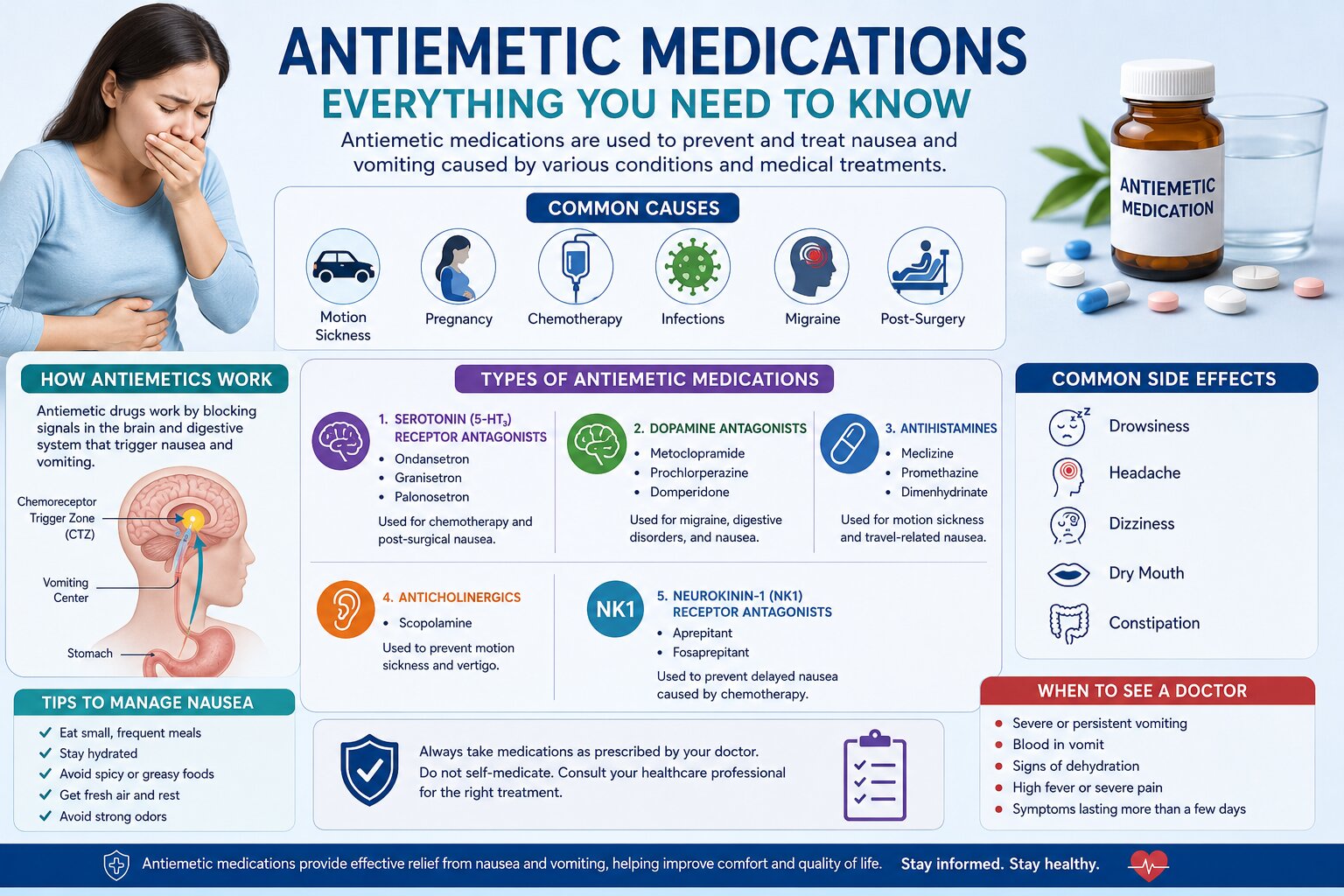
Nausea and vomiting are common symptoms that can occur due to motion sickness, pregnancy, infections, migraines, digestive disorders, chemotherapy, or surgery. These symptoms can interfere with daily life and may sometimes lead to dehydration and weakness if left untreated. Fortunately, several effective antiemetic medications are available to help control nausea and vomiting.
This comprehensive guide explains what antiemetic drugs are, how they work, the different types available, commonly prescribed medications, possible side effects, and safety precautions.
What Are Antiemetic Medications?
Antiemetic medications are drugs used to prevent or treat nausea and vomiting. These medicines work by blocking specific signals in the brain or digestive system that trigger the vomiting reflex.
Doctors prescribe antiemetics for various conditions, including:
- Motion sickness
- Food poisoning
- Stomach infections
- Pregnancy-related nausea
- Migraine-associated vomiting
- Chemotherapy-induced nausea
- Post-surgery nausea and vomiting
Antiemetic medicines are available in tablets, capsules, syrups, injections, patches, and suppositories.
Common Causes of Nausea and Vomiting
Nausea and vomiting may occur due to several health conditions and lifestyle factors.
Common Causes Include:
- Viral stomach infections
- Food poisoning
- Pregnancy morning sickness
- Motion sickness
- Acid reflux and indigestion
- Migraine headaches
- Chemotherapy and radiation therapy
- Side effects of medications
- Anxiety and stress
- Inner ear disorders
The right treatment depends on identifying the underlying cause.
How Do Antiemetic Drugs Work?
Antiemetic medications work by targeting receptors in the brain and digestive tract that control nausea and vomiting.
Different antiemetic drugs act on different receptors, such as:
- Dopamine receptors
- Serotonin receptors
- Histamine receptors
- Acetylcholine receptors
By blocking these signals, antiemetic medicines reduce the urge to vomit and relieve nausea symptoms.
Types of Antiemetic Medications
There are several categories of antiemetic drugs, each designed for specific causes of nausea and vomiting.
1. Serotonin (5-HT3) Receptor Antagonists
These medicines are commonly used for chemotherapy-induced nausea and post-surgical vomiting.
Common Drugs
- Ondansetron
- Granisetron
- Palonosetron
Benefits
- Highly effective for severe nausea
- Commonly used in cancer treatment
- Fast symptom relief
Possible Side Effects
- Headache
- Constipation
- Fatigue
- Dizziness
2. Dopamine Antagonists
These medicines block dopamine receptors in the brain that trigger vomiting.
Common Drugs
- Metoclopramide
- Prochlorperazine
- Domperidone
Uses
- Digestive disorders
- Migraine-related nausea
- Gastrointestinal reflux
Side Effects
- Drowsiness
- Restlessness
- Muscle stiffness
- Dry mouth
3. Antihistamines
Antihistamine antiemetics are mainly used for motion sickness and vertigo.
Common Drugs
- Meclizine
- Promethazine
- Dimenhydrinate
Benefits
- Helpful for travel sickness
- Effective for dizziness and nausea
- Available over the counter in some regions
Common Side Effects
- Sleepiness
- Dry mouth
- Blurred vision
4. Anticholinergic Medications
These drugs help prevent motion sickness by affecting nerve signals related to balance and nausea.
Common Drug
- Scopolamine
Scopolamine is often available as a skin patch used before travelling.
5. Neurokinin-1 (NK1) Receptor Antagonists
These advanced antiemetics are often combined with other medicines during chemotherapy.
Common Drugs
- Aprepitant
- Fosaprepitant
Benefits
- Effective for delayed chemotherapy-related nausea
- Long-lasting symptom control
Commonly Prescribed Antiemetic Medications
Several antiemetic medicines are widely prescribed for the treatment of nausea and vomiting.
Ondansetron
What is Ondansetron?
Ondansetron is one of the most commonly prescribed antiemetic medications used for chemotherapy, radiation therapy, and post-surgical nausea.
How Does It Work?
It blocks serotonin receptors that trigger nausea and vomiting signals in the brain.
Benefits of Ondansetron
- Fast relief from nausea
- Effective after surgery and chemotherapy
- Well tolerated by most patients
Side Effects
- Headache
- Constipation
- Fatigue
Metoclopramide
What is Metoclopramide?
Metoclopramide helps improve stomach emptying and reduces nausea caused by digestive disorders.
Uses
- Acid reflux
- Diabetic gastroparesis
- Migraine-associated nausea
Common Side Effects
- Drowsiness
- Restlessness
- Fatigue
Domperidone
What is Domperidone?
Domperidone is often prescribed for nausea, bloating, and stomach discomfort.
Benefits
- Reduces vomiting
- Improves digestion
- Causes less drowsiness compared to some alternatives
Possible Side Effects
- Dry mouth
- Stomach cramps
- Headache
Promethazine
What is Promethazine?
Promethazine is an antihistamine commonly used to treat motion sickness, allergies, and nausea.
Benefits
- Helpful for travel sickness
- Reduces vomiting and dizziness
- Also used for allergic reactions
Side Effects
- Sleepiness
- Dry mouth
- Blurred vision
Antiemetic Medications for Chemotherapy
Cancer treatments such as chemotherapy can cause severe nausea and vomiting. Doctors often prescribe a combination of antiemetic drugs to control these symptoms.
Commonly Used Medicines Include:
- Ondansetron
- Aprepitant
- Dexamethasone
- Palonosetron
These medications significantly improve comfort and quality of life during cancer treatment.
Antiemetic Medications During Pregnancy
Morning sickness is common during pregnancy, especially during the first trimester.
Commonly Recommended Options
- Vitamin B6
- Doxylamine
- Ondansetron (in certain cases)
Pregnant women should always consult a healthcare provider before taking antiemetic medications.
How to Take Antiemetic Drugs Safely
To get the best results and reduce side effects:
- Follow your doctor’s instructions carefully
- Do not exceed the recommended dosage
- Stay hydrated
- Avoid alcohol if advised
- Inform your doctor about other medications you take
- Avoid driving if the medicine causes drowsiness
Proper use helps improve treatment effectiveness and safety.
Possible Side Effects of Antiemetic Medications
Although antiemetic drugs are generally safe, some people may experience side effects.
Common Side Effects Include:
- Drowsiness
- Dry mouth
- Headache
- Constipation
- Dizziness
- Blurred vision
Serious side effects are rare but should be reported immediately.
Natural Ways to Reduce Nausea
In addition to medications, certain lifestyle changes may help manage mild nausea.
Helpful Tips
- Eat small frequent meals
- Avoid greasy and spicy foods
- Drink ginger tea
- Stay hydrated
- Get fresh air
- Avoid strong odors
Natural remedies may complement medical treatment for mild symptoms.
When Should You See a Doctor?
Medical attention is necessary if nausea and vomiting are severe or persistent.
Seek Immediate Help If You Experience:
- Vomiting blood
- Severe dehydration
- High fever
- Severe abdominal pain
- Persistent vomiting for more than 24 hours
- Sudden weight loss
Early treatment can help prevent complications.
Conclusion
Antiemetic medications play an important role in controlling nausea and vomiting caused by various health conditions. Whether symptoms are related to motion sickness, digestive disorders, pregnancy, surgery, or chemotherapy, the right antiemetic medicine can provide fast and effective relief.
Commonly prescribed drugs such as Ondansetron, Metoclopramide, Domperidone, Promethazine, and Aprepitant help improve comfort and quality of life for many patients.
Always use antiemetic medications under medical guidance and follow proper dosage instructions for safe and effective treatment.

Latest posts by Marie (see all)
- Semaglutide for PCOS: Can It Help with Weight Loss, Insulin Resistance & Irregular Periods? - October 17, 2026
- Semaglutide Side Effects: Common Symptoms, Serious Risks & Safety Tips - October 16, 2026
- How to control high cholesterol: self-care at home? - October 15, 2026


