
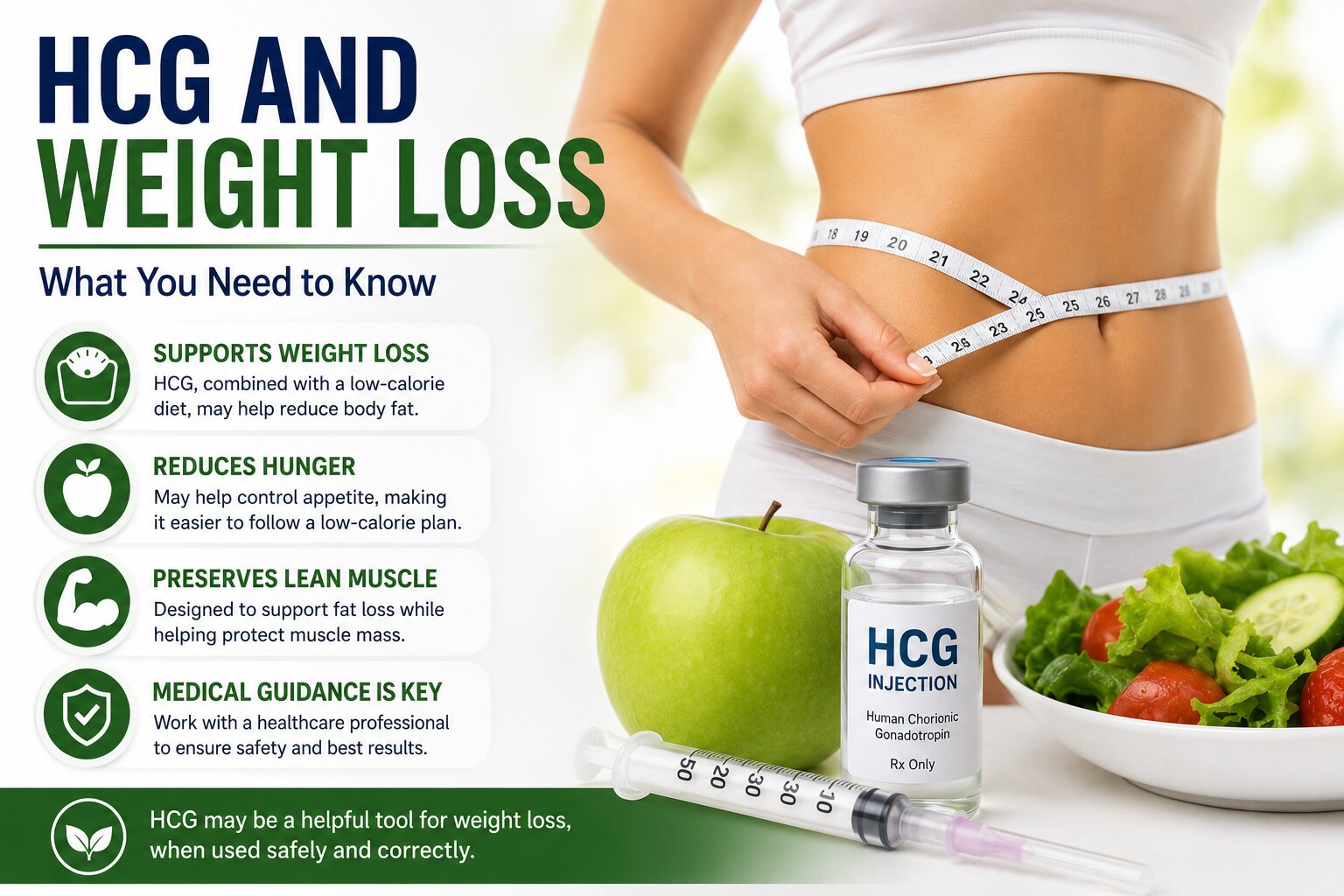
Weight loss remains one of the most common health goals worldwide. While diet and exercise continue to be the foundation of successful weight management, various treatments and programs have emerged over the years claiming to accelerate fat loss. One such approach is the HCG diet, which combines Human Chorionic Gonadotropin (HCG) with a calorie-restricted eating plan.
Supporters claim that HCG helps reduce hunger, preserve muscle mass, and encourage fat loss, while critics argue that the weight loss associated with the HCG diet is primarily due to severe calorie restriction rather than the hormone itself.
In this article, we’ll explore what HCG is, how it has been used for weight loss, the science behind the HCG diet, its potential benefits and risks, and what current research says about its effectiveness.
What Is HCG?
Human Chorionic Gonadotropin (HCG) is a hormone naturally produced during pregnancy. It is made by cells that develop into the placenta and plays a crucial role in supporting pregnancy by helping maintain hormone production.
In medical practice, HCG has been used for decades to treat various conditions, including:
- Female infertility
- Male infertility
- Delayed puberty in boys
- Certain hormonal disorders
- Testosterone support in men
Because HCG influences hormone production and metabolism, researchers and practitioners began investigating its potential role in weight management.
What Is the HCG Diet?
The HCG diet is a weight-loss program that combines HCG supplementation with a very low-calorie diet (VLCD), often limiting daily intake to around 500–800 calories.
The traditional HCG diet consists of three phases:
Phase 1: Loading Phase
For the first two days, participants begin taking HCG while consuming higher-calorie foods. This phase is intended to prepare the body for the upcoming calorie restriction.
Phase 2: Weight Loss Phase
This phase usually lasts several weeks. Participants continue taking HCG while following a strict low-calorie diet.
Typical dietary guidelines include:
- Lean protein sources
- Certain fruits
- Selected vegetables
- Limited carbohydrates
- Minimal fats and sugars
Phase 3: Maintenance Phase
After discontinuing HCG, participants gradually increase calorie intake while attempting to maintain their weight loss.
How Does HCG Supposedly Support Weight Loss?
Advocates of the HCG diet suggest that the hormone works by influencing metabolism and appetite regulation.
Several proposed mechanisms include:
Appetite Suppression
Some believe HCG helps reduce hunger, making it easier to adhere to a very low-calorie diet.
Reduced hunger may improve compliance with calorie restrictions and help individuals stay on track during the program.
Mobilisation of Stored Fat
Supporters claim HCG encourages the body to use stored fat as an energy source.
According to this theory, fat reserves are released and burned for fuel while preserving lean muscle tissue.
Improved Body Composition
Some proponents suggest that HCG may promote fat loss in areas where excess fat tends to accumulate, such as:
- Abdomen
- Hips
- Thighs
- Waist
However, scientific evidence supporting targeted fat loss remains limited.
Preservation of Muscle Mass
Maintaining lean muscle tissue is important during weight loss.
Advocates argue that HCG may help reduce muscle breakdown during calorie restriction, although research findings remain mixed.
What Does the Research Say?
The effectiveness of HCG for weight loss has been studied for decades.
Many clinical studies have compared HCG-treated individuals with those receiving placebo treatments while following similar low-calorie diets.
Findings from Research
Several reviews have concluded that:
- Weight loss occurs during the HCG diet.
- The majority of weight loss is likely due to calorie restriction.
- HCG itself may not significantly increase weight loss compared to a placebo.
- Appetite reduction results have been inconsistent across studies.
As a result, many health organisations maintain that evidence supporting HCG as a weight-loss treatment remains insufficient.
Nevertheless, some individuals report positive personal experiences while using HCG as part of a structured weight-management program.
Why Do People Lose Weight on the HCG Diet?
The primary reason many people lose weight on the HCG diet is the substantial reduction in calorie intake.
When calorie intake falls below energy expenditure, the body begins to use stored energy reserves.
This calorie deficit typically leads to weight loss regardless of whether HCG is included.
Factors contributing to weight loss may include:
- Reduced calorie intake
- Increased awareness of food choices
- Portion control
- Structured eating habits
- Improved dietary discipline
Potential Benefits Reported by Users
Although scientific opinions vary, some users report several perceived benefits.
Rapid Initial Weight Loss
Many participants notice significant weight loss during the first few weeks of the program.
This rapid reduction can be motivating and encourage continued adherence to healthier habits.
Improved Portion Control
Following a structured meal plan often helps individuals become more aware of food choices and portion sizes.
Increased Motivation
Visible results may increase confidence and motivation to continue pursuing health goals.
Better Dietary Awareness
The program encourages individuals to pay closer attention to calorie intake, food quality, and eating patterns.
Potential Risks and Concerns
While weight loss may occur, the HCG diet is not without concerns.
Extremely Low Calorie Intake
Consuming only 500–800 calories per day can be challenging and may lead to:
- Fatigue
- Weakness
- Dizziness
- Headaches
- Nutrient deficiencies
Very low-calorie diets should only be followed under medical supervision.
Nutritional Imbalances
Restrictive diets may limit essential nutrients needed for:
- Energy production
- Immune function
- Bone health
- Muscle maintenance
Proper planning is necessary to reduce the risk of deficiencies.
Gallstones
Rapid weight loss may increase the likelihood of developing gallstones in some individuals.
Muscle Loss
Without adequate protein intake and resistance exercise, muscle mass may decline during significant calorie restriction.
Weight Regain
As with many weight-loss programs, maintaining results can be difficult if healthy habits are not sustained after completing the diet.
HCG Injections vs. Other Forms
HCG is available in several forms.
HCG Injections
Prescription HCG injections are the most commonly used medical form.
They are frequently prescribed for fertility treatment and hormone-related conditions.
Oral Products
Some products marketed as “homoeopathic HCG” claim to support weight loss.
However, many contain little or no measurable HCG and may not provide the same effects as prescription formulations.
Consumers should carefully evaluate product quality and consult healthcare professionals before use.
HCG and Metabolism
Metabolism refers to the body’s process of converting food into energy.
Although HCG may influence hormonal pathways, research has not consistently demonstrated a significant metabolic advantage over calorie restriction alone.
Long-term metabolic health is generally best supported through:
- Balanced nutrition
- Physical activity
- Adequate sleep
- Stress management
- Healthy body composition
Alternatives to the HCG Diet
Many individuals achieve successful weight loss through more sustainable approaches.
Popular alternatives include:
Balanced Calorie Reduction
Moderate calorie deficits often produce steady and sustainable results.
Mediterranean Diet
This eating pattern emphasises:
- Fruits
- Vegetables
- Whole grains
- Healthy fats
- Lean proteins
High-Protein Diets
Protein-rich diets may support satiety and help preserve muscle mass during weight loss.
Regular Exercise
Combining aerobic activity with strength training supports:
- Fat loss
- Muscle preservation
- Cardiovascular health
- Long-term weight maintenance
Behavioural Lifestyle Programs
Programs focusing on habit formation often produce lasting improvements in weight management.
Who Should Consult a Doctor Before Using HCG?
Medical supervision is especially important for:
- Individuals with heart disease
- Diabetes patients
- People with kidney disease
- Pregnant women
- Breastfeeding women
- Individuals with hormonal disorders
A healthcare provider can assess whether HCG is appropriate and monitor safety throughout treatment.
Final Thoughts
The relationship between HCG and weight loss continues to generate discussion among healthcare professionals and consumers. While many people lose weight during HCG-based programs, research suggests that severe calorie restriction plays a major role in these results.
HCG remains an important hormone with established medical uses in fertility and hormone-related treatments. However, its effectiveness as a weight-loss aid remains controversial.
For individuals considering HCG as part of a weight-management strategy, professional medical guidance is essential. A healthcare provider can help determine the safest and most effective approach based on personal health history and weight-loss goals.
Ultimately, sustainable weight management is best achieved through a combination of balanced nutrition, regular physical activity, healthy lifestyle habits, and long-term behavioural changes. While quick-fix solutions may be appealing, lasting success often comes from consistent and manageable habits that support overall health and well-being.

Latest posts by Marie (see all)
- Semaglutide for PCOS: Can It Help with Weight Loss, Insulin Resistance & Irregular Periods? - October 17, 2026
- Semaglutide Side Effects: Common Symptoms, Serious Risks & Safety Tips - October 16, 2026
- How to control high cholesterol: self-care at home? - October 15, 2026


