
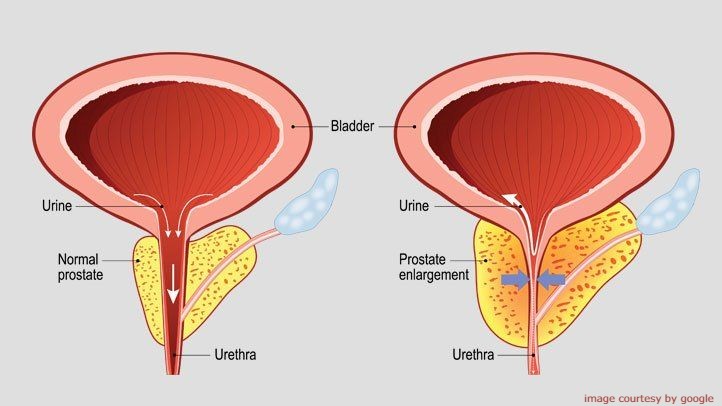
As men age, they become more prone to various health risks and deadly diseases. One of the most common problems these days is prostate gland enlargement, which is a common condition among older men. This condition is also known as benign prostatic hyperplasia (BPH). By age 60, 50% of men develop signs of BPH, and by age 85, 90% have definite signs of this condition. Severe prostate gland enlargement conditions can block the flow of urine out of the bladder and can cause bladder, urinary tract, or kidney problems.
Symptoms of benign prostatic hyperplasia (BPH):
Prostate enlargement varies from person to person, but this is a common problem affecting older men. It has been studied that the prostate gland is responsible for synthesising fluid that acts as a transporting medium for sperm during ejaculation, and for a larger size, etc. The abnormal enlargement of the prostate can interfere with the normal process of urination and cause the following symptoms:
- Urgency of urination is one of the early signs of suffering from an enlarged prostate.
- Another sign of prostate gland enlargement is reduced urine flow and force. Research on various men indicates that normal or peak urine flow among young men is considered 20 ml/second or higher, whereas it may decrease to 15-20 ml/second with mild enlargement. But, for people suffering from severe enlargement conditions, the speed of urine flow worsens to 10 ml/second or below.
- Reduced urine flow means greater involvement of the bladder muscles, which must work harder to push urine through the urethra. This means the bladder cannot function properly, and some urine may remain in the bladder, causing it to dribble at the end of urination.
- Incontinence is another cause of BPH, which means leaking of urine before you head to the toilet.
- Men with an enlarged prostate may have to visit the restrooms various times at night to empty their bladder due to their urge to urinate. Various factors, such as changes in kidney function, urethral irritation, and residual urine in the bladder, cause urinary urgency.
- Another symptom is painful urination, which is also due to the enlargement of the prostate glands. This condition occurs because the load on the bladder muscles increases, causing irritation at the urethra’s origin or as it passes through the prostate gland.
- Urinary retention is another symptom of BPH. In this condition, men will not be able to urinate despite the urge. It is due to the complete obstruction of the urethra.
- Some men with only slightly enlarged prostates have significant symptoms, whereas some men with enlarged prostates have only minor urinary symptoms. If you experience these symptoms, you should seek medical attention immediately. He will advise or recommend the exact treatment.
Treating enlarged prostate glands:
There are several treatments available for enlarged prostates, including medications and surgeries. The treatment for an enlarged prostate depends on your symptoms, the size of your prostate, age, and preference.
Medications:
Below are the various medication options that are used to treat mild symptoms of an enlarged prostate; these include:
- Alpha-blockers – Alpha-blockers like Terazosin, Doxazosin, Alfuzosin, Silodosin, and Tamsulosin relax the bladder, neck muscles, and muscle fibres in the prostate, making urination easier. These medications are very effective, and you will experience increased urinary flow and reduced urinary urgency.
- 5 alpha-reductase inhibitors – These medications are very effective and help shrink the prostate gland by preventing hormonal changes. Medications like Finasteride (Fincar 5 mg tablet) and Dutasteride generally work best for enlarged prostates. You may notice improvement in several weeks or months after taking these medications. Moreover, some of the side effects of these medications include decreased sexual desire or retrograde ejaculation.
- Tadalafil (Cialis)– Tadalafil medication is also known as a phosphodiesterase inhibitor, mainly used to treat impotence (erectile dysfunction). It is also used as a treatment for prostate enlargement. Remember that this medicine can’t be combined with alpha-blockers.
How do ED drugs work for BPH?
Various medications that work to treat ED may also work for treating BPH or enlarged prostate glands. Drugs including Sildenafil, Tadalafil, and Vardenafil inhibit the enzyme phosphodiesterase-5 (PDE-5), which breaks down the chemical called cyclic guanosine monophosphate (cGMP) and increases the blood flow to the penis. Inhibiting PDE-5 can prevent the breakdown of cGMP and help in increasing the blood flow to the penis. Moreover, the above-mentioned ED medicines or pills can boost cGMP levels in the bladder and prostate, as well. This means these increase cGMP, which allows blood to flow to the penis and helps bladder and prostate cells relax, leading to greater urinary flow.
Surgery:
Surgery is the advanced option to treat enlarged prostate glands. It is only recommended by your doctor if medication isn’t effective or if you have severe symptoms. Generally, surgeries help in reducing the size of the prostate gland by treating the enlarged prostate tissue that blocks the flow of urine. The surgery option decision is also based on several factors, including the size of your prostate and the severity of your symptoms.
- Transurethral resection of the prostate (TURP) – This surgery option has been a common procedure for treating an enlarged prostate for many years. In this procedure, a surgeon places a special lighted scope into your urethra by using small cutting tools to remove all but the outer part of the prostate (prostate resection)
- Transurethral incision of the prostate (TUIP or TIP) – This surgery option is for those who have moderately enlarged or small prostate glands, especially if they are suffering from other health problems. The specialist performs TUIP surgery by making one or two small cuts in the prostate gland to open up a channel in the urethra. This makes the person’s urine flow much more easily.
- Open prostatectomy – If you have a large prostate or bladder damage, then this surgery is the best option. This surgery is also known as open and is the most effective treatment for men with severe prostate enlargement because the surgeon makes an incision in the lower abdomen to reach the prostate.
It is a fact that every medication and surgery may cause side effects, such as semen flowing backwards into the bladder instead of passing out through the penis during ejaculation, impotence (erectile dysfunction, and loss of bladder control (incontinence). Let your doctor decide which treatment option is best for you.


Max Jones
Latest posts by Max Jones (see all)
- How to Revive Your Sex Life - October 27, 2023
- Smoking and Asthma - October 20, 2023
- 10 Causes Of Erectile Dysfunction You Probably Didn’t Know About! - June 29, 2023


