
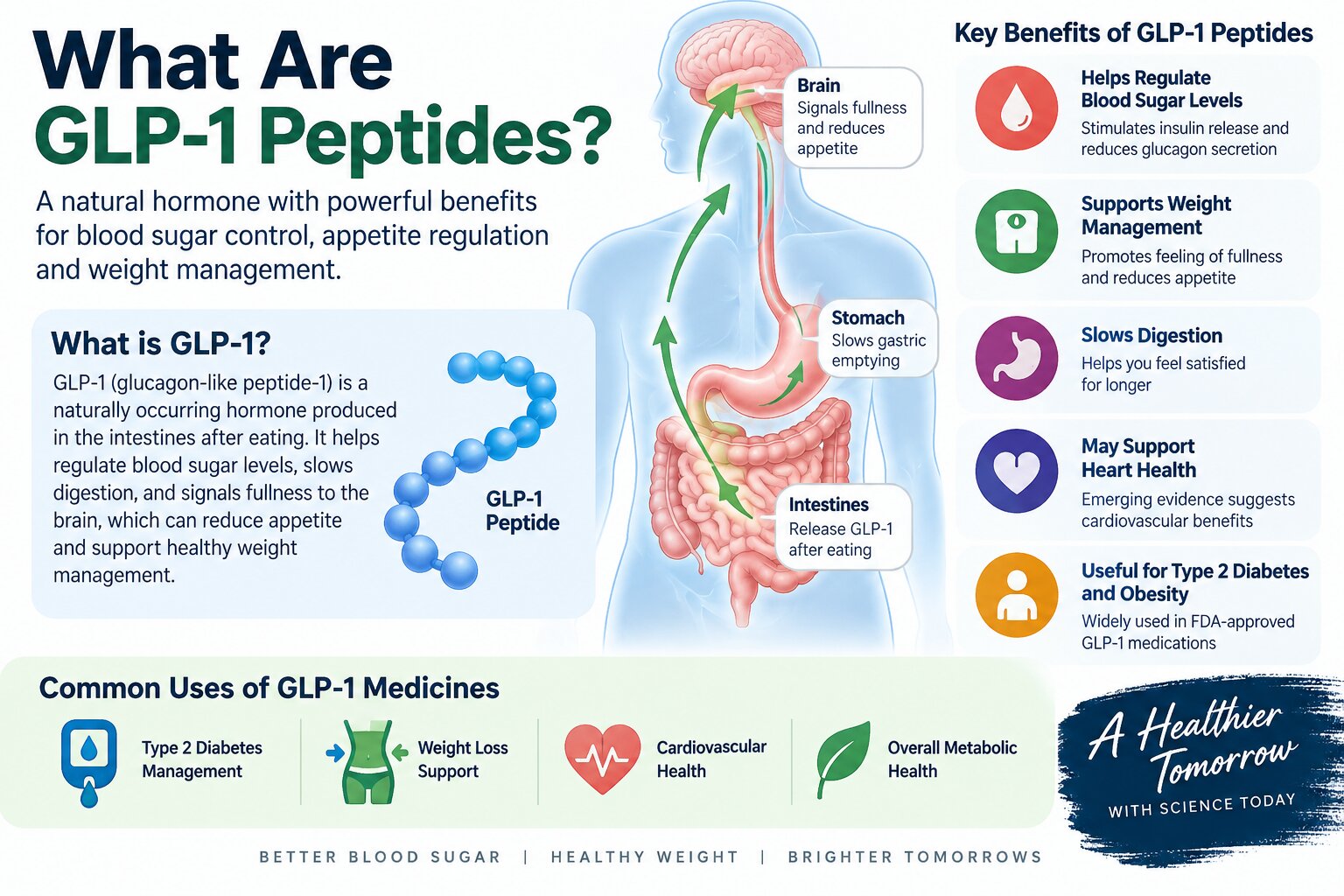
GLP-1 peptides have become one of the most discussed topics in modern weight management and metabolic health. Searches for GLP-1 peptides for weight loss, GLP-1 peptide therapy, semaglutide peptides, tirzepatide, and GLP-1 medicines have increased as more people learn about treatments that influence appetite, blood sugar, and body weight. But what exactly are GLP-1 peptides? Are all GLP-1 peptides the same as prescription weight-loss medicines? And how do they actually work? The answers are important because the term “GLP-1 peptide” is sometimes used broadly online to describe both approved medicines and experimental products. Understanding the difference can help consumers make better-informed decisions about weight-management treatments.
What is GLP-1?
GLP-1 stands for glucagon-like peptide-1, a naturally occurring hormone produced in the body, particularly in the intestine after eating. GLP-1 plays several roles in normal metabolism. It helps regulate blood glucose, influences insulin secretion, slows food movement through the stomach, and contributes to feelings of fullness after eating. Because GLP-1 naturally affects appetite and glucose regulation, researchers developed medicines that can mimic or enhance some of its actions. These treatments are known as GLP-1 receptor agonists.
Rather than simply supplying natural GLP-1, these medicines are designed to activate GLP-1 receptors for longer periods, producing therapeutic effects that can help manage certain metabolic conditions.
What are GLP-1 peptides?
The term GLP-1 peptide generally refers to peptide-based molecules that interact with the GLP-1 pathway. Some GLP-1 medicines are structurally related to GLP-1 and are designed to remain active in the body much longer than naturally occurring GLP-1. This longer activity makes them suitable for therapeutic use. One of the best-known examples is semaglutide, a GLP-1 receptor agonist used in specific approved medicines. Liraglutide is another medicine that acts through the GLP-1 receptor. Tirzepatide is also frequently discussed alongside GLP-1 medicines, although it is technically different because it activates both GIP and GLP-1 receptors. Therefore, when people search for GLP-1 peptides for weight loss, they may actually be referring to several different prescription medicines with related but distinct mechanisms.
How do GLP-1 Peptides work?
GLP-1-based medicines work by activating receptors involved in appetite and glucose regulation. After a meal, natural GLP-1 helps signal the pancreas to release insulin when blood glucose is elevated. It also reduces glucagon secretion under certain conditions and slows gastric emptying. For weight management, one of the most important effects is its influence on appetite and food intake. GLP-1 receptor activation can increase feelings of fullness and reduce hunger, which may make it easier for eligible patients to follow a reduced-calorie eating plan. This does not mean GLP-1 medicines “burn fat.” Their effects involve appetite regulation, food intake, glucose metabolism, and other physiological pathways.
GLP-1 peptides for weight loss
Interest in GLP-1 peptides for weight loss has grown because certain prescription medicines in this category have demonstrated significant weight reduction in clinical trials. For example, semaglutide is used in an FDA-approved product for chronic weight management in eligible patients. Tirzepatide, which targets both GIP and GLP-1 pathways, is also FDA-approved for chronic weight management under the brand Zepbound. These medicines are generally used together with lifestyle measures such as a reduced-calorie diet and increased physical activity. The amount of weight a person loses varies considerably. Clinical trial averages should not be interpreted as a guarantee for an individual patient.
GLP-1 peptides and blood sugar control
Weight loss is only one reason GLP-1-based medicines are important. The GLP-1 pathway also plays a major role in blood glucose regulation. Some GLP-1 receptor agonists are approved to treat type 2 diabetes, while others are approved for chronic weight management. By improving glucose-dependent insulin secretion and influencing glucagon activity, these medicines can help improve blood sugar control in appropriate patients. Their effects on appetite and body weight have also made GLP-1 medicines increasingly important in treating obesity as a chronic metabolic disease.
Semaglutide vs Tirzepatide: Are they the same?
Semaglutide and tirzepatide are often grouped under the broad term GLP-1 weight-loss medicines, but they are not identical. Semaglutide primarily activates the GLP-1 receptor. It is available in different prescription products with different approved indications. Tirzepatide activates both GIP and GLP-1 receptors. Because of this dual mechanism, it is sometimes described as a dual incretin medicine rather than simply a GLP-1 receptor agonist. Both can support weight management in eligible patients, but they have different molecular structures, dosing schedules, indications, and clinical profiles.
Are GLP-1 peptides the same as “peptides for weight loss”?
Not necessarily. The word peptide describes a type of molecule, not a guarantee that a product is an approved weight-loss treatment. Some prescription GLP-1 medicines are peptide-based pharmaceutical products that have gone through extensive clinical development and regulatory review. At the same time, websites may advertise products as “weight-loss peptides,” “research peptides,” or “GLP-1 peptides” without the same evidence or regulatory approval. The FDA has warned about unapproved versions of GLP-1 medicines, including semaglutide and tirzepatide, noting that unapproved products have not undergone the same FDA review for safety, effectiveness, and quality.
Are GLP-1 peptides safe?
GLP-1 medicines can cause side effects, and they are not appropriate for everyone. Common adverse effects associated with GLP-1-based treatments can include nausea, vomiting, diarrhoea, constipation, abdominal discomfort, and decreased appetite. The likelihood and severity can vary by medicine and individual factors. More serious risks are also possible, so use these medicines according to their prescribing information. Before starting prescription weight-loss medication, consider a person’s medical history, current medicines, existing health conditions, and treatment goals.
What about GLP-1 peptide injections sold online?
Online searches can produce advertisements for products described as GLP-1 peptide injections, research peptides, or laboratory peptides. Consumers should be particularly cautious with these products. A product marketed online may not have the same manufacturing controls, purity standards, dosing accuracy, or clinical evidence as an approved prescription medicine. The FDA has raised concerns about unapproved GLP-1 products and recommends that patients obtain prescriptions and use appropriately licensed pharmacies. The safest approach is to identify the exact active ingredient and determine whether the specific product is approved for human use and for the intended medical condition.
How GLP-1 peptides fit into weight management
Prescription GLP-1-based treatment is not a replacement for healthy lifestyle habits. For appropriate patients, medication may become one part of a broader weight-management strategy that includes balanced nutrition, regular physical activity, adequate sleep, and long-term behavioural changes. People researching other weight-loss medicines may also encounter non-GLP-1 options. For example, Orlistat works through a completely different mechanism by reducing the absorption of dietary fat. PremiumRxDrugs is a reliable platform for buying affordable weight-loss medicines. For readers comparing treatment options, Obelit 60 mg and Obelit 120 mg, which contain Orlistat, are two non-GLP-1 weight-management medicines discussed in the broader range of obesity treatments.
GLP-1 Peptides vs HCG
GLP-1 medicines are sometimes compared with HCG because both have been promoted online for weight loss. However, they have very different evidence bases. HCG is a naturally occurring hormone with legitimate medical applications, but it is not FDA-approved for weight loss. Clinical evidence has not demonstrated a meaningful weight-loss benefit from HCG itself. By comparison, certain GLP-1-based medicines have undergone clinical trials and regulatory evaluation for chronic weight management. This is why consumers should evaluate the specific medicine, evidence, and regulatory status rather than assuming all hormone- or peptide-based weight-loss approaches work the same way.
The future of GLP-1 peptide treatment
GLP-1 science continues to develop rapidly. Researchers are investigating new formulations, longer-acting medicines, combination treatments, and different ways to deliver incretin-based therapies. The success of semaglutide and tirzepatide has also encouraged research into treatments that target multiple metabolic pathways at once. Future medicines may offer new options for people who need long-term treatment for obesity, diabetes, or related metabolic conditions. However, promising research should always be distinguished from medicines that have already been adequately studied and approved for a particular use.
Final thoughts
GLP-1 peptides are peptide-based molecules that interact with the GLP-1 pathway, a biological system involved in appetite, blood glucose regulation, and digestion. Their growing role in modern medicine has made GLP-1 therapy particularly important in discussions about obesity and weight management. Semaglutide is a GLP-1 receptor agonist, while tirzepatide targets both GIP and GLP-1 receptors. Both have approved medical uses, including weight-management indications for eligible patients. However, not every product described online as a GLP-1 peptide, weight-loss peptide, or research peptide matches an approved prescription medicine. Consumers should look beyond marketing claims and consider the active ingredient, regulatory status, clinical evidence, manufacturing quality, doctor consultation, and suitability for their individual circumstances. For anyone researching GLP-1 peptides for weight loss, understanding these differences is an important first step toward making informed decisions about available treatment approaches.

Latest posts by Marie (see all)
- HCG vs GLP-1 Medicines: How Are They Different? - September 16, 2026
- HCG, GLP-1, and Peptides: Understanding Different Treatment Approaches - September 16, 2026
- HCG and Weight Loss: Separating Facts from Myths - September 16, 2026


