
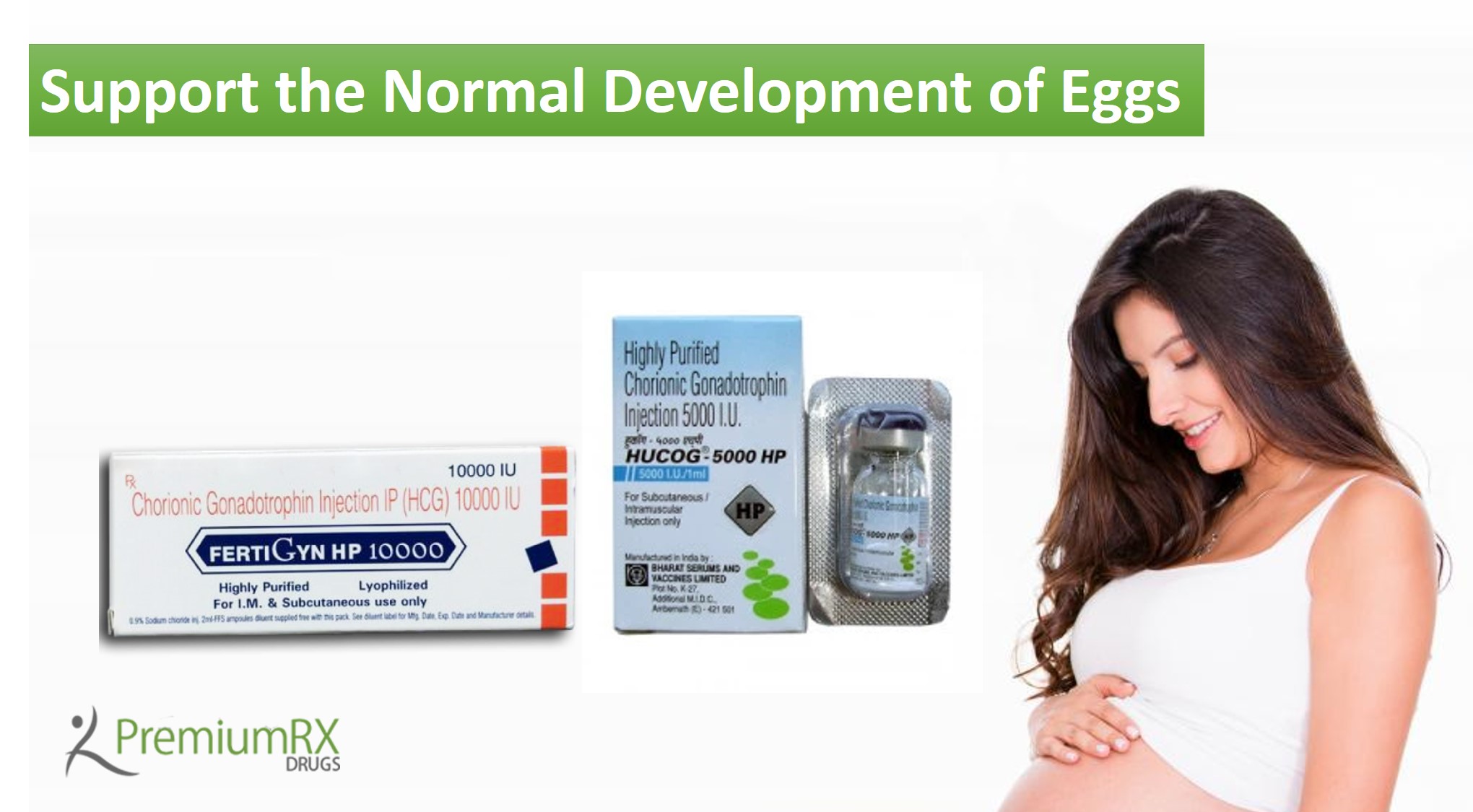
Pregnant women produce human chorionic gonadotropin, or HCG, a hormone, which is why some people refer to it as a pregnancy hormone.
Human chorionic gonadotropin (HCG) is used in women to support the normal development of eggs in the ovaries and allows for ovulation. It stimulated egg production during ovulation. With its regular intake, women experiencing infertility issues get pregnant and are often able to improve their egg development. The medicine helps men to increase their sperm count. A couple using HCG at the same time greatly decreases the waiting period for becoming parents. Some couple chooses HCG and put down other conceptions leading up to the pregnancy. Few women complain of discomfort after using HCG, and it can range from mild to severe pelvic pain. In rare cases, a woman may be diagnosed with ovarian hyperstimulation syndrome (OHSS). The rare conditions usually occur after the first dose or in the early stages of use. The use of HCG shots has also been reported to increase the risk of having multiple births. Women who are prescribed HCG to get pregnant are advised to discontinue treatment immediately they get pregnant, as this can contribute to birth defects in children. Checking pregnancy status regularly is very important.
Features and Functions of HCG
The hormone hCG is secreted by cells surrounding the developing embryo, which will eventually form the placenta. The hormone can be detected in the urine after the embryo is implanted in the womb.
During ovulation, when the egg is released from the ovary, the remaining part of the ovarian follicle becomes the corpus luteum, an ovarian gland that produces the hormone progesterone. If the egg is not fertilised after two weeks, the ovarian gland stops producing progesterone, leading to its breakdown. This signals the production of stimulating follicle hormone (FSH) from the pituitary gland in order to begin the next menstrual cycle. However, during the procedure, when the sperm and an embryo fertilise the egg, the corpus luteum must produce progesterone continuously until the placenta is formed. The continuous release of Progesterone is required because its loss contributes to the shedding of the womb lining, which is called menstruation. This, in turn, prevents an embryo to conceive in the uterus. Here comes the role of HCG, also called the embryonic hormone, which helps ensure the continuous production of progesterone throughout the first trimester of pregnancy.
In addition to stimulating progesterone production in the ovary, HCG plays a crucial role in ensuring that the lining of the uterus, called the endometrium, is ready to receive the embryo.
Women get HCG from the trophoblast cells that surround the growing embryo after a week of pregnancy. It is believed that HCG levels in the blood double every 2 to 3 days as the placenta and embryo develop.
Best time to take HCG
HCG injection is used once there is egg follicles are present in the ovary. Your healthcare specialist will tell you the specific period and time to inject the drug. It is equally important to let your healthcare provider know about any missed doses during dose adjustments. If you have sexual activity or intrauterine insemination, ovulation happens almost 36 hours later, so consider the day of injection and the two days following it as your critical days.
Pregnancy test- when to take
Note that HCG is a hormone detected in urine tests. When you take an HCG injection, it stays in your urine or blood for up to two weeks. So, if you take a pregnancy test during this period, no doubt it will turn positive as a result of the drug, not the actual pregnancy. Therefore, it is important to wait for at least two weeks from the date you inject the HCG shot to make sure the positive results are due to pregnancy and not the medicine.
Numerous brands of HCG injections are available. Your health care provider will prescribe the best one for your health status and current condition. An HCG shot is given intramuscularly as instructed by the specialist.

Latest posts by Marie (see all)
- Alpha Blockers for Blood Pressure and Prostate: A Patient’s Guide to Alpha Blockers - September 17, 2026
- Allergy Medications Guide: Best Treatments for Seasonal, Skin & Food Allergies - September 17, 2026
- Alcohol & Drug Treatment: Medications, Recovery Options & What to Expect - September 17, 2026


