
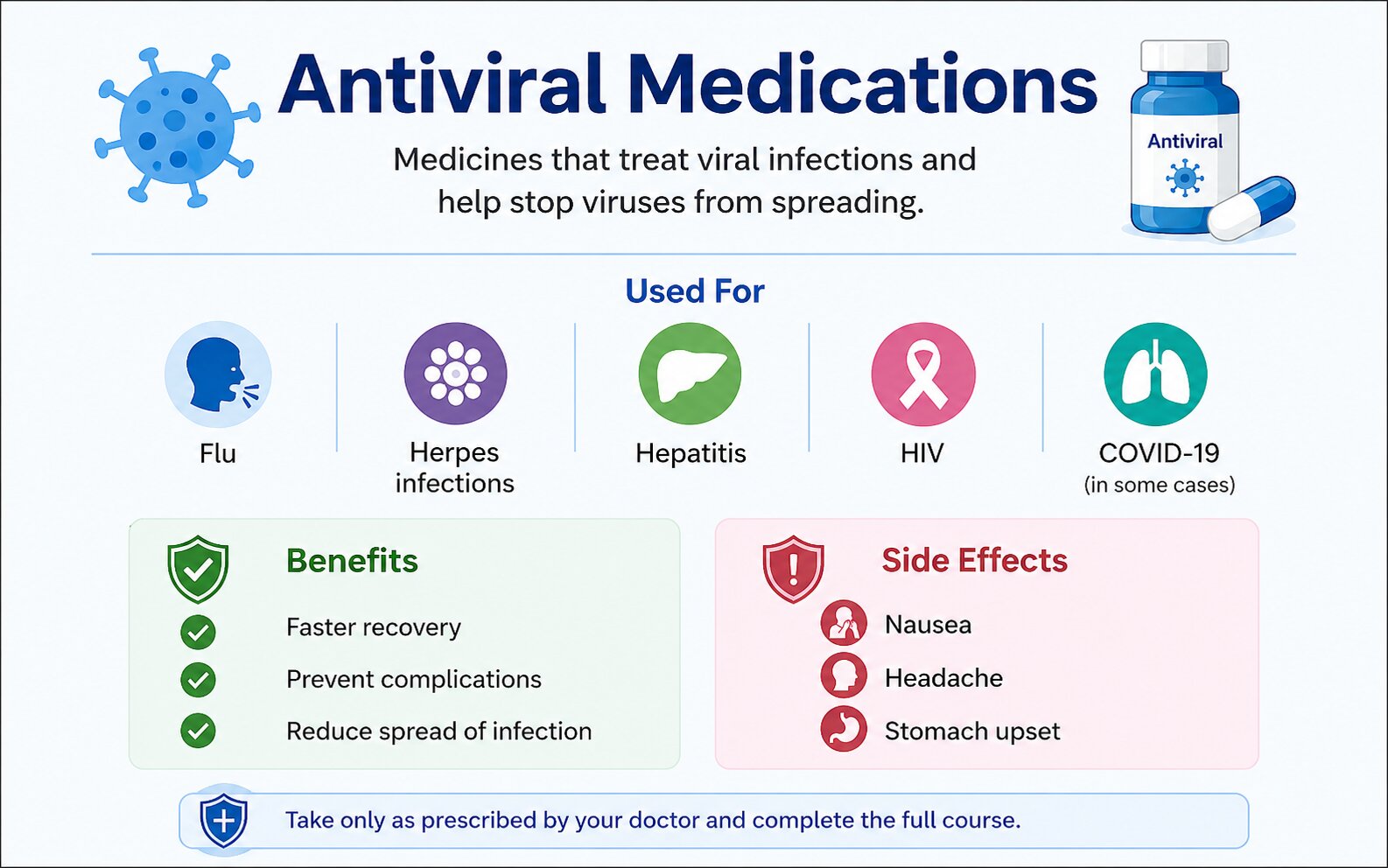
Viruses are responsible for many common and serious illnesses, ranging from seasonal flu and cold sores to chronic infections like HIV and hepatitis. Unlike bacteria, viruses invade healthy cells and multiply inside the body, making them more difficult to treat. This is where antiviral medications play an important role. These medicines are specially designed to stop viruses from growing and spreading, helping the immune system fight infections more effectively.
Today, antiviral drugs are widely used to treat, manage, and sometimes prevent viral infections. They have become essential in modern healthcare, especially after the global focus on viral diseases in recent years. Understanding how antiviral medications work, their uses, and possible side effects can help patients make informed decisions about treatment.
What Are Antiviral Medications?
Antiviral medications are prescription drugs used to treat infections caused by viruses. These medicines work by interfering with the virus’s ability to reproduce inside the body. Unlike antibiotics, which kill bacteria, antivirals specifically target viral infections and do not work against bacterial illnesses.
Antiviral drugs can:
- Reduce the severity of symptoms
- Shorten the duration of illness
- Prevent complications
- Lower the risk of spreading infection
- Help manage chronic viral diseases
Some antiviral medicines can completely clear a virus, while others mainly control the infection and prevent it from worsening.
How Do Antiviral Medications Work?
Viruses depend on human cells to survive and multiply. Antiviral medications block different stages of the viral life cycle, such as:
1. Preventing Viral Entry
Some antivirals stop viruses from entering healthy cells.
2. Blocking Viral Replication
Many antiviral drugs interfere with the virus’s genetic material, preventing it from multiplying.
3. Inhibiting Viral Assembly
Certain medications stop new virus particles from forming properly.
4. Preventing Virus Release
Some drugs prevent newly formed viruses from leaving infected cells and spreading to other cells.
Because different viruses behave differently, antiviral medicines are often virus-specific.
Common Types of Antiviral Medications
There are several categories of antiviral drugs based on the infections they treat.
1. Antivirals for Influenza (Flu)
These medicines help treat and prevent influenza infections. They work best when taken within 48 hours of symptom onset.
Common examples include:
- Oseltamivir
- Zanamivir
- Baloxavir
Benefits
- Reduces flu symptoms
- Shortens recovery time
- Prevents severe complications
2. Antiviral Drugs for Herpes Infections
These medications treat infections caused by the herpes simplex virus (HSV) and the varicella-zoster virus (VZV).
Common conditions treated:
- Cold sores
- Genital herpes
- Shingles
- Chickenpox
Popular antiviral medicines:
- Acyclovir
- Valacyclovir
- Famciclovir
Benefits
- Reduces outbreaks
- Speeds healing
- Lowers pain and discomfort
3. HIV Antiviral Medications
Human Immunodeficiency Virus (HIV) attacks the immune system. Antiretroviral therapy (ART) is used to manage HIV effectively.
Common drug classes:
- Reverse transcriptase inhibitors
- Protease inhibitors
- Integrase inhibitors
Benefits
- Controls viral load
- Protects the immune system
- Improves life expectancy
- Reduces HIV transmission risk
People with HIV often need lifelong treatment.
4. Hepatitis Antiviral Drugs
Antiviral medications are widely used for chronic hepatitis B and hepatitis C infections.
Common medicines include:
- Sofosbuvir
- Entecavir
- Tenofovir
Benefits
- Prevents liver damage
- Reduces inflammation
- Lowers the risk of liver failure and cancer
Modern hepatitis C treatments can cure many patients completely.
5. COVID-19 Antiviral Medications
Some antiviral drugs are used to reduce the severity of COVID-19 infections, especially in high-risk patients.
Examples include:
- Remdesivir
- Nirmatrelvir with Ritonavir
Benefits
- Reduces hospitalisation risk
- Helps recovery
- Prevents severe disease progression
Common Uses of Antiviral Medications
Doctors prescribe antiviral medications for many purposes.
Treating Acute Viral Infections
Antivirals help reduce symptoms and speed recovery in short-term infections.
Managing Chronic Viral Diseases
Conditions like HIV and hepatitis often require long-term antiviral treatment.
Preventing Viral Infections
Some antivirals are used after exposure to viruses or before travel to high-risk areas.
Reducing Transmission
Antiviral therapy can lower the risk of passing infections to others.
Advantages of Antiviral Medications
Antiviral drugs provide several important health benefits.
Faster Recovery
Patients often recover more quickly when treatment starts early.
Reduced Complications
Antivirals can prevent serious complications such as pneumonia, liver damage, or nerve pain.
Better Quality of Life
People with chronic viral infections can live healthier and longer lives with proper antiviral therapy.
Lower Hospitalisation Rates
Early treatment may reduce the need for hospital care.
Improved Infection Control
Some antivirals help reduce the spread of contagious viruses.
Side Effects of Antiviral Medications
Like all medicines, antiviral drugs can cause side effects. The type and severity vary depending on the medication and the individual patient.
Common Side Effects
- Nausea
- Vomiting
- Diarrhea
- Headache
- Dizziness
- Fatigue
Less Common Side Effects
- Skin rash
- Sleep disturbances
- Muscle pain
- Changes in liver function
Serious Side Effects
In rare cases, antivirals may cause:
- Kidney problems
- Severe allergic reactions
- Liver damage
- Blood disorders
Patients should seek medical attention if they experience severe symptoms after taking antiviral medication.
Antiviral Resistance
Over time, some viruses can become resistant to antiviral drugs. This happens when viruses mutate and no longer respond to treatment.
Causes of Resistance
- Skipping doses
- Incorrect medication use
- Long-term therapy
- Incomplete treatment courses
How to Prevent Resistance
- Follow the prescribed dosage instructions
- Complete the full treatment course
- Attend regular medical checkups
- Avoid self-medication
Proper use of antiviral medications is essential for maintaining effectiveness.
Important Precautions Before Using Antivirals
Before taking antiviral medications, patients should discuss their medical history with a healthcare provider.
Inform Your Doctor If You Have:
- Kidney disease
- Liver problems
- Pregnancy or breastfeeding concerns
- Allergies to medications
- Other ongoing treatments
Drug interactions are possible, especially in people taking multiple medications.
Can Antiviral Medications Prevent Viral Infections?
Some antiviral drugs are used as preventive treatment, known as prophylaxis.
Examples include:
- Flu prevention after exposure
- HIV pre-exposure prophylaxis (PrEP)
- Prevention of herpes outbreaks
Preventive antiviral therapy is usually recommended for high-risk individuals.
Natural Immunity vs Antiviral Medications
A healthy immune system plays a major role in fighting viruses, but antiviral medications provide additional support when infections become severe or persistent.
Healthy lifestyle habits that support immunity include:
- Eating nutritious foods
- Exercising regularly
- Managing stress
- Sleeping adequately
- Staying hydrated
However, natural remedies should never replace prescribed antiviral treatments for serious infections.
Future of Antiviral Therapy
Researchers continue to develop newer and more effective antiviral medications. Future advancements may include:
- Broad-spectrum antivirals
- Faster viral detection methods
- Personalised antiviral therapy
- Improved vaccines and prevention strategies
Medical innovation continues to improve outcomes for viral diseases worldwide.
Conclusion
Antiviral medications are an essential part of modern medicine, helping millions of people manage and recover from viral infections. From treating seasonal flu and herpes to controlling chronic conditions like HIV and hepatitis, these medicines have significantly improved healthcare outcomes.
While antiviral drugs offer many benefits, they should always be used under medical supervision to ensure safety and effectiveness. Early diagnosis, proper treatment, and healthy lifestyle habits can greatly improve recovery and overall health.
Understanding how antiviral medications work empowers patients to make informed healthcare decisions and use these treatments responsibly.

Latest posts by Marie (see all)
- Semaglutide for PCOS: Can It Help with Weight Loss, Insulin Resistance & Irregular Periods? - October 17, 2026
- Semaglutide Side Effects: Common Symptoms, Serious Risks & Safety Tips - October 16, 2026
- How to control high cholesterol: self-care at home? - October 15, 2026


