
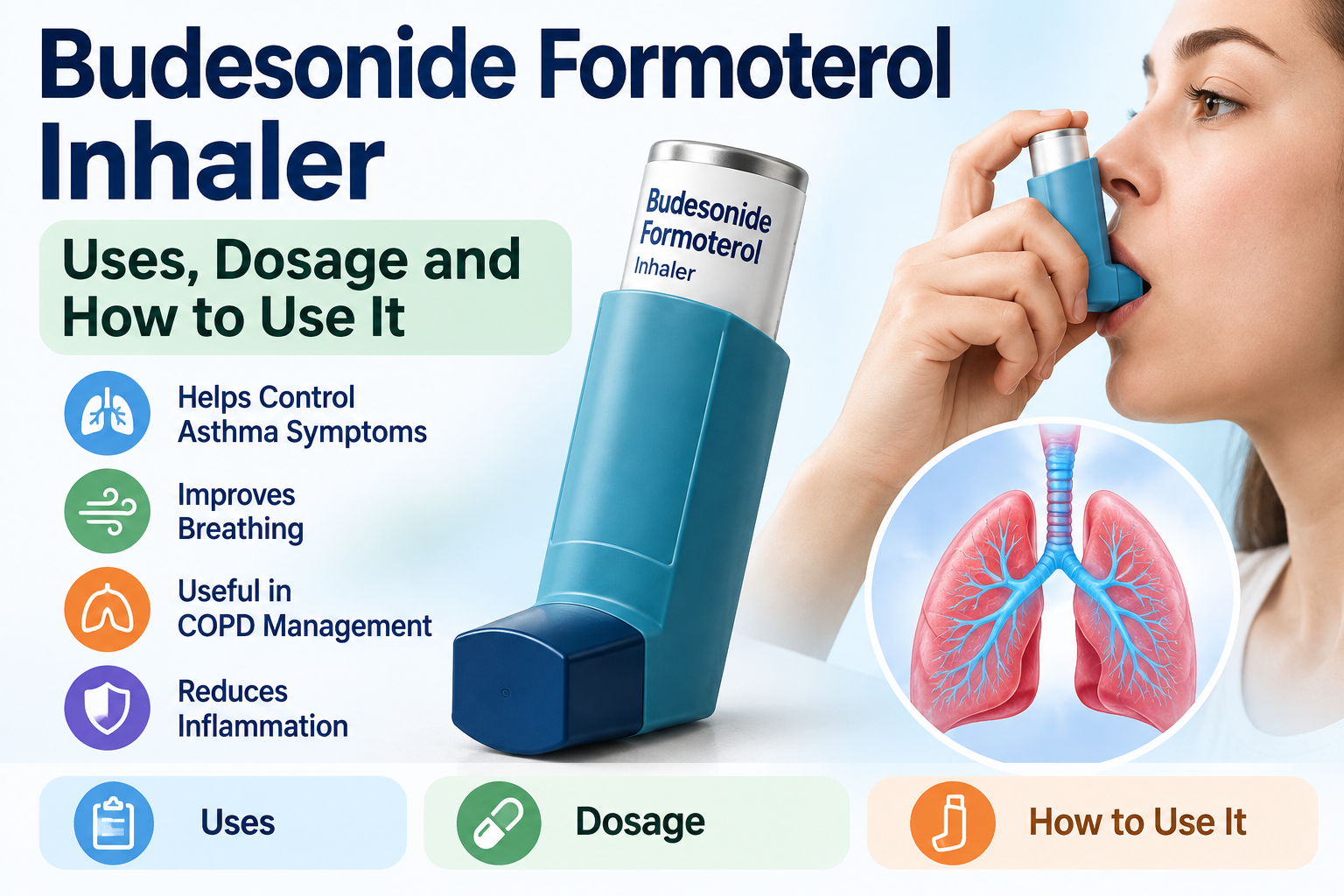
Budesonide-formoterol inhalers combine two medications in a single metered-dose inhaler to manage asthma and chronic obstructive pulmonary disease (COPD) long-term. Budesonide is an inhaled corticosteroid that quiets airway inflammation, while formoterol is a long-acting bronchodilator that keeps airway muscles relaxed for extended symptom control. Knowing what it treats, how to use it correctly, and what dose applies to your situation makes a real difference in how well it works.
What Budesonide Formoterol inhaler is used for
This inhaler is prescribed as maintenance therapy for two separate respiratory conditions. In asthma, it’s used for patients aged six and up whose symptoms aren’t adequately controlled on an inhaled corticosteroid alone, or whose asthma is severe enough to need two long-term control medications from the start.
In COPD, it’s used for long-term maintenance treatment of airflow obstruction, including chronic bronchitis and emphysema, and to reduce flare-ups known as exacerbations. In both conditions, this is a controller medication taken on a fixed schedule, not a rescue treatment. It will not stop a sudden asthma attack or an acute COPD flare-up already in progress, and a separate fast-acting rescue inhaler should always be kept on hand. Because formoterol is a long-acting bronchodilator, it should never be used alone for asthma without an inhaled corticosteroid, which is why it’s formulated as a fixed combination.
How does the Budesonide Formoterol inhaler work?
The two active ingredients target the disease process from different angles. The budesonide inhaler, an inhaled corticosteroid, penetrates the cells lining the airways and reduces the activity of inflammatory cells such as eosinophils and mast cells, while dialling down inflammatory chemical messengers that drive swelling, mucus production, and airway sensitivity. Formoterol, a long-acting beta2-agonist, works on receptors in the smooth muscle surrounding the airways, relaxing that muscle so the airways stay open for roughly twelve hours per dose. Together, the anti-inflammatory effect addresses the root cause of airway narrowing while the bronchodilator effect keeps airways physically open, and this pairing controls symptoms more effectively than either ingredient alone. Because formoterol has a relatively quick onset, many patients notice some improvement within minutes, though the medication is intended for scheduled twice-daily use rather than as-needed relief.
How to use Budesonide Formoterol inhaler?
This is a pressurised metered-dose inhaler, so proper technique matters to deliver a full, consistent dose with every puff. Before using a new inhaler for the first time, or if you haven’t used it for more than seven days, prime it: shake well for five seconds, then spray two test puffs into the air, away from your face. Before every subsequent use, shake the inhaler for five seconds to mix the medication evenly. Remove the cap, breathe out fully, and place the mouthpiece between your lips, sealing them around it. Begin breathing in slowly and deeply through your mouth, pressing down firmly on the canister at the same time to release one puff, and continue inhaling until your lungs feel full. Hold your breath for about ten seconds, then breathe out slowly. If your dose calls for a second inhalation, wait about one minute, shake the inhaler again, and repeat. Afterwards, rinse your mouth thoroughly with water and spit without swallowing, since this meaningfully lowers the risk of oral thrush. Wipe the mouthpiece, replace the cap, and track doses used, since a counter reaching zero means it’s time for a refill even if it still seems to spray.
Budesonide Formoterol inhaler dosage
Dosing differs by age and condition. Adults and adolescents 12 and older with asthma typically take two inhalations of either the 80/4.5 mcg or 160/4.5 mcg strength twice daily, about twelve hours apart, depending on symptom severity; the maximum is two inhalations of 160/4.5 mcg twice daily. Children aged 6 to 11 with asthma are approved only for the 80/4.5 mcg strength, two inhalations twice daily. Adults with COPD take two inhalations of the 160/4.5 mcg strength twice daily; the lower strength isn’t approved for COPD. Space doses evenly and continue daily even when symptoms feel controlled, since stopping abruptly can worsen airflow limitation. Skip missed doses; don’t double up, and report rising rescue-inhaler use to your doctor, as it may signal your regimen needs adjustment.
Precautions and warnings
This inhaler carries a boxed warning because long-acting beta2-agonists like formoterol, used alone in asthma, have been associated with an increased risk of asthma-related death; this is why formoterol is only provided here combined with an inhaled corticosteroid, and it should never be paired with a separate stand-alone LABA product. Do not use it for acute bronchospasm or a worsening asthma or COPD episode, since it isn’t fast-acting enough for emergency relief.
Patients switching from an oral corticosteroid should be monitored carefully, as adrenal function can take time to recover. Use cautiously with heart rhythm problems, high blood pressure, seizure disorders, thyroid conditions, or diabetes, since formoterol can affect heart rate and blood sugar. Anyone with a milk protein allergy should tell their doctor, and those with untreated infections, including tuberculosis, should discuss the risks before starting. This medication isn’t approved for children under six.
Side effects of Budesonide Formoterol inhaler
Commonly reported side effects include throat irritation, headache, upper respiratory tract infections, nasal congestion, back pain, and a mild increase in heart rate or tremor from the formoterol component. Oral thrush and hoarseness can occur from the inhaled corticosteroid and are reduced by rinsing the mouth after each use. Less often, patients report nausea, muscle cramps, or nervousness.
More serious but rare effects include paradoxical bronchospasm, where breathing suddenly worsens right after a dose and requires immediate care; signs of pneumonia in COPD patients, such as a new or worsening cough with fever; and symptoms of adrenal suppression, including unusual fatigue, weakness, or dizziness, particularly after long-term use. Vision changes or signs of increased eye pressure should also be evaluated promptly given a small long-term risk with inhaled steroids. A serious allergic reaction, including facial or throat swelling, hives, or sudden difficulty breathing, needs emergency attention. Most patients tolerate this combination inhaler well when used as prescribed, and side effects are generally mild compared with the improved control it provides.
The PremiumRxDrugs alternative: Foracort inhaler
Patients looking for the same combination at a lower cost can find Foracort Inhaler, manufactured by Cipla, in the equivalent 6/200 mcg strength (formoterol fumarate 6 mcg with budesonide 200 mcg per actuation). As a generic version of the same drug class used in Symbicort, Foracort delivers the identical dual-action mechanism- anti-inflammatory control plus long-acting bronchodilation- at a fraction of the branded price, which matters for a medication most patients take daily for years. Buying it through PremiumRxDrugs adds practical advantages beyond the lower price, plus free shipping on qualifying orders. Consolidating a long-term prescription with one verified online pharmacy also means a single account for tracking orders, refill reminders, and consistent sourcing, rather than juggling multiple suppliers. For anyone managing the cost of daily asthma or COPD treatment, checking PremiumRxDrugs can help save money while delivering authentic medicine to your doorstep in discreet packaging.

Latest posts by Marie (see all)
- Budesonide Formoterol Inhaler: Uses, Dosage and How to Use It - September 28, 2026
- Pulmicort Inhaler: Uses, How to Use, Dosage and Side Effects - September 25, 2026
- Peptide Science: Understanding Peptides, Their Biology, Uses and Future in Medicine - September 22, 2026


