
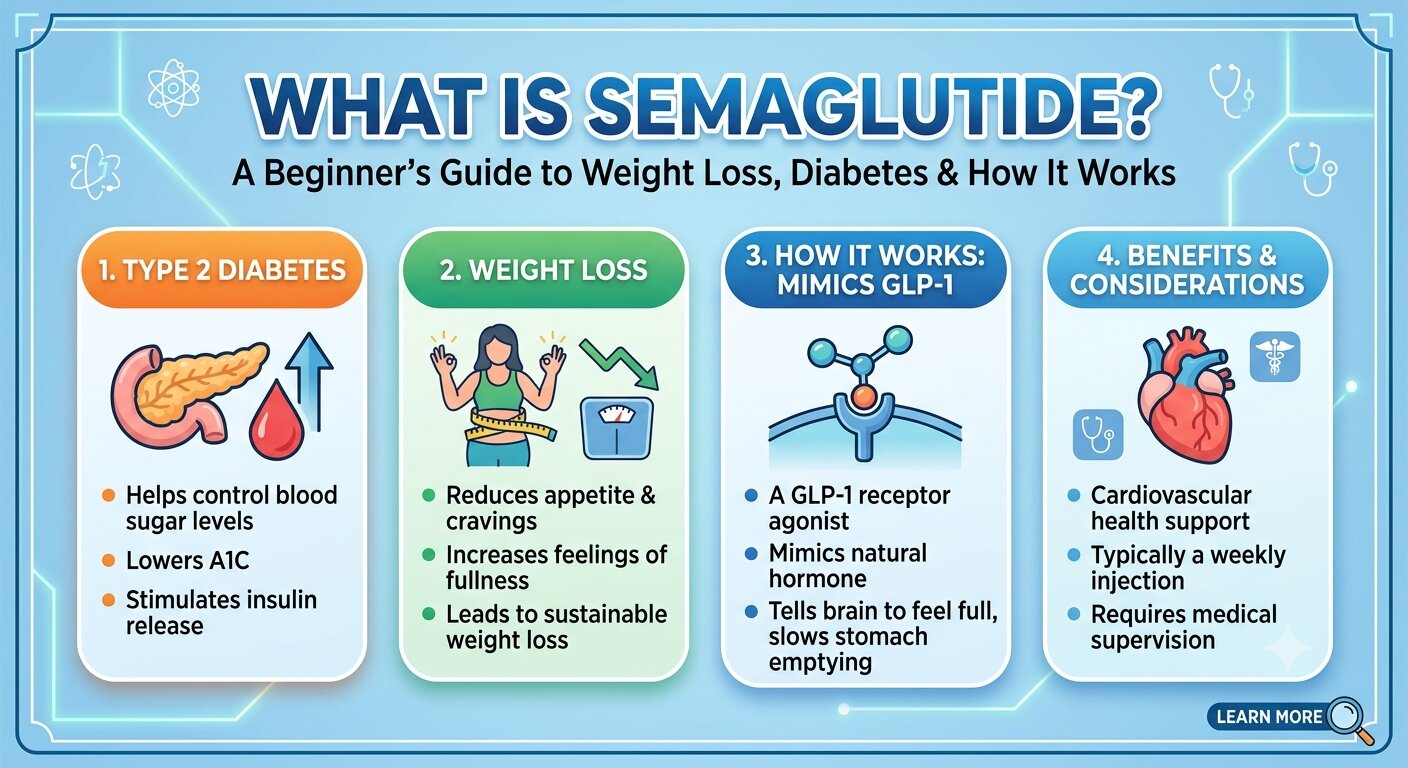
If you’ve seen the name “semaglutide,” “Ozempic,” or “Wegovy” all over the news and social media, you’re not alone. This medication has become one of the most talked-about treatments in modern medicine — and for good reason. It’s changed how doctors approach both type 2 diabetes and long-term weight management.
But with so much buzz comes a lot of confusion. Is semaglutide a diabetes drug or a weight-loss drug? Is it safe? How does it actually work inside your body? This guide answers all of that in plain, everyday language, so you can have an informed conversation with your doctor or pharmacist.
Key Takeaways
- Semaglutide is a GLP-1 receptor agonist that mimics a natural gut hormone.
- It’s sold under three brand names: Ozempic and Rybelsus (diabetes) and Wegovy (weight loss).
- It works by slowing digestion and reducing appetite signals in the brain.
- Clinical trials show average weight loss of around 15% of body weight over 68 weeks when combined with diet and exercise.
- Common side effects are digestive (nausea, diarrhea); serious risks are rare but include pancreatitis and gallbladder issues.
- It is generally intended as a long-term treatment, not a short course.
What Is Semaglutide?
Semaglutide is a prescription medication that mimics a natural hormone in your gut called GLP-1 (glucagon-like peptide-1), helping regulate blood sugar and appetite. It belongs to a drug class called GLP-1 receptor agonists.
Your body naturally produces small amounts of GLP-1 after eating, which briefly signals your pancreas to release insulin and tells your brain you’re full. Semaglutide is a lab-made version of this hormone, engineered to last much longer in the bloodstream — about a week per dose, instead of just minutes.
Semaglutide is sold under three brand names, and this is where most of the public confusion comes from:
| Brand Name | Approved For | Form | Typical Dosing |
|---|---|---|---|
| Ozempic | Type 2 diabetes | Weekly injection | 0.25–2 mg/week |
| Wegovy | Chronic weight management | Weekly injection | Up to 2.4 mg/week |
| Rybelsus | Type 2 diabetes | Daily oral tablet | 3–14 mg/day |
All three contain the identical active ingredient. The difference lies in the approved use, maximum dose, and delivery method.
How Does Semaglutide Work?
Semaglutide works through three connected actions in the body:
- Boosts insulin release from the pancreas when blood sugar is high, helping lower glucose levels.
- Slows gastric emptying, meaning food stays in the stomach longer, so you feel full for longer after eating.
- Reduces appetite signals in the brain, particularly cravings for high-fat, high-calorie foods.
This combination explains why semaglutide affects both blood sugar control and body weight — it isn’t simply an appetite suppressant; it’s a hormone-mimicking medication that acts on multiple systems at once.
Semaglutide for Type 2 Diabetes
Semaglutide was first developed and approved to treat type 2 diabetes, a condition in which the body doesn’t produce enough insulin or doesn’t use it effectively, leading to consistently high blood sugar.
As Ozempic (injection) or Rybelsus (tablet), semaglutide is typically prescribed alongside diet, exercise, and sometimes other diabetes medications like metformin — not as a stand-alone replacement for lifestyle management.
An important additional benefit: clinical research has shown semaglutide can reduce the risk of major cardiovascular events, such as heart attack and stroke, in people with type 2 diabetes who already have cardiovascular disease. This dual benefit is a major reason it has become a first-choice option for many endocrinologists.
Semaglutide for Weight Loss
Wegovy is the semaglutide formulation specifically approved for chronic weight management, with a higher maximum dose (2.4 mg/week) than the diabetes formulation.
Key clinical trial finding: Participants using semaglutide for weight management lost an average of approximately 15% of their body weight over 68 weeks, when combined with a reduced-calorie diet and increased physical activity.
For context, someone weighing 220 lbs (100 kg) losing 15% of body weight would lose roughly 33 lbs (15 kg) — a clinically significant amount linked to real improvements in blood pressure, cholesterol, and joint pain.
Wegovy is not marketed as a substitute for healthy habits. It’s approved as a tool used alongside reduced-calorie eating and regular exercise, not instead of them.
Who Qualifies for Semaglutide for Weight Loss?
Doctors generally consider Wegovy for adults with:
- A BMI of 30 or higher (classified as obesity), or
- A BMI of 27 or higher with at least one weight-related health condition (such as high blood pressure, type 2 diabetes, or high cholesterol)
It is not typically prescribed for people seeking to lose a small amount of weight for cosmetic reasons alone.
How Is Semaglutide Taken?
- Ozempic and Wegovy (injections): Given once weekly, subcutaneously (under the skin), usually in the stomach, thigh, or upper arm, using a pre-filled pen.
- Rybelsus (tablet): Taken once daily on an empty stomach, first thing in the morning, with a small sip of plain water, followed by waiting at least 30 minutes before eating, drinking, or taking other oral medications.
Doctors typically start patients on a low dose and gradually increase it every 4 weeks. This “titration” approach helps the digestive system adjust gradually and reduces the likelihood of nausea and other early side effects.
Semaglutide vs. Other Weight-Loss & Diabetes Medications
| Medication | Active Ingredient | Mechanism | Typical Use |
|---|---|---|---|
| Ozempic / Wegovy / Rybelsus | Semaglutide | GLP-1 receptor agonist | Diabetes / weight loss |
| Mounjaro / Zepbound | Tirzepatide | GLP-1 + GIP receptor agonist | Diabetes / weight loss |
| Saxenda | Liraglutide | GLP-1 receptor agonist (daily injection) | Weight loss |
| Metformin | Metformin | Reduces liver glucose production | First-line diabetes treatment |
Tirzepatide acts on two gut hormones rather than one and has shown slightly greater average weight loss in some head-to-head studies, though individual responses vary. Metformin, by contrast, is typically the first medication tried for type 2 diabetes and works differently — it does not carry the same appetite-suppressing effect.
Common and Serious Side Effects
Most common (usually mild, improve over time):
- Nausea
- Diarrhea or constipation
- Vomiting
- Stomach pain or bloating
- Reduced appetite
- Burping or indigestion
These effects are most noticeable in the first few weeks or right after a dose increase. Eating smaller meals, avoiding greasy foods, and eating slowly can help ease nausea during the adjustment period.
Less common but more serious:
- Gallbladder problems (including gallstones)
- Pancreatitis (pancreas inflammation)
- Kidney problems, often linked to dehydration from vomiting or diarrhea
- Vision changes in people with existing diabetic eye disease
- A rare warning regarding thyroid tumors, relevant to those with a personal or family history of certain thyroid cancers
This list isn’t exhaustive. Always review the full prescribing information with your doctor or pharmacist, and seek prompt medical attention for severe abdominal pain or signs of an allergic reaction.
Who Should Avoid Semaglutide?
Semaglutide is generally not recommended for people with:
- A personal or family history of medullary thyroid carcinoma or Multiple Endocrine Neoplasia syndrome type 2 (MEN 2)
- A known serious allergic reaction to semaglutide or its ingredients
- Current pregnancy or plans for pregnancy in the near future (guidance generally recommends stopping semaglutide at least 2 months before trying to conceive)
People with a history of pancreatitis, severe digestive disorders, or gallbladder disease should discuss risks and benefits carefully with their doctor before starting.
Lifestyle Tips While Taking Semaglutide
- Eat smaller, more frequent meals rather than large ones
- Prioritize protein and fiber to support fullness and muscle maintenance
- Stay well hydrated, especially if experiencing nausea or diarrhea
- Introduce light physical activity, building up gradually
- Avoid alcohol and very fatty or fried foods, which can worsen nausea
- Attend regular follow-ups so your doctor can monitor progress and adjust your dose
What Happens If You Stop Taking Semaglutide?
This is a commonly overlooked but important point. Research shows many people who discontinue semaglutide gradually regain a significant portion of the weight they lost, particularly if the lifestyle changes made during treatment aren’t maintained.
Because of this, many doctors view semaglutide as a long-term, potentially ongoing treatment, similar to how blood pressure or cholesterol medications are often taken indefinitely — not a short course completed and then stopped. It’s worth discussing this expectation with your doctor before you begin treatment.
When to See a Doctor
Speak to your doctor promptly if you experience:
- Severe or persistent abdominal pain (possible pancreatitis warning sign)
- Signs of an allergic reaction, such as swelling of the face or throat, or difficulty breathing
- Persistent vomiting or diarrhea leading to dehydration
- Vision changes
- Symptoms of low blood sugar (shakiness, confusion, sweating) if you’re also taking insulin or other diabetes medications
You should also check in with your doctor regularly during treatment to review your dose, monitor side effects, and assess progress toward your health goals.
Frequently Asked Questions
What is semaglutide used for? Semaglutide is used to treat type 2 diabetes (as Ozempic or Rybelsus) and for chronic weight management in adults with obesity or excess weight plus a related health condition (as Wegovy). It works by mimicking a natural gut hormone that regulates blood sugar and appetite. Doctors prescribe it alongside diet and exercise rather than as a stand-alone treatment. The right use for you depends on your diagnosis, BMI, and overall health, which your doctor will assess before prescribing either version.
Is semaglutide the same as Ozempic? Ozempic is a brand name for semaglutide, not a different drug. Semaglutide is the active ingredient, while Ozempic, Wegovy, and Rybelsus are the specific branded products containing it, each approved for slightly different uses and doses. Ozempic and Rybelsus are approved for type 2 diabetes, while Wegovy is approved specifically for weight management at a higher maximum dose. This is a common source of confusion, since all three are chemically identical medications.
How does semaglutide help with weight loss? Semaglutide slows digestion and acts on appetite centres in the brain, reducing hunger and cravings so people naturally eat less. In clinical trials, this led to an average weight loss of about 15% of body weight over 68 weeks when combined with a reduced-calorie diet and exercise. It doesn’t burn fat directly; instead, it changes hunger signals so sustained calorie reduction feels more manageable. Results vary between individuals based on dose, adherence, and lifestyle factors.
Is semaglutide safe? For most approved patients, semaglutide has a well-studied safety profile, but like all medications, it carries risks. Common side effects include nausea and digestive upset, while rare but serious risks include pancreatitis and gallbladder problems. It isn’t recommended for people with a personal or family history of certain thyroid cancers or during pregnancy. Safety depends on individual health history, so a doctor’s evaluation before starting is essential.
How long does it take for semaglutide to work? Blood sugar improvements can often be seen within the first few weeks, while noticeable weight loss typically builds gradually over several months. Clinical trials measured significant weight loss results at the 68-week mark, though many people notice reduced appetite and early weight changes sooner. Because doctors start with a low dose and increase it slowly, full effects usually aren’t seen until you reach your target maintenance dose, often after 4 to 5 months.
Can semaglutide be used without diabetes, just for weight loss? Yes. Wegovy is specifically approved for weight management in people without diabetes, provided they meet the BMI criteria (30+, or 27+ with a weight-related condition). It works the same way in the body regardless of whether someone has diabetes, since its appetite and digestion effects aren’t dependent on a diabetes diagnosis. A doctor will still assess your overall health and weight-related conditions before prescribing it for this purpose.
What are the most common side effects of semaglutide? The most common side effects are digestive: nausea, diarrhea, constipation, vomiting, bloating, and reduced appetite. These are typically most noticeable in the first few weeks of treatment or after a dose increase, and usually ease as the body adjusts. Eating smaller meals and avoiding greasy foods can help manage symptoms. Serious side effects are less common but include pancreatitis and gallbladder issues, which warrant prompt medical attention.
Is semaglutide safe during pregnancy? Semaglutide is generally not recommended during pregnancy, as there isn’t enough human safety data to confirm it poses no risk to a developing baby. Guidance typically recommends stopping semaglutide at least two months before trying to conceive. If you become pregnant while taking semaglutide, contact your doctor promptly to discuss next steps. Alternative diabetes or weight management approaches considered safer in pregnancy will usually be recommended instead.
Can older adults use semaglutide? Yes, semaglutide has been studied and used in older adults, including those in their 70s and 80s, for both diabetes and weight management. Doctors may monitor kidney function and digestive tolerance more closely in this age group, since side effects like dehydration from vomiting or diarrhea can pose greater risks for older patients. As with any age group, treatment decisions depend on individual health status, other medications, and specific goals discussed with a doctor.
What happens if I stop taking semaglutide? Many people who stop semaglutide gradually regain some or most of the weight they lost, especially if the diet and exercise habits built during treatment aren’t maintained afterward. Blood sugar levels in people with diabetes may also rise again after stopping. Because of this, many doctors recommend viewing semaglutide as a long-term treatment rather than a short-term course, similar to ongoing medications for blood pressure or cholesterol.
Which is better: semaglutide or tirzepatide? Neither is universally “better” — both are effective GLP-1-based medications, but they work slightly differently. Tirzepatide acts on two gut hormones (GLP-1 and GIP) and has shown slightly greater average weight loss in some studies, while semaglutide has a longer track record and strong cardiovascular outcome data for patients with diabetes. The right choice depends on your specific health conditions, prior treatment response, cost, and your doctor’s recommendation.
Does semaglutide interact with other medications? Semaglutide can affect how quickly other oral medications are absorbed by slowing gastric emptying. It may also increase the risk of low blood sugar when combined with insulin or certain other diabetes medications like sulfonylureas. Always give your doctor and pharmacist a complete list of medications and supplements you’re taking before starting semaglutide, so they can check for any relevant interactions or dose adjustments needed.
Is weight loss with semaglutide permanent? Weight loss achieved with semaglutide is generally not permanent unless treatment and healthy lifestyle habits are maintained long-term. Clinical studies show significant regain in many patients within a year of stopping the medication. For this reason, semaglutide is often best thought of as part of an ongoing management plan for obesity or diabetes rather than a one-time fix, with long-term success tied closely to continued treatment and lifestyle habits.
Conclusion
Semaglutide has genuinely changed the treatment landscape for both type 2 diabetes and chronic weight management by mimicking a natural gut hormone to regulate blood sugar and appetite. Sold as Ozempic, Wegovy, and Rybelsus, it offers meaningful, evidence-backed results — but it isn’t a quick fix, and it works best as part of a broader plan involving diet, exercise, and regular medical follow-up.
If you think semaglutide might be right for you, the best next step is an honest conversation with your doctor or pharmacist about your health history, goals, and what a realistic, sustainable treatment plan looks like.
This article is for general educational purposes only and does not replace professional medical advice, diagnosis, or treatment. Always consult a qualified healthcare provider before starting, stopping, or changing any medication.

Latest posts by Marie (see all)
- HCG vs Semaglutide: Can They Be Used Together for Weight Loss? - October 3, 2026
- HCG vs Semaglutide for Weight Loss: Uses, Benefits & Differences - October 1, 2026
- Budesonide Formoterol Inhaler: Uses, Dosage and How to Use It - September 28, 2026


