
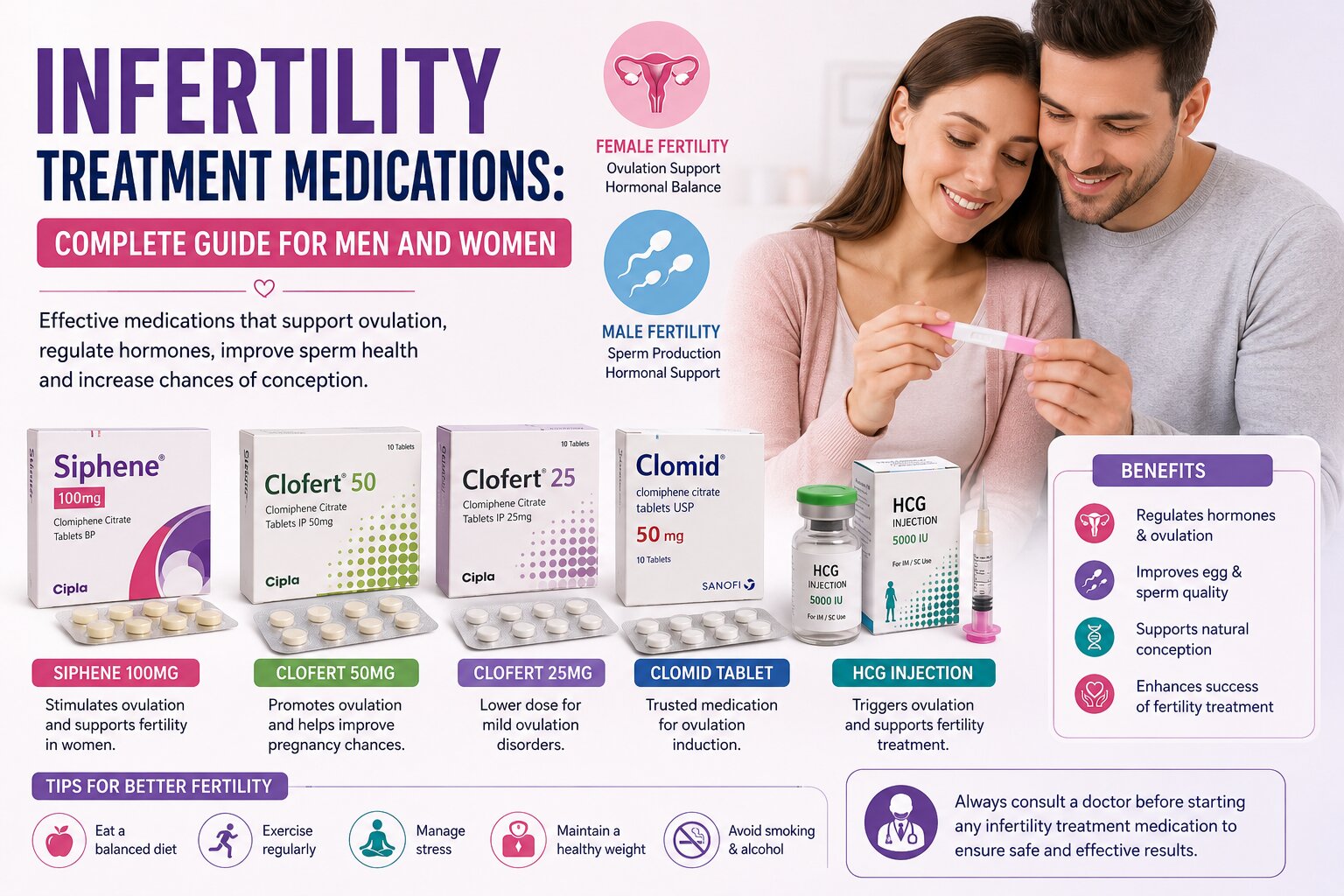
Infertility affects millions of couples worldwide and can impact both men and women equally. Fortunately, modern fertility medicine offers several effective treatment options that help improve the chances of conception naturally or through assisted reproductive techniques. From ovulation-inducing tablets to hormone injections, infertility treatment medications play a major role in helping couples achieve pregnancy.
Popular fertility medications such as Siphene 100 mg, Clofert 50 mg, Clofert 25mg, Clomiphene Citrate 50 mg, and HCG injections are commonly prescribed to support ovulation, improve sperm production, and regulate reproductive hormones.
This complete guide explains how infertility medications work, their benefits, side effects, and how they help both men and women overcome fertility challenges.
What is Infertility?
Infertility is defined as the inability to conceive after 12 months of regular unprotected intercourse. It may occur due to hormonal imbalances, ovulation disorders, low sperm count, age-related factors, lifestyle habits, or underlying medical conditions.
Common Causes of Female Infertility
- Polycystic ovary syndrome (PCOS)
- Irregular ovulation
- Hormonal imbalance
- Blocked fallopian tubes
- Endometriosis
- Age-related fertility decline
- Thyroid disorders
Common Causes of Male Infertility
- Low sperm count
- Poor sperm motility
- Hormonal imbalance
- Varicocele
- Erectile dysfunction
- Testosterone deficiency
- Lifestyle factors like smoking and obesity
Infertility treatment medications are often the first step before advanced fertility procedures such as IVF or IUI.
What are Infertility Treatment Medications?
Infertility treatment medication refers to prescription medicines used to improve reproductive function, stimulate ovulation, regulate hormones, or increase sperm production.
These medications help:
- Stimulate egg release in women
- Improve ovulation timing
- Increase sperm count in men
- Support hormonal balance
- Improve conception chances naturally
The most commonly prescribed Infertility treatment medications belong to the class of ovulation stimulants and hormone therapies.
Clomiphene Citrate: A Common Fertility Medication
What is Clomiphene Citrate 50 mg?
Clomiphene Citrate 50 mg is one of the most widely prescribed infertility medications for women who have difficulty ovulating. It belongs to a class of drugs called selective estrogen receptor modulators (SERMs).
It works by stimulating the release of hormones needed for ovulation.
Popular brands include:
- Siphene 100mg
- Clofert 50mg
- Clofert 25mg
- Clomid tablet
Many patients also search for a clomid alternative when looking for affordable fertility treatment options.
How Clomiphene Citrate Works
Clomiphene Citrate stimulates the pituitary gland to release:
- Follicle-stimulating hormone (FSH)
- Luteinizing hormone (LH)
These hormones encourage the ovaries to develop and release mature eggs, increasing the likelihood of conception.
In men, Clomiphene Citrate may help:
- Increase testosterone levels
- Improve sperm count
- Enhance sperm motility
This makes Clomiphene Citrate 50 mg for male or female infertility an effective treatment option in selected cases.
Siphene 100mg for Infertility Treatment
What is Siphene 100mg?
Siphene 100mg contains Clomiphene Citrate and is commonly prescribed for women experiencing ovulation problems.
Benefits of Siphene 100mg
- Stimulates ovulation
- Supports egg maturation
- Improves conception chances
- Helps regulate menstrual cycles
- Used in PCOS-related infertility
Doctors may prescribe Siphene 100mg when lower doses fail to produce adequate ovulation.
Clofert 50mg for Fertility Support
What is Clofert 50mg?
Clofert 50mg is a commonly used fertility tablet containing Clomiphene Citrate 50 mg.
Uses of Clofert 50mg
- Female infertility treatment
- Ovulation induction
- PCOS management
- Hormonal fertility support
Clofert 50mg is often considered a reliable clomid alternative because it contains the same active ingredient.
Benefits
- Encourages regular ovulation
- Affordable fertility treatment
- Improves pregnancy success rates
- Easy oral administration
Clofert 25mg for Mild Ovulation Disorders
What is Clofert 25mg?
Clofert 25mg contains a lower dose of Clomiphene Citrate and is prescribed for women requiring mild ovulation stimulation.
Advantages of Clofert 25mg
- Lower risk of side effects
- Suitable for dose-sensitive patients
- Gradual hormonal stimulation
- Supports controlled fertility treatment
Doctors often begin fertility treatment with lower doses before increasing the strength if necessary.
Clomid Tablet and Clomid Alternatives
What is a Clomid Tablet?
Clomid is a well-known fertility medication containing Clomiphene Citrate.
It is primarily used for:
- Ovulation induction
- Female infertility treatment
- Hormonal fertility support
Why Patients Look for Clomid Alternatives
Many people search for a clomid alternative because:
- Generic versions are more affordable
- Similar effectiveness
- Better availability online
- Comparable fertility outcomes
Popular alternatives include:
- Clofert
- Siphene
- Generic Clomiphene Citrate tablets
HCG Injection for Fertility Treatment
What is an HCG Injection?
HCG Injection contains Human Chorionic Gonadotropin, a hormone that plays an essential role in fertility treatment.
How HCG Injection Works
In women:
- Triggers ovulation
- Supports egg release
- Helps fertility timing during IUI or IVF
In men:
- Stimulates testosterone production
- Supports sperm development
- Helps treat hormonal infertility
Benefits of HCG Injection
- Improves ovulation timing
- Enhances fertility treatment success
- Supports reproductive hormone balance
- Often combined with Clomiphene therapy
HCG injections are commonly used in assisted reproductive procedures and hormone therapy protocols.
Clomiphene Citrate 50 mg for Male or Female Fertility
For Women
Clomiphene Citrate helps women by:
- Stimulating ovulation
- Regulating menstrual cycles
- Improving egg release
- Increasing conception chances
It is particularly effective in women with:
- PCOS
- Irregular periods
- Anovulation
- Hormonal imbalance
For Men
Clomiphene Citrate 50 mg for male infertility may help:
- Increase testosterone naturally
- Improve sperm count
- Support sperm motility
- Enhance fertility hormones
Male fertility treatment should always be monitored by a healthcare professional.
How Long Do Fertility Medications Take to Work?
Most fertility medications begin working within the first treatment cycle.
Typical Ovulation Timing
- Ovulation usually occurs 5–10 days after the last Clomiphene tablet.
- Pregnancy may occur within 3–6 treatment cycles.
Success rates vary depending on:
- Age
- Underlying fertility issues
- Hormonal health
- Lifestyle factors
Side Effects of Infertility Treatment Medications
While fertility medications are generally safe, some patients may experience side effects.
Common Side Effects of Clomiphene Citrate
- Hot flashes
- Mood swings
- Breast tenderness
- Nausea
- Headache
- Bloating
- Ovarian enlargement
Side Effects of HCG Injection
- Injection site pain
- Water retention
- Mood changes
- Breast swelling
- Hormonal fluctuations
Seek immediate medical advice if severe abdominal pain or breathing difficulty occurs.
Tips to Improve Fertility Naturally Along with Medication
Medication works best when combined with healthy lifestyle habits.
Fertility-Friendly Lifestyle Tips
- Maintain a healthy body weight
- Eat a balanced diet
- Avoid smoking and alcohol
- Exercise moderately
- Reduce stress
- Get adequate sleep
- Monitor ovulation cycles
- Follow medical advice carefully
Both men and women benefit from healthier reproductive habits.
Who Should Take Fertility Medications?
Infertility treatment medications may be recommended for:
- Women with irregular ovulation
- Couples trying to conceive naturally
- PCOS patients
- Men with low testosterone
- Men with reduced sperm count
- Couples preparing for IVF or IUI
Treatment plans vary based on individual fertility evaluations.
Buying Fertility Medications Online
Many couples now choose to buy infertility treatment medications online for convenience and affordability.
Benefits of Online Fertility Pharmacies
- Competitive prices
- Access to generic fertility drugs
- Home delivery
- Wide product selection
- Privacy and convenience
Always purchase fertility medications from trusted and licensed online pharmacies.
Is Clomiphene Citrate the same as Clomid?
Yes, Clomid is a brand name for Clomiphene Citrate.
Can men take Clomiphene Citrate 50 mg?
Yes, doctors sometimes prescribe Clomiphene Citrate 50 mg for male infertility to improve hormone levels and sperm production.
What is the best clomid alternative?
Popular clomid alternatives include Siphene and Clofert, which contain the same active ingredient, Clomiphene Citrate.
How successful are fertility medications?
Success depends on age, fertility condition, and overall health. Many couples achieve pregnancy within several treatment cycles.
Are HCG injections painful?
Most patients experience only mild discomfort at the injection site.
Conclusion
Infertility can be emotionally challenging, but modern fertility medications offer hope for many couples trying to conceive. Treatments such as Siphene 100 mg, Clofert 50 mg, Clofert 25mg, Clomid tablets, Clomiphene Citrate 50 mg, and HCG injections are widely used to support ovulation, hormonal balance, and reproductive health in both men and women.
With proper medical supervision, healthy lifestyle changes, and consistent treatment, infertility medications can significantly improve the chances of successful conception and pregnancy.
Always consult a fertility specialist before starting any infertility treatment medication to ensure safe and effective use tailored to your specific fertility needs.

Latest posts by Marie (see all)
- Alpha Blockers for Blood Pressure and Prostate: A Patient’s Guide to Alpha Blockers - September 17, 2026
- Allergy Medications Guide: Best Treatments for Seasonal, Skin & Food Allergies - September 17, 2026
- Alcohol & Drug Treatment: Medications, Recovery Options & What to Expect - September 17, 2026


