
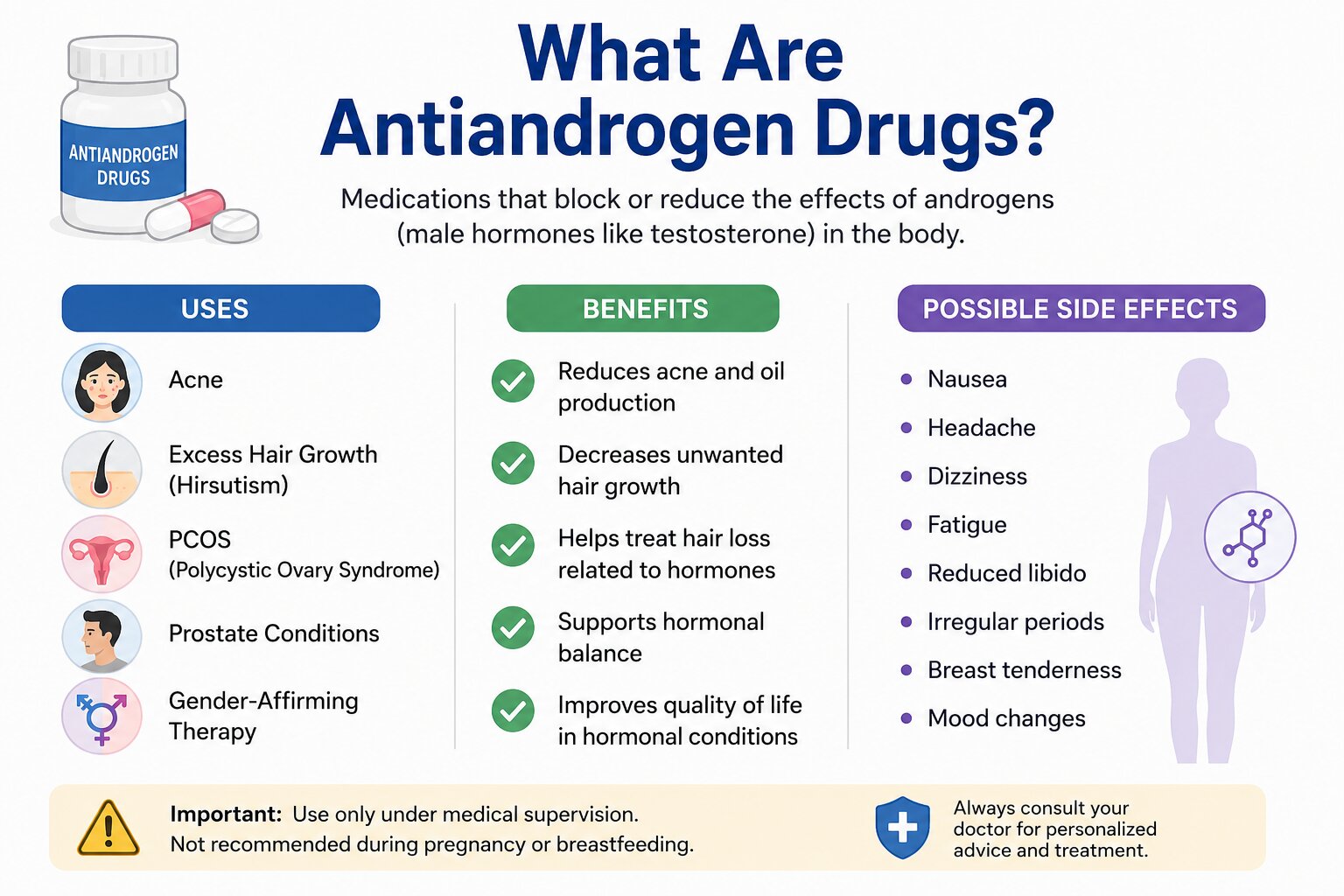
Hormones play a major role in regulating many important functions in the human body. Among these hormones, androgens are responsible for the development of male characteristics such as facial hair, deep voice, muscle growth, and reproductive health. Although androgens are commonly associated with men, women also produce small amounts of these hormones.
When androgen levels become too high or their effects become excessive, they can contribute to several medical and cosmetic conditions. This is where antiandrogen drugs become important. These medications help block or reduce the effects of androgens in the body and are widely used for treating hormonal disorders, acne, hair loss, excessive hair growth, prostate conditions, and hormone therapy.
In this guide, we’ll explore what antiandrogen drugs are, how they work, their common uses, benefits, possible side effects, and important precautions.
What Are Antiandrogen Drugs?
Antiandrogen drugs are medications designed to reduce the activity or effects of male hormones called androgens. The most well-known androgen is testosterone, but several others are involved in hormonal regulation.
These medications work in different ways, including:
- Blocking androgen receptors
- Reducing androgen production
- Preventing the conversion of hormones into stronger forms
Antiandrogens are commonly prescribed for both men and women, depending on the medical condition being treated.
How Do Antiandrogen Drugs Work?
Antiandrogen medications work by interfering with androgen activity in the body. Different drugs may use different mechanisms to achieve this effect.
Blocking Hormone Receptors
Some antiandrogens prevent testosterone and similar hormones from attaching to androgen receptors. This reduces their ability to influence skin, hair follicles, reproductive organs, and other tissues.
Lowering Hormone Production
Certain medications decrease the body’s production of testosterone and other androgens.
Preventing Hormone Conversion
Some drugs block the conversion of testosterone into dihydrotestosterone (DHT), a stronger androgen linked to hair loss, acne, and prostate enlargement.
By reducing androgen effects, these medications help improve symptoms caused by hormonal imbalance.
Common Uses of Antiandrogen Drugs
Antiandrogen therapy is used to manage several medical and cosmetic conditions.
Antiandrogen Drugs for Acne
Hormonal acne is often linked to excess androgen activity. Increased androgen levels can stimulate oil glands in the skin, leading to excess sebum production and clogged pores.
Antiandrogen medications help reduce oil production and inflammation, making them useful for treating persistent hormonal acne, especially in women.
Benefits may include:
- Reduced breakouts
- Less oily skin
- Fewer painful cystic pimples
- Improved skin clarity
Antiandrogen Treatment for Hirsutism
Hirsutism refers to excessive hair growth in women in areas such as the face, chest, abdomen, and back. It is commonly associated with hormonal conditions like PCOS (Polycystic Ovary Syndrome).
Antiandrogen drugs help slow unwanted hair growth by reducing the effects of androgens on hair follicles.
Visible improvement may take several months because hair growth cycles are gradual.
Antiandrogens for Female Pattern Hair Loss
Excess androgen activity may contribute to thinning hair and female pattern hair loss. Antiandrogen medications can help slow hair shedding and support healthier hair growth in some individuals.
These medications are often combined with other hair restoration treatments for better results.
Antiandrogen Therapy for PCOS
Polycystic Ovary Syndrome (PCOS) is one of the most common hormonal disorders in women and is frequently linked to elevated androgen levels.
Symptoms of PCOS may include:
- Acne
- Irregular periods
- Excess facial hair
- Weight gain
- Scalp hair thinning
Antiandrogen drugs are often prescribed to help manage these symptoms and improve hormonal balance.
Antiandrogens for Prostate Conditions
In men, antiandrogen therapy is sometimes used to manage prostate enlargement and prostate cancer. Since prostate tissue is influenced by testosterone, reducing androgen activity can help slow disease progression.
These treatments are commonly used under close medical supervision.
Antiandrogen Therapy in Transgender Care
Antiandrogen medications are also used as part of hormone therapy for transgender women. These drugs help reduce masculine features by lowering testosterone activity.
Combined with estrogen therapy, antiandrogens may help with:
- Reduced facial and body hair
- Softer skin
- Reduced muscle mass
- Slower scalp hair loss
Hormone therapy should always be supervised by experienced healthcare professionals.
Common Types of Antiandrogen Drugs
Several medications are classified as antiandrogens. The specific drug prescribed depends on the condition being treated.
Spironolactone
Spironolactone is commonly used for acne, hirsutism, and hormonal hair loss in women. It blocks androgen receptors and reduces oil production.
Finasteride
Finasteride works by blocking the conversion of testosterone into DHT. It is commonly used for male pattern baldness and prostate enlargement.
Flutamide
Flutamide is a stronger antiandrogen often used in prostate cancer treatment.
Cyproterone Acetate
This medication is used in some countries for severe acne, hirsutism, and hormone therapy.
Dutasteride
Dutasteride also blocks DHT production and is sometimes prescribed for hair loss and prostate conditions.
Benefits of Antiandrogen Drugs
Antiandrogen therapy offers several medical and cosmetic benefits depending on the condition being treated.
Improves Hormonal Acne
By reducing excess oil production, antiandrogens can help achieve clearer skin.
Reduces Excess Hair Growth
Many women experience a significant reduction in unwanted facial and body hair after consistent treatment.
Helps Manage Hair Loss
Some antiandrogens help slow thinning hair and improve hair density.
Supports Hormonal Balance
Antiandrogens can improve symptoms linked to excess androgen activity.
Assists in Gender-Affirming Therapy
These medications help support feminisation goals in transgender care.
Possible Side Effects of Antiandrogen Drugs
Like all medications, antiandrogen drugs may cause side effects. The severity depends on the medication, dosage, and individual response.
Common Side Effects
- Fatigue
- Dizziness
- Headaches
- Breast tenderness
- Reduced libido
- Irregular menstrual cycles
- Nausea
Skin and Hair Changes
Some users may notice dry skin, reduced oiliness, or changes in hair texture.
Hormonal Effects
Antiandrogens can influence hormone levels, which may affect mood, energy, and reproductive health.
Serious Side Effects
Rare but serious side effects may include:
- Liver problems
- High potassium levels
- Severe allergic reactions
- Blood pressure changes
Medical supervision is important during treatment.
Are Antiandrogen Drugs Safe?
Antiandrogen drugs are generally considered safe when prescribed appropriately and monitored by a healthcare professional. Regular checkups and blood tests may be recommended during long-term use.
Certain individuals may need extra caution, including:
- Pregnant women
- People with liver disease
- Individuals with kidney problems
- Patients taking multiple hormonal medications
Who Should Avoid Antiandrogen Drugs?
Antiandrogen therapy may not be suitable for everyone. These medications should only be used under medical guidance.
People who should consult a doctor before use include:
- Pregnant or breastfeeding women
- Individuals with hormone-sensitive conditions
- People with liver or kidney disorders
- Those with a history of severe medication allergies
Tips for Using Antiandrogen Medications Safely
Follow Prescribed Dosage
Do not increase or decrease dosage without professional advice.
Attend Regular Checkups
Monitoring helps detect side effects early and ensures safe treatment.
Be Patient With Results
Hormonal improvements often take several months to become visible.
Maintain a Healthy Lifestyle
Balanced nutrition, exercise, and stress management may support hormonal health.
Avoid Self-Medication
Hormonal medications should never be taken without proper medical supervision.
Lifestyle Changes That May Support Hormonal Balance
While antiandrogen drugs can be effective, lifestyle habits also play an important role in hormone regulation.
Helpful habits may include:
- Eating a balanced diet
- Managing stress levels
- Maintaining a healthy weight
- Exercising regularly
- Getting adequate sleep
These practices may help improve overall hormonal wellness alongside medical treatment.
Frequently Asked Questions
How long do antiandrogen drugs take to work?
Results vary depending on the condition being treated. Acne and oil reduction may improve within a few months, while hair-related improvements may take longer.
Can men use antiandrogen drugs?
Yes, antiandrogens are used in men for conditions such as prostate enlargement, prostate cancer, and hair loss.
Are antiandrogen medications permanent solutions?
These medications help manage symptoms, but stopping treatment may allow symptoms to return.
Do antiandrogen drugs affect fertility?
Some antiandrogens may influence fertility or reproductive hormones. Discuss concerns with a healthcare provider before starting treatment.
Can antiandrogens be combined with other treatments?
Yes, they are often combined with other hormonal or dermatological therapies depending on the condition.
Final Thoughts
Antiandrogen drugs play an important role in managing hormonal conditions linked to excess androgen activity. From acne and unwanted hair growth to hair loss, PCOS, prostate conditions, and hormone therapy, these medications offer valuable medical and cosmetic benefits.
However, because they affect hormone levels, antiandrogen drugs should always be used carefully and under proper medical supervision. Understanding how these medications work, their benefits, and possible side effects can help individuals make informed decisions about treatment.
With proper guidance, consistent treatment, and healthy lifestyle habits, antiandrogen therapy can significantly improve both physical symptoms and overall quality of life.

Latest posts by Marie (see all)
- Semaglutide for PCOS: Can It Help with Weight Loss, Insulin Resistance & Irregular Periods? - October 17, 2026
- Semaglutide Side Effects: Common Symptoms, Serious Risks & Safety Tips - October 16, 2026
- How to control high cholesterol: self-care at home? - October 15, 2026


