
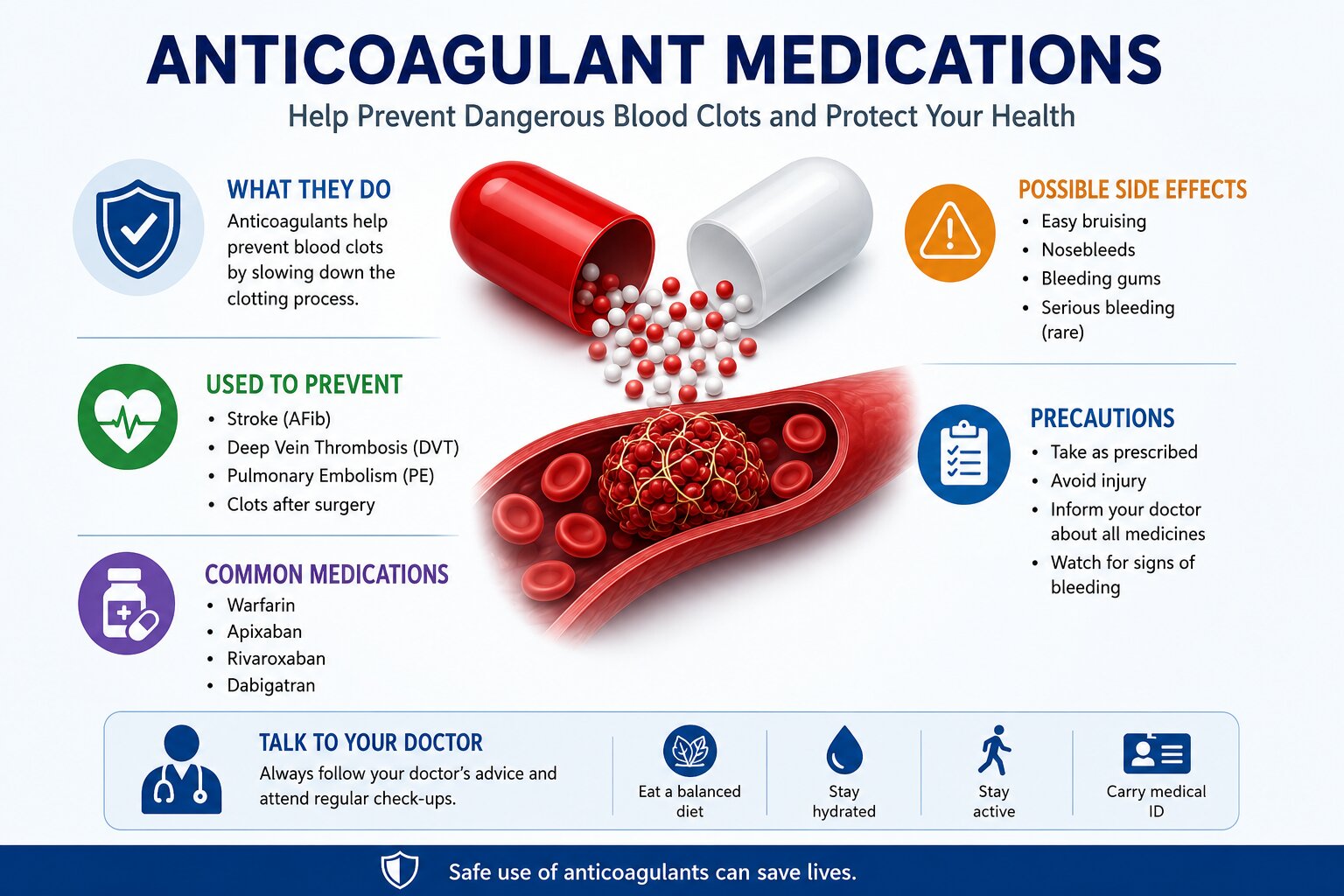
Blood clotting is an essential process that helps stop bleeding when injuries occur. However, when blood clots form inside blood vessels unnecessarily, they can become dangerous and even life-threatening. This is where anticoagulant medications play a vital role. Commonly referred to as “blood thinners,” anticoagulants help prevent harmful clots from forming or growing larger.
These medications are widely prescribed for people with conditions such as deep vein thrombosis (DVT), pulmonary embolism (PE), atrial fibrillation, and certain heart diseases. Understanding how anticoagulant drugs work, their types, benefits, risks, and precautions can help patients use them safely and effectively.
What Are Anticoagulant Medications?
Anticoagulant medications are drugs that reduce the blood’s ability to clot. They do not actually “thin” the blood, but they slow down the clotting process to prevent dangerous clots from forming inside veins or arteries.
Doctors prescribe anticoagulants to reduce the risk of serious complications such as:
- Stroke
- Heart attack
- Deep vein thrombosis
- Pulmonary embolism
- Blood clots after surgery
These medications are often used for long-term management in patients with chronic cardiovascular conditions.
How Do Anticoagulants Work?
The body’s clotting process involves a series of proteins known as clotting factors. Anticoagulant drugs interfere with different steps in this clotting cascade to prevent clot formation.
Depending on the medication, anticoagulants may:
- Block vitamin K is needed for clotting
- Inhibit specific clotting factors such as Factor Xa or thrombin
- Prevent existing clots from growing larger
- Reduce the risk of new clots forming
Because these medicines affect clotting, they require careful monitoring and proper dosing.
Common Conditions Treated with Anticoagulants
Anticoagulant medications are prescribed for various medical conditions, including:
1. Atrial Fibrillation (AFib)
AFib is an irregular heartbeat that increases the risk of blood clots and stroke. Anticoagulants help lower this risk significantly.
2. Deep Vein Thrombosis (DVT)
DVT occurs when blood clots form in deep veins, usually in the legs. Anticoagulants prevent the clot from enlarging and reduce the risk of complications.
3. Pulmonary Embolism (PE)
A pulmonary embolism happens when a clot travels to the lungs. Immediate anticoagulant treatment is often necessary.
4. Mechanical Heart Valves
Patients with artificial heart valves often require lifelong anticoagulant therapy to prevent clot formation around the valve.
5. Post-Surgical Clot Prevention
After major surgeries, especially hip or knee replacements, anticoagulant medications may be prescribed to reduce the risk of clotting.
Types of Anticoagulant Medications
There are several categories of anticoagulants, each working differently.
1. Vitamin K Antagonists
Warfarin
Warfarin is one of the oldest and most commonly used anticoagulants. It works by blocking vitamin K, which is essential for producing clotting factors.
Benefits:
- Effective for long-term clot prevention
- Often used for mechanical heart valves
- Affordable
Challenges:
- Requires regular blood tests (INR monitoring)
- Interacts with many foods and medications
- Dose adjustments may be needed frequently
Patients taking warfarin must maintain consistent vitamin K intake from foods like spinach, kale, and broccoli.
2. Direct Oral Anticoagulants (DOACs)
DOACs are newer anticoagulants that directly target specific clotting factors.
Common DOACs:
- Apixaban
- Rivaroxaban
- Dabigatran
- Edoxaban
Advantages:
- No regular INR monitoring required
- Fewer food interactions
- Fixed dosing
- Rapid onset of action
Disadvantages:
- Maybe more expensive
- Not suitable for all patients
- Some require kidney function monitoring
DOACs have become increasingly popular because of their convenience and effectiveness.
3. Heparin
Heparin is a fast-acting anticoagulant usually given in hospitals.
Types:
- Unfractionated heparin (UFH)
- Low molecular weight heparin (LMWH)
Uses:
- Emergency clot treatment
- Surgical procedures
- Temporary anticoagulation during hospitalisation
Heparin is often administered through injection or intravenous infusion.
4. Injectable Anticoagulants
Some anticoagulants are self-administered by injection at home.
Examples:
- Enoxaparin
- Dalteparin
- Fondaparinux
These are commonly used after surgeries or during pregnancy when oral anticoagulants may not be suitable.
Benefits of Anticoagulant Medications
Anticoagulants provide several important health benefits.
1. Stroke Prevention
Patients with atrial fibrillation are at increased risk of stroke due to clot formation in the heart. Anticoagulants significantly reduce this risk.
2. Prevention of Life-Threatening Clots
These medications help prevent dangerous blood clots from travelling to the lungs or brain.
3. Improved Recovery After Surgery
Anticoagulants lower the risk of post-operative complications caused by clot formation.
4. Better Long-Term Heart Health
By preventing clot-related complications, anticoagulants contribute to improved cardiovascular outcomes.
Side Effects of Anticoagulants
Although highly effective, anticoagulants may cause side effects.
Common Side Effects:
- Easy bruising
- Nosebleeds
- Bleeding gums
- Heavy menstrual bleeding
- Prolonged bleeding from cuts
Serious Side Effects:
- Internal bleeding
- Blood in urine or stool
- Severe headaches
- Dizziness
- Vomiting blood
- Sudden weakness or numbness
Any unusual bleeding should be reported to a healthcare provider immediately.
Who Should Avoid Anticoagulants?
Anticoagulants may not be suitable for everyone.
People who may need special precautions include:
- Patients with active bleeding disorders
- Individuals with stomach ulcers
- Those with severe liver disease
- People with uncontrolled high blood pressure
- Patients at high risk of falls
- Pregnant women (certain anticoagulants only)
Doctors carefully evaluate the risks and benefits before prescribing these medications.
Important Drug Interactions
Anticoagulants can interact with many medications, supplements, and foods.
Common Drug Interactions:
- Aspirin
- NSAIDs (ibuprofen, naproxen)
- Certain antibiotics
- Antifungal medications
- Herbal supplements like ginkgo biloba and St. John’s wort
These interactions may increase bleeding risk or reduce medication effectiveness.
Always inform your healthcare provider about all medicines and supplements you take.
Foods and Anticoagulants
Certain foods may affect anticoagulant therapy, particularly warfarin.
Foods High in Vitamin K:
- Spinach
- Kale
- Broccoli
- Brussels sprouts
- Green tea
Patients do not necessarily need to avoid these foods completely, but should maintain a consistent intake.
DOACs generally have fewer dietary restrictions compared to warfarin.
Monitoring During Anticoagulant Therapy
Some anticoagulants require regular monitoring to ensure safety.
INR Testing
Patients taking warfarin need INR (International Normalised Ratio) blood tests to measure clotting time.
Kidney and Liver Function Tests
DOAC users may require periodic monitoring of kidney and liver function.
Regular Check-Ups
Routine medical follow-ups help detect side effects and adjust dosages if necessary.
Tips for Safe Use of Anticoagulants
Using anticoagulants safely is extremely important.
1. Take Medication Exactly as Prescribed
Missing doses or taking extra medication can increase the risk of clotting or bleeding.
2. Avoid Injury
Use caution with sharp objects and activities that may cause falls or cuts.
3. Inform Healthcare Providers
Always tell doctors, dentists, and pharmacists that you are taking anticoagulants.
4. Wear Medical Identification
Medical alert bracelets can help during emergencies.
5. Watch for Signs of Bleeding
Seek immediate medical attention if severe bleeding occurs.
Anticoagulants During Pregnancy
Pregnancy increases the risk of blood clots in some women.
However, not all anticoagulants are safe during pregnancy.
Safe Options:
- Low molecular weight heparin (LMWH)
Usually Avoided:
- Warfarin (may harm the fetus)
Pregnant women should always use anticoagulants under strict medical supervision.
Anticoagulants vs Antiplatelet Medications
Many people confuse anticoagulants with antiplatelet drugs.
Anticoagulants:
- Target clotting proteins
- Used for DVT, PE, AFib
Antiplatelet Drugs:
- Prevent platelets from sticking together
- Commonly used after heart attacks or stent placement
Examples of antiplatelet drugs include aspirin and clopidogrel.
Sometimes both types are prescribed together under close supervision.
New Advances in Anticoagulant Therapy
Medical research continues to improve the safety and convenience of anticoagulants.
Recent Innovations:
- Newer reversal agents for emergency bleeding
- Safer dosing protocols
- Improved anticoagulants with fewer interactions
- Personalised treatment approaches
These advances help reduce complications while improving patient outcomes.
Lifestyle Tips While Taking Anticoagulants
Healthy lifestyle choices can improve treatment success.
Recommended Habits:
- Maintain a balanced diet
- Exercise regularly
- Avoid smoking
- Limit alcohol intake
- Stay hydrated
- Manage blood pressure and diabetes
Patients should also avoid extreme sports or activities with a high risk of injury.
When to Seek Emergency Help
Immediate medical attention is necessary if you experience:
- Severe bleeding
- Black or bloody stools
- Sudden chest pain
- Difficulty breathing
- Sudden weakness
- Severe headache
- Vision changes
These symptoms may indicate serious bleeding or clot-related complications.
Conclusion
Anticoagulant medications are essential tools in preventing and treating dangerous blood clots. From reducing stroke risk in atrial fibrillation to preventing complications after surgery, these drugs save countless lives every year.
Although anticoagulants are highly effective, they must be used carefully due to the risk of bleeding and drug interactions. Regular monitoring, healthy lifestyle habits, and close communication with healthcare providers are key to safe treatment.
Whether using traditional medications like warfarin or newer direct oral anticoagulants, patients should always follow medical advice and never adjust doses on their own. With proper management, anticoagulants can greatly improve long-term cardiovascular health and overall quality of life.

Latest posts by Marie (see all)
- Semaglutide for PCOS: Can It Help with Weight Loss, Insulin Resistance & Irregular Periods? - October 17, 2026
- Semaglutide Side Effects: Common Symptoms, Serious Risks & Safety Tips - October 16, 2026
- How to control high cholesterol: self-care at home? - October 15, 2026


