
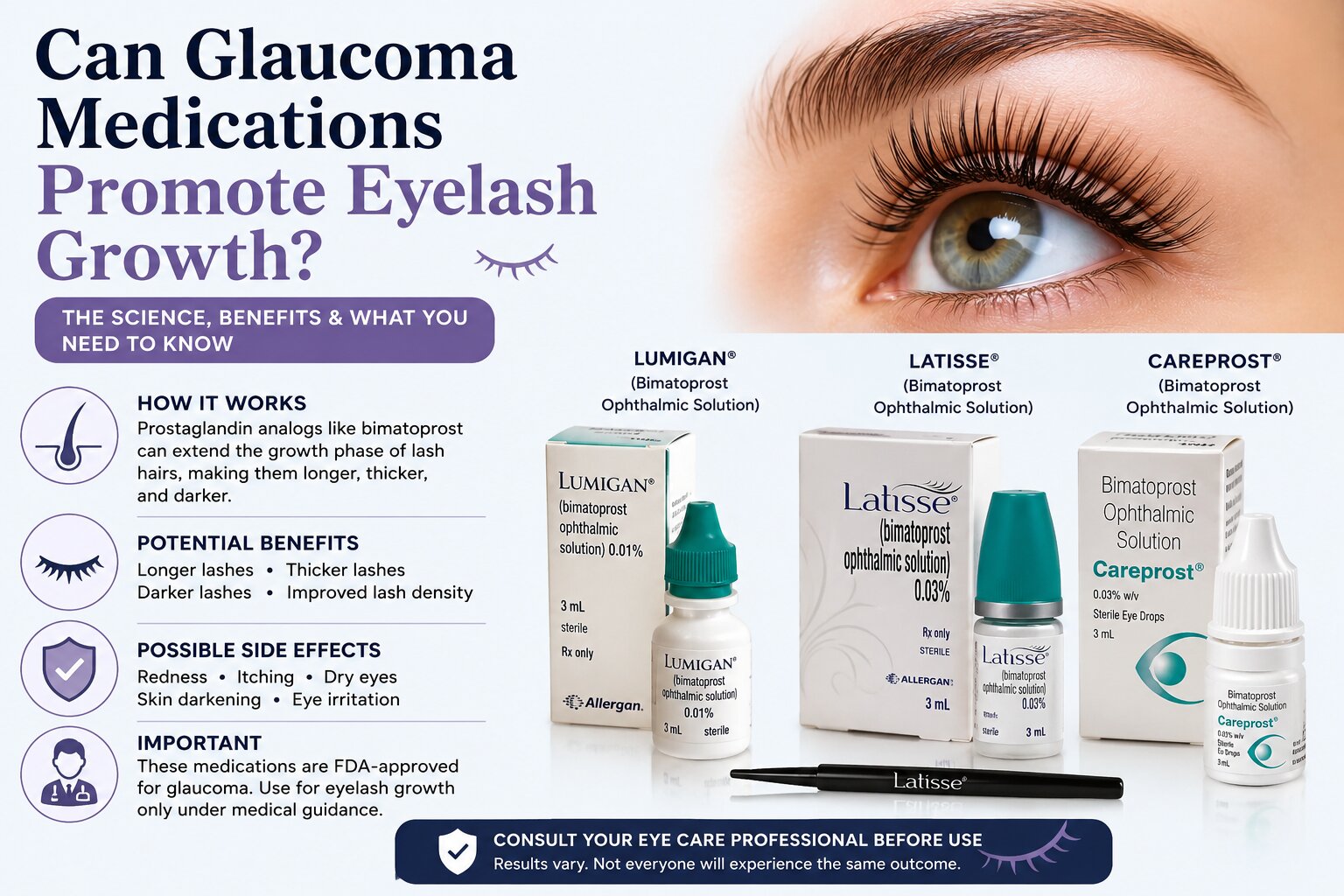
Many people are surprised to learn that some glaucoma medications may also help improve eyelash growth. What began as a side effect noticed by patients eventually led to the development of eyelash-enhancing treatments such as Latisse. Today, medications originally designed to lower eye pressure are also widely discussed for their cosmetic benefits.
But can glaucoma medications really promote eyelash growth? The answer is yes—certain medications containing bimatoprost and similar compounds have been linked to longer, thicker, and darker eyelashes. However, there are important details, risks, and precautions to understand before using these treatments.
This guide explains how glaucoma medications affect eyelash growth, which medications are associated with this effect, potential side effects, and what users should know before trying them.
Understanding Glaucoma Medications
Glaucoma is a condition that damages the optic nerve, often due to increased pressure inside the eye. To help lower this pressure, doctors commonly prescribe medicated eye drops.
Several categories of glaucoma medications are available, including:
- Prostaglandin analogs
- Beta blockers
- Carbonic anhydrase inhibitors
- Alpha agonists
- Combination eye drops
Among these, prostaglandin analogues are the group most commonly linked to eyelash growth.
Popular medications in this category include:
- Lumigan
- Careprost
- Xalatan
- Travatan Z
These medications work by improving fluid drainage from the eye, helping reduce intraocular pressure.
How Was Eyelash Growth Discovered?
Doctors and patients using glaucoma eye drops noticed an unusual cosmetic side effect: eyelashes appeared longer, darker, and fuller over time.
This observation became especially common with bimatoprost-based medications such as Lumigan. Researchers later studied this effect and discovered that the active ingredient could stimulate eyelash follicles during the hair growth cycle.
Eventually, bimatoprost was approved in a lower cosmetic-dose formulation specifically for eyelash enhancement under the brand name Latisse.
How Do These Medications Promote Eyelash Growth?
Eyelashes naturally grow in cycles that include:
- Growth phase (anagen)
- Transition phase (catagen)
- Resting phase (telogen)
Prostaglandin analogue medications may help:
- Extend the growth phase of eyelashes
- Increase the number of hairs actively growing
- Improve lash thickness and darkness
- Reduce lash shedding
As a result, users may notice:
- Longer eyelashes
- Fuller lash lines
- Darker lashes
- Increased lash density
These effects usually develop gradually over several weeks.
Which Glaucoma Medications Are Associated with Eyelash Growth?
1. Bimatoprost
Bimatoprost is the medication most strongly associated with eyelash growth.
It is found in:
- Lumigan
- Careprost
- Latisse
Among these, Latisse was specifically developed for cosmetic eyelash enhancement.
2. Latanoprost
Latanoprost-based eye drops may also cause mild eyelash growth in some users, although the effect is usually less noticeable than with bimatoprost.
3. Travoprost
Travoprost eye drops may similarly affect eyelash appearance due to their prostaglandin-like activity.
What Makes Bimatoprost Popular for Lash Growth?
Bimatoprost became especially popular because it showed consistent cosmetic improvements in clinical observations.
People often report:
- Longer eyelashes
- Increased lash thickness
- Darker lashes
- More visible lash volume
Because of these effects, many individuals searching for fuller lashes became interested in products containing bimatoprost.
Some users also discuss alternatives, such as Careprost, which contains the same active ingredient as Latisse.
How Long Does It Take to See Results?
Results vary from person to person, but many users begin noticing changes within:
- 4 to 8 weeks for early improvements
- 12 to 16 weeks for fuller results
Consistency plays a major role. Missing applications may slow progress.
It is important to remember that results are not permanent. If treatment is stopped, eyelashes gradually return to their original appearance over time.
Can Everyone Use These Medications for Eyelash Growth?
Not necessarily.
Although cosmetic interest in these medications is common, they were originally developed for medical conditions of the eye. Users should speak with a healthcare professional before using prescription products for cosmetic purposes.
People with the following conditions should be especially cautious:
- Eye infections
- Glaucoma
- Eye pressure disorders
- Sensitive eyes
- Recent eye surgery
- Contact lens complications
- Allergies to ingredients
Pregnant or breastfeeding individuals should also seek medical advice before use.
Possible Side Effects of Travatan eye drops
Like all medications, glaucoma eye drops and bimatoprost products may cause side effects.
Common side effects include:
- Eye redness
- Itching
- Dry eyes
- Irritation
- Darkening of eyelid skin
- Eye discomfort
Less common but important side effects may include:
- Changes in eye color
- Increased pigmentation around the eyes
- Unwanted hair growth in nearby areas
- Eye sensitivity
Using too much product or applying it incorrectly may increase the risk of side effects.
Cosmetic Use vs Medical Use
There is a difference between medically prescribed glaucoma treatment and cosmetic eyelash enhancement.
Medical Use
For glaucoma, the drops are placed directly into the eyes to reduce pressure.
Cosmetic Use
For eyelash growth, products are typically applied carefully along the upper lash line using sterile applicators.
This distinction matters because improper use may increase the chance of irritation or side effects.
Are Over-the-Counter Lash Serums the Same?
Not always.
Many over-the-counter lash serums contain peptides, vitamins, or botanical extracts instead of prescription-strength bimatoprost.
Some users prefer non-prescription options because they may carry fewer risks. However, results can vary significantly between products.
Prescription-based solutions containing bimatoprost are generally considered more effective for noticeable eyelash growth.
Safety Tips for Users
Anyone considering glaucoma medications for eyelash growth should follow safety guidelines.
Use Only as Directed
Applying more product will not necessarily improve results faster.
Avoid Sharing Applicators
Sharing applicators may increase the risk of infection.
Keep the Product Clean
Always use clean applicators and wash your hands before application.
Monitor for Side Effects
Stop use and seek medical advice if severe irritation develops.
Remove Contact Lenses if Necessary
Some eye products may require contact lenses to be removed before application.
Why Do People Search for Alternatives to Latisse?
Many users search for affordable or accessible alternatives to Latisse.
This is why products such as Careprost often gain attention online. Since both contain bimatoprost, users frequently compare:
- Cost
- Availability
- Packaging
- Usage instructions
- Cosmetic results
However, it is important to purchase medications only from reliable and licensed sources.
Can Eyelash Growth Become Permanent?
No. The effects are usually temporary.
Once treatment stops:
- Eyelashes gradually return to their original growth cycle
- Lash length and thickness may decrease
- Results fade over several weeks or months
Continued maintenance is generally required to sustain results.
Are These Medications FDA-Approved for Lash Growth?
Only specific formulations are approved for cosmetic eyelash enhancement.
For example:
- Latisse received approval for eyelash hypotrichosis treatment
- Other glaucoma medications are primarily approved for eye pressure management
Using glaucoma medications outside their intended purpose should only happen under medical guidance.
Final Thoughts
Certain glaucoma medications can indeed promote eyelash growth, especially those containing bimatoprost. What started as a side effect eventually became one of the most recognised prescription-based eyelash enhancement treatments available today.
Products such as Lumigan, Careprost, and Latisse are frequently discussed for their association with fuller, darker, and longer eyelashes. However, these medications still affect the eyes and surrounding tissues, so careful use is essential.
Anyone considering these products for cosmetic purposes should understand both the potential benefits and possible risks. Consulting a healthcare professional can help determine whether a bimatoprost-based treatment is appropriate for individual needs.
With proper guidance and realistic expectations, users can safely explore the cosmetic effects of certain glaucoma medications while protecting overall eye health.

Latest posts by Marie (see all)
- Semaglutide for PCOS: Can It Help with Weight Loss, Insulin Resistance & Irregular Periods? - October 17, 2026
- Semaglutide Side Effects: Common Symptoms, Serious Risks & Safety Tips - October 16, 2026
- How to control high cholesterol: self-care at home? - October 15, 2026


