
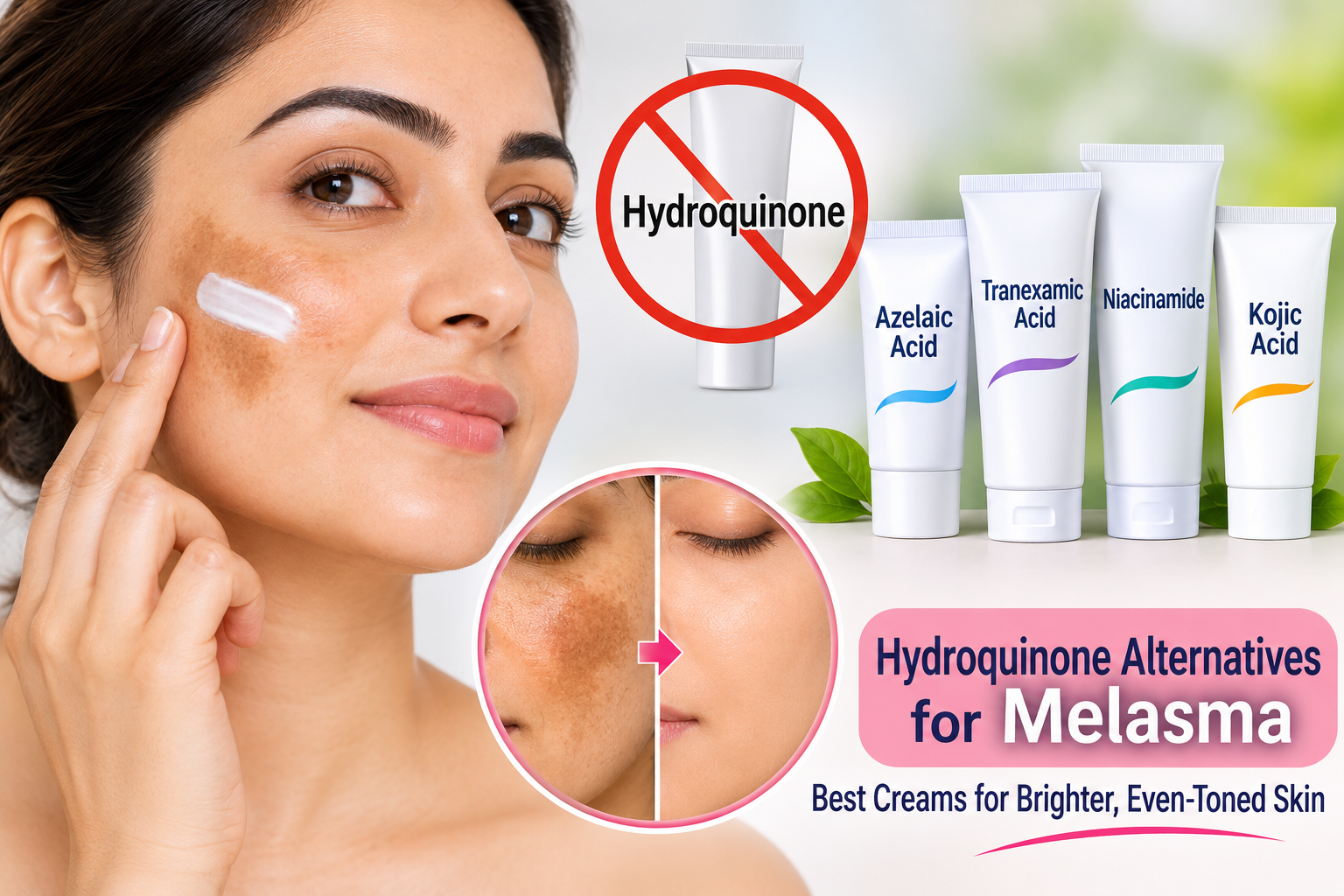
Hydroquinone is a well-known ingredient for treating melasma, but it isn’t suitable for everyone. Some people experience irritation, while others prefer alternatives to maintain results over the long term. Fortunately, several ingredients can help improve pigmentation through different mechanisms. Azelaic acid, kojic acid, niacinamide, vitamin C, cysteamine, and tranexamic acid are among the options worth exploring. Understanding how these ingredients work can help you choose a skincare product that suits your skin and treatment goals.
Why look for alternatives to hydroquinone?
Hydroquinone reduces melanin production by inhibiting tyrosinase, an enzyme involved in skin pigmentation. When used correctly, it can effectively treat stubborn dark patches. However, prolonged or unsupervised use may cause redness, dryness, irritation, and, rarely, exogenous ochronosis, which causes bluish-black discolouration. For this reason, dermatologists generally recommend using hydroquinone cream for a limited period rather than treating it as a permanent daily skincare product. People with sensitive skin or those looking for maintenance options may benefit from discussing other pigmentation-control ingredients with a dermatologist.
Best Hydroquinone alternatives for melasma
- Azelaic Acid cream
Azelaic acid is a commonly recommended alternative for managing melasma and post-inflammatory hyperpigmentation. It helps reduce excess pigmentation by interfering with tyrosinase activity. Another advantage is its anti-inflammatory action, which makes it useful for people with acne and pigmentation. It is available in different strengths, including 10%, 15%, and 20%, depending on the formulation and local availability. People with sensitive skin may experience mild itching, tingling, or dryness when starting treatment. Beginning with an appropriate lower-strength formulation can help improve tolerance.
- Kojic Acid cream
Kojic acid is a skin-brightening ingredient produced by certain fungi during fermentation. It is frequently included in creams and serums designed to reduce dark spots and uneven skin tone. Its main function is to inhibit tyrosinase, thereby limiting melanin formation. With regular use, it may gradually improve the appearance of superficial pigmentation. Kojic acid is also combined with ingredients such as vitamin C, glycolic acid, and alpha arbutin in some skincare products. However, it can cause irritation or allergic contact dermatitis, so people with sensitive skin should introduce it cautiously.
- Niacinamide cream
Niacinamide, also known as vitamin B3, helps manage pigmentation by reducing melanosome transfer from melanocytes to surrounding skin cells. This mechanism makes it useful for gradually improving uneven skin tone. Beyond its brightening benefits, niacinamide supports the skin barrier, improves moisture retention, and helps reduce redness. It is commonly found in moisturisers and serums at concentrations between 2% and 10%. It can be included in both morning and evening skincare routines, depending on the product instructions.
- Vitamin C cream or serum
Vitamin C is an antioxidant that helps protect the skin against oxidative stress caused by sunlight and environmental pollution. It also interferes with certain processes involved in melanin production, making it a useful ingredient for dullness and uneven pigmentation. L-ascorbic acid is one of the most researched forms, although several vitamin C derivatives are also used in skincare formulations. Regular application may improve skin brightness and support a more even appearance. Some formulations can cause stinging or irritation, particularly on sensitive skin. Combining vitamin C with daily sunscreen can help protect the skin from environmental damage.
- Cysteamine cream
Cysteamine is a pigmentation-control ingredient that works through several pathways involved in melanin production. Unlike ingredients that mainly target tyrosinase, it influences multiple stages of pigment formation. Topical cysteamine, commonly available in 5% formulations, has shown potential for improving melasma in clinical studies. Some formulations require application for a specific period before washing off. Temporary redness, dryness, or burning may occur, so follow the manufacturer’s directions.
- Tranexamic Acid cream or serum
Tranexamic acid has become increasingly popular in skincare products formulated for persistent pigmentation. It influences pathways involved in inflammation and communication between skin cells and melanocytes. This may help reduce the processes that contribute to melasma. Topical tranexamic acid is often included in serums and creams, sometimes alongside niacinamide or other brightening ingredients. It may be helpful as part of a dermatologist-recommended combination routine. Oral tranexamic acid is a separate medical treatment and should never be taken without professional assessment because it can increase the risk of blood clots in susceptible individuals.
- Alpha Arbutin cream
Alpha arbutin is a cosmetic brightening ingredient that helps reduce tyrosinase activity. By influencing melanin formation, it may gradually improve the appearance of dark spots and uneven skin tone. It is commonly found in lightweight serums and creams. It is often combined with niacinamide or vitamin C. Alpha arbutin is generally considered a gentler cosmetic option than stronger prescription pigmentation treatments. However, clinical evidence specifically supporting its use for melasma is still limited.
- Thiamidol-based creams
Thiamidol is a pigmentation-control ingredient that targets human tyrosinase, the enzyme responsible for an important step in melanin production. It is used in selected cosmetic products designed to improve dark spots and uneven complexion. Its targeted action makes it an interesting option for people seeking non-hydroquinone skincare. However, results depend on the formulation, application frequency, and individual skin response. It is best introduced as part of a consistent routine rather than combined with several strong brightening products.
How to build a skincare routine for melasma
Choosing the right ingredients matters, but using them correctly also affects results. Applying multiple active products at once may irritate the skin and make pigmentation more noticeable. A simple routine can help maintain skin comfort while addressing uneven tone.
Morning routine:
- Wash your face using a gentle cleanser.
- Apply a vitamin C or niacinamide serum.
- Use a moisturiser suitable for your skin type.
- Finish with broad-spectrum SPF 50+ sunscreen.
Night routine:
- Remove sunscreen and makeup gently.
- Apply one suitable pigmentation treatment, such as azelaic acid or another dermatologist-recommended product.
- Follow with a moisturiser to support the skin barrier.
Introduce new ingredients individually and avoid using several exfoliating or brightening treatments together until you know how your skin responds.
Why sunscreen is essential for melasma
Even the most suitable pigmentation cream may provide disappointing results without proper sun protection. Ultraviolet radiation stimulates melanin production, which can darken existing patches. Visible light can also contribute to melasma, particularly in people with darker skin tones. A tinted sunscreen containing iron oxides can provide additional protection against visible light. Choose a broad-spectrum sunscreen with SPF 30 or higher, preferably SPF 50+, and reapply every two hours when outdoors. Wearing a hat and limiting direct sun exposure can further support your skincare routine.
How long do Hydroquinone alternatives take to work?
Pigmentation treatments require patience. Some people notice gradual changes after several weeks, while established melasma may take several months to improve. Results depend on pigmentation depth, hormonal influences, sun exposure, and consistent application. Melasma can return, so continue maintenance skincare and sun protection even after the patches lighten it.
Final thoughts
The most suitable ingredient depends on pigmentation severity, skin sensitivity, and previous treatment experience. A dermatologist can help select an appropriate cream and recommend a routine that avoids unnecessary irritation. With consistent treatment, gentle skincare, and daily sun protection, you can improve the appearance of melasma and maintain a more even-looking complexion.

Latest posts by Marie (see all)
- Hydroquinone Alternatives for Melasma: Best Creams for Brighter, Even-Toned Skin - November 10, 2026
- Can Semaglutide Reduce Heart Disease Risk? SELECT Trial Results Explained - November 5, 2026
- Semaglutide FAQs: 15 Expert Answers Every New Patient Should Know - October 31, 2026


