
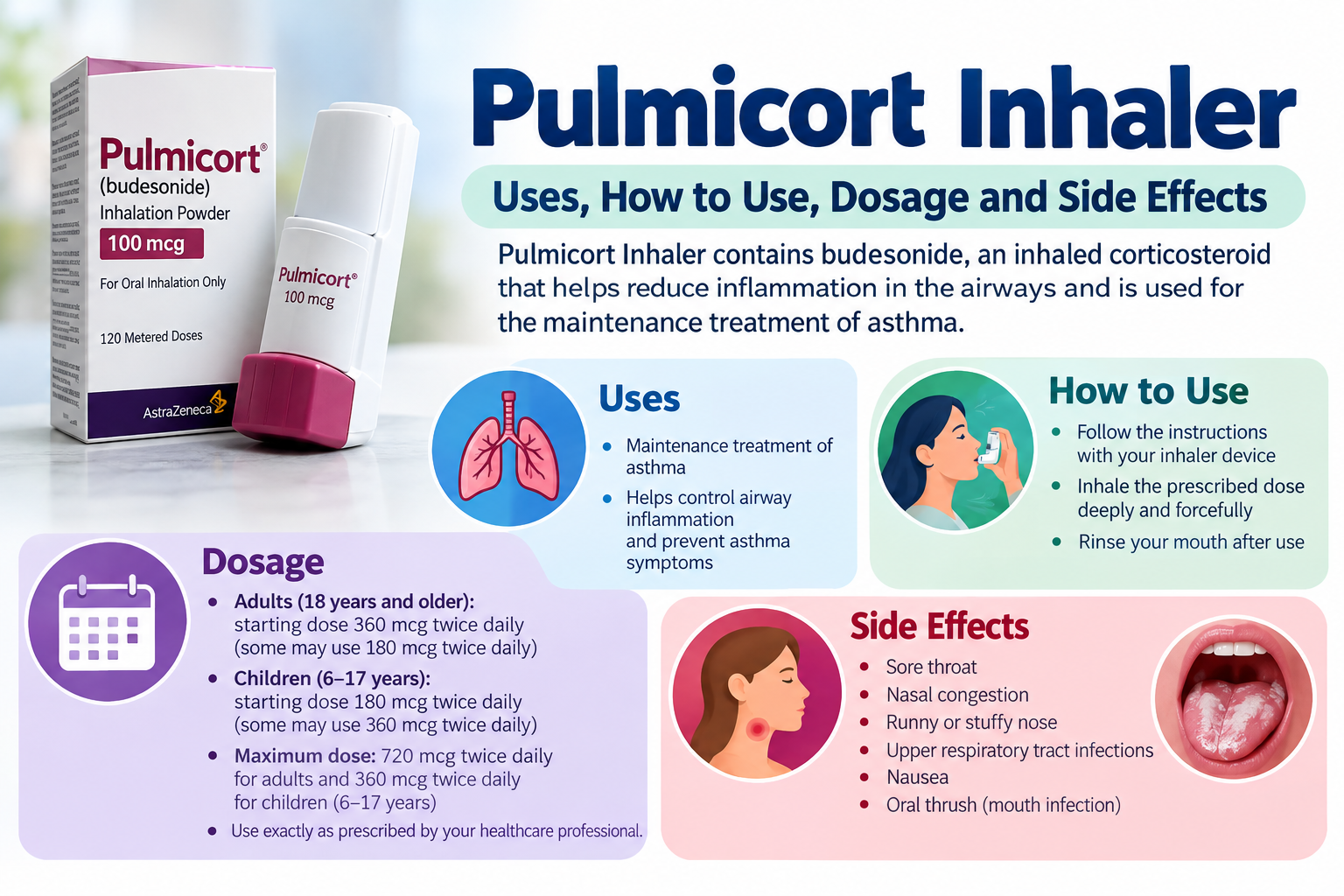
Living with asthma often means walking a fine line between staying ahead of symptoms and reacting to them once they’ve already started. That’s where a maintenance inhaler like Pulmicort comes in. Rather than offering quick relief during a flare-up, it works quietly in the background, calming the airway inflammation that makes asthma attacks more likely. For many patients, understanding how this daily habit fits into their broader treatment plan can be the difference between occasional symptom control and lasting relief. Here’s what you need to know about how Pulmicort Inhaler works, how to use it properly, correct dosing, and what side effects to watch for.
Pulmicort inhaler introduction
Pulmicort Inhaler is a prescription maintenance inhaler used to control asthma symptoms over the long term rather than to stop an asthma attack already underway. Budesonide, the main active ingredient, is an inhaled corticosteroid that calms airway inflammation day after day, reducing how often asthma flares happen in the first place. Understanding what it treats, how the device works, and what to expect makes it much easier to use correctly and get the full benefit.
What is the Pulmicort inhaler used for?
Pulmicort inhaler is approved for the maintenance treatment of asthma, meaning it’s taken on a fixed daily schedule to keep airway inflammation under long-term control, not reached for when symptoms suddenly flare up. It’s specifically indicated as prophylactic therapy, a preventive treatment that reduces the frequency and severity of asthma symptoms over time by addressing the underlying inflammation that makes airways twitchy and prone to narrowing. Doctors prescribe it for both adults and children as young as six, often alongside a fast-acting rescue inhaler for sudden symptoms. It’s important to be clear about what this inhaler is not: it will not relieve an asthma attack that’s already started, and it should never be used as a rescue medication during acute breathing difficulty. For that, patients need a separate short-acting bronchodilator, and they should keep both inhaler types on hand once prescribed this combination approach.
How does the Pulmicort inhaler work?
Budesonide belongs to a class of medications called inhaled corticosteroids, which work directly at the site of the problem rather than circulating through the whole body the way an oral steroid would. Once inhaled, budesonide is absorbed into the cells lining the airways, where it reduces the activity of immune cells, including eosinophils and mast cells, that drive the chronic inflammation seen in asthma. It also decreases inflammatory chemicals like cytokines and reduces swelling and excess mucus in the airway lining. Over time, this steady anti-inflammatory action makes airways less reactive to common triggers such as allergens, cold air, or exercise, which is why consistent daily use, rather than occasional use, produces meaningful symptom control. Because this process builds gradually, most patients don’t feel an immediate difference the way they might with a rescue inhaler; noticeable improvement typically develops over one to two weeks of regular use.
How to use Pulmicort inhaler?
Pulmicort Inhaler is a breath-activated dry powder inhaler, which means there’s no spray or propellant to coordinate with your breath the way there is with a traditional metered-dose inhaler; instead, your own inhalation pulls the medication into your lungs. Before using a brand-new inhaler for the first time, prime it: hold it upright by the brown grip with the white cover pointing up, twist the grip fully in one direction and then fully back until you hear a click, and repeat once more before your first dose.
To take a dose, hold the inhaler upright and remove the white cover. Twist the brown grip fully in one direction as far as it will go, then twist it fully back until you hear a click; this loads the dose and is required before every single inhalation, not just the first. Breathe out fully, away from the device, then place the mouthpiece between your lips and close them firmly around it. Breathe in quickly and deeply through your mouth, then remove the inhaler before breathing out. Because the dose is a fine powder, you may not taste or feel it the way you would with an aerosol inhaler, but a deep, forceful inhalation is what pulls the medication effectively into your lungs. Rinse your mouth with water and spit it out after every dose without swallowing, since this significantly lowers the risk of oral thrush, a fungal infection linked to inhaled steroid use. Replace the white cover after each use, and never wash or submerge the inhaler in water.
Pulmicort Inhaler dosage
Dosing depends on age, asthma severity, and whether a patient has previously used oral or inhaled corticosteroids, so follow your doctor’s specific instructions over general guidance. For adults and adolescents 18 and older, typical starting doses range from 180 mcg to 360 mcg twice daily, with a maximum of 720 mcg twice daily in more severe cases. For children and teens aged 6 to 17, dosing generally starts at 180 mcg twice daily, with some started at 360 mcg twice daily, up to a maximum of 360 mcg twice daily. Take the Pulmicort inhaler twice a day, roughly 12 hours apart, at the same times each day to maintain steady control. It can take one to two weeks of consistent use for the full benefit to become noticeable, and you should continue it even during symptom-free periods, since stopping it can allow inflammation to return. Never adjust your dose without your doctor’s guidance, and don’t double up if you miss a dose; take the next scheduled dose.
Precautions and warnings
Pulmicort inhaler is not for treating a sudden asthma attack or status asthmaticus, and patients switching from an oral steroid to this inhaled version need careful monitoring, since the body’s natural steroid production can take time to recover and sudden withdrawal of oral steroids can be dangerous.
People with an active respiratory infection, tuberculosis, or a severe milk protein allergy should discuss this with their doctor before starting, since the inhaler’s lactose carrier contains milk proteins. Long-term use has been associated with a modest reduction in growth velocity in children, so height is typically monitored, and with reduced bone mineral density in adults at higher doses over time.
Anyone with glaucoma, cataracts, or a family history of these should mention it to their doctor, given a small increased risk with long-term corticosteroid use. Because inhaled steroids can mildly suppress the local immune response, report exposure to chickenpox or measles promptly if you haven’t had these illnesses or been vaccinated.
Side effects of Pulmicort inhaler
The most commonly reported side effects include a sore or irritated throat, hoarseness, nasal congestion, sneezing, cough, and a change in voice. Headache, nausea, and mild stomach upset have also been reported. Oral thrush, a fungal infection causing white patches in the mouth, is a well-known risk with inhaled steroids and is significantly reduced by rinsing with water after every dose. Less commonly, more serious effects can occur, including signs of weakened immune response to infection, unusual fatigue, easy bruising, or slow wound healing, which should be reported to a doctor. Vision changes, eye pain, or blurred vision warrant prompt evaluation given the small long-term risk of glaucoma or cataracts. Rarely, a serious allergic reaction, including facial or throat swelling, rash, or difficulty breathing right after a dose, requires emergency care. For most patients using this inhaler consistently as prescribed, side effects stay mild and are outweighed by the improved asthma control it provides.
Pulmicort Generic Products
Since asthma maintenance therapy is typically a long-term commitment, having both the branded option and an affordable generic gives patients flexibility in managing the ongoing cost of consistent treatment.
Pulmicort is a brand of inhaled budesonide, a corticosteroid used to help control and prevent symptoms associated with asthma and other inflammatory airway conditions. Budesonide reduces inflammation and swelling in the airways, helping improve breathing and reduce the frequency of respiratory symptoms. Generic and alternative budesonide products are available in different strengths and delivery forms, allowing treatment selection based on the patient’s age, condition, inhalation device, and healthcare provider’s instructions.
Common budesonide products include Budecort Inhaler 100mcg, Budecort Respules 0.5mg, Budecort Respules 1mg, Budecort Rotacaps 200mcg, and Budecort Rotacaps 400mcg. These products contain budesonide but differ in strength and how they’re administered. Budecort Inhaler is administered through an inhaler, while Budecort Respules are inhalation solutions used with a nebuliser. Budecort Rotacaps contain powdered medicine designed for use with a suitable Rotahaler-type inhalation device.
Budesonide product and strength should be followed per prescription. Patients should use inhaled corticosteroids regularly as prescribed and should not change the dose or discontinue treatment without consulting a doctor.

Latest posts by Marie (see all)
- Pulmicort Inhaler: Uses, How to Use, Dosage and Side Effects - September 25, 2026
- Peptide Science: Understanding Peptides, Their Biology, Uses and Future in Medicine - September 22, 2026
- HCG for Men: Uses, Benefits, and Important Considerations - September 18, 2026


