
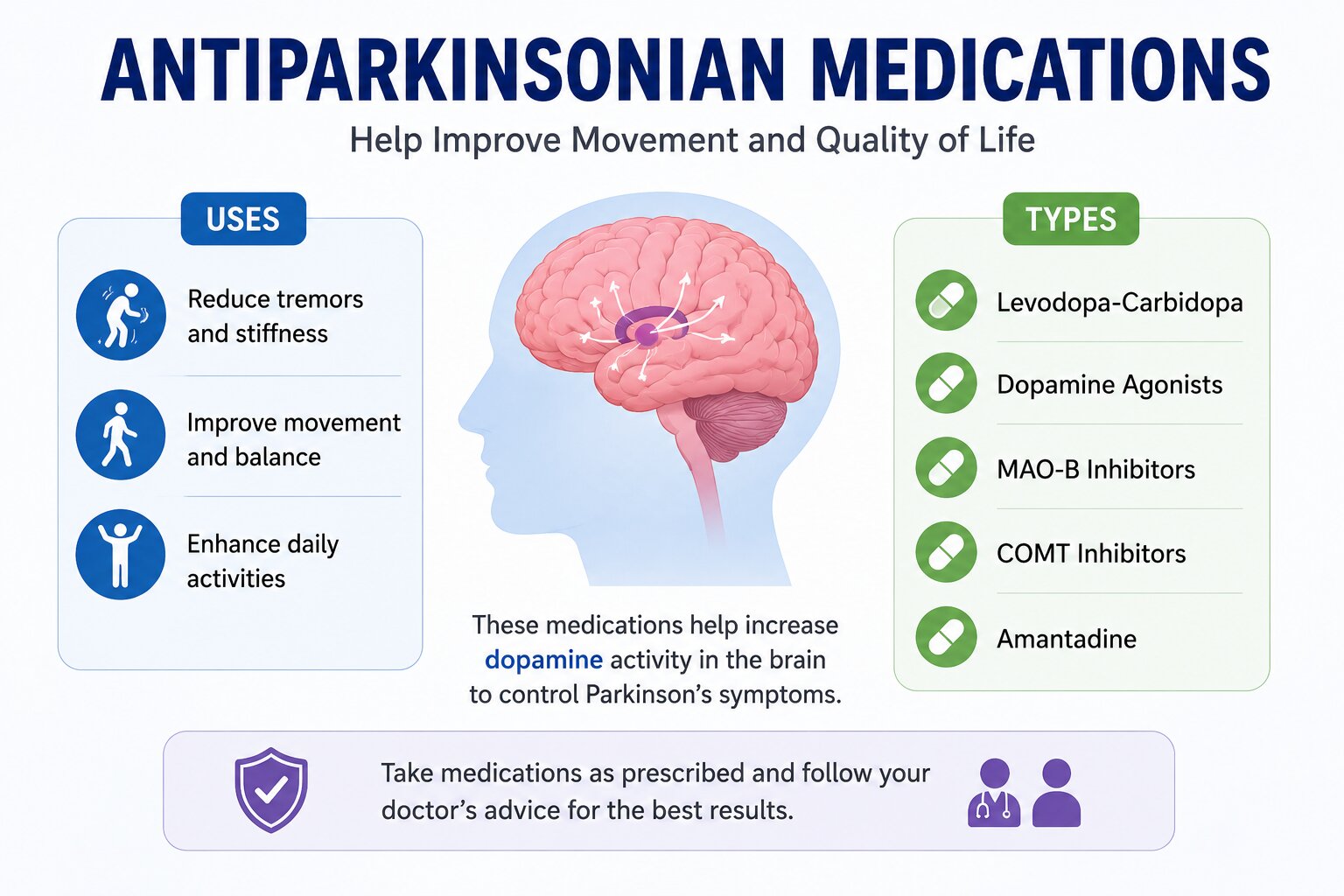
Parkinson’s disease is a progressive neurological disorder that affects movement, balance, and muscle control. It develops when the brain produces lower levels of dopamine, a neurotransmitter that helps coordinate smooth, controlled body movements. As dopamine levels decrease, symptoms such as tremors, stiffness, slow movement, and balance problems begin to appear.
Antiparkinsonian medications are specially designed drugs used to manage the symptoms of Parkinson’s disease and related movement disorders. While these medications cannot completely cure Parkinson’s disease, they can significantly improve mobility, daily functioning, and quality of life for many patients.
Modern treatment options have advanced greatly over the years, offering better symptom control with fewer side effects. Understanding how antiparkinsonian medications work, their types, benefits, and risks can help patients and caregivers make informed healthcare decisions.
What Are Antiparkinsonian Medications?
Antiparkinsonian medications are drugs used to increase dopamine activity in the brain or help control symptoms caused by dopamine deficiency. These medications help improve mobility and reduce symptoms such as tremors, muscle rigidity, and slowed movement.
Doctors prescribe antiparkinsonian medications for:
- Parkinson’s disease
- Parkinsonism
- Drug-induced movement disorders
- Restless leg syndrome (certain cases)
The choice of medication depends on the patient’s age, symptoms, disease severity, and overall health condition.
How Do Antiparkinsonian Drugs Work?
Parkinson’s disease mainly occurs due to the degeneration of dopamine-producing nerve cells in the brain. Antiparkinsonian medications work by either increasing dopamine levels or mimicking dopamine’s effects.
Different medications may work by:
- Replacing dopamine
- Stimulating dopamine receptors
- Preventing dopamine breakdown
- Increasing dopamine release
- Balancing other brain chemicals
These actions help improve coordination and reduce movement difficulties.
Common Symptoms Treated with Antiparkinsonian Medications
Antiparkinsonian drugs help manage several motor and non-motor symptoms associated with Parkinson’s disease.
Motor Symptoms
- Tremors
- Muscle stiffness
- Slowed movement (bradykinesia)
- Poor balance
- Walking difficulties
Non-Motor Symptoms
- Sleep problems
- Depression
- Fatigue
- Muscle cramps
- Restlessness
Although medications may not stop disease progression, they can greatly improve symptom control.
Types of Antiparkinsonian Medications
There are several classes of medications used to treat Parkinson’s disease and related disorders.
1. Levodopa-Carbidopa
Levodopa is considered the most effective treatment for Parkinson’s disease. It converts into dopamine inside the brain and helps restore dopamine levels.
Carbidopa is combined with levodopa to reduce side effects like nausea and improve medication effectiveness.
Benefits
- Strong symptom relief
- Improves mobility
- Reduces stiffness and tremors
Common Side Effects
- Nausea
- Dizziness
- Involuntary movements (dyskinesia)
- Low blood pressure
Levodopa remains the gold-standard treatment for moderate to advanced Parkinson’s disease.
2. Dopamine Agonists
These medications mimic dopamine’s effects in the brain.
Common Dopamine Agonists
- Pramipexole
- Ropinirole
- Rotigotine
- Apomorphine
Benefits
- Useful in early Parkinson’s disease
- May delay the need for levodopa
- Helps reduce “off” periods
Side Effects
- Sleepiness
- Hallucinations
- Swelling
- Impulsive behaviors
Dopamine agonists are often used in younger patients or combined with levodopa.
3. MAO-B Inhibitors
Monoamine oxidase-B (MAO-B) inhibitors help prevent dopamine breakdown in the brain.
Common Examples
Benefits
- Mild symptom improvement
- May enhance levodopa effects
- Convenient oral dosing
Possible Side Effects
- Headache
- Insomnia
- Nausea
- Dizziness
These medications are commonly used in early-stage Parkinson’s disease.
4. COMT Inhibitors
Catechol-O-methyltransferase (COMT) inhibitors extend the effects of levodopa by slowing its breakdown.
Common Medications
- Entacapone
- Opicapone
- Tolcapone
Benefits
- Reduces wearing-off symptoms
- Improves symptom control
Side Effects
- Diarrhea
- Orange-colored urine
- Dyskinesia
COMT inhibitors are usually prescribed together with levodopa.
5. Anticholinergic Medications
These drugs help control tremors and muscle stiffness by balancing acetylcholine activity in the brain.
Examples
- Benztropine
- Trihexyphenidyl
Benefits
- Effective for tremor control
- Useful in younger patients
Side Effects
- Dry mouth
- Blurred vision
- Constipation
- Memory problems
Anticholinergics are generally used less often in older adults because of cognitive side effects.
6. Amantadine
Amantadine was originally developed as an antiviral medication but was later found useful in Parkinson’s disease.
Benefits
- Helps reduce dyskinesia
- Improves mild symptoms
- May reduce tremors
Side Effects
- Swelling
- Confusion
- Dry mouth
- Hallucinations
Benefits of Antiparkinsonian Medications
These medications offer several important advantages for patients living with Parkinson’s disease.
1. Improved Movement
Most antiparkinsonian drugs help improve walking, balance, and coordination.
2. Better Quality of Life
Symptom relief allows patients to remain more independent and active.
3. Reduced Tremors and Stiffness
Many medications effectively reduce shaking and muscle rigidity.
4. Enhanced Daily Functioning
Patients may perform daily tasks more easily with proper medication management.
5. Longer Symptom Control
Modern treatment combinations help extend medication effectiveness and reduce fluctuations.
Side Effects of Antiparkinsonian Medications
Although highly beneficial, these medications can sometimes cause side effects.
Common Side Effects
- Nausea
- Dizziness
- Drowsiness
- Low blood pressure
- Dry mouth
- Constipation
Serious Side Effects
Some patients may experience:
- Hallucinations
- Confusion
- Involuntary movements
- Sudden sleep attacks
- Behavioral changes
Side effects vary depending on the medication type and dosage.
Long-Term Challenges of Parkinson’s Treatment
As Parkinson’s disease progresses, medication response may change.
Wearing-Off Effect
Symptoms may return before the next dose is due.
Dyskinesia
Long-term levodopa use may cause involuntary movements.
Motor Fluctuations
Patients may alternate between periods of good symptom control and poor mobility.
Doctors often adjust medication schedules or combine therapies to manage these complications.
Drug Interactions
Antiparkinsonian medications may interact with several drugs.
Common Interactions
- Antidepressants
- Antipsychotic medications
- Blood pressure drugs
- Sedatives
Some high-protein foods may also interfere with levodopa absorption.
Patients should always discuss all medications and supplements with their doctor.
Lifestyle Tips for Parkinson’s Patients
Medication works best when combined with healthy lifestyle habits.
Helpful Lifestyle Measures
- Regular exercise
- Physical therapy
- Healthy balanced diet
- Good sleep habits
- Stress management
- Staying socially active
Exercise can improve flexibility, balance, and overall mobility.
Importance of Medication Timing
Proper timing is extremely important in Parkinson’s disease treatment.
Taking medications at the correct times helps:
- Maintain stable symptom control
- Prevent wearing-off periods
- Improve mobility throughout the day
Patients should follow dosing schedules carefully and avoid missing doses.
Surgical Options Alongside Medication
Some advanced Parkinson’s patients may benefit from surgery.
Deep Brain Stimulation (DBS)
DBS involves implanting electrodes in specific brain areas to help control movement symptoms.
It may help:
- Reduce tremors
- Improve motor control
- Lower medication requirements
DBS is usually considered when medications alone no longer provide sufficient symptom control.
New Advances in Parkinson’s Treatment
Ongoing research continues to improve Parkinson’s care.
Emerging Therapies Include
- Extended-release medications
- Gene therapies
- Stem cell research
- Continuous dopamine delivery systems
- Personalised treatment plans
These advances may lead to better long-term disease management in the future.
When to Seek Medical Attention
Patients should contact a healthcare provider if they experience:
- Severe hallucinations
- Sudden worsening of symptoms
- Fainting
- Uncontrolled movements
- Difficulty swallowing
- Severe confusion
Prompt medical evaluation can help prevent complications.
Conclusion
Antiparkinsonian medications are essential for managing Parkinson’s disease and improving patients’ quality of life. From levodopa and dopamine agonists to MAO-B inhibitors and amantadine, these medications help reduce tremors, stiffness, and movement difficulties associated with dopamine deficiency.
Although these drugs cannot cure Parkinson’s disease, they can significantly improve mobility, independence, and daily functioning when used properly. Treatment plans often require adjustments over time to manage changing symptoms and minimise side effects.
With regular medical care, proper medication management, healthy lifestyle habits, and ongoing support, many people with Parkinson’s disease can continue to lead active and fulfilling lives.

Latest posts by Marie (see all)
- Semaglutide for PCOS: Can It Help with Weight Loss, Insulin Resistance & Irregular Periods? - October 17, 2026
- Semaglutide Side Effects: Common Symptoms, Serious Risks & Safety Tips - October 16, 2026
- How to control high cholesterol: self-care at home? - October 15, 2026


