
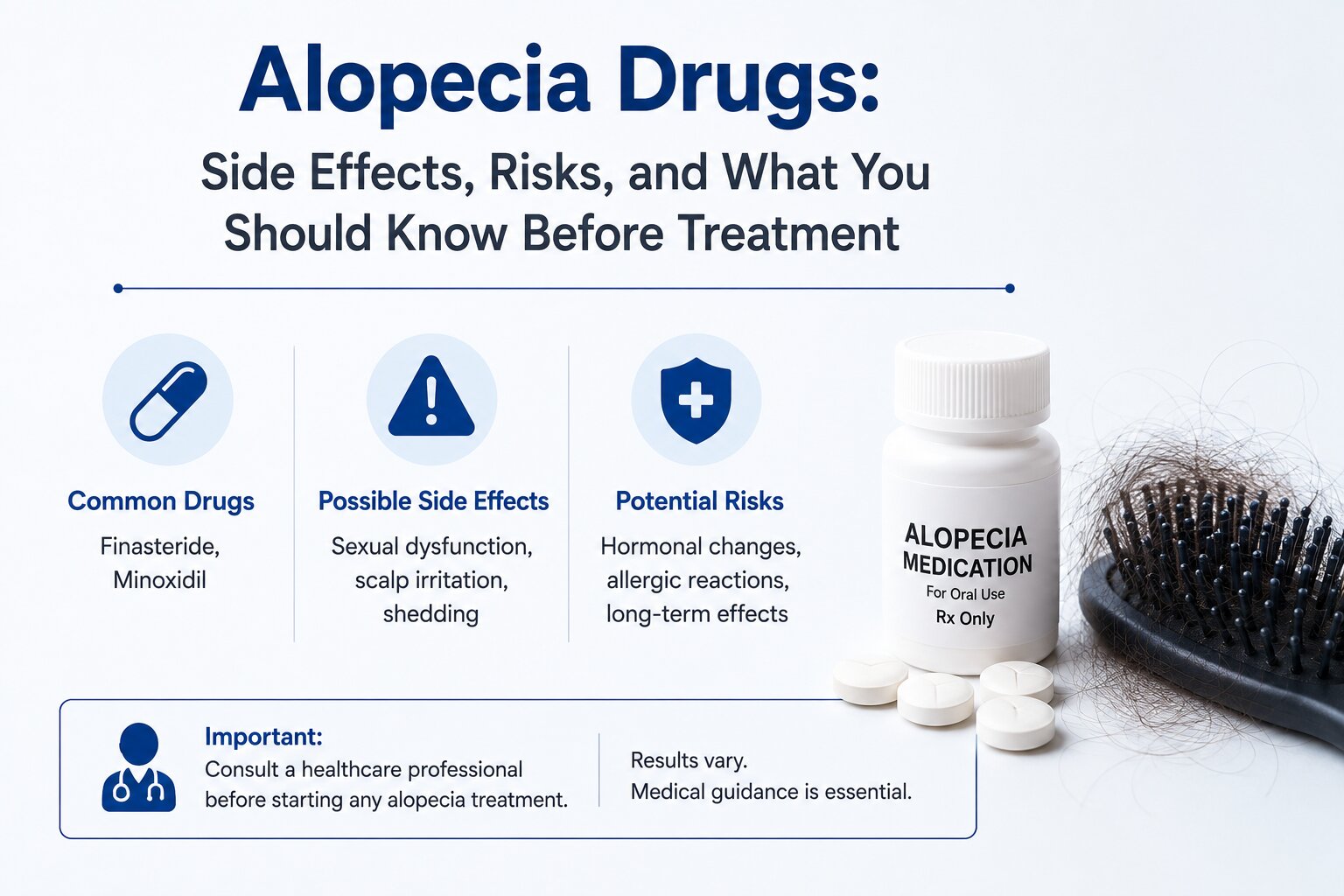
Hair loss can significantly impact self-confidence and quality of life. Fortunately, several medications are available to treat alopecia and promote hair regrowth. From prescription drugs such as Finasteride and Dutasteride to topical treatments like Minoxidil, these therapies have helped millions of people manage hair loss effectively.
However, like all medications, alopecia drugs can cause side effects. Understanding the potential risks and benefits of treatment can help patients make informed decisions and use these medications safely.
In this article, we’ll explore the most commonly prescribed alopecia drugs, their side effects, and important considerations before starting treatment.
What Is Alopecia?
Alopecia is a condition that causes hair loss from the scalp or other parts of the body. There are several types of alopecia, including:
- Androgenetic alopecia (male and female pattern hair loss)
- Alopecia areata
- Traction alopecia
- Scarring alopecia
- Telogen effluvium
Treatment depends on the type and severity of hair loss. Medications are often used to slow hair loss, stimulate regrowth, or prevent further thinning.
Common Medications Used for Alopecia
Several drugs are commonly prescribed or recommended for hair loss treatment:
Finasteride
Finasteride is an oral medication approved for male pattern baldness. It works by blocking the enzyme that converts testosterone into dihydrotestosterone (DHT), a hormone linked to hair follicle shrinkage.
Popular brands include:
- Finpecia 1mg
- Propecia
Minoxidil
Minoxidil is a topical solution or foam applied directly to the scalp. It helps stimulate blood flow to hair follicles and extends the hair growth phase.
Popular brands include:
Dutasteride
Dutasteride works similarly to Finasteride but blocks additional forms of the enzyme that produce DHT.
Corticosteroids
Used primarily for alopecia areata, corticosteroids help reduce inflammation and suppress immune system activity.
Oral Minoxidil
In some cases, low-dose oral Minoxidil may be prescribed when topical treatments are ineffective.
Finasteride Side Effects
Finasteride is one of the most effective medications for androgenetic alopecia, but some users may experience side effects.
Sexual Side Effects
The most discussed side effects include:
- Reduced libido
- Erectile dysfunction
- Difficulty maintaining erections
- Reduced semen volume
Although these effects are uncommon, they may occur in some men during treatment.
Hormonal Changes
Because Finasteride alters hormone levels, some users may notice:
- Breast tenderness
- Breast enlargement (gynecomastia)
- Testicular discomfort
Mood Changes
Rarely, patients may report:
- Depression
- Anxiety
- Mood swings
Anyone experiencing significant emotional changes should consult a healthcare provider promptly.
Allergic Reactions
Although uncommon, allergic reactions may include:
- Skin rash
- Swelling of the face or lips
- Itching
Immediate medical attention should be sought if severe symptoms occur.
Minoxidil Side Effects
Minoxidil is generally considered safe and is available without a prescription in many countries.
Scalp Irritation
The most common side effects include:
- Itching
- Redness
- Dryness
- Flaking
These symptoms often improve after continued use or switching formulations.
Initial Hair Shedding
Many users experience a temporary increase in hair shedding during the first few weeks of treatment.
This occurs because older hairs are pushed out as new growth begins, and it is usually a sign that the medication is working.
Unwanted Hair Growth
Minoxidil may occasionally cause hair growth in unintended areas such as:
- Forehead
- Face
- Neck
Proper application helps minimise this risk.
Dizziness and Rapid Heart Rate
Rare systemic side effects may include:
- Lightheadedness
- Increased heart rate
- Fluid retention
Patients should seek medical advice if these symptoms occur.
Dutasteride Side Effects
Dutasteride is often prescribed off-label for hair loss and may be more potent than Finasteride.
Sexual Dysfunction
Possible side effects include:
- Reduced sex drive
- Erectile difficulties
- Ejaculation disorders
Hormonal Effects
Some users may experience:
- Breast enlargement
- Breast tenderness
- Hormonal fluctuations
Long-Term Persistence
Because Dutasteride remains in the body longer than Finasteride, side effects may persist for an extended period after discontinuation.
Corticosteroid Side Effects
Corticosteroids are commonly used to treat alopecia areata and other autoimmune hair loss conditions.
Injection Site Reactions
Localised side effects may include:
- Skin thinning
- Pain at injection sites
- Skin discoloration
Long-Term Steroid Risks
Extended use can lead to:
- Weight gain
- Elevated blood sugar
- Increased blood pressure
- Suppressed immune function
Healthcare providers typically monitor patients closely when steroids are used long-term.
Oral Minoxidil Side Effects
Low-dose oral Minoxidil is becoming increasingly popular for hair loss treatment.
Cardiovascular Effects
Potential side effects include:
- Increased heart rate
- Swelling in the legs
- Fluid retention
- Low blood pressure
Excessive Hair Growth
Hair growth may occur in unwanted areas, including:
- Arms
- Legs
- Face
Headaches
Some patients report mild headaches during treatment.
Regular monitoring helps reduce the risk of complications.
Are Alopecia Drug Side Effects Permanent?
Most side effects associated with alopecia medications are temporary and improve after adjusting the dose or discontinuing treatment.
For example:
- Minoxidil-related irritation often resolves with continued use.
- Finasteride side effects typically improve after stopping treatment.
- Corticosteroid side effects may diminish once therapy ends.
However, individuals react differently, and patients should always discuss concerns with their healthcare provider.
How to Reduce the Risk of Side Effects
Follow Prescribed Dosages
Taking more medication than recommended does not necessarily improve results and may increase side effects.
Maintain Regular Follow-Ups
Routine consultations allow healthcare providers to monitor progress and adjust treatment if necessary.
Report Symptoms Early
Patients should inform their doctor if they experience:
- Sexual dysfunction
- Mood changes
- Allergic reactions
- Significant swelling
Use Topical Products Correctly
Applying Minoxidil exactly as directed helps reduce irritation and unwanted hair growth.
Balancing Benefits and Risks
Although side effects receive considerable attention, it’s important to remember that many people use alopecia medications successfully without significant complications.
Clinical studies have shown that:
- Finasteride effectively slows male pattern baldness.
- Minoxidil promotes hair regrowth in many patients.
- Dutasteride may provide stronger DHT suppression.
- Corticosteroids can help manage autoimmune hair loss conditions.
For most patients, the potential benefits outweigh the risks when treatment is used under medical supervision.
Alternative Hair Loss Treatments
Individuals who cannot tolerate medications may consider alternative options such as:
Platelet-Rich Plasma (PRP)
PRP therapy uses concentrated platelets from the patient’s own blood to stimulate hair follicles.
Hair Transplant Surgery
Hair transplantation can provide long-lasting results for suitable candidates.
Low-Level Laser Therapy
Laser devices may help stimulate follicle activity and improve hair density.
Nutritional Support
Addressing deficiencies in:
- Iron
- Zinc
- Vitamin D
- Protein
may improve hair health and reduce shedding.
When to Consult a Doctor
Seek medical advice if you experience:
- Severe scalp reactions
- Persistent sexual side effects
- Sudden hair loss
- Chest pain or swelling
- Significant mood changes
A healthcare professional can determine whether treatment adjustments are needed.
Conclusion
Alopecia medications have transformed the treatment of hair loss and continue to help millions of people preserve and regrow hair. Popular treatments such as Finasteride, Minoxidil, Dutasteride, and corticosteroids can be highly effective when used correctly.
While side effects are possible, most are manageable and relatively uncommon. Understanding the risks, following medical advice, and monitoring symptoms closely can help ensure a safe and successful treatment experience.
Before starting any alopecia medication, consult a qualified healthcare provider to determine the most appropriate treatment based on your specific condition, medical history, and hair loss goals.


