
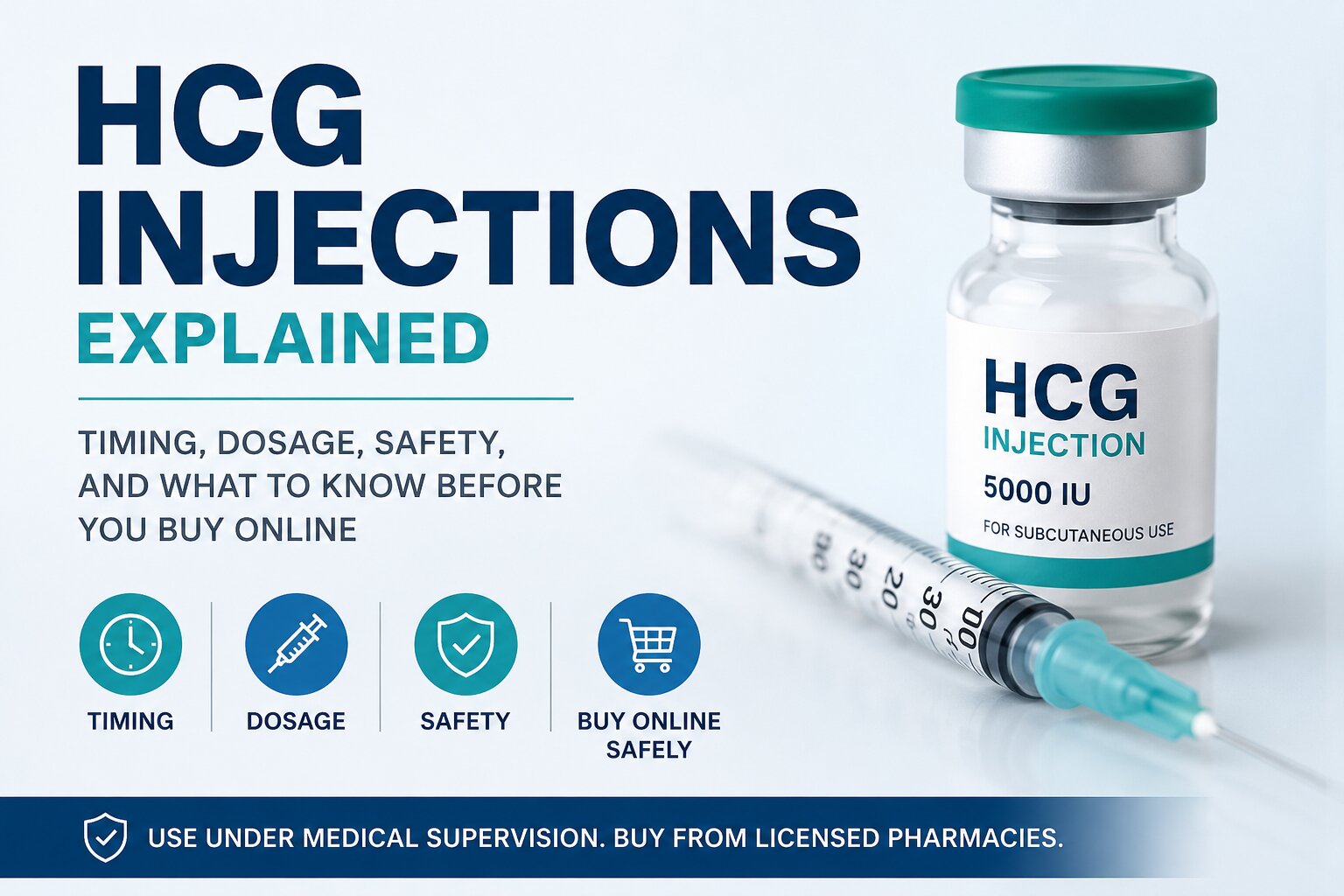
If you’ve been prescribed HCG — whether for fertility treatment, low testosterone, or hormonal support — it’s normal to have a long list of questions before your first injection. HCG (Human Chorionic Gonadotropin) plays a precise, time-sensitive role in the body, and getting the timing, dosage, and storage right can make a real difference in how well treatment works. This guide walks through what patients most commonly ask about HCG injections, from how quickly they work to how to choose among the available brands and strengths, such as Sifasi, Corion, Fertigyn HP, and Ovidac — all generic equivalents of Novarel.
How HCG Works, and How Fast
HCG typically starts working within a few hours of injection, though what “working” means depends on why it’s prescribed. Used as a trigger shot, HCG usually induces ovulation within 24 to 36 hours, which is why fertility clinics time procedures like IUI or egg retrieval so precisely around it. In men, HCG’s effect on testosterone production builds more gradually, over days to weeks of consistent dosing, rather than showing up immediately. Because Sifasi, Corion, Fertigyn HP, and Ovidac all contain the same active ingredient, their onset times are comparable across brands — your doctor will time your specific dose based on bloodwork, follicle size, or hormone monitoring.
That precision matters most around a trigger shot. Most fertility protocols schedule IUI, IVF egg retrieval, or intercourse between 24 and 36 hours after the injection, based on your individual follicle measurements. Missing that window, even by a few hours, can reduce your chances that cycle, so it’s worth keeping your phone close in case your clinic needs to adjust timing based on last-minute results.
It also helps to know that a single HCG injection stays detectable in the body for one to two weeks, even though its active hormonal effect is concentrated in the first few days. This lingering presence is why a home pregnancy test can occasionally give a false positive if taken too soon after an injection — both detect the same hormone.
Staying on Schedule
For men using HCG to support testosterone production, doctors typically prescribe two to three doses per week, spaced out to maintain steady stimulation rather than sharp spikes and drops. You don’t need to inject at exactly the same time every time, but sticking to a similar pattern — say, Monday, Wednesday, Friday — makes doses easier to remember and helps you track how your body responds over time.
If you do miss a dose, take it as soon as you remember, unless your next scheduled dose is coming up soon — in that case, skip the missed one rather than doubling up. Fertility patients on a precisely timed trigger-shot schedule should treat a missed or delayed dose more urgently and contact their clinic right away, since monitoring or procedure timing may need adjusting. Men on a maintenance schedule have more flexibility, but an occasional missed dose is still worth mentioning at your next appointment.
Storing and Self-Administering HCG at Home
Many patients safely store and self-inject HCG once they’ve been shown how to do so by a provider or pharmacist. HCG usually needs to be reconstituted with a diluent before use and then kept refrigerated — most mixed solutions remain stable for only a limited number of days once prepared. Shipping matters too: reputable pharmacies use insulated or cold-chain packaging to protect the hormone from heat and light in transit. Once it arrives, unmixed powder generally belongs in the fridge, and reconstituted solution needs to be used within its stated window. If a shipment arrives visibly warm, damaged, or significantly delayed, it’s worth checking with the pharmacy before using it rather than assuming it’s still effective.
If you’re ever unsure about mixing, drawing up, or injecting a dose correctly, don’t guess — ask for a demonstration or written instructions. Dosing errors can affect how well treatment works.
Who HCG Is and Isn’t Right For
HCG isn’t recommended for anyone with certain hormone-sensitive cancers, undiagnosed abnormal vaginal bleeding, or precocious puberty, and it should be avoided during pregnancy due to potential effects on fetal development. A known allergy to HCG is also a clear reason to avoid it. People with a history of ovarian cysts or certain pituitary conditions need closer evaluation first, since HCG stimulates hormone pathways that could aggravate these issues. A full medical history review — current medications, prior fertility treatments, any hormone-related conditions — is a standard and important step before a doctor confirms it’s appropriate for you.
Age alone isn’t usually a barrier. Men over 50 can often use HCG to support testosterone, though doctors typically confirm low testosterone with bloodwork first and screen for age-related factors like prostate health and cardiovascular risk. HCG is sometimes favoured over testosterone replacement alone in this group because it stimulates the body’s own production rather than replacing it externally, which can help preserve testicular function.
Women with PCOS commonly use HCG as part of ovulation induction, usually alongside other fertility medications that help follicles develop before the trigger shot. Because PCOS can cause follicles to grow irregularly, doctors monitor closely with ultrasound and bloodwork to time the injection precisely — women with PCOS also carry a higher baseline risk of ovarian hyperstimulation syndrome (OHSS), so dosing tends to be more conservative in this group.
Choosing Between Brands and Strengths
A common question is whether Sifasi, Corion, Fertigyn HP, or Ovidac performs better than the others. The honest answer: no single brand is inherently superior, since all four contain the same active ingredient and are generic equivalents of Novarel. Differences come down to manufacturer, inactive ingredients, vial presentation, and price — not how the hormone behaves in your body. Some patients find one brand’s formulation slightly more comfortable at the injection site, but clinical effectiveness is expected to be consistent across all of them when dosed correctly.
Strength selection follows a similar logic. The difference between 2,000 IU, 5,000 IU, and 10,000 IU vials is simply the total hormone content, which affects how many doses you get and how the vial is typically used. Lower strengths often suit maintenance dosing, 5,000 IU is common for standard trigger shots or testosterone support, and 10,000 IU is often reserved for high-dose fertility protocols like IVF. This isn’t a decision to make based on price — it should follow your doctor’s specific prescription.
It’s also worth understanding how HCG compares to other fertility medications you may have heard of. Clomid (clomiphene citrate) and HCG aren’t competitors so much as teammates in many protocols: Clomid is typically taken orally earlier in the cycle to stimulate follicle development, while HCG is given afterwards to finalise egg maturation and trigger ovulation once those follicles are ready. Many treatment plans use both together rather than choosing one over the other.
Side Effects to Expect — and What Should Prompt a Call to Your Doctor
Mild redness, swelling, or tenderness at the injection site for a day or two is normal, especially if you’re not rotating sites. What’s not normal: spreading redness or warmth well beyond the site, significant swelling, pus, fever, or pain that worsens rather than improves — these warrant medical attention, as does numbness, tingling, or bruising that doesn’t fade.
Mood changes are also worth knowing about in advance. Some patients notice irritability, restlessness, or low mood while on HCG, since it affects hormone levels tied to emotional state. This tends to be more pronounced in women during fertility treatment, where hormone shifts are larger, but men can experience it too. These effects are usually mild and temporary, resolving as hormone levels stabilise. If mood changes feel significant or start affecting daily life, that’s a conversation worth having with your doctor rather than something to push through quietly.
Buying HCG Online Responsibly
HCG is a prescription-only hormone, and that requirement exists for good reason — dosing, brand selection, and monitoring all depend on your individual hormone levels and treatment goals. When ordering online, look for a pharmacy that verifies your prescription, is transparent about sourcing, and ships using proper cold-chain packaging. A doctor’s oversight isn’t a hurdle between you and treatment; it’s what ensures the HCG you receive, whatever strength or brand, is the right fit for your body.
Frequently Asked Questions
How fast does HCG work? HCG generally begins to act within a few hours of injection. As a trigger shot, it induces ovulation within 24–36 hours; for testosterone support in men, effects build gradually over days to weeks of consistent dosing.
How long does HCG stay in your system? A single injection is typically detectable for one to two weeks, though its active hormonal effect is strongest in the first few days.
What should I do if I miss a dose? Take it as soon as you remember, unless your next dose is coming up soon — in that case, skip it rather than doubling up. Fertility patients on a trigger-shot schedule should contact their clinic right away if a dose is missed or delayed.
Is it safe to inject HCG at home? Yes, once you’ve been shown proper technique by a provider or pharmacist. HCG needs to be reconstituted, kept refrigerated, and used within its stated stability window after mixing.
Is Sifasi, Corion, Fertigyn HP, or Ovidac better than the others? No — all four are generic equivalents of Novarel, each containing the same active ingredient. Differences come down to manufacturer, inactive ingredients, and price, not effectiveness.
Which strength do I need — 2,000 IU, 5,000 IU, or 10,000 IU? This depends on your prescribed treatment, not personal preference. Lower strengths often suit maintenance dosing, HCG 5,000 IU is common for standard trigger shots or testosterone support, and HCG 10,000 IU is typically reserved for high-dose fertility protocols like IVF.
Can men over 50 use HCG for low testosterone? Often, yes, though doctors typically confirm low testosterone with bloodwork and screen for age-related factors like prostate health and cardiovascular risk first.
Can women with PCOS use HCG for ovulation induction? Yes, usually alongside other fertility medications, with closer monitoring since PCOS carries a higher baseline risk of ovarian hyperstimulation syndrome (OHSS).
What side effects are normal, and what’s not? Mild injection-site redness or tenderness for a day or two is normal. Spreading redness, significant swelling, fever, or worsening pain are not, and warrant medical attention. Mild, temporary mood changes can also occur as hormone levels shift.
Do I need a prescription to buy HCG online? Yes. Buy HCG is a prescription-only medication, and a legitimate pharmacy will always verify your prescription before dispensing it.
This article is for general informational purposes and does not replace advice from a licensed healthcare provider. HCG dosing, brand selection, and treatment protocols should always be determined by a doctor or fertility specialist.

Latest posts by Marie (see all)
- HCG Injections Explained: Timing, Dosage, Safety, and What to Know Before You Buy Online - July 14, 2026
- Menarini Tretinoin Gel Explained: Uses, Strengths, Benefits, and Side Effects - July 11, 2026
- Mebendazole vs Albendazole: Which Anti-Worm Medicine Is Better for Treating Parasitic Infections? - July 9, 2026


