
Heartburn and acid reflux are among the most common digestive complaints worldwide. While occasional symptoms after a heavy meal are usually harmless, frequent acid reflux can interfere with daily life. It may lead to complications such as gastroesophageal reflux disease (GERD), esophagitis, or stomach ulcers. Fortunately, modern medicines known as proton pump inhibitors (PPIs) offer effective, long-lasting relief by reducing the amount of acid produced in the stomach.
Three of the most prescribed PPIs are Pantoprazole, Omeprazole, and Esomeprazole. Although they belong to the same class of medications and share a similar purpose, they are not identical. Differences in their absorption, duration of action, potential drug interactions, and clinical use can influence which medication is most suitable for a particular patient.
If you’ve ever wondered “Is Pantoprazole better than Omeprazole?” or “Should I take Esomeprazole instead of Omeprazole?”, this guide will help you understand the similarities and differences between these widely used acid-reducing medicines. By understanding how each medication works and when it is commonly prescribed, you can have a more informed discussion with your healthcare provider about the best treatment for your condition.
What are Proton Pump Inhibitors (PPIs)?
Proton pump inhibitors are medications that reduce stomach acid production by blocking the proton pump, an enzyme found in the cells lining the stomach. This enzyme is responsible for the final step in acid secretion. By blocking it, PPIs significantly reduce acid production, allowing the stomach and oesophagus to heal from irritation caused by excessive acid exposure. Doctors prescribe PPIs to treat several digestive disorders, including:
- Gastroesophageal reflux disease (GERD)
- Frequent heartburn
- Peptic ulcers
- Erosive esophagitis
- Zollinger-Ellison syndrome
- Gastric ulcers caused by long-term NSAID use
- Helicobacter pylori (H. pylori) infection (combined with antibiotics)
Unlike antacids that provide immediate but short-lived relief, PPIs work gradually and provide longer-lasting acid suppression. Most people begin to notice symptom improvement within a few days, while complete healing of acid-related damage may take several weeks of continuous treatment.
Pantoprazole vs Omeprazole vs Esomeprazole: Key differences
Although these medications belong to the same drug class, several important differences influence their use in clinical practice.
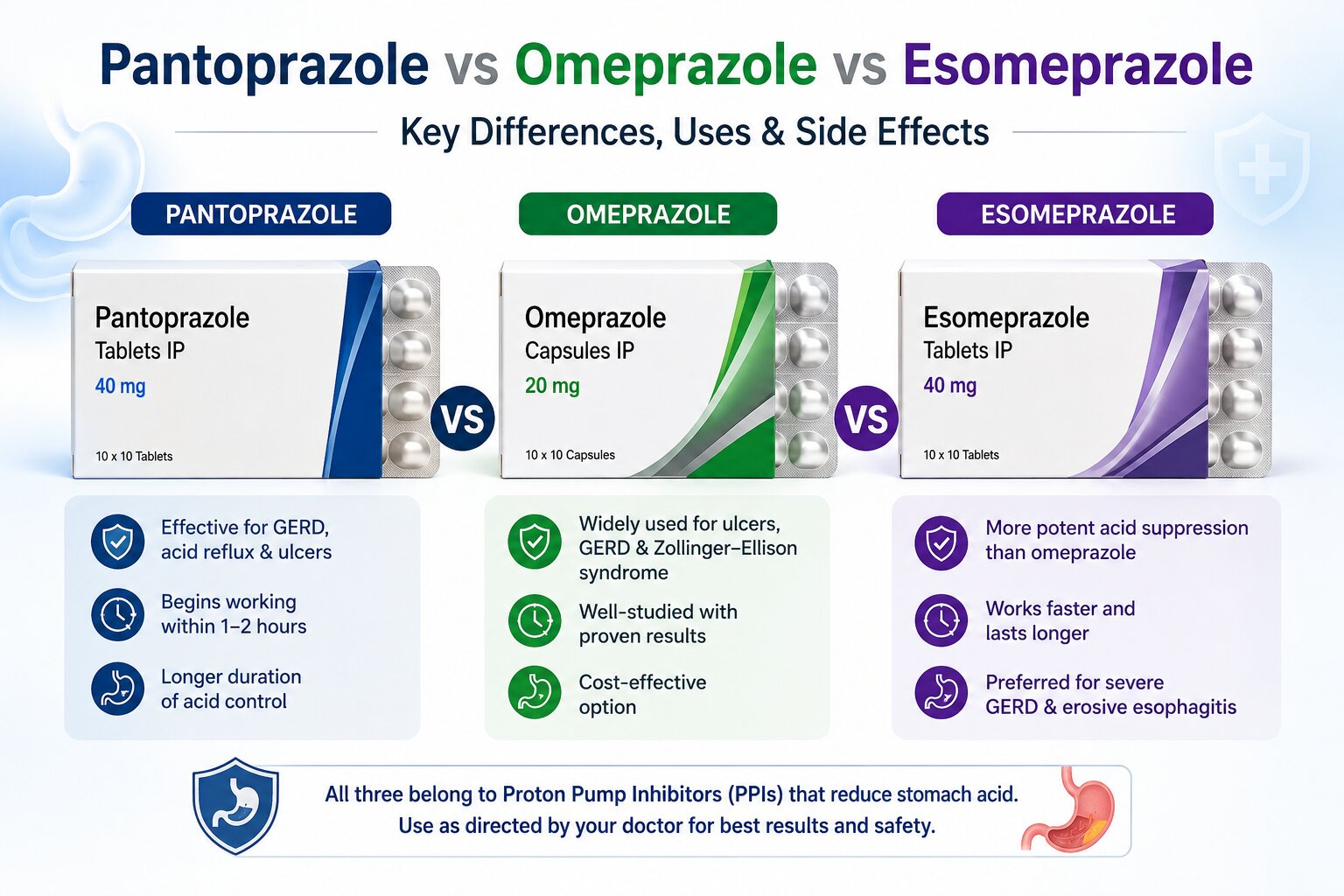
- Pantoprazole is often preferred for patients taking multiple medications because it has fewer significant drug interactions. It is also widely used for long-term GERD management and ulcer prevention.
- Omeprazole remains one of the most affordable and extensively studied PPIs. It is highly effective for treating mild to moderate acid reflux and is commonly recommended for uncomplicated GERD and heartburn. However, its interaction with certain medications means it may not be the best option for every patient.
- Esomeprazole provides more consistent acid suppression in many individuals. It is frequently chosen for patients with severe reflux symptoms, erosive esophagitis, or those who do not achieve adequate relief with other PPIs.
While all three medications effectively reduce stomach acid, the ideal choice depends on factors such as symptom severity, medical history, other medications, treatment duration, and individual response.
Common uses of Pantoprazole, Omeprazole, and Esomeprazole
Although Pantoprazole, Omeprazole, and Esomeprazole differ slightly in their pharmacological properties, they are prescribed for many of the same digestive conditions. Their primary role is to suppress stomach acid, allowing irritated tissues to heal and preventing further damage.
One of the most common conditions treated with PPIs is gastroesophageal reflux disease (GERD). People with GERD experience frequent acid reflux, heartburn, regurgitation, and sometimes difficulty swallowing. By reducing acid production, these medications relieve symptoms and help heal the lining of the esophagus. PPIs are also highly effective for treating erosive esophagitis, a condition in which persistent stomach acid damages the esophageal lining. Healing typically occurs over several weeks when the medication is taken consistently as prescribed.
Another important use is the treatment and prevention of peptic ulcers. Whether ulcers develop because of excess acid, long-term use of nonsteroidal anti-inflammatory drugs (NSAIDs), or Helicobacter pylori (H. pylori) infection, PPIs reduce acid levels and create an environment that promotes healing. In H. pylori infections, they are combined with antibiotics to improve treatment success. Doctors may also prescribe these medicines for rare conditions such as Zollinger-Ellison syndrome, where the stomach produces unusually large amounts of acid.
Which Proton Pump Inhibitor is more effective?
Many patients ask whether Pantoprazole, Omeprazole, or Esomeprazole is the “best” PPI. The truth is that all three medications are highly effective, but the right choice depends on individual needs rather than one medicine being universally superior.
Omeprazole has been used for decades and remains one of the most trusted treatments for acid reflux and GERD. It provides reliable symptom relief and is often chosen because of its affordability and long history of successful use.
Pantoprazole delivers comparable acid suppression while offering an important advantage—it has fewer clinically significant drug interactions. This makes it particularly suitable for patients taking multiple medications, including some cardiovascular drugs.
Esomeprazole is often considered a more advanced formulation because it may provide more consistent and prolonged acid suppression in certain individuals. Patients with moderate to severe GERD or persistent symptoms despite standard treatment may benefit from Esomeprazole under medical supervision.
Rather than focusing on which medicine is “strongest,” it is more helpful to consider which one best matches your medical condition, other medications, and treatment goals.
Side effects of Pantoprazole, Omeprazole, and Esomeprazole
Like all medications, proton pump inhibitors can cause side effects, although most people tolerate them well. Common side effects are usually mild and temporary and may include headache, nausea, abdominal discomfort, bloating, diarrhoea, constipation, or dizziness.
Long-term use requires careful medical supervision. Prolonged acid suppression may reduce the absorption of nutrients such as vitamin B12, magnesium, and calcium, particularly in people who take PPIs for many months or years. Some studies have also linked extended PPI use with a slightly increased risk of certain intestinal infections because lower stomach acid may reduce the body’s natural defence against bacteria.
These risks should be considered in context. For patients with significant GERD, ulcers, or erosive esophagitis, the benefits of treatment generally outweigh the potential risks. However, PPIs should always be used at the lowest effective dose and for the appropriate duration recommended by a healthcare professional.
Choosing the right PPI
The most appropriate proton pump inhibitor depends on your individual health profile.
- If you take several prescription medicines or require long-term acid suppression, Pantoprazole may be the preferred option because of its lower interaction potential.
- If you have occasional or uncomplicated acid reflux, Omeprazole remains an effective, affordable, and widely available treatment supported by years of clinical experience.
- If your reflux symptoms are severe, frequent, or not adequately controlled with another PPI, your healthcare provider may recommend Esomeprazole because of its ability to provide more sustained acid control in some patients.
Regardless of which medicine you use, it is important to follow the prescribed dosage and avoid stopping treatment without consulting your healthcare provider.
Lifestyle changes to support treatment
Medication is only one part of managing acid reflux successfully. Healthy lifestyle habits can significantly improve treatment outcomes and reduce symptom frequency. Maintaining a healthy body weight, eating smaller meals, avoiding late-night eating, limiting spicy and fatty foods, reducing caffeine and alcohol intake, and quitting smoking can all help reduce acid reflux episodes. Sleeping with the head slightly elevated may also improve nighttime symptoms. These simple changes, combined with appropriate medication, often provide better long-term symptom control than medication alone.
Best platform to buy Acid Reflux medicines online
When purchasing acid reflux medications online, choosing a reliable online pharmacy is important. PremiumRxDrugs (PRx) provides access to quality gastrointestinal medicines, including commonly prescribed proton pump inhibitors, from trusted pharmaceutical sources. Customers can benefit from competitive pricing, convenient online ordering, and access to a wide range of healthcare products. A reliable pharmacy helps ensure that patients receive genuine medications while making ongoing treatment more accessible and convenient. AT PRX, you can easily get access to the acid reducers category, which includes Pantocid 20 mg, Omecip 20 mg, Nexpro 20 mg and many more like these at affordable rates. Before starting or changing any acid reflux medication, consulting a healthcare professional is recommended to ensure the treatment is appropriate for your condition.
Conclusion
When comparing Pantoprazole vs Omeprazole vs Esomeprazole, all three medications are effective proton pump inhibitors that play an important role in treating GERD, acid reflux, stomach ulcers, and other acid-related digestive disorders.
Pantoprazole is often preferred for people taking multiple medications because it has fewer drug interactions. Omeprazole continues to be one of the most widely used and cost-effective treatments for heartburn and GERD, while Esomeprazole may provide more consistent acid suppression for individuals with persistent or severe symptoms.
The best medication is not necessarily the newest or strongest—it is the one that best suits your medical condition, overall health, and treatment goals. Working with your healthcare provider and adopting healthy lifestyle habits can help you achieve effective, long-term control of acid reflux and improve your quality of life.


