
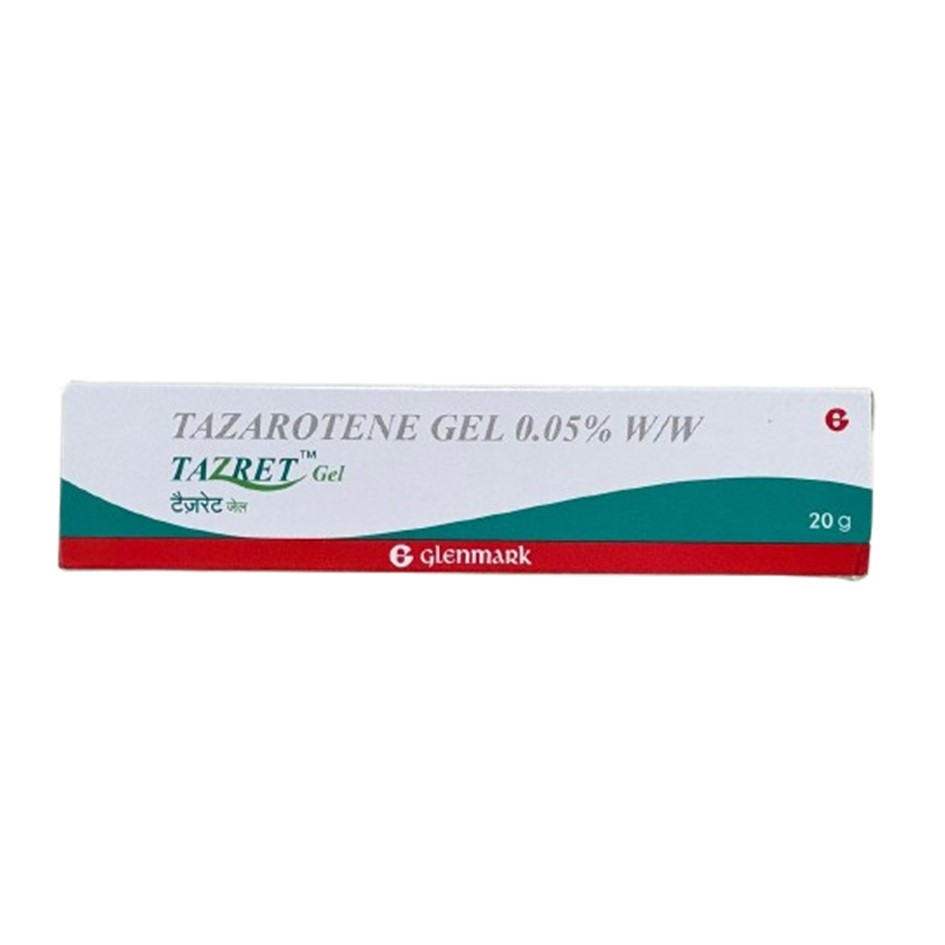
Tazarotene gel is a topical retinoid — a vitamin A derivative — prescribed for plaque psoriasis and acne vulgaris. It works by changing how quickly skin cells grow and shed, which helps clear acne lesions and reduce the scaling and thickness associated with psoriasis plaques.
This guide focuses on what makes tazarotene distinct from other topical treatments: the medications and conditions it interacts with, the side effects worth monitoring, and the situations where extra caution is needed. For step-by-step application instructions, see our companion guide on using Tazret Gel safely.
What Tazarotene Gel Treats
Tazarotene gel is approved for two main indications:
- Plaque psoriasis in adults — the raised, silvery-scaled patches characteristic of this condition
- Acne vulgaris — by keeping pores clear of the dead skin cells that contribute to breakouts
It’s available in gel and cream formulations, typically starting at 0.05% strength, with some formulations available at 0.1% depending on how a patient responds to initial treatment.
Before You Start: Conditions Your Doctor Needs to Know About
Because tazarotene changes how skin cells behave, certain pre-existing conditions and circumstances change how — or whether — it should be used. Tell your doctor if any of the following apply to you:
- Eczema, sunburn, or other active skin conditions — applying a retinoid to already-irritated or compromised skin increases the risk of significant irritation
- A personal or family history of skin cancer, including a prior diagnosis of lentigo maligna (a type of skin cancer sometimes confused with ordinary sun spots)
- A history of allergic reaction to any skin product, since cross-sensitivity to retinoid-based treatments is possible
- Heightened sensitivity to sunlight, given that tazarotene increases photosensitivity
- Working outdoors regularly, which raises cumulative sun exposure during treatment
- Pregnancy or plans to become pregnant, or breastfeeding — retinoids carry known risks to fetal development, and safety during breastfeeding hasn’t been well established
None of these automatically rule out tazarotene, but they change the risk calculation your prescriber needs to weigh, and may affect dosing, monitoring, or whether an alternative treatment makes more sense.
Dosing and Available Strengths of Tazarotene Gel
Treatment typically starts at the lower 0.05% strength, with your doctor potentially increasing to 0.1% depending on how your skin responds and tolerates the medication. Both strengths are available in Tazret gel and cream form, generally in 15g tubes.
As with any topical retinoid, more product doesn’t equal faster results — using more than directed mainly increases the likelihood of irritation without improving outcomes.
What Happens With a Missed Dose or Overdose
Missed dose: Skip it and apply your next dose at the regular scheduled time. If it’s been less than an hour since you realised you missed it, applying the missed dose is generally fine — but never double up to compensate for a skipped application, since this increases irritation risk without added benefit.
Overdose: True overdose with a topical medication like tazarotene is uncommon, since absorption through the skin is limited compared to oral medications. Still, if a significant overdose is suspected — for example, if the product is accidentally ingested or applied over a very large area — seek urgent medical care or contact your doctor immediately rather than waiting to see if symptoms develop.
Side Effects of Tazarotene Gel
Most people experience some degree of irritation when starting tazarotene, and mild reactions are considered a normal part of the adjustment period. Effects that generally don’t require medical attention (though worth mentioning to your doctor if persistent) include:
- Mild burning, stinging, or itching
- Redness and irritation at the application site
- Dryness or peeling of treated skin
Seek medical attention promptly if you experience:
- Severe skin irritation — significant burning, stinging, or itching well beyond the mild adjustment-phase reactions
- Severe redness that seems disproportionate or spreading
- Signs of skin infection: swelling, warmth, oozing, or pus at the application site
Drug Interactions: What Tazarotene Gel Can Interact With
This is one of the more important — and often overlooked — aspects of tazarotene treatment. Several medication classes can compound its side effects or increase photosensitivity risk when combined with topical retinoid use. Always give your doctor a complete list of medications you’re taking, but pay particular attention to:
Diuretics (such as chlorothiazide, hydrochlorothiazide, chlorthalidone, indapamide, or metolazone) — some diuretics can increase skin photosensitivity, which compounds the sun-sensitivity effect tazarotene already causes, raising the risk of severe sunburn-like reactions.
Tetracycline-class antibiotics (doxycycline, minocycline, tetracycline) — these are well known for causing photosensitivity on their own. Combined with tazarotene, the cumulative effect can significantly increase the risk of sunburn or skin reactions with even brief sun exposure.
Fluoroquinolone antibiotics (ciprofloxacin, gemifloxacin, levofloxacin, moxifloxacin, norfloxacin, ofloxacin) — like tetracyclines, this antibiotic class carries its own photosensitivity risk, and stacking it with a retinoid warrants extra sun protection and closer monitoring for skin reactions.
Phenothiazines (chlorpromazine, fluphenazine, perphenazine, prochlorperazine, promethazine, thioridazine, trifluoperazine) — this class, often used for nausea or certain psychiatric conditions, is also associated with increased photosensitivity, adding another layer of sun-related risk when combined with tazarotene.
Sulfa drugs — another category associated with photosensitizing effects that can compound tazarotene’s own sun-sensitivity profile.
The common thread: most of the notable interactions with tazarotene centre on photosensitivity. If you’re taking any of the medication classes above, sun protection isn’t optional — it becomes a critical part of managing treatment safely, and your doctor may adjust dosing, timing, or monitoring accordingly.
Precautions for Safe Use
- Never exceed the prescribed dose or frequency, even if results seem slow — more product increases irritation risk without speeding improvement
- Minimise sun and UV exposure, and treat this as especially important if you’re also taking any of the interacting medications listed above
- Keep the medication away from eyes, mouth, and mucous membranes; rinse thoroughly with water if accidental contact occurs
- Use sunscreen and protective clothing over treated areas whenever you’re outdoors
- Don’t use the medication past its expiration date — dispose of expired product promptly, and ask your pharmacist about proper disposal
- Never ingest tazarotene — it’s for topical use only, and swallowing it can cause serious harm
- Avoid applying it to cracked, injured, or otherwise compromised skin, since this increases both irritation risk and systemic absorption
Frequently Asked Questions
Can I take antibiotics while using tazarotene gel? Some antibiotics — particularly tetracyclines and fluoroquinolones — increase photosensitivity, which can compound tazarotene’s own sun-sensitivity effect. This doesn’t necessarily mean the combination is off-limits, but your doctor should know about it so you can take extra sun-protection precautions during treatment.
Why does tazarotene interact with so many unrelated drug classes? Most of the interactions aren’t about the drugs affecting tazarotene’s mechanism directly — they share a common side effect (increased photosensitivity) that compounds when combined, raising the risk of sunburn-like skin reactions.
Is mild irritation early in treatment something to worry about? Generally no — mild burning, redness, and peeling are common as skin adjusts to a retinoid, and typically ease within the first few weeks. Severe irritation, signs of infection, or symptoms that worsen rather than improve are the signals to contact your doctor.
Can tazarotene be used with other acne treatments? Combination approaches are common in dermatology, but should be guided by your prescriber, since layering multiple active ingredients increases the likelihood of excessive dryness or irritation.
The Bottom Line
Tazarotene gel is an effective option for both plaque psoriasis and acne, but its interaction profile — largely centred on compounded photosensitivity with certain antibiotics, diuretics, and other medication classes — makes a full conversation with your prescriber about your current medications especially important. Combined with careful sun protection, this is a manageable and often highly effective treatment when used exactly as directed.
This article is for general informational purposes and isn’t a substitute for professional medical advice. Always tell your doctor about every medication you’re taking before starting tazarotene gel.

Latest posts by Marie (see all)
- Semaglutide for PCOS: Can It Help with Weight Loss, Insulin Resistance & Irregular Periods? - October 17, 2026
- Semaglutide Side Effects: Common Symptoms, Serious Risks & Safety Tips - October 16, 2026
- How to control high cholesterol: self-care at home? - October 15, 2026


