
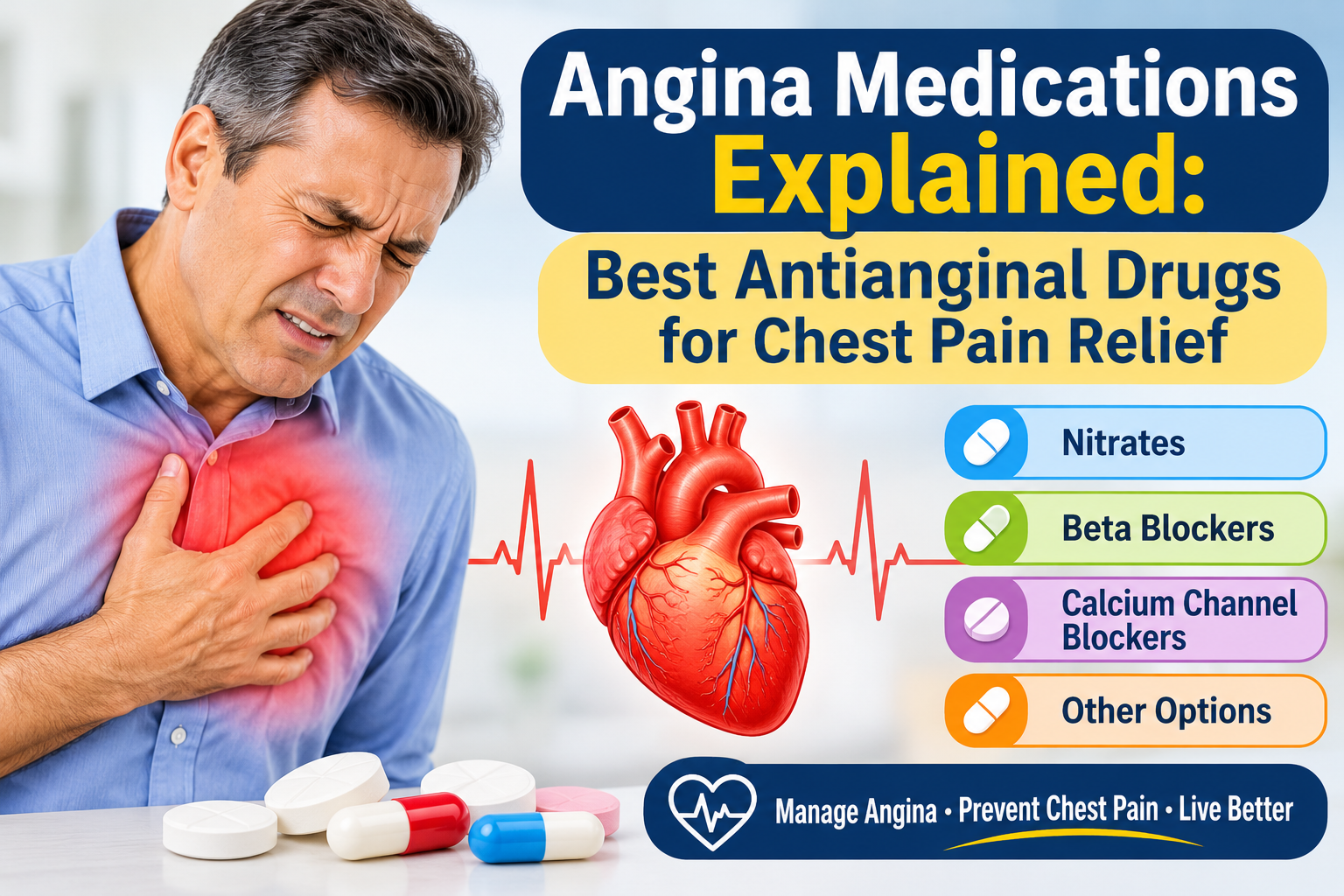
Chest pain that appears when you climb stairs or feel stressed can be frightening. For millions of Americans, this discomfort is angina, a warning sign that the heart muscle isn’t getting enough oxygen-rich blood. The relief is that angina is very manageable. With the right antianginal medication for chest pain and a few healthy lifestyle changes, most people can stay active and have far fewer episodes.
In this guide, we break down the main angina medication types, explain how antianginals work, cover when nitrates for angina are used, and help you recognise the difference between angina and a heart attack.
What is Angina?
Angina is chest pain or discomfort caused by reduced blood flow to the heart, usually because coronary artery disease (CAD) has narrowed the coronary arteries. It often feels like pressure, squeezing, tightness, or heaviness in the chest. It may spread to the shoulders, arms, neck, jaw, or back, and some people, especially women and people with diabetes, feel breathlessness, fatigue, or nausea instead.
There are a few main types of angina:
- Stable angina: The most common type. It follows a predictable pattern, is triggered by exertion or stress, and eases within a few minutes of rest or nitroglycerin.
- Unstable angina: New, worsening, or occurring at rest. It is a medical emergency because it can lead to a heart attack.
- Variant (Prinzmetal) angina: Caused by a coronary artery spasm, often at rest or during the night.
Angina vs Heart Attack Symptoms: Know the difference
Because both conditions come from the heart not getting enough oxygen, angina vs heart attack symptoms can feel alike. The key difference is that angina is a temporary shortage of blood flow, while a heart attack is a blockage that damages heart muscle.
| Feature | Stable Angina | Heart Attack |
| Trigger | Physical activity, stress, cold weather, heavy meals | Can happen at any time, even at rest or during sleep |
| Duration | Usually a few minutes (often under 5) | Lasts longer than a few minutes, or goes away and comes back |
| Relief | Eases with rest or nitroglycerin | Not relieved by rest or nitroglycerin |
| Other signs | Mild breathlessness | Cold sweat, nausea, lightheadedness, severe shortness of breath |
How do antianginals work?
Understanding how antianginals work makes it easier to follow your treatment plan. Angina happens when the heart’s oxygen demand exceeds the supply it receives. Antianginal drugs restore that balance in one or more ways:
- Reducing oxygen demand: Slowing the heart rate, lowering blood pressure, or easing the force of each heartbeat so the heart works less.
- Increasing oxygen supply: Relaxing and widening blood vessels, including the coronary arteries, and preventing artery spasm.
- Improving heart cell efficiency: Newer agents help heart muscle cells use oxygen and energy more efficiently.
Treatment aims to stop attacks quickly and prevent future episodes.
Angina medication types: The main options
Here is a quick overview of the most common angina medication types prescribed in the US:
| Drug class | Common examples | Main role |
| Short-acting nitrates | Nitroglycerin tablets or spray (Nitrostat, Nitrolingual) | Fast relief of an attack |
| Long-acting nitrates | Isosorbide mononitrate (Imdur), nitroglycerin patches and SR capsules | Daily prevention |
| Beta-blockers | Metoprolol, atenolol, bisoprolol | Prevention; lower heart rate |
| Calcium channel blockers | Amlodipine, diltiazem, verapamil | Prevention; relax arteries |
| Late sodium current inhibitor | Ranolazine (Ranexa) | Add-on prevention for chronic angina |
1. Nitrates for Angina
Nitrates are among the oldest and most trusted angina treatments. They release nitric oxide, which relaxes and widens blood vessels, reducing the heart’s workload and improving blood flow. Sublingual nitroglycerin dissolves under the tongue and typically relieves pain within 1 to 3 minutes. Long-acting nitrates, such as isosorbide mononitrate or sustained-release nitroglycerin, are taken daily to prevent attacks.
Common side effects include headache, flushing, and dizziness. Doctors often schedule a daily nitrate-free period to prevent tolerance. Never combine nitrates with erectile dysfunction drugs like sildenafil (Viagra) or tadalafil (Cialis), as this can cause a dangerous drop in blood pressure.
2. Beta-Blockers
Beta-blockers slow the heart rate and lower blood pressure, cutting the heart’s oxygen needs. They are often a first-line choice for stable angina, especially in people who have had a heart attack. Side effects can include tiredness and a slow pulse. Never stop a beta-blocker suddenly, as this can worsen chest pain.
3. Calcium Channel Blockers
Calcium channel blockers relax the muscles of the artery walls, improving blood flow. Diltiazem and verapamil also slow the heart rate. They are especially helpful for variant angina caused by artery spasm and for people who cannot take beta-blockers. Common side effects include ankle swelling, constipation, and headache.
4. Ranolazine
Ranolazine 500mg works differently from older drugs. It blocks the late sodium current in heart cells, helping the heart muscle relax and use oxygen more efficiently, without significantly changing heart rate or blood pressure. That makes it a useful add-on when symptoms continue despite other medicines. Take it twice daily for prevention; it is not meant to stop an attack in progress. It interacts with some medicines and grapefruit, so share your full medication list with your doctor.
Choosing the best Antianginal medication for chest pain
No single “best” antianginal medication for chest pain suits everyone. Your doctor will consider your type of angina, heart rate, blood pressure, other conditions such as asthma, diabetes, or heart failure, and any medications you already take. Many people use a combination: a rescue nitroglycerin for attacks, plus one or two daily preventive medicines. If symptoms persist, a long-acting nitrate or ranolazine may be added.
Managing stable angina: Tips beyond medication
Managing stable angina works best when medication is paired with healthy daily habits:
- Take your medicines exactly as prescribed, and always carry your rescue nitroglycerin. Check its expiration date regularly.
- Quit smoking, which is one of the most powerful steps for heart health.
- Eat a heart-healthy diet rich in vegetables, fruits, whole grains, and lean protein, with less salt and saturated fat.
- Stay active with doctor-approved exercise or a cardiac rehabilitation program.
- Avoid known triggers such as heavy meals, extreme cold, and sudden intense exertion, and manage stress.
- Report any change in your angina pattern to your doctor promptly.
If medicines and lifestyle changes don’t control symptoms, procedures such as angioplasty with stenting or bypass surgery may be considered.
Buy Angina medication online
Angina prevention is a long-term commitment, and PRx can make ongoing refills simple and affordable. If your doctor has prescribed ranolazine for chronic stable angina, you can order Ranozex XR 500 mg (Ranolazine), a generic alternative to Ranexa, from PremiumRxDrugs (PRx). Ordering with a valid prescription keeps your treatment safe and supervised.
At PRx, you get genuine, quality-assured generic medicines at cost-effective prices, an easy reorder system with prescription management tools, discreet packaging, free delivery on qualifying orders to the US, and friendly customer support whenever you have questions. Here you can also find other prescribed antianginals, such as Angispan TR (Nitroglycerin) for angina prevention and Angizem (Diltiazem).
The bottom line
Angina is a signal from your heart, not a life sentence. Knowing how antianginals work, using rescue nitrates correctly, and taking preventive medicines consistently can help you control chest pain and stay active. Never ignore chest pain that feels different or won’t go away.
Frequently Asked Questions (FAQs)
1. What is the fastest-acting medicine for angina chest pain?
Sublingual nitroglycerin, as a tablet or spray, is the fastest option. It usually starts working within 1 to 3 minutes. If pain isn’t better 5 minutes after one dose, call 911.
2. Can I take nitroglycerin with Viagra or Cialis?
No. Combining nitrates with erectile dysfunction drugs like sildenafil or tadalafil can cause a sudden, life-threatening drop in blood pressure. Always tell your doctor and pharmacist about every medicine you take.
3. What is the first-line treatment for stable angina?
Most doctors start with a beta-blocker or a calcium channel blocker for prevention, plus sublingual nitroglycerin for quick relief. Long-acting nitrates or ranolazine may be added if symptoms continue.
4. Can angina be cured or go away on its own?
Angina is a symptom of coronary artery disease, which can’t be fully cured. But with medication, lifestyle changes, and sometimes procedures, many people greatly reduce or eliminate episodes.
5. How do I know if my chest pain is angina or a heart attack?
Stable angina is usually brief, triggered by activity or stress, and relieved by rest or nitroglycerin. Heart attack pain tends to last longer, can occur at rest, and doesn’t respond to rest or nitroglycerin. If you’re unsure, treat it as an emergency and call 911.
Disclaimer: This article is for informational purposes only and is not a substitute for professional medical advice. Always consult your doctor before starting, stopping, or changing any medication.

Latest posts by Marie (see all)
- Angina Medications Explained: Best Antianginal Drugs for Chest Pain Relief - November 12, 2026
- Generic Adapalene vs Differin: Is the Generic Version Just as Effective? - November 10, 2026
- Hydroquinone Alternatives for Melasma: Best Creams for Brighter, Even-Toned Skin - November 10, 2026


