
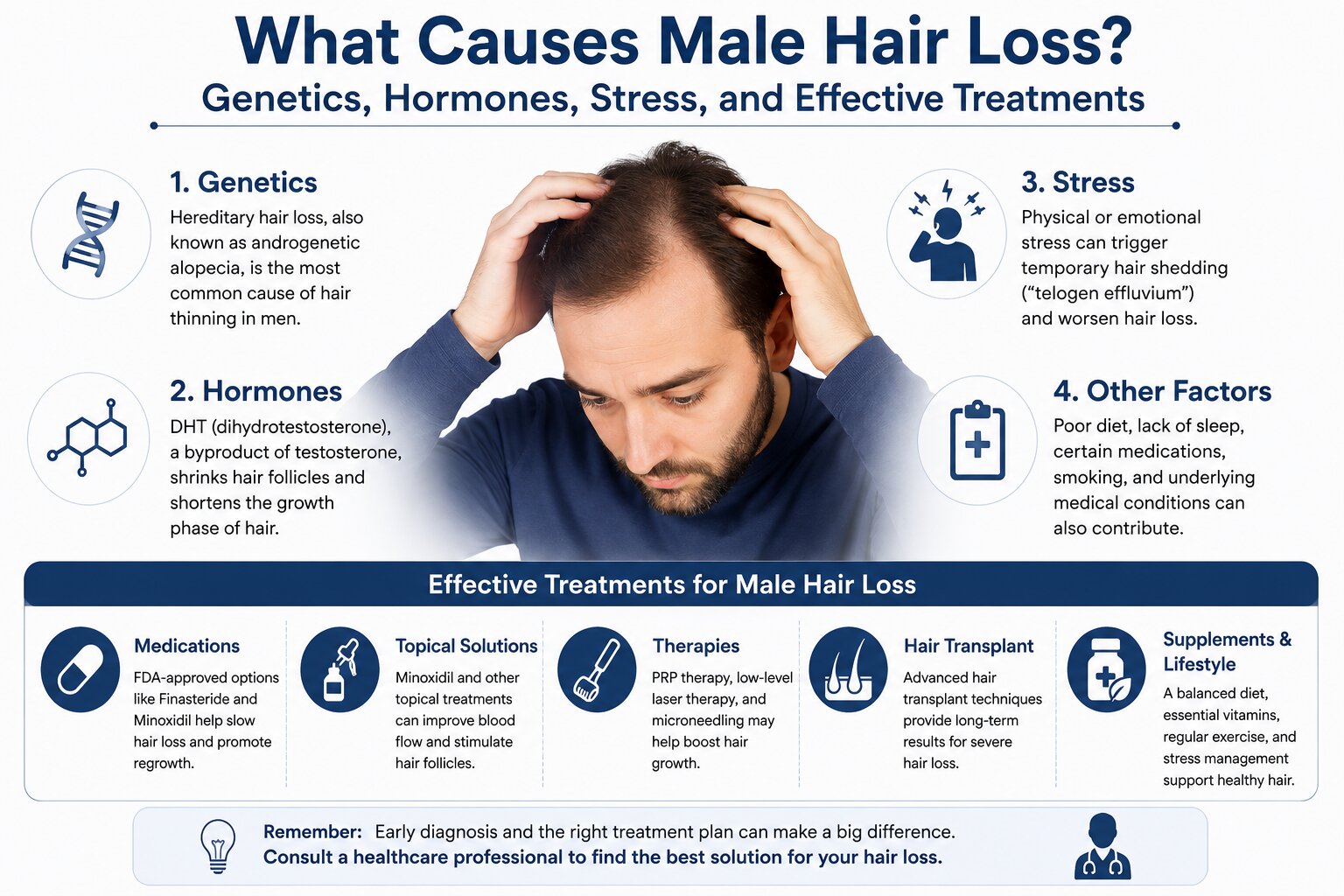
Hair loss is one of the most common concerns among men worldwide. While losing a few strands of hair every day is normal, excessive hair shedding or noticeable thinning can affect confidence and self-esteem. Male hair loss can occur at any age, although it becomes more common as men grow older. Understanding the causes of hair loss is the first step toward finding the right treatment and maintaining healthy hair.
In this comprehensive guide, we’ll explore the most common causes of male hair loss, how to identify the underlying problem, and the medications and treatments available to help slow hair loss and promote regrowth.
Understanding Male Hair Loss
Hair grows in a cycle that consists of three phases:
- Anagen (Growth Phase): Hair actively grows from the follicle.
- Catagen (Transition Phase): Hair growth slows, and follicles shrink.
- Telogen (Resting Phase): Hair falls out, and new hair begins to grow.
When this cycle is disrupted, excessive hair loss or thinning may occur.
1. Genetics: The Most Common Cause of Male Hair Loss
The leading cause of hair loss in men is androgenetic alopecia, commonly known as male pattern baldness. This hereditary condition affects millions of men worldwide.
How Genetics Cause Hair Loss
Men who inherit sensitivity to a hormone called Dihydrotestosterone (DHT) experience a gradual shrinking of hair follicles. Over time, the follicles produce thinner and shorter hairs until hair growth stops completely.
Signs of Male Pattern Baldness
- Receding hairline
- Thinning at the crown
- M-shaped hairline
- Gradual loss of hair density
Treatment Options
Finasteride (Finpecia 1mg, Propecia)
Finasteride is one of the most commonly prescribed medications for male pattern baldness. It works by blocking the enzyme that converts testosterone into DHT.
Benefits include:
- Reduces DHT levels
- Slows hair loss progression
- Promotes hair regrowth
- Helps maintain existing hair
Many men begin noticing results after three to six months of consistent use.
Minoxidil (Mintop, Rogaine)
Minoxidil is a topical treatment applied directly to the scalp. It improves blood flow to hair follicles and stimulates growth.
Benefits include:
- Encourages thicker hair growth
- Extends the growth phase of hair
- Available without a prescription in many regions
2. Hormonal Imbalances
Hormones play a significant role in hair growth and maintenance. When hormone levels become imbalanced, hair loss may occur.
Common Hormonal Causes
- Increased DHT levels
- Thyroid disorders
- Low testosterone
- Hormonal changes related to ageing
Symptoms
- Hair thinning across the scalp
- Fatigue
- Weight changes
- Reduced energy levels
Treatment
Doctors may recommend hormone testing to identify underlying issues. Depending on the diagnosis, treatments may include:
- Finasteride
- Thyroid medications
- Hormone replacement therapy
- Lifestyle modifications
3. Stress and Emotional Factors
Stress is a surprisingly common trigger for temporary hair loss.
Types of Stress-Related Hair Loss
Telogen Effluvium
Significant physical or emotional stress can push large numbers of hair follicles into the resting phase.
Triggers may include:
- Job-related stress
- Relationship difficulties
- Financial concerns
- Major life events
Symptoms
- Sudden increase in hair shedding
- Hair found on pillows, brushes, and shower drains
- Overall, thinning rather than bald patches
Treatment
- Stress management
- Better sleep habits
- Regular exercise
- Nutritional support
- Medical evaluation if symptoms persist
Hair often regrows once the stress trigger is addressed.
4. Nutritional Deficiencies
Hair follicles require proper nutrition to function effectively.
Important Nutrients for Hair Health
- Protein
- Iron
- Zinc
- Vitamin D
- Biotin
- Vitamin B12
How Deficiencies Cause Hair Loss
When the body lacks essential nutrients, it prioritises vital organs over hair growth. As a result, hair becomes weak, brittle, and prone to shedding.
Treatment
- Balanced diet
- Nutritional supplements if recommended by a healthcare provider
- Increased intake of nutrient-rich foods
Good food choices include:
- Eggs
- Fish
- Lean meats
- Nuts
- Spinach
- Beans
5. Medical Conditions
Several health conditions can contribute to hair loss.
Thyroid Disorders
Both hypothyroidism and hyperthyroidism can disrupt the hair growth cycle.
Alopecia Areata
An autoimmune condition where the immune system attacks hair follicles.
Symptoms include:
- Round bald patches
- Sudden hair loss
- Hair loss on the scalp and body
Diabetes
Poor blood circulation and hormonal changes associated with diabetes can impact hair growth.
Treatment
Treatment depends on the underlying condition and may involve:
- Corticosteroids
- Immune-modulating medications
- Disease-specific treatments
6. Medications That Can Cause Hair Loss
Certain prescription medications may contribute to hair thinning.
Common Examples
- Blood pressure medications
- Antidepressants
- Chemotherapy drugs
- Blood thinners
- Acne medications
If you suspect medication-related hair loss, consult your healthcare provider before stopping any prescribed treatment.
7. Poor Scalp Health
A healthy scalp provides the foundation for healthy hair growth.
Common Scalp Conditions
- Dandruff
- Seborrheic dermatitis
- Fungal infections
- Psoriasis
Symptoms
- Itching
- Redness
- Flaking
- Inflammation
Treatment
Doctors may recommend:
- Medicated shampoos
- Antifungal treatments
- Topical corticosteroids
- Improved scalp hygiene
8. Smoking and Lifestyle Factors
Lifestyle choices significantly impact hair health.
Smoking
Smoking reduces blood flow to hair follicles and increases oxidative stress.
Excessive Alcohol Consumption
Heavy drinking can contribute to nutrient deficiencies and hormonal imbalances.
Poor Sleep
Insufficient sleep affects hormone regulation and cellular repair processes.
Prevention Tips
- Quit smoking
- Limit alcohol intake
- Exercise regularly
- Maintain healthy sleep patterns
9. Ageing and Natural Hair Changes
As men age, hair growth naturally slows.
Common age-related changes include:
- Thinner hair strands
- Reduced hair density
- Slower growth rate
- Increased shedding
While ageing cannot be prevented, early treatment can help preserve hair for longer.
Effective Medications for Male Hair Loss
1. Finasteride (Finpecia 1mg)
Finasteride remains one of the most effective oral treatments for male pattern baldness.
Benefits:
- Reduces DHT production
- Slows follicle shrinkage
- Improves hair density
- Clinically proven effectiveness
2. Minoxidil
Minoxidil is widely used either alone or in combination with Finasteride.
Benefits:
- Stimulates dormant follicles
- Improves scalp circulation
- Encourages thicker hair growth
3. Dutasteride
Dutasteride is another DHT-blocking medication that may be prescribed in some cases when Finasteride does not provide adequate results.
4. Nutritional Supplements
Depending on individual deficiencies, doctors may recommend:
- Biotin
- Iron
- Zinc
- Vitamin D
Supplements should only be used when a deficiency is confirmed or suspected.
Advanced Hair Loss Treatments
Hair Transplant Surgery
Hair transplant procedures move healthy follicles from one part of the scalp to areas affected by hair loss.
Popular methods include:
- Follicular Unit Extraction (FUE)
- Follicular Unit Transplantation (FUT)
Platelet-Rich Plasma (PRP) Therapy
PRP therapy uses concentrated platelets from the patient’s blood to stimulate hair follicles.
Potential benefits include:
- Improved hair thickness
- Reduced shedding
- Enhanced follicle health
Low-Level Laser Therapy (LLLT)
Laser devices may stimulate cellular activity in hair follicles and support hair growth.
How to Prevent Hair Loss
Although not all hair loss can be prevented, certain habits may help maintain healthy hair.
Prevention Tips
- Eat a balanced diet
- Manage stress levels
- Avoid smoking
- Treat scalp conditions promptly
- Get regular medical checkups
- Start treatment early when hair loss is noticed
When to See a Doctor
Consult a healthcare professional if you experience:
- Sudden hair loss
- Patchy bald spots
- Hair loss accompanied by illness
- Scalp pain or inflammation
- Rapid thinning
Early diagnosis often leads to more successful treatment outcomes.
Conclusion
Male hair loss can result from various factors, including genetics, hormonal imbalances, stress, nutritional deficiencies, medical conditions, and lifestyle habits. Among these, male pattern baldness, caused by DHT sensitivity, remains the most common cause of hair loss in men.
Fortunately, several effective treatments are available today. Medications such as Finasteride (Finpecia 1mg), Minoxidil, and Dutasteride can help slow hair loss and encourage regrowth when used appropriately. Advanced options such as PRP therapy and hair transplantation may also benefit men with significant hair loss.
The key to successful treatment is early intervention. If you notice increased shedding or thinning hair, consulting a healthcare professional can help identify the cause and determine the most effective treatment plan for your individual needs.

Latest posts by Marie (see all)
- Semaglutide for PCOS: Can It Help with Weight Loss, Insulin Resistance & Irregular Periods? - October 17, 2026
- Semaglutide Side Effects: Common Symptoms, Serious Risks & Safety Tips - October 16, 2026
- How to control high cholesterol: self-care at home? - October 15, 2026


