
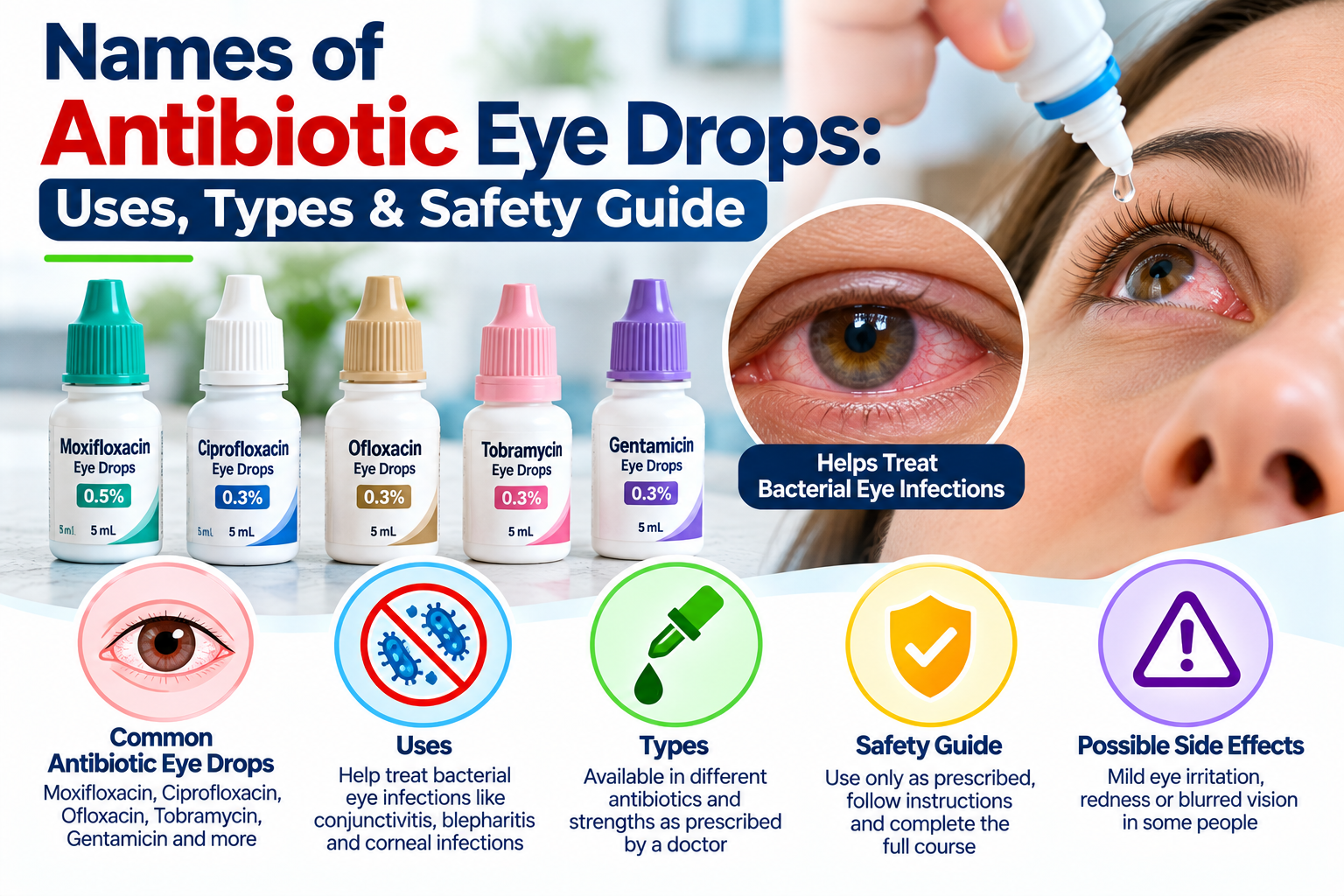
Many antibiotic eye drops have been introduced to treat ocular infections. The chosen ophthalmic solution depends on the suspected infection, the bacteria involved, the individual’s medical history, and the eye’s condition. In this article, you will learn about commonly prescribed antibacterial eye drops and how they are used.
Introduction
A sore, red, or watery eye can be uncomfortable enough to make people look for eye drops immediately. But redness alone doesn’t tell you what is causing the problem. An eye may become inflamed because of bacteria, a virus, an allergy, dryness, irritation, or another condition. When bacteria are responsible, an eye specialist may recommend an antibiotic medicine in the form of drops or, in some cases, an ointment. Many antibiotics are available as ophthalmic preparations. The choice of medicine depends on the suspected infection, the bacteria involved, the person’s medical history, and the eye’s condition.
What are antibiotic eye drops?
Antibiotic eye drops help treat and prevent various bacterial eye infections. The ophthalmic solution is applied to the eye to stop bacterial growth. The antibiotic eye formulations treat only bacterial eye infections. They won’t work for other types of eye infections. Unnecessary use or overuse of these antibiotic eye drops can reduce their effectiveness.
Antibiotic eye drops are prescribed to individuals with red eyes. They are safe to use, but they won’t work unless bacteria are proliferating on the ocular surface. Using the eye drops on the closed eye and then rubbing them along the eyelid margin can help remove an eye infection. Use either option once or twice daily and consult your ophthalmologist to determine how long to use the antibacterial eye drops.
Best antibiotic eye drops for eye infections
Here are some effective eye drops for eye infections:
- Norflox eye drops 0.3%: Norfloxacin ophthalmic solutions are specially formulated to treat acute superficial eye infections, such as conjunctivitis, blepharitis, and blepharoconjunctivitis, caused by bacteria in adults and children. Depending on the severity of the eye infection and the patient’s condition, the first-day dose may be 1 to 2 drops every 2 hours during waking hours.
- Oflox eye drops: Oflox eye drops contain the active ingredient Ofloxacin and are used to treat certain eye infections. The Oflox eye drops are used to kill a wide range of bacteria that cause certain eye infections, such as conjunctivitis and infection on the surface of the eye.
- Ciplox eye drops 3%: Another ophthalmic solution used to treat bacterial eye infections. The antibiotic ophthalmic solution fights bacteria in the eye. The eye drops, also known as Ciprofloxacin, are used to treat an ulcer in the cornea of the eye. This eye medication will not treat viral or fungal eye infections.
- Locula eye drops 20%: The sulphonamide antibiotic ophthalmic solution is active against bacteria. It treats bacterial eye infections by inhibiting the growth of the bacteria that cause them.
- Milflox 0.5% eye drop: Moxifloxacin is an antibiotic available as an eye drop. It belongs to the fluoroquinolone group and is used against susceptible bacteria that can cause certain eye infections. An ophthalmologist may consider it when bacterial conjunctivitis or another susceptible bacterial infection is suspected. Moxifloxacin works by interfering with bacterial enzymes essential for the organism’s growth and reproduction.
- Azithral eye drops 0.1%: This ophthalmic solution contains azithromycin, a macrolide antibiotic. It is available in ophthalmic formulations and can be prescribed for certain bacterial eye infections.
- Gatilox 0.3% eye drop: The eye drop containing Gatifloxacin is another fluoroquinolone that has been used in ophthalmic preparations. It has activity against susceptible bacteria and may be used for certain bacterial eye infections. Gatifloxacin availability varies by country. Therefore, patients should check the active ingredient and follow their doctor’s advice rather than choosing an antibiotic solely from an online list.
- Toba eye drop– The eye drop containing Tobramycin belongs to a different antibiotic family known as aminoglycosides. Ophthalmic preparations containing Tobramycin are used against susceptible bacteria affecting the eye.
- Zaha eye drops- The antibiotic eye drops kill bacteria and prevent their further growth. The ophthalmic preparation cures your eye infection and improves the associated symptoms.
It may seem unnecessary to have so many different antibiotics for what appears to be the same problem. But not all eye infections are identical. Different bacteria respond differently to antibiotics. Doctors may also consider previous treatment, allergies, contact-lens use, symptom severity, and the possibility of antibiotic resistance. The infection’s location also matters. A simple case of bacterial conjunctivitis is not managed the same way as a more serious infection involving deeper or more sensitive eye structures. Consult a doctor before using any antibiotic eye drop.
Does every red eye need an antibiotic?
Well, this is one of the most important things to understand before buying an antibiotic eye drop online. Redness is a symptom, not a diagnosis. For example, viral conjunctivitis can cause considerable redness and watering but does not improve simply because an antibacterial medicine is applied. Allergic conjunctivitis may cause itching, watering, and redness without bacterial involvement. Dryness, dust, chemical exposure, and contact-lens problems can produce similar complaints. Using an antibiotic when bacteria are not the cause may therefore offer little or no benefit.
What precautions to take before using antibiotic eye drops?
The safest approach is to identify the reason for the symptoms first. An eye-care professional can examine the eye and decide whether an antibiotic is appropriate. If you were previously prescribed an eye drop for conjunctivitis, that doesn’t necessarily mean the same product is suitable next time. Two episodes of red eye may have completely different causes. Also check the label before use. Some ophthalmic products contain more than one active ingredient, while others may contain an antibiotic together with another medicine. Use these combinations only under the guidance of an ophthalmologist.
Conclusion
Antibiotic eye drops are commonly prescribed to treat a range of bacterial eye infections. Using them as directed by an ophthalmologist helps relieve symptoms such as irritation, redness, discharge, and swelling. Many options are available; the choice depends mainly on the infection type and severity. Because not all eye infections are bacterial, use antibiotic eye drops only with appropriate medical guidance. A proper diagnosis supports correct use, promotes faster healing, and helps maintain the eye’s overall health.

Latest posts by Marie (see all)
- Can Semaglutide Reduce Heart Disease Risk? SELECT Trial Results Explained - November 5, 2026
- Semaglutide FAQs: 15 Expert Answers Every New Patient Should Know - October 31, 2026
- Alzheimer’s Disease Treatment: Medications That May Help Slow Memory Loss - October 29, 2026


