
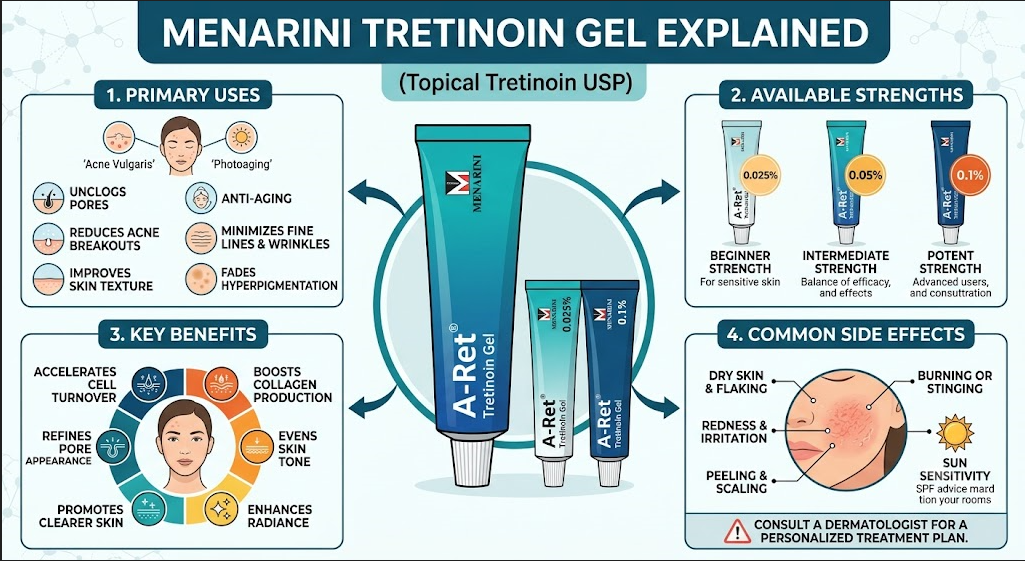
If you’ve spent any time researching retinoids for acne or anti-ageing, you’ve probably come across Menarini Tretinoin Gel — often sold under the brand name A-Ret. It’s one of the most widely recognised topical retinoid products on the market, prescribed by dermatologists for decades to treat everything from stubborn breakouts to fine lines. But what exactly is it, how does it work, and is it right for your skin?
This guide breaks down everything you need to know: what Menarini Tretinoin Gel is, the available strengths, who it’s typically used for, the benefits you can realistically expect, and the side effects to be aware of before you start.
What Is Menarini Tretinoin Gel?
Tretinoin is the generic name for all-trans-retinoic acid, a derivative of vitamin A. It belongs to a class of medications called retinoids, which work by accelerating skin cell turnover and influencing how skin cells behave at the molecular level. Menarini, an Italian pharmaceutical company, manufactures a tretinoin gel formulation, frequently marketed as A-Ret Gel.
Unlike over-the-counter retinol (a weaker, non-prescription form of vitamin A that must be converted by the skin into retinoic acid before it becomes active), tretinoin is already in its active form. That means it works faster and more potently than retinol, but it also comes with a higher likelihood of irritation, especially when you’re just starting out.
Because tretinoin is a prescription medication in most countries, it’s meant to be used under the guidance of a dermatologist or physician, particularly at higher strengths or for medical (rather than purely cosmetic) purposes.
How Does Tretinoin Actually Work?
Tretinoin works by binding to retinoic acid receptors inside skin cells. Once bound, it switches on genes that regulate skin cell growth, shedding, and renewal. In practical terms, this means:
- Faster cell turnover. Dead skin cells are shed more efficiently, rather than building up and clogging pores.
- Reduced comedone formation. Because pores stay clearer, blackheads and whiteheads are less likely to form.
- Increased collagen production. Tretinoin has been shown to stimulate collagen synthesis in the deeper layers of skin, which is part of why it’s so effective against fine lines and wrinkles.
- Improved skin texture and tone. By encouraging the turnover of pigmented or damaged surface cells, tretinoin can gradually fade dark spots and even out skin tone.
This dual action — clearing pores while also renewing deeper skin structure — is why tretinoin has remained a dermatological gold standard for both acne and anti-ageing treatment for well over 40 years.
Available Strengths
Menarini Tretinoin Gel (A-Ret) is typically available in three concentrations, each suited to different skin needs and tolerance levels:
A Ret 0.025% Gel — The Gentlest Option
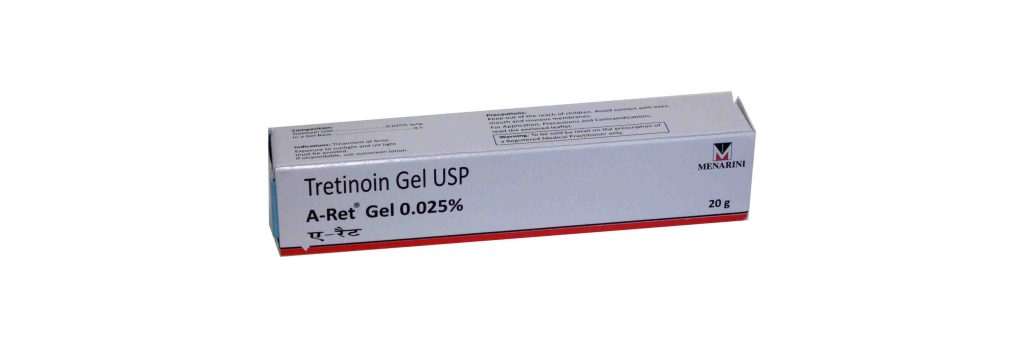
Menarini A-Ret Gel 0.025 Gel Online
This is usually the recommended starting point for people who are new to tretinoin or who have sensitive skin. It allows the skin to gradually build tolerance to the ingredient while still delivering visible benefits for mild acne, early signs of ageing, and general skin renewal.
A Ret Gel 0.05% — The Middle Ground
Once skin has adjusted to the lower strength, many users move up to 0.05%. This concentration offers a noticeable step up in potency, making it suitable for moderate acne, more visible fine lines, and uneven pigmentation, while still being manageable for most skin types with proper introduction.
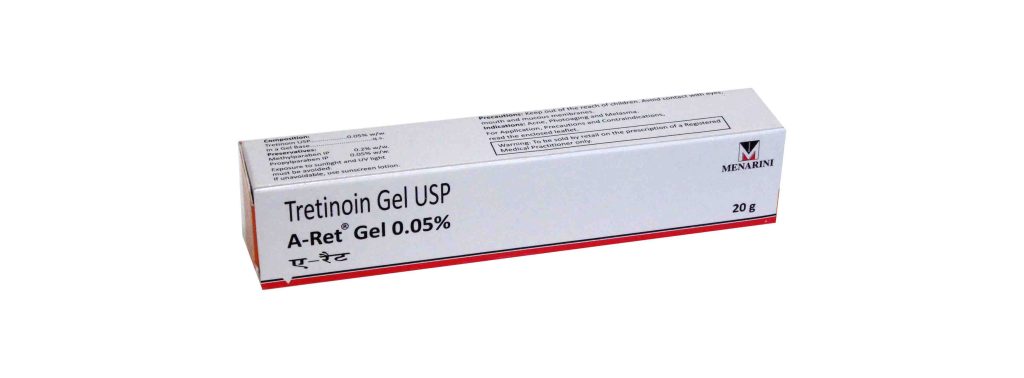
Menarini A-Ret Gel 0.025% Online
A Ret Gel 0.1% — The High-Strength Option
This is the most potent concentration and is generally reserved for people who have already developed a tolerance to lower strengths, or for stubborn acne and more pronounced signs of photoaging. It delivers the most dramatic results but also carries the highest risk of irritation, dryness, and peeling, especially in the first few weeks of use.
Choosing the right strength isn’t just about desired results — it’s about matching the product to your skin’s sensitivity level. Jumping straight to 0.1% without prior retinoid use is a common mistake that often leads to excessive irritation and can actually set back progress rather than speed it up.
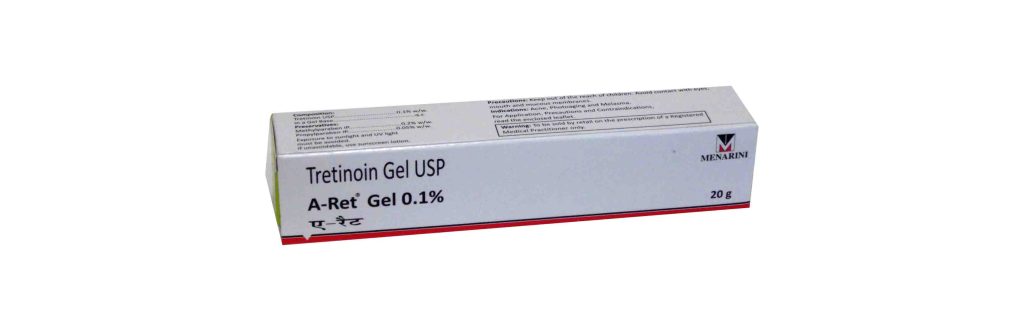
Menarini A-Ret Gel 0.1% online
What Is Menarini Tretinoin Gel Used For?
1. Acne Vulgaris
This is the primary FDA-recognised use for tretinoin. It works by preventing the formation of comedones (clogged pores) and reducing existing blackheads and whiteheads. It’s often combined with other acne treatments, such as topical or oral antibiotics, for moderate-to-severe cases.
2. Anti-Ageing and Fine Lines
Tretinoin is one of the few topical ingredients with strong clinical evidence supporting its ability to reduce the appearance of fine lines and wrinkles. This is largely attributed to its collagen-boosting effects and its ability to improve skin texture over time.
3. Hyperpigmentation and Uneven Skin Tone
By accelerating the shedding of pigmented skin cells, tretinoin can help fade dark spots, post-acne marks, and sun-induced pigmentation. It’s sometimes used alongside other brightening agents, such as hydroquinone, for conditions like melasma.
4. General Skin Texture Improvement
Beyond specific conditions, many users incorporate tretinoin into their skincare routines simply to improve overall skin smoothness, refine the appearance of pores, and maintain a more even, radiant complexion.
Benefits of Menarini Tretinoin Gel
Clinically proven efficacy. Tretinoin isn’t a trendy ingredient — it has decades of clinical research supporting its effects on acne, photoaging, and pigmentation.
Fast-absorbing, lightweight texture. Because it’s a gel rather than a cream, it tends to absorb quickly without leaving a greasy residue, which makes it a popular choice for those with oily or acne-prone skin.
Multi-tasking formula. Few skincare ingredients can simultaneously address acne, texture, tone, and ageing the way tretinoin can, which reduces the need for multiple separate products.
Long-term skin health. With consistent use, many people notice not just improvement in active concerns but also a preventive effect — skin that continues to look smoother and more even over time.
Flexible strength options. Having access to 0.025%, 0.05%, and 0.1% concentrations means the product can be tailored to an individual’s skin tolerance and treatment goals, and adjusted over time as skin adapts.
How to Use Tretinoin Gel Properly
Getting good results from tretinoin — and avoiding unnecessary irritation — comes down to using it correctly:
- Start low and slow. Begin with the lowest strength available and apply just 2–3 times per week, gradually increasing frequency as your skin builds tolerance.
- Apply at night. Tretinoin degrades in sunlight and increases photosensitivity, so it should always be applied in the evening, on clean, completely dry skin.
- Use a pea-sized amount. More product does not mean better or faster results — it usually just means more irritation.
- Moisturize afterward. Applying a gentle, fragrance-free moisturiser after the gel has absorbed can help offset dryness and peeling, especially in the early weeks.
- Never skip sunscreen. Daily broad-spectrum SPF is non-negotiable when using tretinoin, since skin becomes noticeably more vulnerable to UV damage.
- Be patient. Initial improvements are often visible within 4–6 weeks, but the fuller results — particularly for fine lines and pigmentation — usually take 8–12 weeks or longer of consistent use.
Side Effects to Be Aware Of
Tretinoin is effective, but it’s also an active pharmaceutical ingredient, and side effects are common, especially during the initial adjustment period (sometimes referred to as “retinization” or the “tretinoin purge”).
Common Side Effects
- Redness and irritation
- Dryness, flaking, and peeling
- A temporary increase in breakouts as pores clear out (the “purge”)
- Stinging or burning sensation upon application
- Increased sensitivity to sunlight
Less Common but Notable Effects
- Excessive dryness leading to cracked or sensitive skin if overused
- Worsening of pre-existing skin conditions such as eczema or rosacea
- Allergic reactions, in rare cases, present as significant swelling, rash, or hives
Who Should Be Cautious or Avoid Tretinoin
- Pregnant or breastfeeding individuals. Tretinoin is generally not recommended during pregnancy due to potential risks to fetal development, and its use should always be discussed with a doctor beforehand.
- People with very sensitive or compromised skin barriers. Those with active eczema, rosacea, or significant sunburn may need to wait until skin has healed before introducing tretinoin.
- Anyone under 18 should use tretinoin only under direct medical supervision, as skin needs and appropriate concentrations differ from those for adults.
If irritation becomes severe — persistent swelling, blistering, or intense pain — discontinue use and consult a healthcare provider.
Tretinoin Gel vs. Cream
It’s worth noting that tretinoin is also available in cream form, and the two aren’t interchangeable in terms of feel and suitability:
- Gel formulations (like Menarini’s) are alcohol-based, lightweight, and better suited for oily or acne-prone skin, since they absorb quickly and feel less heavy.
- Cream formulations are typically water-based and more hydrating, making them a better fit for normal-to-dry or more mature skin that needs extra moisture alongside the active ingredient.
Neither form is universally “better” — the right choice depends on your skin type and specific goals.
Final Thoughts
Menarini Tretinoin Gel, widely sold as A-Ret gel, remains one of the most trusted and clinically validated retinoid treatments for acne, anti-ageing, and pigmentation concerns. Its availability in three distinct strengths — 0.025%, 0.05%, and 0.1% — gives users and their dermatologists flexibility to match the product to individual skin tolerance and treatment needs.
That said, tretinoin is a potent, prescription-strength active ingredient, and results come with a real possibility of irritation, particularly in the first several weeks. Success with this product depends heavily on starting slowly, being consistent, protecting your skin with sunscreen, and — ideally — working with a healthcare provider who can guide your dosage and monitor your skin’s response.
As with any prescription skincare treatment, this article is for general informational purposes only and isn’t a substitute for personalised medical advice. If you’re considering starting tretinoin or are currently using it and experiencing significant side effects, it’s best to consult a dermatologist or physician who can evaluate your specific skin and health history.

Latest posts by Marie (see all)
- Menarini Tretinoin Gel Explained: Uses, Strengths, Benefits, and Side Effects - July 11, 2026
- Mebendazole vs Albendazole: Which Anti-Worm Medicine Is Better for Treating Parasitic Infections? - July 9, 2026
- Weight Loss Medication: Types, Benefits, Side Effects & How to Choose the Right Treatment - July 8, 2026


